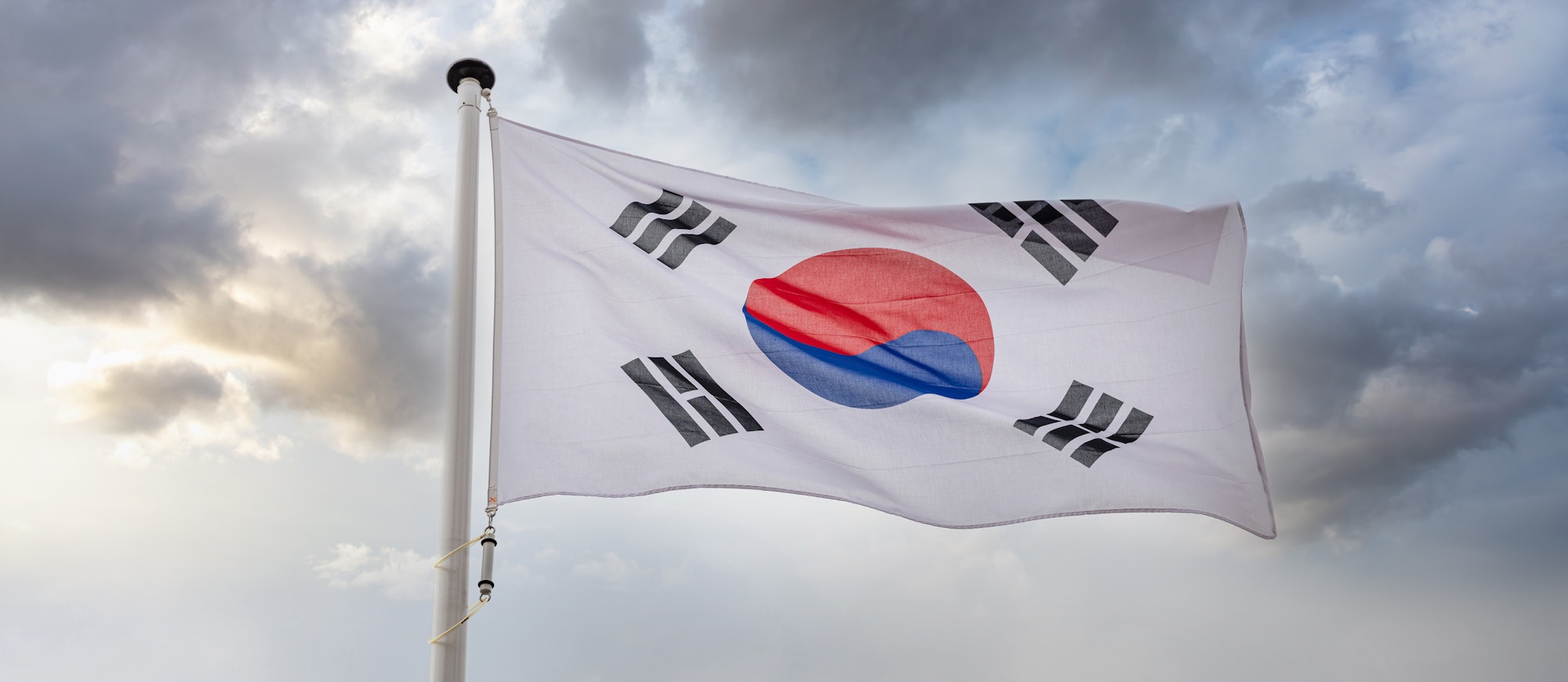
South Korea’s new administration has unveiled a five-year economic plan to build what it calls a ‘super-innovation economy’ by integrating AI across all sectors of society.
The strategy, led by President Lee Jae-myung, commits 100 trillion won (approximately US$71.5 billion) to position the country among the world’s top three AI powerhouses. Private firms will drive development, with government support for nationwide adoption.
Plans include a sovereign Korean-language AI model, humanoid robots for logistics and industry, and commercialising autonomous vehicles by 2027. Unmanned ships are targeted for completion by 2030, alongside widespread use of drones in firefighting and aviation.
AI will also be introduced into drug approvals, smart factories, welfare services, and tax administration, with AI-based tax consultations expected by 2026. Education initiatives and a national AI training data cluster will nurture talent and accelerate innovation.
Five domestic firms, including Naver Cloud, SK Telecom, and LG AI Research, will receive state support to build homegrown AI foundation models. Industry reports currently rank South Korea between sixth and 10th in global AI competitiveness.
Would you like to learn more about AI, tech and digital diplomacy? If so, ask our Diplo chatbot!
Google has expanded its AI Mode in Search to 180 additional countries and territories, introducing new agentic features to help users make restaurant reservations. The service remains limited to English and is not yet available in the European Union.
The update enables users to specify their dining preferences and constraints, allowing the system to scan multiple platforms and present real-time availability. Once a choice is made, users are directed to the restaurant’s booking page.
Partners supporting the service include OpenTable, Resy, SeatGeek, StubHub, Booksy, Tock, and Ticketmaster. The feature is part of Google’s Search Labs experiment, available to subscribers of Google AI Ultra in the United States.
AI Mode also tailors suggestions based on previous searches and introduces a Share function, letting users share restaurant options or planning results with others, with the option to delete links.
Would you like to learn more about AI, tech and digital diplomacy? If so, ask our Diplo chatbot!
A ransomware attack against dialysis provider DaVita has exposed the personal data of 2.7 million people, according to a notice on the US health department’s website.
The company first disclosed the cyber incident in April, saying it had taken steps to restore operations but could not predict the scale of disruption.
DaVita confirmed that hackers gained unauthorised access to its laboratory database, which contained sensitive information belonging to some current and former patients. The firm said it is now contacting those affected and offering free credit monitoring to help protect against identity theft.
Despite the intrusion, DaVita maintained uninterrupted dialysis services across its network of nearly 3,000 outpatient clinics and home treatment programmes. The company described the cyberattack as a temporary disruption but stressed that patient care was never compromised.
Financial disclosures show the incident led to around $13.5 million in charges during the second quarter of 2025. Most of the costs were linked to system restoration and third-party support, with $1 million attributed to higher patient care expenses.
Would you like to learn more aboutAI, tech and digital diplomacy? If so, ask our Diplo chatbot!
Russia will require all new mobile phones and tablets sold starting in September, including a government-backed messenger called Max. Developed by Kremlin-controlled tech firm VK, the app offers messaging, video calls, mobile payments, and access to state services.
Authorities claim Max is a safe alternative to Western apps, but critics warn it could act as a state surveillance tool. The platform is reported to collect financial data, purchase history, and location details, all accessible to security services.
Journalist Andrei Okun described Max as a ‘Digital Gulag’ designed to control daily life and communications.
The move is part of Russia’s broader push to replace Western platforms. New restrictions have already limited calls on WhatsApp and Telegram, and officials hinted that WhatsApp may face a ban.
Telegram remains widely used but is expected to face greater pressure as the Kremlin directs officials to adopt Max.
VK says Max has already attracted 18 million downloads, though parts of the app remain in testing. From 2026, Russia will also require smart TVs to come preloaded with a state-backed service offering free access to government channels.
Would you like to learn more about AI, tech and digital diplomacy? If so, ask our Diplo chatbot!
Turkey’s government is preparing a long-awaited 5G frequency auction in October, with the Transport and Infrastructure Minister announcing that the first services should begin in 2026.
The auction will offer 11 spectrum packages across the 700 MHz and 3.5 GHz bands, with individual packages valued between $50 million and $425 million. The minimum total reserve price is set at $2.13 billion. Operators Turkcell, Türk Telekom and Vodafone Turkey are expected to participate.
Existing mobile licences, set to expire in 2029, will be rolled over through this process. Operators will be required to contribute 5 percent of their annual revenues as part of the renewal. The government aims for full nationwide 5G rollout within a few years following the initial launch.
Would you like to learn more about AI, tech and digital diplomacy? If so, ask our Diplo chatbot!
AI-enabled cameras in Devon and Cornwall have detected 6,000 people failing to wear seat belts over the past year. The number caught was 50 percent higher than those penalised for using mobile phones while driving, police confirmed.
Road safety experts warn that the long-standing culture of belting up may be fading among newer generations of drivers. Geoff Collins of Acusensus noted a rise in non-compliance and said stronger legal penalties could help reverse the trend.
Current UK law imposes a £100 fine for not wearing a seat belt, with no points added to a driver’s licence. Campaigners now urge the government to make such offences endorsable, potentially adding penalty points and risking licence loss.
Would you like to learn more about AI, tech and digital diplomacy? If so, ask our Diplo chatbot!
Europol has warned that a reported $50,000 reward for information on two members of the Qilin ransomware group is fake. The message, circulating on Telegram, claimed the suspects, known as Haise and XORacle, coordinate affiliates and manage extortion operations.
Europol clarified that it does not operate a Telegram channel and that the message does not originate from its official accounts, which are active on Instagram, LinkedIn, X, Bluesky, YouTube, and Facebook.
Qilin, also known as Agenda, has been active since 2022 and, in 2025, listed over 400 victims on its leak website, including media and pharmaceutical companies.
Recent attacks, such as the one targeting Inotiv, demonstrate the group’s ongoing threat. Analysts note that cybercriminals often circulate false claims to undermine competitors, mislead affiliates, or sow distrust within rival gangs.
Would you like to learn more aboutAI, tech and digital diplomacy? If so, ask our Diplo chatbot!
US tech stocks have stumbled after a sharp rally, with investors increasingly cautious over AI-linked valuations and shifting market conditions. The S&P 500 tech sector has dropped around 2.5% this week, while the Nasdaq has slipped 2%, led by losses in Nvidia and Palantir.
The fall follows a 50% surge in tech shares since April, far outpacing the broader market and pushing valuations to year-highs. Concerns are growing that investor enthusiasm around AI has become overheated, with some funds reducing their exposure ahead of expected interest rate guidance.
US market watchers are now focused on Federal Reserve Chair Jerome Powell’s speech at Jackson Hole, which could signal if rate cuts are on the horizon. Tech stocks, already heavily weighted in many portfolios, are particularly vulnerable to higher rates due to their stretched price-to-earnings ratios.
Would you like to learn more about AI, tech and digital diplomacy? If so, ask our Diplo chatbot!
Citi has expanded its digital client platform, CitiDirect Commercial Banking, with new AI capabilities to improve customer service and security.
The platform now supports over half of Citi’s global commercial banking client base and handles around 2.3 million sessions.
AI features assist in fraud detection, automate customer queries, and provide real-time onboarding updates and guidance.
KYC renewals have been simplified through automated alerts and pre-filled forms, cutting effort and processing time for clients.
Live in markets including the UK, US, India, and others, the platform has received positive feedback from over 10,000 users. Citi says the enhancements are part of a broader effort to make mid-sized corporate banking faster, more innovative, and more efficient.
Would you like to learn more about AI, tech and digital diplomacy? If so, ask our Diplo chatbot!
Japan has pledged $5.5 billion in loans and announced an ambitious AI training programme to deepen economic ties with Africa.
At TICAD 9, Prime Minister Shigeru Ishiba proposed creating an Indian Ocean–Africa economic zone to link African nations with Asia and the Middle East.
Japan will also support training 30,000 AI experts over three years to drive digital transformation and job growth across the continent.
The initiative comes amid growing calls from leaders like António Guterres and João Lourenço to overhaul global finance systems and empower African representation.
Japan’s move signals renewed interest in African engagement, as the US scales back and China’s influence expands across the region.
Would you like to learn more about AI, tech and digital diplomacy? If so, ask our Diplo chatbot!