Stability AI has unveiled its latest AI model, Stable Virtual Camera, designed to convert 2D images into dynamic 3D video scenes. Announced in a company blog post, the model enables users to create immersive videos with realistic depth and perspective using up to 32 input images. It generates ‘novel views’ of a scene, offering various preset camera movements, including Spiral, Dolly Zoom, Move, and Pan.
The tool is currently available as a research preview and allows users to generate videos in square (1:1), portrait (9:16), and landscape (16:9) formats, with a maximum length of 1,000 frames. However, Stability AI warns that certain images, such as those with people, animals, or complex textures like water, may produce lower-quality results. Highly ambiguous or irregularly shaped objects may also lead to visual artifacts.
Stable Virtual Camera is available for research use under a non-commercial license and can be downloaded from AI development platform Hugging Face. The launch follows a turbulent period for Stability AI, which has recently undergone leadership changes, secured new investments, and expanded into new AI applications, including generative audio. With this latest innovation, the company aims to solidify its position in the competitive AI market.
For more information on these topics, visit diplomacy.edu.
Tesla has received approval from the California Public Utilities Commission (CPUC) to operate a transportation service in the state, though the permit does not yet extend to autonomous vehicle operations. The transportation charter permit (TCP), granted on Tuesday, allows Tesla to use its own vehicles and employees as drivers for prearranged transport services. Initially, the company plans to use this permit for employee transportation, with the possibility of expanding to public services in the future.
Unlike Uber and Lyft, which operate under transportation network company (TNC) permits, Tesla’s TCP authorisation requires the company to own the vehicles and directly employ its drivers. The permit does not allow Tesla to test or deploy autonomous vehicles, nor does it grant the company participation in California’s Autonomous Vehicle Passenger Service Programs. Should Tesla wish to operate a driverless service, it would need additional approvals from both the CPUC and the California Department of Motor Vehicles (DMV).
Despite these restrictions, Tesla continues to push forward with its self-driving ambitions. CEO Elon Musk has announced plans to launch a robotaxi service in Austin, Texas, as early as June, using vehicles equipped with an updated version of the company’s Full Self-Driving software. While California regulators have not yet approved Tesla’s autonomous ride-hailing plans, the newly acquired permit may represent the first step towards that goal.
For more information on these topics, visit diplomacy.edu.
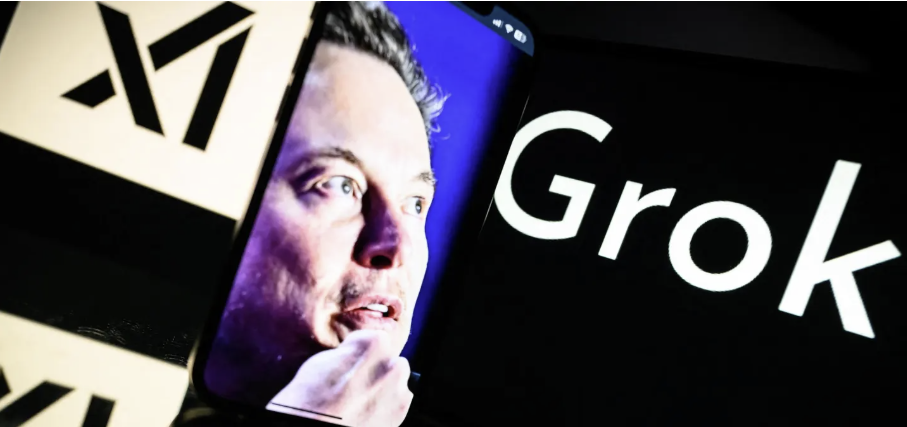
xAI, Elon Musk’s AI company, has acquired Hotshot, a San Francisco-based startup focused on generative AI video tools.
The company, founded by Aakash Sastry and John Mullan, initially developed AI-driven photo editing tools but shifted its focus to text-to-video AI models.
Hotshot’s video foundation models, such as Hotshot-XL and Hotshot Act One, have already gained significant attention in the AI industry.
The acquisition is expected to boost xAI’s plans to develop its own video generation models, competing with major competitors like OpenAI’s Sora and Google’s Veo 2.
Musk had previously hinted at the creation of a ‘Grok Video’ model, which he anticipates launching in the near future. Hotshot’s team will likely play a key role in scaling these efforts, using xAI’s powerful infrastructure, including the Colossus cluster.
Hotshot’s website has confirmed the sunsetting of its video creation tools as of March 14, with existing customers having until March 30 to download their content.
The specifics of the staff transition to xAI remain unclear, with Sastry declining to comment. This acquisition represents a significant step for xAI in the rapidly evolving generative AI space.
For more information on these topics, visit diplomacy.edu.
France’s broadcasting regulator, Arcom, is on the verge of deciding whether satellite operator Eutelsat has breached European sanctions against Russia.
The decision follows requests from several NGOs, including Comité Diderot, which has raised concerns over Eutelsat’s contracts with Russian media outlets like the army’s Zvezda channel and state-run VGTRK.
These contracts represent a small fraction of Eutelsat’s revenue, about 4%, but the watchdog’s ruling could have significant financial consequences for the company.
In 2022, Eutelsat complied with Arcom’s request to halt the broadcast of three Russian TV channels. However, the company still maintains agreements with other Russian media outlets, which some critics argue continue to violate EU sanctions.
Eutelsat has expressed respect for regulatory decisions, but the investigation has drawn attention to its ongoing contracts with Russian entities.
Arcom, which now has the authority to ensure EU sanctions compliance under France’s 2024 SREN law, may impose a fine of up to 3% of Eutelsat’s annual revenue.
If further violations are found, the penalty could rise to 5%. The French National Assembly recently supported the call for Arcom to enforce stricter compliance, reflecting growing pressure on Eutelsat amid the ongoing sanctions against Russia.
For more information on these topics, visit diplomacy.edu.
Apple has lost its appeal against a regulatory decision that could impose stricter controls on the company in Germany.
The Federal Court of Justice upheld a 2023 ruling by the country’s competition authority, which classified Apple as a company of ‘paramount cross-market significance for competition,’ placing it under closer scrutiny.
A decision like this means Apple will face potential regulatory measures similar to those imposed on tech giants such as Google’s parent company, Alphabet, and Facebook’s owner, Meta.
The ruling follows a judge’s earlier indication in January that the court would side with the regulator. Apple had attempted to involve the European Court of Justice in Luxembourg, but the request was denied.
In Europe, Apple’s App Store has come under increasing scrutiny, with regulators expressing concerns over how the company collects and utilises vast amounts of user data. This latest setback adds to Apple’s ongoing legal and regulatory challenges in the region.
For more information on these topics, visit diplomacy.edu.
The UK’s internet watchdog, Ofcom, has launched a new enforcement programme under the Online Safety Act (OSA), targeting storage and file-sharing services due to concerns over the sharing of child sexual abuse material (CSAM).
The regulator has identified these services as particularly vulnerable to misuse for distributing CSAM and will assess the safety measures in place to prevent such activities.
As part of the enforcement programme, Ofcom has contacted a number of file-storage and sharing services, warning them that formal information requests will be issued soon.
These requests will require the services to submit details on the measures they have implemented or plan to introduce to combat CSAM, along with risk assessments related to illegal content.
Failure to comply with the requirements of the OSA could result in substantial penalties for these companies, with fines reaching up to 10% of their global annual turnover.
Ofcom’s crackdown highlights the growing responsibility for online services to prevent illegal content from being shared on their platforms.
For more information on these topics, visit diplomacy.edu.
The European Union has announced that the ETIAS (European Travel Information and Authorisation System) will require visa-free travellers from non-EU countries, including the UK, to obtain authorisation before short stays in the Schengen Area.
Initially planned for 2026, the system has been delayed and is now set to launch in late 2026, with full implementation not expected until 2027. The ETIAS aims to improve border security and will apply to travellers from 60 non-EU countries who don’t need a visa.
To apply for the ETIAS, travellers will need to complete an online application, provide personal details, answer security questions, and pay a €7 fee.
However, this authorisation will be linked to the traveller’s passport and remain valid for three years, or until the passport expires. Also, children under 18 and adults over 70 will be exempt from the fee, though they still need to apply for authorisation.
The ETIAS will not become mandatory until six months after the EU’s Entry/Exit System (EES) is fully operational. The EES, which is set to launch in phases starting in October 2025, will be a registration system for non-EU travellers, including those from the UK and US.
However, due to delays in the installation of necessary technology at Schengen borders, the launch of the ETIAS has been pushed back to late 2026.
For more information on these topics, visit diplomacy.edu.
Indian IT services giant Infosys has settled lawsuits filed against its US subsidiary, Infosys McCamish Systems, for $17.5 million. The lawsuits stem from a cyber incident that occurred in November 2023, which resulted in the compromise of personal data. The company has agreed to pay the settlement into a fund that will resolve all claims related to the breach.
The breach, which involved unauthorised access and data exfiltration, affected up to 6.5 million individuals. Following the incident, Infosys McCamish in the US, in coordination with a third-party vendor, took steps to address the issue and limit the damage caused by the cyberattack.
This settlement marks a significant step for Infosys in resolving the ongoing legal issues stemming from the 2023 incident. The Indian company has worked to resolve the situation while continuing to bolster its cybersecurity measures to prevent future breaches.
For more information on these topics, visit diplomacy.edu.
In an open letter dated 14 March, they emphasised the urgent need for Europe to strengthen its strategic autonomy in critical digital infrastructure, from AI frameworks to semiconductor manufacturing.
The letter warns that Europe’s reliance on foreign technology creates security risks and weakens economic growth. It highlights the importance of public investment, particularly in capital-intensive sectors like quantum computing and microchips. The signatories also suggest a ‘buy European’ policy in government procurement to boost demand and encourage local businesses to invest.
Prominent supporters of the initiative include French cloud provider OVH Cloud, the European Software Institute, and the German AI Association. The appeal also reached EU tech chief Henna Virkkunen, as Europe faces increasing pressure to compete with major US and Asian technology powers.
For more information on these topics, visit diplomacy.edu.
The Turkish Competition Board has opened an investigation into major subscription-based, on-demand video service providers, including Netflix, Disney, and Amazon. This decision follows a preliminary inquiry into whether these global streaming platforms have violated Turkey‘s competition laws.
The board is particularly focused on examining their business practices within the Turkish market and assessing whether any anti-competitive behaviour has occurred. The investigation highlights Turkey’s increasing scrutiny of digital platforms operating within its borders.
The inquiry comes at a time when subscription-based streaming services are growing rapidly in Turkey, with Netflix, Disney+, and Amazon Prime Video among the most popular platforms in the country. The Turkish Competition Board’s investigation aims to ensure that the market remains competitive and that no service provider is unfairly dominating the sector.
By looking into the practices of these major players, the board seeks to protect consumers and maintain a level playing field for all companies involved in the digital entertainment industry.
For more information on these topics, visit diplomacy.edu.