Police in the UK have begun trialling an AI assistant called Bobbi to help manage non-emergency queries online and reduce pressure on overstretched call handlers.
The virtual tool responds to common questions and hands conversations to a human operator if users request it or ask about issues it cannot resolve.
Developers say Bobbi follows the same guidance as trained call handlers and offers recommendations based on official advice, reflecting input from more than 200 testers, including victim support groups.
The system cannot investigate crimes or replace the 999 emergency line, and police emphasise that crime reports must still be made through existing channels.
Senior officers believe the tool will free up staff for emergencies and complex cases as demand for police contact continues to rise each year.
Leaders at Thames Valley Police and Hampshire & Isle of Wight Constabulary, the first forces to deploy the technology, say the assistant will help ensure the public receives timely support.
Would you like to learn more about AI, tech, and digital diplomacy? If so, ask our Diplo chatbot!
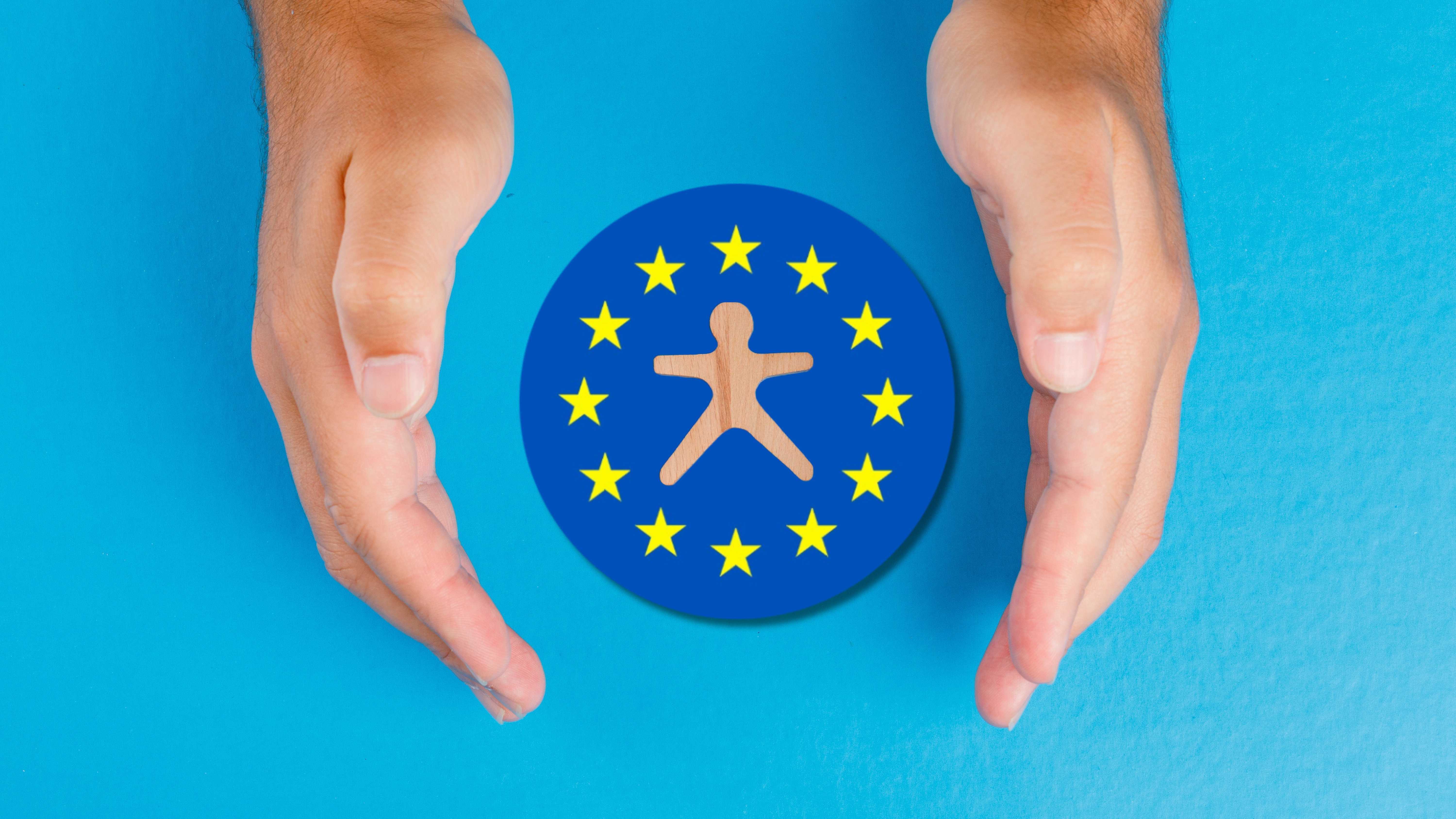
Hopae is expanding into Europe with a €5M investment as the region prepares for mandatory EUDI Wallet adoption. The company aims to help businesses navigate multiple electronic identity systems before new requirements take effect in 2026 and 2027.
The firm plans to offer an intermediary platform that unifies eIDs and wallet-based verification. It says the model can ease compliance for regulated sectors and Very Large Online Platforms, which will need to accept EUDI Wallets under the EU rules.
Hopae has already signed a partnership with Luxembourg’s INCERT, becoming the first officially registered intermediary service. It secured OIDC certification and opened a Luxembourg office, naming Bertrand Bouteloup to lead its European expansion and trust-service ambitions.
The company says its system already integrates more than 50 eIDs and wallets, to reach 100 by mid-2026. CEO Ace Jaehoon Shim says demand for secure, wallet-based identity verification will require further investment across the continent.
Founded in 2022, Hopae previously developed the national vaccination pass in South Korea and has expanded into the United States. It is now contributing to the Korean Architecture Reference Framework while operating offices in Seoul, San Francisco, Paris, and Luxembourg.
Would you like to learn more about AI, tech, and digital diplomacy? If so, ask our Diplo chatbot!
Vietnam has emerged as Southeast Asia’s leader in AI readiness, with daily usage, upskilling rates and data-sharing willingness topping regional rankings. Survey data show 81 percent of users engage with AI tools each day, supported by widespread training and high trust levels.
Commercial activity reflects the shift, with AI-enhanced apps recording a 78 percent rise in revenue over the past year. Investors contributed 123 million dollars to local AI ventures, and most expect funding to grow further across software, services and deep-tech fields.
Vietnam’s digital economy is forecast to reach 39 billion dollars in 2025, fuelled by rapid expansion across e-commerce, online media, travel and digital finance. E-commerce continues to dominate, while gaming and online payments record notable acceleration across broader markets.
Vietnamese government support for cashless payments and favourable travel measures further strengthens digital adoption. Analysts say that Vietnam’s combination of strong user trust, fast-growing platforms and rising investment positions the country as a strong regional technological powerhouse.
Would you like to learn more about AI, tech and digital diplomacy? If so, ask our Diplo chatbot!
Vietnam has moved to expand its use of Chinese 5G technology, awarding Huawei and ZTE a series of new contracts. Under recent deals, the two companies will supply advanced 5G radio equipment to strengthen network coverage, while European vendors remain responsible for core systems.
Vietnam, which borders China, Laos, and Cambodia, previously echoed allies’ warnings that Chinese-made 5G gear posed an unacceptable security risk. Recent tariff frictions with the United States and shifting economic priorities have since pushed officials to reconsider that stance.
According to local reports, Huawei and ZTE have together secured contracts worth about 43 million dollars for non-core 5G equipment. Ericsson and Nokia are expected to continue supplying the 5G core, with Chinese vendors focused on antennas and related infrastructure at the network edge.
In April, a consortium including Huawei won a 23 million dollar deal to provide 5G gear, shortly after new US tariffs on Vietnamese exports came into force. Analysts say those measures have strained ties between Hanoi and Washington while nudging Vietnam to deepen economic and technological links with Beijing.
Vietnamese supply chain specialist Nguyen Hung says Hanoi is prioritising its own strategic interests, seeing closer ties with Chinese vendors as a route to deeper regional integration. US officials warn the deals could damage network trust and limit access to advanced American technology.
Would you like to learn more about AI, tech, and digital diplomacy? If so, ask our Diplo chatbot!
Researchers have uncovered why the human brain remains far more adaptable than AI. A new Princeton study finds that the brain repurposes shared cognitive components to manage varied tasks, enabling quick adaptation to new challenges without relearning from scratch.
Experiments with rhesus macaques showed that the prefrontal cortex uses shared ‘cognitive blocks’ that combine and recombine based on the task, such as judging colour or shape. The monkeys completed related categorisation tasks, allowing scientists to observe how neural patterns were reused across activities.
The findings suggest that humans excel at flexible learning because the brain builds new behaviours from existing mental components. By activating only the necessary blocks and quieting others, the prefrontal cortex avoids overload and keeps learning efficient.
Researchers say the insight could help artificial intelligence move beyond its tendency to forget past skills when learning new ones. It may also support clinical advances for conditions where cognitive flexibility is impaired, including schizophrenia and certain brain injuries.
Would you like to learn more about AI, tech and digital diplomacy? If so, ask our Diplo chatbot!
EU member states reached a common position on a regulation intended to reduce online child sexual abuse.
The proposal introduces obligations for digital service providers to prevent the spread of harmful content and to respond when national authorities require the removal, blocking or delisting of material.
A framework that requires providers to assess how their services could be misused and to adopt measures that lower the risk.
Authorities will classify services into three categories based on objective criteria, allowing targeted obligations for higher-risk environments. Victims will be able to request assistance when seeking the removal or disabling of material that concerns them.
The regulation establishes an EU Centre on Child Sexual Abuse, which will support national authorities, process reports from companies and maintain a database of indicators. The Centre will also work with Europol to ensure that relevant information reaches law enforcement bodies in member states.
The Council position makes permanent the voluntary activities already carried out by companies, including scanning and reporting, which were previously supported by a temporary exemption.
Formal negotiations with the European Parliament can now begin with the aim of adopting the final regulation.
Would you like to learn more aboutAI, tech and digital diplomacy? If so, ask our Diplo chatbot!
SAP introduced the EU AI Cloud as part of a unified plan that aims to support Europe’s digital sovereignty goals.
The offering consolidates SAP’s existing sovereign cloud work under one structure and provides organisations with a way to meet strict regulatory and operational needs, ensuring full EU data residency.
Customers can select deployment options that match their level of required control, ranging from SAP’s European data centres to on-site infrastructure.
SAP is also expanding its partnership with Cohere to integrate advanced multimodal and agentic AI features through Cohere North.
Incorporation into SAP Business Technology Platform enables enterprises with data residency constraints to apply AI within core processes without undermining compliance or performance.
A collaboration that is intended to improve insight generation and decision support across a wide range of industries.
EU AI Cloud is backed by a broad ecosystem that includes Cohere, Mistral AI, OpenAI and other partners whose models and applications can be accessed through SAP BTP.
European enterprises and public bodies gain access to routes for developing and deploying AI tools while maintaining flexibility and sovereignty.
The range of options includes SAP Sovereign Cloud, customer-operated on-site deployments and, where chosen, commercial services on selected hyperscalers with sovereignty controls. The approach also includes Delos Cloud for organisations in Germany that require dedicated public sector safeguards.
SAP positions the initiative as a means to advance AI adoption in Europe, aligning with regional standards on data protection and operational independence.
Would you like to learn more aboutAI, tech and digital diplomacy? If so, ask our Diplo chatbot!
EU policy debates intensified after Denmark abandoned plans for mandatory mass scanning in the draft Child Sexual Abuse Regulation. Advocates welcomed the shift yet warned that new age checks and potential app bans still threaten privacy.
France and the UK advanced consultations on good practice guidelines for cyber intrusion firms, seeking more explicit rules for industry responsibility. Civil society groups also marked two years of the Digital Services Act by reflecting on enforcement experience and future challenges.
Campaigners highlighted rising concerns about tech-facilitated gender violence during the 16 Days initiative. The Centre for Democracy and Technology launched fresh resources stressing encryption protection, effective remedies and more decisive action against gendered misinformation.
CDT Europe also criticised the Commission’s digital omnibus package for weakening safeguards under laws, including the AI Act. The group urged firm enforcement of existing frameworks while exploring better redress options for AI-related harms in the EU legislation.
Would you like to learn more about AI, tech and digital diplomacy? If so, ask our Diplo chatbot!
OpenAI has rolled out an update to ChatGPT Voice that unifies voice and text in a single interface. Users can now speak, type or mix both without switching screens mid-conversation.
The redesigned chat window displays live transcriptions and responses in real-time. Users can scroll through earlier messages and view images, maps and other visuals while the exchange continues in one place.
You can now use ChatGPT Voice right inside chat—no separate mode needed.
You can talk, watch answers appear, review earlier messages, and see visuals like images or maps in real time.
Previously, voice required a separate mode that hid the main chat history and shared content. OpenAI says the unified layout should make longer, mixed-mode conversations feel more natural and less fragmented.
Voice and text can still be used interchangeably, but ending a voice session requires tapping ‘End’ before returning to text-only use. Those who prefer the old layout can re-enable a separate voice view in settings.
The revamped Voice experience is becoming the default on web and mobile apps as the update rolls out. OpenAI aims to make ChatGPT feel more like a flexible conversational assistant across various devices.
Would you like to learn more about AI, tech and digital diplomacy? If so, ask our Diplo chatbot!
Europe’s constrained energy supply and strict regulations are emerging as unlikely strengths in the global race to expand AI infrastructure. Limited power access and careful planning are encouraging more resilient, future-ready data-centre designs that appeal to long-term investors.
Countries such as the Nordics, Spain and Italy are drawing interest due to stronger renewable capacity and shorter grid-connection times, while the UK, Germany and the Netherlands face greater congestion.
Shifting to a ‘first ready, first connected’ model aims to curb speculation and speed up delivery of viable projects.
Europe’s biggest opportunity lies in cloud-focused facilities and AI inference, which analysts expect to account for most AI demand and must often remain within regional borders.
Tighter rules may slow construction, yet they reduce the risk of stranded assets and support sustainable sites that strengthen Europe’s investment case.
Would you like to learn more about AI, tech, and digital diplomacy? If so, ask our Diplo chatbot!