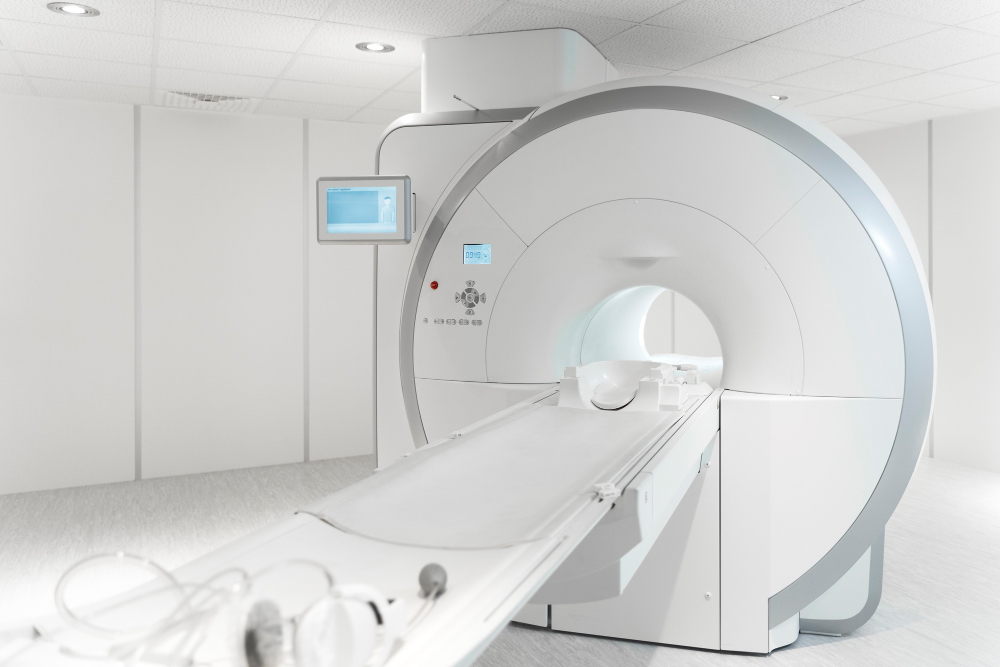
Philips has unveiled Verida, the world’s first detector-based spectral CT fully powered by AI. The system integrates AI across the imaging chain, enhancing image quality, lowering system noise, and streamlining clinical workflow for faster, more precise diagnostics.
Spectral CT allows tissues to be distinguished based on how they absorb different x-ray energies, providing insights that conventional scans cannot. Verida reconstructs 145 images per second, completing exams in under 30 seconds, allowing up to 270 scans daily with lower doses and up to 45% less energy use.
Clinicians are already seeing benefits, especially in cardiac imaging. Prof. Eliseo Vañó Galván, Chairman of CT & MR at Hospital Nuestra. Sra. Del Rosario in Madrid, said the system could boost confidence, reduce invasive procedures, and expand spectral imaging.
Built for high-demand environments, Verida combines AI-driven reconstruction with Philips’ Nano-panel dual-layer detector and proprietary Spectral Precise Image technology. The system is CE-marked and 510k pending, with availability in select markets expected in 2026.
Would you like to learn more about AI, tech and digital diplomacy? If so, ask our Diplo chatbot!
Accenture partners with OpenAI to embed ChatGPT Enterprise, upskilling tens of thousands of professionals with AI skills through OpenAI Certifications. The initiative represents the most extensive professional upskilling programme powered by OpenAI.
A new flagship AI client programme will combine OpenAI’s enterprise products with Accenture’s deep industry expertise. The programme will help clients adopt AI in key functions like customer service, finance, HR and supply chain, automating workflows and improving decision-making.
The collaboration will leverage OpenAI’s AgentKit and other advanced tools to design, test and deploy custom AI agents rapidly. By integrating agentic AI, Accenture aims to accelerate enterprise reinvention and create measurable economic value for its clients.
Accenture and OpenAI have already worked with many of the world’s largest enterprises, including Walmart, Salesforce, PayPal and Morgan Stanley. The partnership enhances both firms’ global AI adoption and helps organisations unlock new growth opportunities.
Would you like to learn more about AI, tech and digital diplomacy? If so, ask our Diplo chatbot!
Around 80 percent of researchers at Germany’s Max Planck and Fraunhofer societies report using AI in their work, according to a survey of more than 6,200 respondents published in Research Policy.
Nearly half said they were very familiar with AI tools, while another 44 percent had used AI a few times.
The study shows a rapid rise in AI use since 2023, when just 17 percent of researchers used generative AI weekly. Many respondents now employ AI for core and creative research tasks, with 37 percent citing its use in innovative work processes.
Demographic trends reveal that older researchers and women are less likely to use AI, although lower familiarity rather than scepticism drives these differences. Researchers view AI as transformative, acting increasingly as a co-creator or manager rather than merely an automation tool.
Measures such as training, supportive learning environments and legal guidance could further boost AI adoption. Despite the study being limited to Germany, the findings point to a profound transformation in research driven by AI technologies.
Would you like to learn more about AI, tech and digital diplomacy? If so, ask our Diplo chatbot!
Three servers were seized in Switzerland, together with the cryptomixer.io domain, leading to the confiscation of more than €25 million in Bitcoin and over 12 terabytes of operational data.
Cryptomixer operated on both the clear web and the dark web, enabling cybercriminals to conceal the origins of illicit funds. The platform has mixed over €1.3 billion in Bitcoin since 2016, aiding ransomware groups, dark web markets, and criminals involved in drug trafficking, weapons trafficking, and credit card fraud.
Its randomised pooling system effectively blocked the traceability of funds across the blockchain.
Mixing services, such as Cryptomixer, are used to anonymise illegal funds before moving them to exchanges or converting them into other cryptocurrencies or fiat. The takedown halts further laundering and disrupts a key tool used by organised cybercrime networks.
Europol facilitated information exchange through the Joint Cybercrime Action Taskforce and coordinated operational meetings throughout the investigation. The agency deployed cybercrime specialists on the final day to provide on-site support and forensics.
Earlier efforts included support for the 2023 takedown of Chipmixer, then the largest mixer of its kind.
Would you like to learn more about AI, tech and digital diplomacy? If so, ask our Diplo chatbot!
Chinese shoppers are increasingly using AI to create fake product photos to claim refunds, raising moral and legal concerns. The practice was highlighted during the Double 11 festival, with sellers receiving images of allegedly damaged goods.
Some buyers manipulated photos of fruit to appear mouldy or altered images of electric toothbrushes to look rusty. Clothing and ceramic product sellers also detected AI-generated inconsistencies, such as unnatural lighting, distorted edges, or visible signs of manipulation.
In some cases, requests were withdrawn after sellers asked for video evidence.
E-commerce platforms have historically favoured buyers, granting refunds even when claims seem unreasonable. In response, major platforms such as Taobao and Tmall removed the ‘refund only’ option and introduced buyer credit ratings based on purchase and refund histories.
Sellers are also increasingly turning to AI tools to verify images.
China’s AI content rules, effective from 1 September, require AI-generated material to be labelled, but detection remains difficult. Legal experts warn that using AI to claim refunds could constitute fraud, with calls for stricter enforcement to prevent abuse.
Would you like to learn more about AI, tech and digital diplomacy? If so, ask our Diplo chatbot!
The Second Cairo Forum brought together experts to assess how AI, global shifts, and economic pressures are shaping MENA. Speakers said the region faces a critical moment as new technologies accelerate. The discussion asked whether MENA will help shape AI or simply adopt it.
Participants highlighted global divides, warning that data misuse and concentrated control remain major risks. They argued that middle-income countries can collaborate to build shared standards. Several speakers urged innovation-friendly regulation supported by clear safety rules.
Officials from Egypt outlined national efforts to embed AI across health, agriculture, and justice. They described progress through applied projects and new governance structures. Limited data access and talent retention were identified as continuing obstacles.
Industry voices stressed that trust, transparency, and skills must underpin the use of AI. They emphasised co-creation that fits regional languages and contexts. Training and governance frameworks were seen as essential for responsible deployment.
Closing remarks warned that rapid advances demand urgent decisions. Speakers said safety investment lags behind development, and global competition is intensifying. They agreed that today’s choices will shape the region’s AI future.
Would you like to learn more about AI, tech, and digital diplomacy? If so, ask our Diplo chatbot!
Chinese AI company DeepSeek has unveiled Math-V2, the first open-source AI model to achieve gold-level performance at the International Mathematical Olympiad.
The system, now available on GitHub and Hugging Face, allows developers to modify and deploy the model under a permissive license freely.
Math-V2 also excelled in the 2024 Chinese Mathematical Olympiad, demonstrating advanced reasoning and problem-solving capabilities. Unlike many AI systems, it features a self-verification process that enables it to check solutions even for problems without known answers.
The launch comes as US AI leaders, such as Google DeepMind and OpenAI, have achieved similar milestones with their proprietary models.
Open access to Math-V2 could democratise advanced mathematical tools, potentially accelerating scientific research and development globally.
Would you like to learn more about AI, tech, and digital diplomacy? If so, ask our Diplo chatbot!
Italian defence company Leonardo has revealed plans for the ‘Michelangelo Dome’, an AI-powered shield designed to protect cities and critical infrastructure from missile attacks and drone swarms. The system will integrate multiple defence platforms and is expected to be fully operational by the end of the decade.
The project follows a surge in European defence spending amid geopolitical tensions and uncertainty over US support.
Leonardo’s CEO, Roberto Cingolani, highlighted the system’s open architecture, allowing compatibility with other nations’ defence networks and emphasising the need for innovation and international cooperation.
European defence companies are increasingly investing in integrated command systems rather than standalone hardware.
Private investors are also backing startups developing autonomous and AI-driven defence technologies, creating competition for traditional primes such as Leonardo, BAE Systems, Rheinmetall, and Thales.
Would you like to learn more about AI, tech, and digital diplomacy? If so, ask our Diplo chatbot!
Meta has faced criticism after numerous consumers reported being misled by companies using AI-generated adverts on Facebook and Instagram. The firms posed as UK businesses while shipping cheap goods from Asia, prompting claims that scams were ‘running rampant’ on the platforms.
Victims were persuaded by realistic adverts and AI-generated images but received poorly made clothing and jewellery. Several companies, including C’est La Vie, Mabel & Daisy, Harrison & Hayes, and Chester & Clare, were removed after investigations revealed fabricated backstories and fake shopfronts.
Consumer guides recommend vigilance, advising shoppers to check company websites, reviews, and use Trustpilot to verify legitimacy. Experts warn that overly perfect images, including AI-generated shopfronts or models, may signal fraudulent adverts.
Platforms such as Facebook and Instagram are urged to enforce stricter measures to prevent scams.
Meta stated it works with Stop Scams UK and encourages users to report suspicious adverts, while the Advertising Standards Authority continues to crack down on misleading online promotions.
Would you like to learn more about AI, tech and digital diplomacy? If so, ask our Diplo chatbot!
A key player is emerging in China’s AI chip market with Baidu’s Kunlunxin unit stepping in to fill the gap left by Nvidia due to US export restrictions.
The company plans a five-year roadmap for AI chips, beginning with the M100 in 2026 and the M300 in 2027, while already using its chips to run ERNIE AI models.
Strong domestic demand and shortages of AI chips among Chinese tech giants, such as Alibaba and Tencent, have created an opportunity for Baidu.
The company sells chips to third parties and rents computing capacity via its cloud, presenting itself as a full-stack AI provider with integrated infrastructure, models, and applications.
Analysts predict explosive growth for Baidu’s AI chip business, with sales expected to increase sixfold to 8 billion yuan ($1.1 billion) by 2026. Industry experts highlight that the timely delivery of competitive Kunlun chip generations could make Baidu a strategic supplier to the rest of China’s AI ecosystem.
Would you like to learn more about AI, tech, and digital diplomacy? If so, ask our Diplo chatbot!