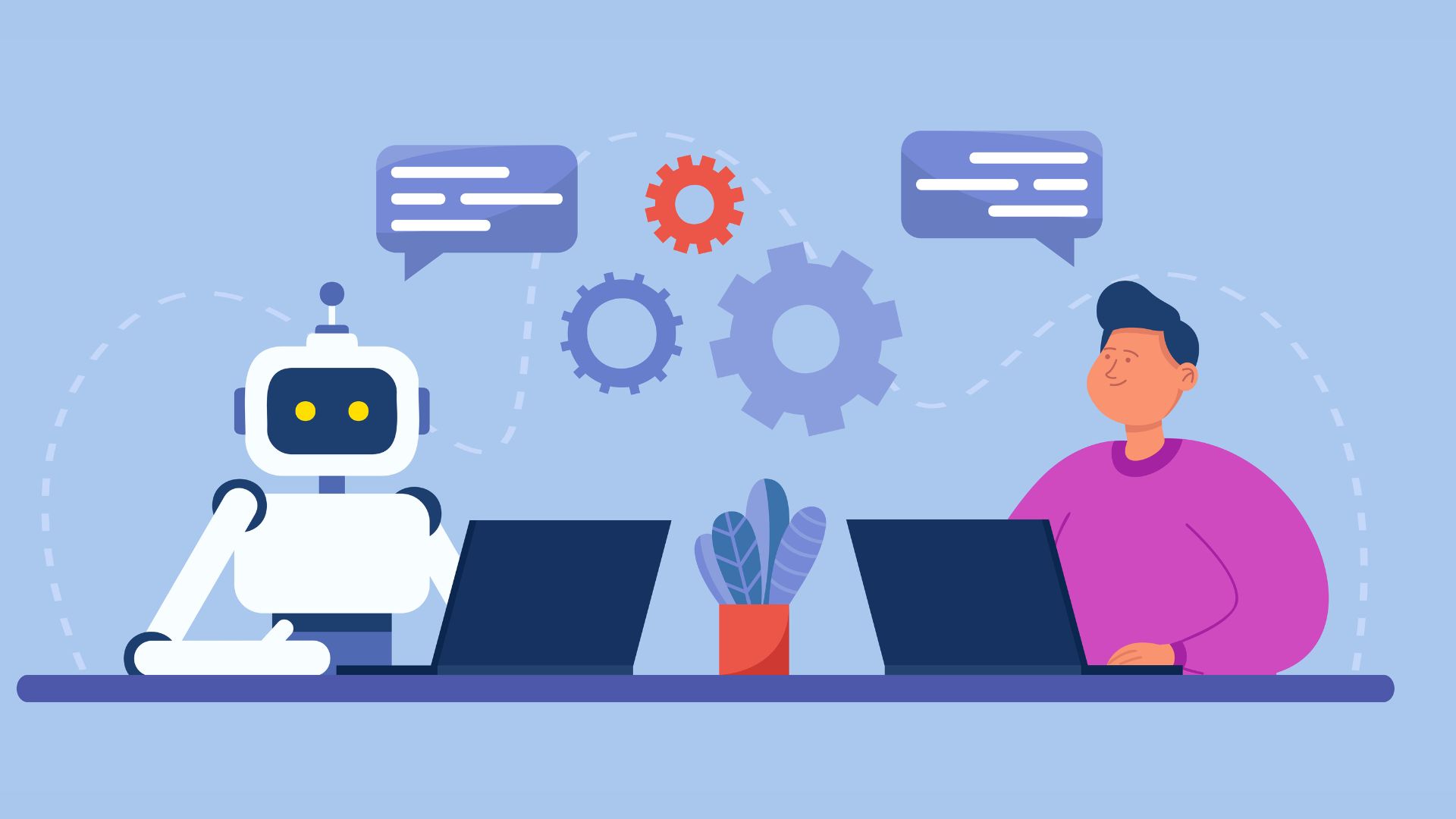
Research shows AI complements, not replaces, human work

AI headlines often flip between hype and fear, but the truth is more nuanced. Much research is misrepresented, with task overlaps miscast as job losses. Leaders and workers need clear guidance on using AI effectively.

Microsoft Research mapped 200,000 Copilot conversations to work tasks, but headlines warned of job risks. The study showed overlap, not replacement. Context, judgment, and interpretation remain human strengths, meaning AI supports rather than replaces roles.

Other research is similarly skewed. METR found that AI slowed developers by 19%, but mostly due to the learning curves associated with first use. MIT’s ‘GenAI Divide’ measured adoption, not ability, showing workflow gaps rather than technology failure.

Better studies reveal the collaborative power of AI. Harvard’s ‘Cybernetic Teammate’ experiment demonstrated that individuals using AI performed as well as full teams without it. AI bridged technical and commercial silos, boosting engagement and improving the quality of solutions produced.

The future of AI at work will be shaped by thoughtful trials, not headlines. By treating AI as a teammate, organisations can refine workflows, strengthen collaboration, and turn AI’s potential into long-term competitive advantage.

Would you like to learn more about AI, tech, and digital diplomacy? If so, ask our Diplo chatbot!

Behavioural AI could be the missing piece in the $2 trillion AI economy

Global AI spending is projected to reach $1.5 trillion in 2025 and exceed $2 trillion in 2026, yet a critical element is missing: human judgement. A growing number of organisations are turning to behavioural science to bridge this gap, coding it directly into AI systems to create what experts call behavioural AI.

Early adopters like Clarity AI utilise behavioural AI to flag ESG controversies before they impact earnings. Morgan Stanley uses machine learning and satellite data to monitor environmental risks, while Google Maps influences driver behaviour, preventing over one million tonnes of CO₂ annually.

Behavioural AI is being used to predict how leaders and societies act under uncertainty. These insights guide corporate strategy, PR campaigns, and decision-making. Mind Friend combines a network of 500 mental health experts with AI to build a ‘behavioural infrastructure’ that enhances judgement.

The behaviour analytics market was valued at $1.1 billion in 2024 and is projected to grow to $10.8 billion by 2032. Major players, such as IBM and Adobe, are entering the field, while Davos and other global forums debate how behavioural frameworks should shape investment and policy decisions.

As AI scrutiny grows, ethical safeguards are critical. Companies that embed governance, fairness, and privacy protections into their behavioural AI are earning trust. In a $2 trillion market, winners will be those who pair algorithms with a deep understanding of human behaviour.

Would you like to learn more about AI, tech, and digital diplomacy? If so, ask our Diplo chatbot!

Quantinuum’s 12-qubit system achieves unassailable quantum advantage

Researchers have reached a major milestone in quantum computing, demonstrating a task that surpasses the capabilities of classical machines. Using Quantinuum’s 12-qubit ion-trap system, they delivered the first permanent, provable example of quantum supremacy, settling a long-running debate.

The experiment addressed a communication-complexity problem in which one processor (Alice) prepared a state and another (Bob) measured it. After 10,000 trials, the team proved that no classical algorithm could match the quantum result with fewer than 62 bits, with equivalent performance requiring 330 bits.

Unlike earlier claims of quantum supremacy, later challenged by improved classical algorithms, the researchers say no future breakthrough can close this gap. Experts hailed the result as a rare proof of permanent quantum advantage and a significant step forward in the field.

However, like past demonstrations, the result has no immediate commercial application. It remains a proof-of-principle demonstration showing that quantum hardware can outperform classical machines under certain conditions, but it has yet to solve real-world problems.

Future work could strengthen the result by running Alice and Bob on separate devices to rule out interaction effects. Experts say the next step is achieving useful quantum supremacy, where quantum machines beat classical ones on problems with real-world value.

Would you like to learn more about AI, tech, and digital diplomacy? If so, ask our Diplo chatbot!

GPT-5-powered ChatGPT Edu comes to Oxford staff and students

The University of Oxford will become the first UK university to offer free ChatGPT Edu access to all staff and students. The rollout follows a year-long pilot with 750 academics, researchers, and professional services staff across the University and Colleges.

ChatGPT Edu, powered by OpenAI’s GPT-5 model, is designed for education with enterprise-grade security and data privacy. Oxford says it will support research, teaching, and operations while encouraging safe, responsible use through robust governance, training, and guidance.

Staff and students will receive access to in-person and online training, webinars, and specialised guidance on the use of generative AI. A dedicated AI Competency Centre and network of AI Ambassadors will support users, alongside mandatory security training.

The prestigious UK university has also established a Digital Governance Unit and an AI Governance Group to oversee the adoption of emerging technologies. Pilots are underway to digitise the Bodleian Libraries and explore how AI can improve access to historical collections worldwide.

A jointly funded research programme with the Oxford Martin School and OpenAI will study the societal impact of AI adoption. The project is part of OpenAI’s NextGenAI consortium, which brings together 15 global research institutions to accelerate breakthroughs in AI.

Would you like to learn more about AI, tech and digital diplomacy? If so, ask our Diplo chatbot!

Huawei highlights benchmark projects for AI digital innovation

The Chinese tech company, Huawei, has introduced over 30 global benchmark showcases at HUAWEI CONNECT 2025, highlighting how AI is reshaping digital transformation across education, healthcare, finance, government, and energy.

The company emphasised that networks have become the backbone of intelligent upgrades instead of serving only as information channels.

Among the examples, Shenzhen Welkin School presented an innovative education model to expand equitable learning opportunities. In finance, China Pacific Insurance demonstrated how its intelligent computing centre uses large-model training and inference to accelerate digital services.

Resorts World Sentosa in Singapore showcased an innovative campus network that improves the visitor experience and sets a new standard for digital innovation.

These initiatives were developed jointly by Huawei and its partners, creating replicable practices that can be applied worldwide. Leaders from Huawei and industry organisations attended the launch, underlining the collaborative nature of these projects.

The showcases will be open for on-site visits, offering customers direct insight into how AI can be integrated into networks to boost efficiency and enhance user experience.

Huawei noted that the insights gained from these projects will guide future innovations. The company and its partners aim to refine solutions and extend their applicability across various sectors by drawing on proven industry applications.

Would you like to learn more about AI, tech and digital diplomacy? If so, ask our Diplo chatbot!

Google boosts AI and connectivity in Africa

Google has announced new investments to expand connectivity, AI access and skills training across Africa, aiming to accelerate youth-led innovation.

The company has already invested over $1 billion in digital infrastructure, including subsea cable projects such as Equiano and Umoja, enabling 100 million people to come online for the first time. Four new regional cable hubs are being established to boost connectivity and resilience further.

Alongside infrastructure, Google will provide college students in eight African countries with a free one-year subscription to Google AI Pro. The tools, including Gemini 2.5 Pro and Guided Learning, are designed to support research, coding, and problem-solving.

By 2030, Google says it intends to reach 500 million Africans with AI-powered innovations tackling issues such as crop resilience, flood forecasting and access to education.

Would you like to learn more about AI, tech and digital diplomacy? If so, ask our Diplo chatbot

AI forecasts help millions of Indian farmers

More than 38 million farmers in India have received AI-powered forecasts predicting the start of the monsoon season, helping them plan when to sow crops.

The forecasts, powered by NeuralGCM, a Google Research model, blend physics-based simulations with machine learning trained on decades of climate data.

Unlike traditional models requiring supercomputers, NeuralGCM can run on a laptop, making advanced AI weather predictions more accessible.

Research shows that accurate early forecasts can nearly double Indian farmers’ annual income by helping them decide when to plant, switch crops or hold back.

The initiative demonstrates how AI research can directly support communities vulnerable to climate shifts and improve resilience in agriculture.

Would you like to learn more about AI, tech and digital diplomacy? If so, ask our Diplo chatbot

Startups gain new tools on Google Cloud

Google Cloud says AI startups are increasingly turning to its technology stack, with more than 60% of global generative AI startups building on its infrastructure. Nine of the world’s top ten AI labs also rely on its cloud services.

To support this momentum, Google Cloud hosted its first AI Builders Forum in Silicon Valley, where hundreds of founders gathered to hear about new tools, infrastructure and programmes designed to accelerate innovation.

Google Cloud has also released a technical guide to help startups build and scale AI agents, including retrieval-augmented generation (RAG) and multimodal approaches. The guide highlights leveraging Google’s agentic development kit and agent-to-agent tools.

The support is bolstered by the Google for Startups Cloud Program, which offers credits worth up to $350,000, mentorship and access to partner AI models from Anthropic and Meta. Google says its goal is to give startups the technology and resources to launch, scale and compete globally.

Would you like to learn more about AI, tech and digital diplomacy? If so, ask our Diplo chatbot

JFTC study and MSCA shape Japan’s AI oversight strategy

Japan is adopting a softer approach to regulating generative AI, emphasising innovation while managing risks. Its 2025 AI Bill promotes development and safety, supported by international norms and guidelines.

The Japan Fair Trade Commission (JFTC) is running a market study on competition concerns in AI, alongside enforcing the new Mobile Software Competition Act (MSCA), aimed at curbing anti-competitive practices in mobile software.

The AI Bill focuses on transparency, international cooperation, and sector-specific guidance rather than heavy penalties. Policymakers hope this flexible framework will avoid stifling innovation while encouraging responsible adoption.

The MSCA, set to be fully enforced in December 2025, obliges mobile platform operators to ensure interoperability and fair treatment of developers, including potential applications to AI tools and assistants.

With rapid AI advances, regulators in Japan remain cautious but proactive. The JFTC aims to monitor markets closely, issue guidelines as needed, and preserve a balance between competition, innovation, and consumer protection.

Would you like to learn more about AI, tech, and digital diplomacy? If so, ask our Diplo chatbot!
AI agent headlines Notion 3.0 rollout

Notion has officially entered the agent era with the launch of Notion Agent, the centrepiece of its Notion 3.0 rollout. Described as a ‘teammate and Notion super user,’ the AI agent is designed to automate work inside and beyond Notion.

The new tool can automatically build pages and databases, search across connected tools like Slack, and perform up to 20 minutes of autonomous work at a time. Notion says this enables faster, more efficient workflows across hundreds of pages simultaneously.

A key feature is memory, which allows the agent to ‘remember’ a user’s preferences and working style. These memories can be edited and stored under multiple profiles, allowing users to customise their agent for different projects or contexts.

Notion highlights use cases such as generating email campaigns, consolidating feedback into reports, and transforming meeting notes into emails or proposals. The company says the agent acts as a partner who plans tasks and carries them out end-to-end.

Future updates will expand personalisation and automation, including fully customised agents capable of even more complex tasks. Notion positions the launch as a step toward a new era of intelligent, self-directed productivity.

Would you like to learn more about AI, tech, and digital diplomacy? If so, ask our Diplo chatbot!