Microsoft bug report video requirement backfires as developers push back

Microsoft’s recent decision to require developers to include a video alongside bug reports has caused more trouble than clarity.

What was likely meant to filter low-quality submissions has instead sparked mockery and confusion, culminating in at least one bug hunter responding with an absurdist 15-minute performance piece rather than a clear walkthrough.

The video requirement, intended to improve reproducibility, has been widely criticised as a needless burden. Developers argue it adds an unnecessary tax on their time, especially when clear, written steps would suffice.

Rather than improving productivity, critics say the move risks demotivating contributors and reducing the number of valuable bug reports Microsoft receives.

The policy is being seen by some as a poorly thought-out ‘tariff on time’, a barrier that punishes those trying to help improve Microsoft’s software.

Critics suggest the company would be better served by educating users on effective bug reporting rather than adding extra steps.

As humorous as the backlash has been, the underlying lesson is serious: imposing clumsy restrictions can harm both sides. Whether in software or international trade, a poorly executed policy risks creating more inefficiency than improvement and sometimes, a viral protest video is the least of the consequences.

For more information on these topics, visit diplomacy.edu.
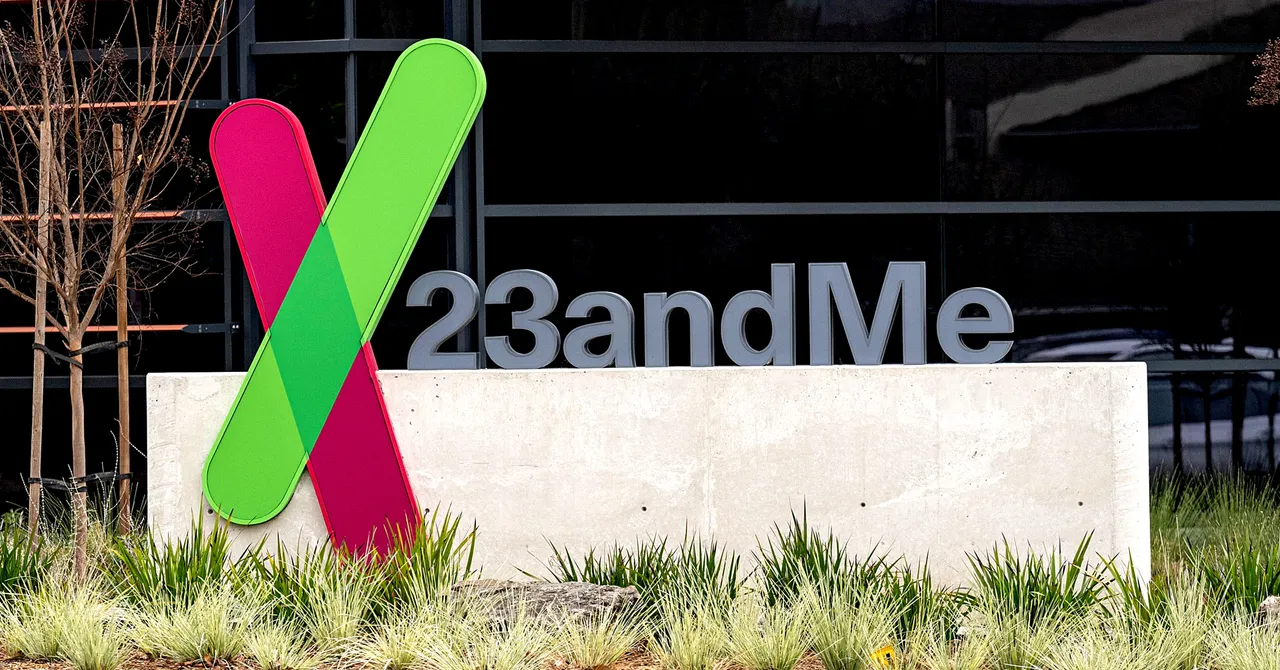
23andMe enters bankruptcy after failed takeover bids

Genetic testing company 23andMe has filed for Chapter 11 bankruptcy protection in the United States as part of efforts to sell the struggling business.

Co-founder and CEO Anne Wojcicki has resigned after multiple failed takeover attempts, with CFO Joe Selsavage stepping in as interim chief executive.

The company had previously cut 40% of its workforce and halted therapy development in a restructuring effort announced in November.

Wojcicki had been pushing for a buyout since April 2023 but faced repeated rejections from the board. Her most recent bid, valuing 23andMe at $11 million, was significantly lower than the company’s current $50 million market value.

Despite financial difficulties, the firm has secured a $35 million financing commitment and expects to continue operations during the sale process.

The company has faced mounting challenges, including a $30 million settlement for a 2023 data breach that exposed the personal information of 6.9 million customers.

With estimated liabilities between $100 million and $500 million, 23andMe’s future now depends on securing a buyer willing to salvage the once high-profile genetic testing firm.

For more information on these topics, visit diplomacy.edu.

SAP reaches $340 billion market cap, leading European companies

German software company SAP has become Europe’s largest firm by market capitalisation, surpassing Danish healthcare giant Novo Nordisk.

SAP’s market value stood at $340 billion on Monday, edging ahead of Novo Nordisk, according to Reuters calculations using LSEG Workspace data.

Novo Nordisk, known for its dominance in the diabetes and weight-loss drug market, had held the top spot for some time.

The rise of SAP reflects the growing influence of the European tech sector, with the company benefiting from strong demand for its enterprise software and cloud-based services.

SAP’s achievement marks a significant moment for the region’s corporate landscape, signalling the increasing importance of technology firms in the European economy.

The shift in rankings highlights the evolving competition between industries as technology continues to drive market growth.

For more information on these topics, visit diplomacy.edu.

Meta agrees to halt targeted ads in landmark UK privacy case

Meta, the owner of Facebook and Instagram, has agreed to stop targeting a UK citizen with personalised adverts as part of a settlement in a landmark privacy case.

The case, which avoided a high court trial, was brought by human rights campaigner Tanya O’Carroll in 2022, who claimed Meta had violated UK data laws by processing her personal data for targeted advertising without her consent.

O’Carroll’s case received support from the UK’s data watchdog, the Information Commissioner’s Office (ICO), which stated that users have the right to opt out of targeted ads.

The settlement has been hailed as a victory for O’Carroll, with potential implications for millions of social media users in the UK. Meta, however, disagreed with the claims. Instead of this, the company was considering introducing a subscription model in the UK for users who want an advert-free version of its platforms.

The ICO’s stance in favour of privacy rights could prompt similar lawsuits in the future, as users are increasingly demanding control over how their data is used online.

O’Carroll argued that the case demonstrated the growing desire for more control over surveillance advertising and said that the ICO’s support could encourage more people to object to targeted ads.

Meta, which generates most of its revenue from advertising, emphasised that it took its privacy obligations seriously and was exploring the option of a paid, ad-free service for UK users.

For more information on these topics, visit diplomacy.edu.

AI agents take centre stage in Oracle fusion

Oracle has launched its AI Agent Studio, a new platform designed to let businesses orchestrate and customise AI agents within its Fusion Applications suite.

Announced during the OracleCloud World Tour in London, the studio enables companies to coordinate teams of AI agents that handle tasks across enterprise resource planning, HR, supply chain, and customer experience systems.

The AI Agent Studio allows businesses to adapt prebuilt Oracle agents to suit their own processes. Users can modify agents by adjusting logic, integrating external tools, or adding custom prompts.

It also offers flexibility in choosing from a range of large language models optimised for Oracle or industry-specific use cases, such as Llama and Cohere.

Oracle’s move builds on earlier AI deployments in its cloud applications, where agents have been embedded to manage routine operations like invoice processing or recruitment steps.

The new platform advances that effort by allowing these agents to operate collaboratively and be tailored to more complex workflows.

Industry leaders including Accenture, Deloitte, and PwC have praised the development, calling it a significant step toward smarter enterprise automation.

Analysts echo this sentiment, noting that Oracle’s approach allows businesses to maximise AI efficiency across departments without added cost, offering a powerful edge in today’s rapidly evolving digital workplace.

For more information on these topics, visit diplomacy.edu.

Hackers use fake Semrush ads to steal Google accounts

Cybercriminals are using fake adverts for popular SEO platform Semrush to trick users into giving up access to their Google accounts, researchers have warned.

The malvertising campaign features ads that link to a bogus Semrush login page, which only allows users to sign in via Google, a tactic designed to steal high-value credentials.

According to Malwarebytes, Semrush accounts are often linked to critical Google services such as Analytics and Search Console.

These tools store confidential business insights, which threat actors could exploit for strategic and financial gain. The scammers may also access names, phone numbers, business details, and partial card information through compromised Semrush accounts.

By impersonating Semrush support, attackers could deceive users into revealing full card details under the pretence of payment or billing updates. However, this may open the door to wider fraud, such as redirecting funds from vendors or business partners.

With Semrush serving over 117,000 customers, including a significant share of Fortune 500 firms, the attack underscores the growing risks of malvertising on platforms like Google.

Security experts are urging businesses to tighten account access controls and remain cautious when engaging with search ads, even from seemingly reputable brands.

For more information on these topics, visit diplomacy.edu.

MetaAI rolls out in Europe after regulatory hurdles

MetaAI, Meta’s AI chat function, is set to launch across Europe after delays caused by regulatory scrutiny regarding the use of personal data to train its models.

The European Commission is reviewing a risk assessment from Meta to ensure that the new feature complies with the EU’s Digital Services Act (DSA). However, this regulation mandates companies to submit risk assessments in advance of deploying new functions.

MetaAI was first launched in the US in September 2023, followed by India in June 2024, and the UK in October.

However, its European rollout was delayed last summer after the Irish Data Protection Commission raised concerns about using data from Facebook and Instagram users for AI training.

Meta faced criticism over Europe’s regulatory approach, with company officials, including CEO Mark Zuckerberg, expressing frustration with the delays.

Despite the regulatory hurdles, Meta is now moving forward with its plans to bring MetaAI to the EU, with the company noting that the process has taken longer than expected due to Europe’s complex regulatory landscape.

For more information on these topics, visit diplomacy.edu.

FuriosaAI rejects $800m acquisition offer from Meta

FuriosaAI, a South Korean startup specialising in AI chips, has reportedly turned down an $800 million acquisition offer from Meta.

Instead of selling, FuriosaAI plans to continue developing its AI chips. Disagreements over post-acquisition business strategy and organisational structure were reportedly the cause of the breakdown in negotiations, rather than issues over price.

Meta, which has been trying to reduce its reliance on Nvidia for chips specialised in training large language models (LLMs), unveiled its custom AI chips last year. The company also announced plans to invest up to $65 billion this year to support its AI initiatives.

FuriosaAI, founded in 2017 by June Paik, who previously worked at Samsung Electronics and AMD, has developed two AI chips—Warboy and Renegade (RNGD).

The startup is also in talks to raise approximately $48 million and is planning to launch the RNGD chips later this year, with LG AI Research already testing them for use in its AI infrastructure.

FuriosaAI’s decision to focus on expanding its chip production signals its confidence in competing with giants like Nvidia and AMD in the rapidly growing AI hardware market.

For more information on these topics, visit diplomacy.edu.

Apple plans to add cameras to future Apple Watch

Apple is reportedly planning to introduce cameras to its Apple Watch lineup within the next two years, integrating advanced AI-powered features like Visual Intelligence.

According to Bloomberg’s Mark Gurman, the standard Apple Watch Series will have a camera embedded within the display, while the Apple Watch Ultra will feature one on the side near the digital crown.

These cameras will allow the smartwatch to observe its surroundings and use AI to provide real-time, useful information to users.

Apple is also exploring similar camera technology for future AirPods, aiming to enhance their functionality with AI-driven capabilities.

The concept builds on the Visual Intelligence feature introduced with the iPhone 16, which allows users to extract details from flyers, identify locations, and more using the phone’s camera.

While the current system relies on external AI models, Apple is working on its in-house AI technology, and it is expected to power these features by 2027, when the camera-equipped Apple Watch and AirPods are likely to be released.

The move is part of Apple’s broader push into AI, led by Mike Rockwell, who previously spearheaded the Vision Pro project.

Rockwell is now overseeing the upgrade of Siri’s language model, which has faced delays, and contributing to visionOS, the operating system expected to support AI-enhanced AR glasses in the future. Apple’s increasing focus on AI suggests a shift towards more intelligent, context-aware wearable devices.

For more information on these topics, visit diplomacy.edu.

Google expands Gemini with real-time AI features

Google has begun rolling out real-time AI features for its Gemini system, allowing it to analyse smartphone screens and camera feeds instantly. These capabilities, which will be available to select Google One AI Premium subscribers, build on the company’s earlier ‘Project Astra’ demonstration.

The live video feature will enable Gemini to interpret smartphone camera feeds in real time, providing users with instant answers and insights.

The new functionality also allows users to engage in back-and-forth conversations with Gemini based on their screen’s content. A Reddit user recently demonstrated the ‘Share screen with Live’ feature, accessible via the Gemini overlay, showcasing its ability to process and respond to information directly from a device’s display.

Google has confirmed that these updates will first roll out to Gemini Advanced subscribers under the Google One AI Premium Plan, with Pixel and Galaxy S25 owners among the first to gain access.

In addition to real-time AI video capabilities, Google has introduced ‘Canvas,’ a tool designed to help users refine documents and code seamlessly. Canvas allows for real-time edits and streamlines the process of developing prototypes for web apps, Python scripts, and other digital projects.

Another notable addition is ‘Audio Overview,’ which transforms written documents, slides, and research reports into podcast-style discussions between two AI-generated hosts.

An innovation like this aims to make complex information more engaging and accessible by delivering content in a conversational format. Google continues to expand Gemini’s capabilities, reinforcing its position at the forefront of AI-driven user experiences.

For more information on these topics, visit diplomacy.edu.