Oracle to oversee TikTok algorithm in US deal

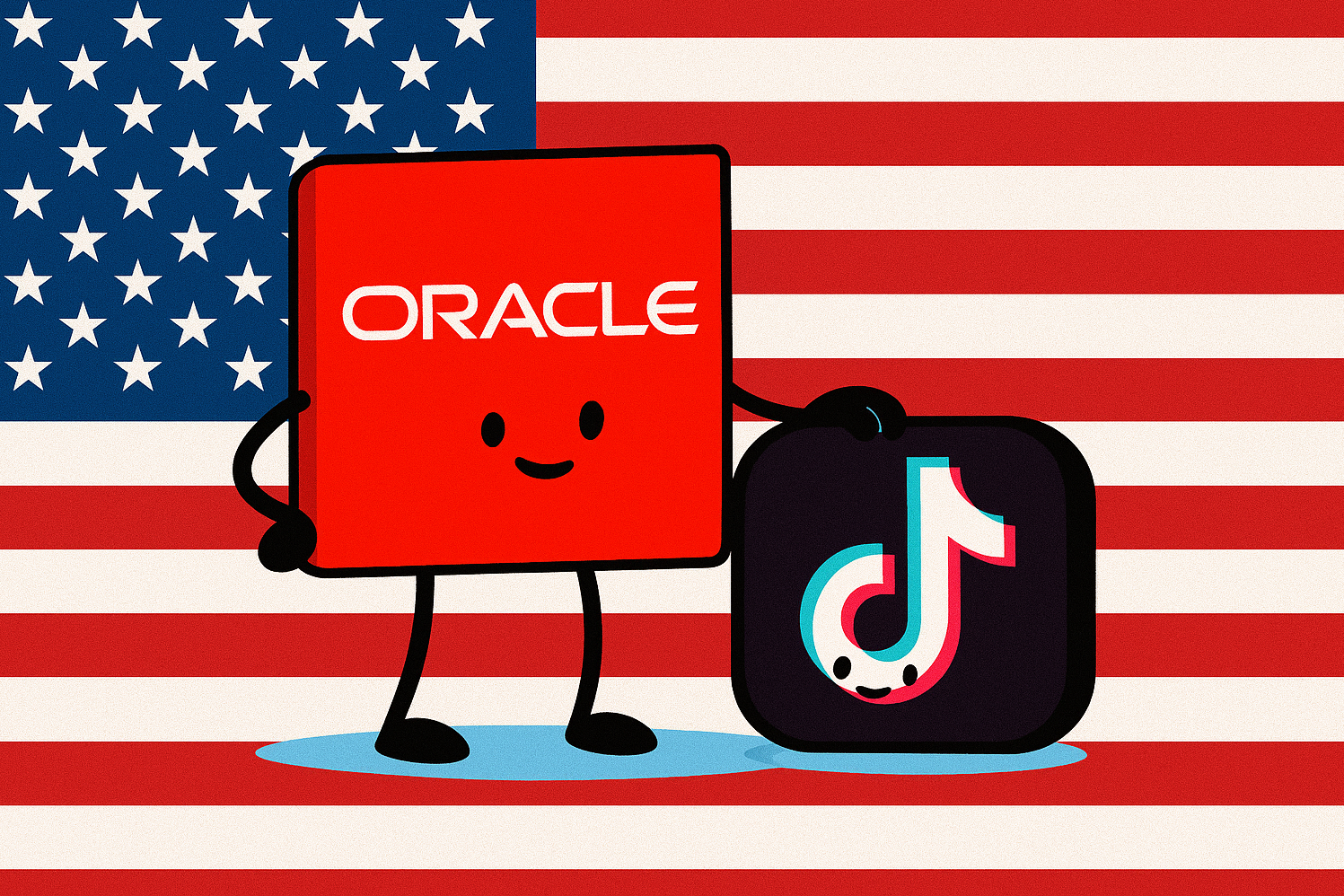
The White House has confirmed that TikTok’s prized algorithm will be managed in the US under Oracle’s supervision as part of a deal to place the app’s US operations under majority American ownership. The agreement would transfer control of TikTok’s US business, along with a copy of the algorithm, to a new joint venture run by a board dominated by American investors.

The confirmed participants are Oracle and private equity firm Silver Lake, with Fox Corp. also expected to join the group. President Donald Trump has suggested that high-profile figures such as Michael Dell, Rupert, and Lachlan Murdoch could be involved, though CNN sources say that the Murdochs personally will not invest. ByteDance will keep a stake of less than 20% in the new US entity.

The deal follows years of negotiations over concerns that TikTok’s Chinese parent company could be pressured to manipulate the platform for political influence. By law, ByteDance is barred from cooperating on the algorithm with any new American owners. The code will be reviewed, retrained on US user data to address these fears, and monitored by Oracle to ensure its independence.

President Trump is expected to sign an executive order later this week certifying that the deal meets national security requirements under last year’s ‘ban-or-sale’ law. He will also extend the pause on enforcement by 120 days, giving Washington and Beijing time to finalise regulatory approvals. The White House said the deal could be signed within days, with completion likely early next year.

The arrangement deepens Oracle’s role in managing TikTok’s American presence, building on its existing partnership to store US user data. The development coincided with Oracle announcing a leadership shake-up, with CEO Safra Catz stepping down to become vice chair and two co-CEOs taking over. It is unclear if the timing is connected, but Catz, a close Trump ally, could take a role in the TikTok venture.

While financial details remain uncertain, the White House has ruled out taking a direct stake in the company. The deal, valued in the billions, would conclude a years-long effort to bring TikTok under US oversight and resolve national security concerns tied to its Chinese ownership.

Would you like to learn more about AI, tech and digital diplomacyIf so, ask our Diplo chatbot!

Misconfigurations drive major global data breaches

Misconfigurations in cloud systems and enterprise networks remain one of the most persistent and damaging causes of data breaches worldwide.

Recent incidents have highlighted the scale of the issue, including a cloud breach at the US Department of Homeland Security, where sensitive intelligence data was inadvertently exposed to thousands of unauthorised users.

Experts say such lapses are often more about people and processes than technology. Complex workflows, rapid deployment cycles and poor oversight allow errors to spread across entire systems. Misconfigured servers, storage buckets or access permissions then become easy entry points for attackers.

Analysts argue that preventing these mistakes requires better governance, training and process discipline rather. Building strong safeguards and ensuring staff have the knowledge to configure systems securely are critical to closing one of the most exploited doors in cybersecurity.

Would you like to learn more about AI, tech and digital diplomacy? If so, ask our Diplo chatbot

Research shows AI complements, not replaces, human work

AI headlines often flip between hype and fear, but the truth is more nuanced. Much research is misrepresented, with task overlaps miscast as job losses. Leaders and workers need clear guidance on using AI effectively.

Microsoft Research mapped 200,000 Copilot conversations to work tasks, but headlines warned of job risks. The study showed overlap, not replacement. Context, judgment, and interpretation remain human strengths, meaning AI supports rather than replaces roles.

Other research is similarly skewed. METR found that AI slowed developers by 19%, but mostly due to the learning curves associated with first use. MIT’s ‘GenAI Divide’ measured adoption, not ability, showing workflow gaps rather than technology failure.

Better studies reveal the collaborative power of AI. Harvard’s ‘Cybernetic Teammate’ experiment demonstrated that individuals using AI performed as well as full teams without it. AI bridged technical and commercial silos, boosting engagement and improving the quality of solutions produced.

The future of AI at work will be shaped by thoughtful trials, not headlines. By treating AI as a teammate, organisations can refine workflows, strengthen collaboration, and turn AI’s potential into long-term competitive advantage.

Would you like to learn more about AI, tech, and digital diplomacy? If so, ask our Diplo chatbot!

MrBeast under scrutiny for child advertising practices

The Children’s Advertising Review Unit (CARU) has advised MrBeast, LLC and Feastables to strengthen their advertising and privacy practices following concerns over promotions aimed at children.

CARU found that some videos on the MrBeast YouTube channel included undisclosed advertising in descriptions and pinned comments, which could mislead young viewers.

It also raised concerns about a promotional taste test for Feastables chocolate bars, which appeared to children as a valid comparison despite lacking a scientific basis.

Investigators said Feastables sweepstakes failed to clearly disclose free entry options, minimum age requirements and the actual odds of winning. Promotions were also criticised for encouraging excessive purchases and applying sales pressure, such as countdown timers urging children to buy more chocolate.

Privacy issues were also identified, with Feastables collecting personal data from under-13s without parental consent. CARU noted the absence of an effective age gate and highlighted that information provided via popups was sent to third parties.

MrBeast and Feastables said many of the practices under review had already been revised or discontinued, but pledged to take CARU’s recommendations into account in future campaigns.

Would you like to learn more about AI, tech and digital diplomacy? If so, ask our Diplo chatbot

VodafoneThree signs deals with Ericsson and Nokia to speed up 5G rollout

VodafoneThree has signed multibillion-pound investment deals with Ericsson and Nokia to accelerate the rollout of what it calls the UK’s best mobile network. The move marks the latest milestone in the newly merged operator’s £11 billion plan.

The partnerships will deliver one of Europe’s largest privately funded infrastructure builds, modernising existing 4G and 5G networks while preparing the country for nationwide 5G Standalone. Four British site-build companies will also support construction across the UK.

VodafoneThree estimates the investment could boost the UK economy by up to £102 billion between 2025 and 2035. Up to 13,000 jobs are expected to be created in engineering and construction, with most based outside London and the South East.

The company says nearly three-quarters of the population will have access to its fastest 5G speeds in the first year, rising to 90% by year three. By 2034, 99.95% of the population is forecast to be covered by 5G Standalone, creating what VodafoneThree describes as the UK’s first nationwide AI-ready network.

Would you like to learn more about AI, tech and digital diplomacy? If so, ask our Diplo chatbot

Nissan to launch next-generation ProPILOT in 2027

Nissan has announced plans to launch its next-generation ProPILOT system in fiscal year 2027. The upgraded system will include Nissan Ground Truth Perception, next-generation Lidar, and Wayve AI Driver, enhancing collision avoidance and autonomous driving.

Wayve AI Driver software is built on an embodied AI foundation model that enables human-like decision-making in complex real-world driving conditions. By efficiently learning from large volumes of data, the system continuously enhances Nissan vehicles’ performance and safety.

Wayve, a global AI company, specialises in embodied AI for driving. Its foundation model leverages extensive real-world experience to deliver reliable point-to-point navigation across urban and highway environments, while adapting quickly to new scenarios and platforms.

The partnership positions Nissan at the forefront of autonomous vehicle technology, combining cutting-edge sensors, AI, and adaptive software to redefine safety and efficiency in future mobility.

Would you like to learn more about AI, tech and digital diplomacy? If so, ask our Diplo chatbot

Behavioural AI could be the missing piece in the $2 trillion AI economy

Global AI spending is projected to reach $1.5 trillion in 2025 and exceed $2 trillion in 2026, yet a critical element is missing: human judgement. A growing number of organisations are turning to behavioural science to bridge this gap, coding it directly into AI systems to create what experts call behavioural AI.

Early adopters like Clarity AI utilise behavioural AI to flag ESG controversies before they impact earnings. Morgan Stanley uses machine learning and satellite data to monitor environmental risks, while Google Maps influences driver behaviour, preventing over one million tonnes of CO₂ annually.

Behavioural AI is being used to predict how leaders and societies act under uncertainty. These insights guide corporate strategy, PR campaigns, and decision-making. Mind Friend combines a network of 500 mental health experts with AI to build a ‘behavioural infrastructure’ that enhances judgement.

The behaviour analytics market was valued at $1.1 billion in 2024 and is projected to grow to $10.8 billion by 2032. Major players, such as IBM and Adobe, are entering the field, while Davos and other global forums debate how behavioural frameworks should shape investment and policy decisions.

As AI scrutiny grows, ethical safeguards are critical. Companies that embed governance, fairness, and privacy protections into their behavioural AI are earning trust. In a $2 trillion market, winners will be those who pair algorithms with a deep understanding of human behaviour.

Would you like to learn more about AI, tech, and digital diplomacy? If so, ask our Diplo chatbot!

Fiji enforces strict ban on cryptocurrency services

Fiji, renowned for its pristine beaches and coral reefs, may lose its appeal for cryptocurrency investors after authorities reaffirmed a ban on virtual asset service providers. The National Anti-Money Laundering Council cited financial stability and national security concerns in maintaining the restriction.

The Reserve Bank of Fiji has prohibited crypto exchanges, transfers, and custody services, while residents are barred from purchasing cryptocurrency using local funds. The move reinforces the country’s strict stance on digital assets and limits crypto activity within its borders.

Across Oceania, regulatory approaches vary widely. Vanuatu and Nauru now licence crypto companies, while the Marshall Islands launched its own digital currency in 2018. In contrast, Papua New Guinea and Samoa still lack formal crypto regulations.

Australia and New Zealand, the region’s largest economies, are steadily developing comprehensive frameworks to govern digital assets, signalling a more structured approach to cryptocurrency regulation in Oceania.

Would you like to learn more about AI, tech and digital diplomacy? If so, ask our Diplo chatbot

GPT-5-powered ChatGPT Edu comes to Oxford staff and students

The University of Oxford will become the first UK university to offer free ChatGPT Edu access to all staff and students. The rollout follows a year-long pilot with 750 academics, researchers, and professional services staff across the University and Colleges.

ChatGPT Edu, powered by OpenAI’s GPT-5 model, is designed for education with enterprise-grade security and data privacy. Oxford says it will support research, teaching, and operations while encouraging safe, responsible use through robust governance, training, and guidance.

Staff and students will receive access to in-person and online training, webinars, and specialised guidance on the use of generative AI. A dedicated AI Competency Centre and network of AI Ambassadors will support users, alongside mandatory security training.

The prestigious UK university has also established a Digital Governance Unit and an AI Governance Group to oversee the adoption of emerging technologies. Pilots are underway to digitise the Bodleian Libraries and explore how AI can improve access to historical collections worldwide.

A jointly funded research programme with the Oxford Martin School and OpenAI will study the societal impact of AI adoption. The project is part of OpenAI’s NextGenAI consortium, which brings together 15 global research institutions to accelerate breakthroughs in AI.

Would you like to learn more about AI, tech and digital diplomacy? If so, ask our Diplo chatbot!
Breakthrough method links AI with mathematics and physics

Researchers have introduced a new AI-driven method that could help solve long-standing mathematical problems in fluid dynamics, physics, and engineering. The study examines unstable singularities, where equations fail and predict impossible results like infinite pressure or velocity.

Using Physics-Informed Neural Networks, the team discovered new unstable singularities across three fluid equations, including the Navier–Stokes system. Their findings reveal emerging patterns that could point to even more elusive solutions, advancing understanding of fluid motion.

The method combines deep mathematical knowledge with machine learning techniques, enabling precision at levels previously unattainable. For example, researchers reduced computational errors to a scale comparable with measuring the Earth’s diameter within just a few centimetres.

Such accuracy is essential for building reliable computer-assisted proofs in mathematics.

The study, carried out with mathematicians and geophysicists from leading universities, signals a shift in mathematical research. By embedding physics directly into neural networks, the approach transforms AI into a discovery tool that may reshape how complex equations are tackled in the years ahead.

Would you like to learn more about AI, tech and digital diplomacy? If so, ask our Diplo chatbot