Anthropic boosts cloud capacity with Google’s AI hardware

Anthropic has struck a multibillion-dollar deal with Google to expand its use of cloud computing and specialised AI chips. The agreement includes the purchase of up to one million Tensor Processing Units, Google’s custom hardware built to train and run large AI models.

The partnership will provide Anthropic with more than a gigawatt of additional computing power by late 2026. Executives said the move will support soaring demand for its Claude model family, which already serves over 300,000 business clients.

Anthropic, founded by former OpenAI employees, has quickly become a major player in generative AI. Backed by Amazon and valued at $183 billion, the company recently launched Claude Sonnet 4.5, praised for its coding and reasoning abilities.

Google continues to invest heavily in AI hardware to compete with Nvidia’s GPUs and rival US tech giants. Analysts said Anthropic’s expansion signals intensifying demand for computing power as companies race to lead the global AI revolution.

Would you like to learn more about AI, tech and digital diplomacy? If so, ask our Diplo chatbot

Two founders turn note-taking into an AI success

Two 20-year-old drop-outs, Rudy Arora and Sarthak Dhawan, are behind Turbo AI, an AI-powered notetaker that has grown to around 5 million users and reached a multi-million-dollar annual recurring revenue (ARR) in a short timeframe.

Their app addresses a clear pain point, which is that meetings, lectures, and long videos produce information overload. Turbo AI uses generative AI to convert audio, typed notes or uploads into structured summaries, highlight key points and help users organise insights. The founders describe it as a ‘productivity assistant’ more than a general-purpose chat agent.

The business model appears lean, meaning that freemium user acquisition is scaling quickly, then converting power users into paid subscriptions. The insights are that a well-targeted niche tool can win strong uptake even in a crowded productivity-AI market.

Arora and Dhawan say they kept the feature set focused and user experience simple, enabling rapid word-of-mouth growth.

The growth raises interesting implications for enterprise and consumer AI alike. While large language models dominate headlines, tools like Turbo AI show the value of vertical-specific applications addressing tangible workflows (e.g., note-taking, summarisation). It also underscores how younger founders are building AI tools outside the major tech hubs and scaling globally.

At this stage, challenges remain: user retention, differentiation in a field where major players (Microsoft, Google, OpenAI) are adding similar capabilities, and privacy/data governance (especially with audio and meeting content). However, the early results suggest that targeted AI productivity tools can achieve a meaningful scale quickly.

Would you like to learn more about AI, tech and digital diplomacy? If so, ask our Diplo chatbot

Tech giants push AI agents into web browsing

Tech companies are intensifying competition to reshape how people search online through AI-powered browsers. OpenAI’s new Atlas browser, built around ChatGPT, can generate answers and complete web-based tasks such as making shopping lists or reservations.

Atlas joins rivals like Microsoft’s Copilot-enabled Edge, Perplexity’s Comet, and newer platforms Dia and Neon. Developers are moving beyond traditional assistants, creating ‘agentic’ AI capable of acting autonomously while keeping user experience familiar.

Google remains dominant, with Chrome holding over 70 percent of the browser market and integrating limited AI features. Analysts say OpenAI could challenge that control by combining ChatGPT insights with browser behaviour to personalise search and advertising.

Experts note the battle extends beyond browsers as wearables and voice interfaces evolve. Controlling how users interact with AI today, they argue, could determine which company shapes digital habits in the coming decade.

Would you like to learn more about AI, tech and digital diplomacy? If so, ask our Diplo chatbot

AI tool Mirror keeps track of medical information

A new app called Mirror, developed by Oxford-based company Aide Health, aims to help patients remember and summarise information from medical appointments using AI. The platform records consultations and produces summaries that patients can refer back to or share with family and carers.

Creator Ian Wharton said the idea came from helping his father, who has early-stage Alzheimer’s, to recall essential details from doctors’ visits. The app listens passively during appointments and produces a clear summary of what was discussed, making it easier for patients to retain key information.

Early users have praised the platform for making consultations easier to manage. One described being able to share concise summaries with friends and colleagues, saving the effort of repeating complex medical details. The creator added that patient data is private and not shared with third parties.

The current version works during in-person consultations, but future updates will allow the app to actively prompt patients with reminders or questions, advocating for their healthcare needs.

Would you like to learn more about AI, tech and digital diplomacyIf so, ask our Diplo chatbot!

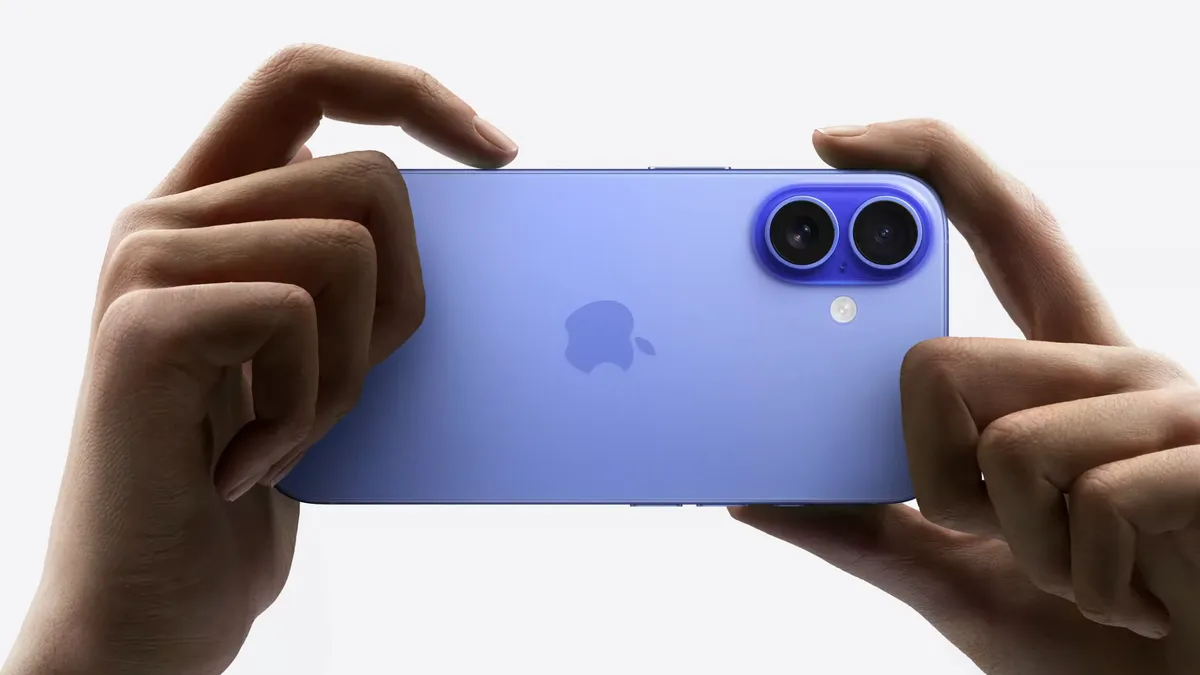
Apple may have to pay $1.9B in damages to UK consumers over unfair App Store fees

Apple could face damages of up to £1.5 billion ($1.9 billion) after a British court ruled it overcharged consumers by imposing unfair commission fees on app developers.

The Competition Appeal Tribunal found that Apple abused its dominant position between 2015 and 2020 by charging excessive commissions, up to 30%, on App Store purchases and in-app payments. Judges ruled that the company’s fees should not have exceeded 17.5% for app sales and 10% for in-app transactions, concluding that half of the inflated costs were passed on to consumers.

The total damages, to be set next month, would compensate users who paid higher prices for apps, subscriptions and digital purchases. Apple said it will appeal, arguing that the App Store ‘helps developers succeed and provides consumers with a safe and trusted place to discover apps and make payments’.

The ruling comes as Apple continues to resist more burdensome antitrust regulation in Europe, which adds to Apple’s growing list of competition battles across Europe. Courts in the Netherlands and Belgium have accused the company of blocking alternative payment methods and charging excessive commissions, while similar lawsuits are ongoing in the United States.

Would you like to learn more about AI, tech and digital diplomacyIf so, ask our Diplo chatbot!

MoonshotAI released KIMI-K2 and OK Computer

KIMI-K2 is a large language model (LLM) developed by Beijing-based Moonshot AI, offering strong performance in writing and coding across diverse applications. Open-source and versatile, it delivers high-quality outputs across multiple domains, from text generation to programming.

Alongside KIMI-K2, the developers introduced OK Computer, an agent that extends the model’s abilities. Using this agent, users can build websites, conduct research, generate images, and create presentations or graphics from a single prompt, making complex workflows simpler and more accessible.

These tools reflect a growing trend in AI, which is combining multiple capabilities into one accessible system. By offering open-source solutions, KIMI-K2 and OK Computer empower users to tackle creative, technical, and research tasks with minimal effort.

Would you like to learn more about AI, tech and digital diplomacyIf so, ask our Diplo chatbot!

UN cybercrime treaty signed in Hanoi amid rights concerns

Around 73 countries signed a landmark UN cybercrime convention in Hanoi, seeking faster cooperation against online crime. Leaders cited trillions in annual losses from scams, ransomware, and trafficking. The pact enters into force after 40 ratifications.

UN supporters say the treaty will streamline evidence sharing, extradition requests, and joint investigations. Provisions target phishing, ransomware, online exploitation, and hate speech. Backers frame the deal as a boost to global security.

Critics warn the text’s breadth could criminalise security research and dissent. The Cybersecurity Tech Accord called it a surveillance treaty. Activists fear expansive data sharing with weak safeguards.

The UNODC argues the agreement includes rights protections and space for legitimate research. Officials say oversight and due process remain essential. Implementation choices will decide outcomes on the ground.

Would you like to learn more about AI, tech, and digital diplomacy? If so, ask our Diplo chatbot!

MLK estate pushback prompts new Sora 2 guardrails at OpenAI

OpenAI paused the ability to re-create Martin Luther King Jr. in Sora 2 after Bernice King objected to user videos. Company leaders issued a joint statement with the King estate. New guardrails will govern depictions of historical figures on the app.

OpenAI said families and authorised estates should control how likenesses appear. Representatives can request removal or opt-outs. Free speech was acknowledged, but respectful use and consent were emphasised.

Policy scope remains unsettled, including who counts as a public figure. Case-by-case requests may dominate early enforcement. Transparency commitments arrived without full definitions or timelines.

Industry pressure intensified as major talent agencies opted out of clients. CAA and UTA cited exploitation and legal exposure. Some creators welcomed the tool, showing a split among public figures.

User appetite for realistic cameos continues to test boundaries. Rights of publicity and postmortem controls vary by state. OpenAI promised stronger safeguards while Sora 2 evolves.

Would you like to learn more about AI, tech, and digital diplomacy? If so, ask our Diplo chatbot!

EU MiCA greenlight turns Blockchain.com’s Malta base into hub

Blockchain.com received a MiCA license from Malta’s Financial Services Authority, enabling passported crypto services across all 30 EEA countries under one EU framework. Leaders called it a step toward safer, consistent access.

Malta becomes the hub for scaling operations, citing regulatory clarity and cross-border support. Under the authorisation, teams will expand secure custody and wallets, enterprise treasury tools, and localised products for the EU consumers.

A unified license streamlines go-to-market and accelerates launches in priority jurisdictions. Institutions gain clearer expectations on safeguarding, disclosures, and governance, while retail users benefit from standardised protections and stronger redress.

Fiorentina D’Amore will lead the EU strategy with deep fintech experience. Plans include phased rollouts, supervisor engagement, and controls aligned to MiCA’s conduct and prudential requirements across key markets.

Since 2011, Blockchain.com says it has processed over one trillion dollars and serves more than 90 million wallets. Expansion under MiCA adds scalable infrastructure, robust custody, and clearer disclosures for users and institutions.

Would you like to learn more about AI, tech, and digital diplomacy? If so, ask our Diplo chatbot!

Japan’s G-QuAT and Fujitsu sign pact to boost quantum competitiveness

Fujitsu and AIST’s G-QuAT have signed a collaboration to lift Japan’s quantum competitiveness, aligning roadmaps, labs, and funding toward commercialisation. The pact focuses on practical outcomes: industry-ready prototypes, interoperable tooling, and clear pathways from research to deployment.

The partners will pool superconducting know-how, shared fabs and test sites, and structured talent exchanges. Common testbeds will reduce duplication, lift throughput, and speed benchmarks. Joint governance will release reference designs, track milestones, and align on global standards.

Scaling quantum requires integrated systems, not just faster qubits. Priorities include full-stack validation across cryogenics and packaging, controls, and error mitigation. Demonstrations target reproducible, large-scale superconducting processors, with results for peer review and industry pilots.

G-QuAT will act as an international hub, convening suppliers, universities, and overseas labs for co-development. Fujitsu brings product engineering, supply chain, and quality systems to translate research into deployable hardware. External partners will be invited to run comparative trials.

AIST anchors the effort with the national research capacity of Japan and a mission to bridge lab and market. Fujitsu aligns commercialization and service models to emerging standards. Near-term work packages include joint pilots and verification suites, followed by prototypes aimed at industrial adoption.

Would you like to learn more about AI, tech and digital diplomacy? If so, ask our Diplo chatbot!