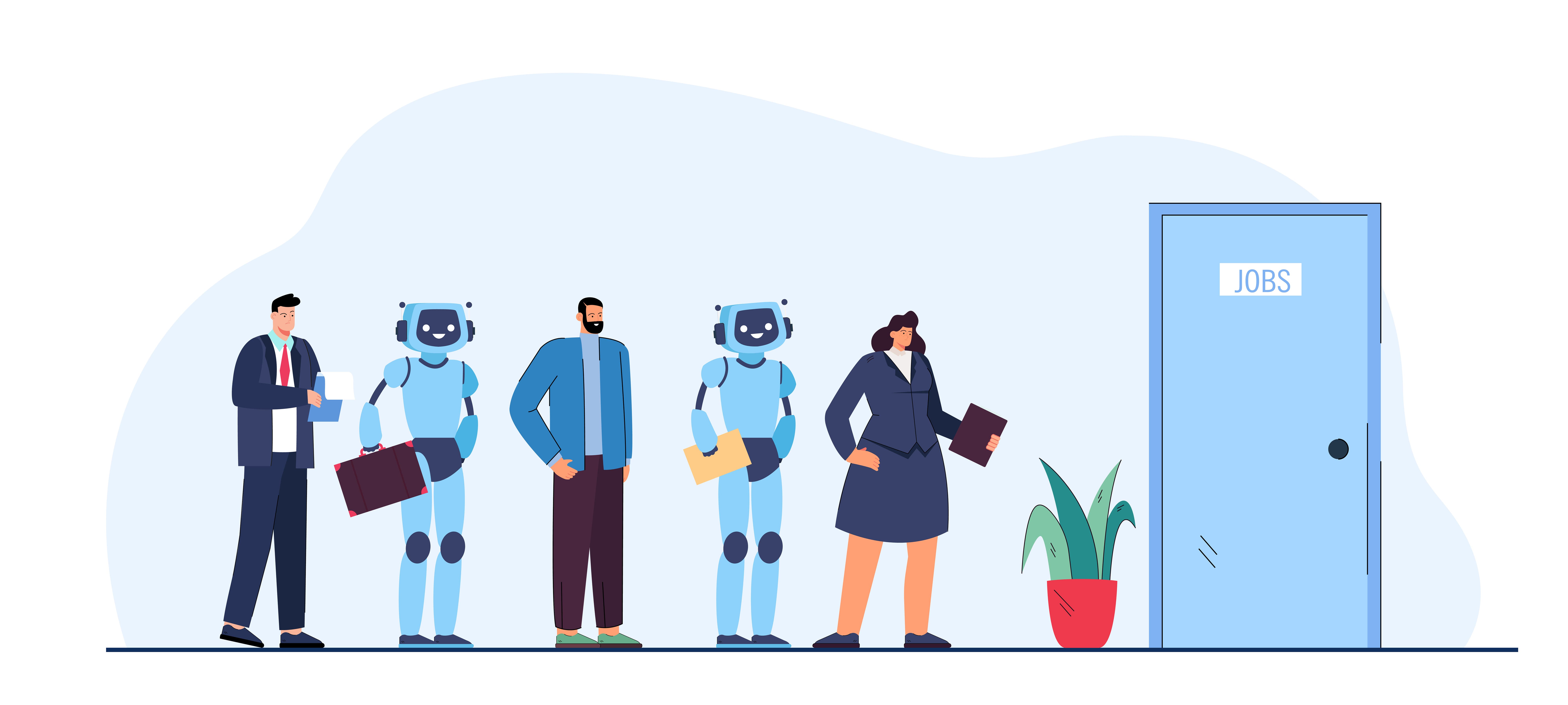
HP plans to cut between 4,000 and 6,000 jobs worldwide by fiscal 2028 as it restructures operations and expands its use of AI across product development and support services.
CEO Enrique Lores said the cuts will hit development, operations and support teams, with the plan aiming to save $1 billion over three years. The company already shed up to 2,000 roles in February under an earlier restructuring plan.
AI-enabled PCs now make up over 30% of HP’s shipments in Q4 ending 31 October, driving strong demand. However, analysts at Morgan Stanley warned that rising memory chip prices fuelled by AI data centre expansion could increase costs for consumer electronics makers.
Lores noted that HP expects the impact to be felt from the second half of fiscal 2026, though existing inventory should cover the first half.
HP projected fiscal 2026 adjusted earnings of $2.90–$3.20 per share, below expectations, with first-quarter profits also falling short of forecasts. Fourth-quarter revenue reached $14.64 billion, slightly ahead of forecasts.
Would you like to learn more about AI, tech and digital diplomacy? If so, ask our Diplo chatbot!
Germany has launched the INQUBATOR initiative to help companies, particularly SMEs, prepare for the industrial impact of quantum computing. The four-year programme offers structured support to firms facing high entry barriers and limited access to advanced technologies.
A central feature is affordable access to quantum systems from multiple vendors, paired with workshops and hands-on training. Companies can test algorithms, assess business relevance and adapt processes without investing in costly hardware or specialist infrastructure.
The project is coordinated by the Fraunhofer Institute for Applied Solid-State Physics and is funded by the Federal Ministry of Research and Technology. It brings together several Fraunhofer institutes to guide firms from early exploration to applied solutions.
Initial pilot projects span medicine, cybersecurity, insurance and automotive sectors. These examples are intended to demonstrate measurable advantages and will be followed by an open call for further use cases across a broader range of industries.
INQUBATOR aims to reduce financial and technical obstacles while expanding quantum expertise and industrial readiness in Germany. By enabling practical experimentation, it seeks to build a competitive ecosystem of quantum-literate companies over the next four years.
Would you like to learn more about AI, tech, and digital diplomacy? If so, ask our Diplo chatbot!
Quantum computing has long been framed as a future promise, but D-Wave argues real-world use has now arrived. The company says its Advantage2 system is already running complex optimisation tasks for businesses through both cloud and on-premise deployment.
D-Wave highlights a recent physics experiment as evidence of this shift, claiming the system solved a materials-modelling problem that would take a top supercomputer nearly a million years. The result, completed in minutes, serves as a proof point of practical quantum performance.
The company says accessibility is central to its approach, emphasising that Advantage2 can be programmed in Python without specialist quantum expertise. It frames this ease of use as essential to broader adoption beyond research labs.
Industry deployments are cited across logistics, telecoms, and manufacturing. D-Wave points to scheduling gains at Pattison Food Group, network optimisation at NTT Docomo, and faster production planning at Ford Otosan as examples of measurable operational benefits.
Energy efficiency is another focus, with D-Wave stating that each of its six hardware generations draws roughly 12.5 kilowatts. The company argues that this stable power use, paired with rising performance, positions quantum systems as a lower-energy option for hard computational problems.
Would you like to learn more about AI, tech, and digital diplomacy? If so, ask our Diplo chatbot!
Growing numbers of online users are turning to AI chatbots to verify suspicious images, yet many tools are failing to detect fakes they created themselves. AFP found several cases in Asia where AI systems labelled fabricated photos as authentic, including a viral image of former Philippine lawmaker Elizaldy Co.
The failures highlight a lack of genuine visual analysis in current models. Many models are primarily trained on language patterns, resulting to inconsistent decisions even when dealing with images generated by the same generative systems.
Investigations also uncovered similar misidentifications during unrest in Pakistan-administered Kashmir, where AI models wrongly validated synthetic protest images. A Columbia University review reinforced the trend, with seven leading systems unable to verify any of the ten authentic news photos.
Specialists argue that AI may assist professional fact-checkers but cannot replace them. They emphasise that human verification remains essential as AI-generated content becomes increasingly lifelike and continues to circulate widely across social media platforms.
Would you like to learn more about AI, tech and digital diplomacy? If so, ask our Diplo chatbot!
A legal case is underway involving OpenAI and the family of a teenager who had extensive interactions with ChatGPT before his death.
OpenAI has filed a response in court that refers to its terms of use and provides additional material for review. The filing also states that more complete records were submitted under seal so the court can assess the situation in full.
The family’s complaint includes concerns about the model’s behaviour and the company’s choices, while OpenAI’s filing outlines its view of the events and the safeguards it has in place. Both sides present different interpretations of the same interactions, which the court will evaluate.
OpenAI has also released a public statement describing its general approach to sensitive cases and the ongoing development of safety features intended to guide users towards appropriate support.
The case has drawn interest because it relates to broader questions about safety measures within conversational AI systems.
Would you like to learn more aboutAI, tech and digital diplomacy? If so, ask our Diplo chatbot!
Private 5G is often dismissed as too complex or narrow, yet analysts argue it carries strong potential for mission-critical industries instead of consumer-centric markets.
Sectors that depend on high reliability, including manufacturing, logistics, energy and public safety, find public networks and Wi-Fi insufficient for the operational demands they face. The technology aligns with the rise of AI-enabled automation and may provide growth in a sluggish telecom landscape.
Success depends on the maturity of surrounding ecosystems. Devices, edge computing and integration models differ across industrial verticals, slowing adoption instead of enabling rapid deployment.
The increasing presence of physical AI systems, from autonomous drones to industrial vehicles, makes reliable connectivity even more important.
Debate intensified when Nokia considered divesting its private 5G division, raising doubts about commercial viability, yet industry observers maintain that every market involves unique complexity.
Private 5G extends beyond traditional telecom roles by supporting real-economy sectors such as factories, ports and warehouses. The challenge lies in tailoring networks to distinct operational needs instead of expecting a single solution for all industries.
Analysts also note that inflated expectations in 2019 created a perception of underperformance, although private cellular remains a vital piece in a broader ecosystem involving edge computing, device readiness and software integration.
Long-term outlooks remain optimistic. Analysts project an equipment market worth around $30 billion each year by 2040, supported by strong service revenue. Adoption will vary across industries, but its influence on public RAN markets is expected to grow.
Despite complexity, interest inside the telecom sector stays high, especially as enterprise venues search for reliable connectivity solutions that can support their digital transformation.
Would you like to learn more aboutAI, tech and digital diplomacy? If so, ask our Diplo chatbot!
A new report from NFER warns that up to 3 million low-skilled jobs in the UK could disappear by 2035 due to the growing adoption of automation and AI. Sectors most at risk include trades, machine operations and administrative work, where routine and repetitive tasks dominate.
Economic forecasts remain mixed. The overall UK labour market is expected to grow by 2.3 million jobs by 2035, with gains primarily in professional and managerial roles. Many displaced workers may struggle to find new employment, widening inequality.
The change contrasts with earlier predictions suggesting AI would target higher-skilled jobs such as consultancy or software engineering. Current findings emphasise that manual and lower-skill roles face the most significant short-term disruption from AI.
Policymakers and educators are encouraged to build extensive retraining programmes and foster skills like creativity, communication and digital literacy. Without such efforts, long-term unemployment could become a significant challenge.
Would you like to learn more about AI, tech and digital diplomacy? If so, ask our Diplo chatbot!
The internet has become part of almost everything we do. It helps us work, stay in touch with friends and family, buy things, plan trips, and handle tasks that would have felt impossible until recently. Most people cannot imagine getting through the day without it.
But there is a hidden cost to all this convenience. Most of the time, online services run smoothly, with countless systems working together in the background. But every now and then, though, a key cog slips out of place.
When that happens, the effects can spread fast, taking down apps, websites, and even entire industries within minutes. These moments remind us how much we rely on digital services, and how quickly everything can unravel when something goes wrong. It raises an uncomfortable question. Is digital dependence worth the convenience, or are we building a house of cards that could collapse, pulling us back into reality?
Warning shots of the dot-com Era and the infancy of Cloud services
In its early years, the internet saw several major malfunctions that disrupted key online services. Incidents like the Morris worm in 1988, which crashed about 10 percent of all internet-connected systems, and the 1996 AOL outage that left six million users offline, revealed how unprepared the early infrastructure was for growing digital demand.
A decade later, the weaknesses were still clear. In 2007, Skype, then with over 270 million users, went down for nearly two days after a surge in logins triggered by a Windows update overwhelmed its network. Since video calls were still in their early days, the impact was not as severe, and most users simply waited it out, postponing chats with friends and family until the issue was fixed.
As the dot-com era faded and the 2010s began, the shift to cloud computing introduced a new kind of fragility. When Amazon’s EC2 and EBS systems in the US-East region went down in 2011, the outage took down services like Reddit, Quora, and IMDb for days, exposing how quickly failures in shared infrastructure can cascade.
A year later, GoDaddy’s DNS failure took millions of websites offline, while large-scale Gmail disruptions affected users around the world, early signs that the cloud’s growing influence came with increasingly high stakes.
By the mid-2010s, it was clear that the internet had evolved from a patchwork of standalone services to a heavily interconnected ecosystem. When cloud or DNS providers stumbled, their failures rippled simultaneously across countless platforms. The move to centralised infrastructure made development faster and more accessible, but it also marked the beginning of an era where a single glitch could shake the entire web.
Centralised infrastructure and the age of cascading failures
The late 2000s and early 2010s saw a rapid rise in internet use, with nearly 2 billion people worldwide online. As access grew, more businesses moved into the digital space, offering e-commerce, social platforms, and new forms of online entertainment to a quickly expanding audience.
With so much activity shifting online, the foundation beneath these services became increasingly important, and increasingly centralised, setting the stage for outages that could ripple far beyond a single website or app.
The next major hit came in 2016, when a massive DDoS attack crippled major websites across the USA and Europe. Platforms like Netflix, Reddit, Twitter, and CNN were suddenly unreachable, not because they were directly targeted, but because Dyn, a major DNS provider, had been overwhelmed.
The attack used the Mirai botnet malware to hijack hundreds of thousands of insecure IoT devices and flood Dyn’s servers with traffic. It was one of the clearest demonstrations yet that knocking out a single infrastructure provider could take down major parts of the internet in one stroke.
In 2017, another major outage occurred, with Amazon at the centre once again. On 28 February, the company’s Simple Storage Service (S3) went down for about 4 hours, disrupting access across a large part of the US-EAST-1 region. While investigating a slowdown in the billing system, an Amazon engineer accidentally entered a typo in a command, taking more servers offline than intended.
That small error was enough to knock out services like Slack, Quora, Coursera, Expedia and countless other websites that relied on S3 for storage or media delivery. The financial impact was substantial; S&P 500 companies alone were estimated to have lost roughly 150 million dollars during the outage.
Amazon quickly published a clear explanation and apology, but transparency could not undo the economic damage nor (yet another) sudden reminder that a single mistake in a centralised system could ripple across the entire web.
Outages in the roaring 2020s
The S3 incident made one thing clear. Outages were no longer just about a single platform going dark. As more services leaned on shared infrastructure, even small missteps could take down enormous parts of the internet. And this fragility did not stop at cloud storage.
Over the next few years, attention shifted to another layer of the online ecosystem: content delivery networks and edge providers that most people had never heard of but that nearly every website depended on.
The 2020s opened with one of the most memorable outages to date. On 4 October 2021, Facebook and its sister platforms, Instagram, WhatsApp, and Messenger, vanished from the internet for nearly 7 hours after a faulty BGP configuration effectively removed the company’s services from the global routing table.
Millions of users flocked to other platforms to vent their frustration, overwhelming Twitter, Telegram, Discord, and Signal’s servers and causing performance issues across the board. It was a rare moment when a single company’s outage sent measurable shockwaves across the entire social media ecosystem.
But what happens when outages hit industries far more essential than social media? In 2023, the Federal Aviation Administration was forced to delay more than 10,000 flights, the first nationwide grounding of air traffic since the aftermath of September 11.
A corrupted database file brought the agency’s Notice to Air Missions (NOTAM) system to a standstill, leaving pilots without critical safety updates and forcing the entire aviation network to pause. The incident sent airline stocks dipping and dealt another blow to public confidence, showing just how disruptive a single technical failure can be when it strikes at the heart of critical infrastructure.
Outages that defined 2025
The year 2025 saw an unprecedented wave of outages, with server overloads, software glitches and coding errors disrupting services across the globe. The Microsoft 365 suite outage in January, the Southwest Airlines and FAA synchronisation failure in April, and the Meta messaging blackout in July all stood out for their scale and impact.
But the most disruptive failures were still to come. In October, Amazon Web Services suffered a major outage in its US-East-1 region, knocking out everything from social apps to banking services and reminding the world that a fault in a single cloud region can ripple across thousands of platforms.
Just weeks later, the Cloudflare November outage became the defining digital breakdown of the year. A logic bug inside its bot management system triggered a cascading collapse that took down social networks, AI tools, gaming platforms, transit systems and countless everyday websites in minutes. It was the clearest sign yet that when core infrastructure falters, the impact is immediate, global and largely unavoidable.
And yet, we continue to place more weight on these shared foundations, trusting they will hold because they usually do. Every outage, whether caused by a typo, a corrupted file, or a misconfigured update, exposes how quickly things can fall apart when one key piece gives way.
Going forward, resilience needs to matter as much as innovation. That means reducing single points of failure, improving transparency, and designing systems that can fail without dragging everything down. The more clearly we see the fragility of the digital ecosystem, the better equipped we are to strengthen it.
Outages will keep happening, and no amount of engineering can promise perfect uptime. But acknowledging the cracks is the first step toward reinforcing what we’ve built — and making sure the next slipped cog does not bring the whole machine to a stop.
The smoke and mirrors of the digital infrastructure
The internet is far from destined to collapse, but resilience can no longer be an afterthought. Redundancy, decentralisation and smarter oversight need to be part of the discussion, not just for engineers, but for policymakers as well.
Outages do not just interrupt our routines. They reveal the systems we have quietly built our lives around. Each failure shows how deeply intertwined our digital world has become, and how fast everything can stop when a single piece gives way.
Will we learn enough from each one to build a digital ecosystem that can absorb the next shock instead of amplifying it? Only time will tell.
Would you like to learn more about AI, tech, and digital diplomacy? If so, ask our Diplo chatbot!
OpenAI has unveiled an updated ChatGPT interface that combines voice and text features in a single view. Users can speak naturally at any point in a chat and receive responses in text, audio, or images. The new layout also introduces real-time map displays.
The redesign adds a scrolling transcript within the chat window. It allows users to revisit earlier exchanges and move easily between reading and listening. OpenAI states that the goal is to support voice-led tasks without compromising clarity.
With the unified experience, conversations no longer require switching modes. ChatGPT can deliver audio, written, and visual replies simultaneously. Maps and images appear directly alongside the voice response.
Every spoken message is automatically transcribed. However, this helps users follow more extended discussions and keep a record for later reference. OpenAI says the feature supports both accessibility and everyday convenience.
The update is rolling out gradually across web and mobile platforms. Users who prefer the earlier voice-only layout can revert to it in settings. OpenAI says the unified mode will remain the default as development continues.
Would you like to learn more about AI, tech, and digital diplomacy? If so, ask our Diplo chatbot!
Microsoft will withdraw Copilot from WhatsApp as of 15 January 2026, following the implementation of new platform rules that ban all LLM chatbots.
The service helped millions of users interact with their AI companion inside an everyday messaging environment, yet the updated policy leaves no option for continued support.
Copilot access will continue on the mobile app, the web portal and Windows, offering fuller functionality instead of the limited experience available on WhatsApp.
Users are encouraged to rely on these platforms for ongoing features such as Copilot Voice, Vision and Mico, which expand everyday use across a broader set of tasks.
Chat history cannot be transferred because WhatsApp operated the service without authentication; therefore, users must manually export their conversations before the deadline. Copilot remains free across supported platforms, although some advanced features require a subscription.
Microsoft is working to ensure a smooth transition and stresses that users can expect a more capable experience after leaving WhatsApp, as development resources now focus on its dedicated environments.
Would you like to learn more aboutAI, tech and digital diplomacy? If so, ask our Diplo chatbot!