MetaMask has launched native Tron support on mobile and in the browser, completing its integration with the Tron DAO, announced last August. The move strengthens MetaMask’s shift towards a fully multichain strategy beyond its Ethereum roots.
Tron-based assets, decentralised applications, staking, and USDT transfers can now be managed directly within MetaMask’s self-custody wallet. Users can swap assets across Tron, EVM chains, Solana, and Bitcoin without extra wallet software.
The integration connects MetaMask to Tron, one of the busiest stablecoin networks, with $21 billion in daily transfers and millions of active wallets. Tron’s strong presence in payments and decentralised finance adds further scale to MetaMask’s growing multichain offering.
Consensys, the developer behind MetaMask, has accelerated expansion beyond Ethereum as user activity increasingly spans multiple blockchain ecosystems. After adding Solana and Bitcoin, the integration with Tron further strengthens MetaMask as a cross-chain platform beyond Ethereum.
Would you like to learn more about AI, tech and digital diplomacy? If so, ask our Diplo chatbot!
The US AI company, OpenAI, has invested in Merge Labs as part of a seed funding round, signalling a growing interest in brain-computer interfaces as a future layer of human–technology interaction.
Merge Labs describes its mission as bridging the gap between biology and AI to expand human capability and agency. The research lab is developing new BCI approaches designed to operate safely while enabling much higher communication bandwidth between the brain and digital systems.
AI is expected to play a central role in Merge Labs’ work, supporting advances in neuroscience, bioengineering and device development instead of relying on traditional interface models.
High-bandwidth brain interfaces are also expected to benefit from AI systems capable of interpreting intent under conditions of limited and noisy signals.
OpenAI plans to collaborate with Merge Labs on scientific foundation models and advanced tools, aiming to accelerate research progress and translate experimental concepts into practical applications over time.
Would you like to learn more about AI, tech and digital diplomacy? If so, ask our Diplo chatbot!
The European Medicines Agency (EMA) and the US Food and Drug Administration (FDA) have released ten principles for good AI practice in the medicines lifecycle. The guidelines provide broad direction for AI use in research, clinical trials, manufacturing, and safety monitoring.
The principles are relevant to pharmaceutical developers, marketing authorisation applicants, and holders, and will form the basis for future AI guidance in different jurisdictions. EU guideline development is already underway, building on EMA’s 2024 AI reflection paper.
European Commissioner Olivér Várhelyi said the initiative demonstrates renewed EU-US cooperation and commitment to global innovation while maintaining patient safety.
AI adoption in medicine has grown rapidly in recent years. New pharmaceutical legislation and proposals, such as the European Commission’s Biotech Act, highlight AI’s potential to accelerate the development of safe and effective medicine.
A principles-based approach is seen as essential to manage risks while promoting innovation.
The EMA-FDA collaboration builds on prior bilateral work and aligns with EMA’s strategy to leverage data, digitalisation, and AI. Ethics and safety remain central, with a focus on international cooperation to enable responsible innovation in healthcare globally.
Would you like to learn more about AI, tech and digital diplomacy? If so, ask our Diplo chatbot!
Uganda’s communications regulator has ordered a nationwide internet shutdown ahead of Thursday’s general election. The move is intended to prevent misinformation, electoral fraud, and incitement to violence.
The shutdown was due to begin at 18:00 local time on Tuesday, with no end date specified. Mobile data users in Uganda reported losing access, while some business networks, including hotels, remained connected. Voice calls and basic SMS services were expected to continue operating.
The regulator said it was acting on recommendations from security agencies, including the army and police. In a letter to operators, it described the suspension as a precautionary measure to protect national stability during what it called a sensitive national exercise.
Uganda imposed a similar internet blackout during the 2021 election, which was followed by protests in which dozens of people were killed. Earlier this month, the commission had dismissed reports of another shutdown as rumours, saying it aimed to guarantee uninterrupted connectivity.
President Yoweri Museveni, 81, is seeking a seventh term against opposition challenger Bobi Wine, 43, whose real name is Robert Kyagulanyi. Wine criticised the internet suspension and urged supporters to use Bluetooth-based messaging apps, though authorities warned those could also be restricted.
Would you like to learn more about AI, tech, and digital diplomacy? If so, ask our Diplo chatbot!
Russia is moving to integrate cryptocurrency into everyday finance as lawmakers prepare a bill to allow retail participation under clear limits. The draft would remove crypto from special regulation, signalling broader adoption for the public.
Under the proposed framework, non-qualified investors would be able to buy crypto up to 300,000 rubles, roughly $3,800. Officials emphasise that these limits aim to prevent excessive speculation while providing controlled exposure to digital assets.
The move marks a significant change after years of tight restrictions and cautious oversight from financial authorities.
The legislation is designed with international use in mind, allowing tokens issued in Russia to participate in foreign markets and supporting cross-border settlements. Policymakers aim to integrate crypto into the economy while protecting retail investors.
Regulators, including the Bank of Russia and the Finance Ministry, continue to stress the importance of risk management. Limits and risk checks will ensure retail crypto use remains secure.
Would you like to learn more about AI, tech and digital diplomacy? If so, ask our Diplo chatbot!
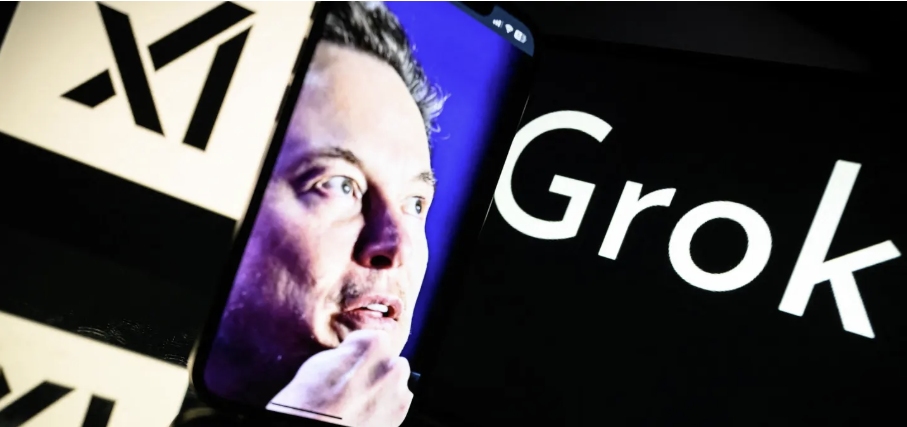
Elon Musk’s X has limited the image editing functions of its Grok AI tool after criticism over the creation of sexualised images of real people.
The platform said technological safeguards have been introduced to block such content in regions where it is illegal, following growing concern from governments and regulators.
UK officials described the move as a positive step, although regulatory scrutiny remains ongoing.
Authorities are examining whether X complied with existing laws, while similar investigations have been launched in the US amid broader concerns over the misuse of AI-generated imagery.
International pressure has continued to build, with some countries banning Grok entirely instead of waiting for platform-led restrictions.
Policy experts have welcomed stronger controls but questioned how effectively X can identify real individuals and enforce its updated rules across different jurisdictions.
Would you like to learn more about AI, tech and digital diplomacy? If so, ask our Diplo chatbot!
Music artist and innovator will.i.am has unveiled the Trinity, a single-person electric micromobility vehicle designed to offer a stylish, efficient alternative to cars for city travel.
The Trinity combines sleek design with practical features for urban environments, targeting commuters and city dwellers seeking sustainable, space-efficient mobility options.
The vehicle’s compact form and electric drive reflect broader trends in micromobility, from e-scooters to e-bikes, as cities look for solutions to congestion, emissions and last-mile transit challenges.
The Trinity’s reveal signals growing interest from creative industries in reimagining the future of personal transport, where design, technology and sustainability intersect.
will.i.am has described the vehicle as part of a broader vision for future-focused urban transport, emphasising the importance of technology in enabling greener, more accessible mobility. The Trinity is positioned not only as a product but as a concept that challenges conventional ideas about how and why people move around cities.
Would you like to learn more about AI, tech and digital diplomacy? If so, ask our Diplo chatbot!
A senior PwC expert has outlined how AI can play a pivotal role in speeding up the transition to clean energy, particularly by improving forecasting, enhancing operational efficiency and enabling smarter planning of renewable systems.
According to the specialist, AI tools can analyse complex data from wind, solar and grid systems to predict output and optimise maintenance, helping utilities and policymakers make better decisions in real time.
AI also supports decarbonisation by modelling scenarios for energy demand and emissions, allowing energy planners to prioritise investments in technologies that deliver the most impact.
The expert emphasised that data integration and digital infrastructure are essential to unlock these benefits at scale, and cautioned that firms must pair AI’s technical capabilities with strong governance and clear regulatory frameworks.
PwC’s perspective reflects a broader industry belief that AI will be integral to managing increasingly complex energy systems, especially as countries pursue net-zero targets and integrate variable renewables into their grids.
Would you like to learn more about AI, tech and digital diplomacy? If so, ask our Diplo chatbot!
The tech giant, IBM, has announced IBM Sovereign Core, a new software offering designed to help organisations deploy and manage AI-ready environments under sovereign control.
The product addresses growing regulatory and governance requirements as enterprises and governments seek greater authority over data, infrastructure and AI operations.
Digital sovereignty, according to IBM, extends beyond where data is stored and includes who controls systems, how access is governed and under which jurisdiction AI workloads operate.
IBM Sovereign Core is positioned as a foundational software layer that embeds sovereignty into operations instead of applying controls after deployment.
Built on Red Hat’s open-source technologies, the software enables customer-operated control planes, in-jurisdiction identity management and continuous compliance reporting. AI workloads, including inference and model hosting, can be governed locally without exporting data to external providers.
IBM plans to offer the software across on-premises environments, in-region cloud infrastructure and through selected service providers.
A technology preview is expected to begin in February, with full general availability planned for mid-2026.
Would you like to learn more about AI, tech and digital diplomacy? If so, ask our Diplo chatbot!
SEC Chair Paul Atkins says US crypto market structure legislation is close to becoming law, with President Donald Trump expected to sign it soon. The move aims to end regulatory uncertainty and provide clear legal foundations for digital asset markets.
Atkins has openly backed Congress in defining the jurisdictional split between the Securities and Exchange Commission and the Commodity Futures Trading Commission, arguing that statutory clarity is essential for protecting investors and supporting institutional growth.
Supporters believe clear rules will replace enforcement-led interpretation and allow the sector to mature within established financial frameworks.
Progress is moving through Congress, with the Senate Banking Committee advancing the CLARITY Act while the Agriculture Committee continues negotiations. Despite disagreements and amendments, bipartisan support suggests the bill could reach the White House by the end of the first quarter.
Looking ahead, Atkins has linked the bill to long-term US competitiveness, stating that clear and principled regulation will encourage innovation and attract capital. Coordination between the SEC, CFTC and the White House is expected to be central to implementation.
Would you like to learn more about AI, tech and digital diplomacy? If so, ask our Diplo chatbot!