Russia has the potential to improve its global AI standing by 2030, bolstered by local talent and the development of its own generative AI models, according to Alexander Vedyakhin, the first deputy CEO of Sberbank. Speaking at the bank’s AI Journey conference, Vedyakhin highlighted the resilience of Russian developers in navigating Western sanctions, which aimed to limit the country’s computing resources. He emphasised the importance of fostering experimentation to maintain progress in AI.
Although Russia currently trails the US and China in AI innovation by six to nine months, Vedyakhin is optimistic about closing the gap. Instead of building massive data centres, Russia is focusing on smart AI models tailored to its market, similar to Meta’s Llama. These efforts, he said, will ensure technological sovereignty, especially as generative AI gains global importance. For example, Russian language models address local cultural contexts better than English-trained systems, avoiding misunderstandings like misinterpreting cultural dishes.
President Vladimir Putin also underscored the strategic significance of AI, announcing plans to collaborate with BRICS countries to challenge US dominance. Vedyakhin added that while Europe and China face setbacks due to overregulation, Russia’s supportive regulatory environment could be a competitive advantage. Encouraging investment in AI startups and allowing for innovation without severe penalties for mistakes are key to advancing the sector.
Despite a broader decline in venture capital investment in Russia, funding for AI startups continues to grow, hinting at a more diversified market. Vedyakhin also suggested that decentralised autonomous organizations (DAOs), powered by blockchain, could address labour shortages, paving the way for Russia to strengthen its AI ecosystem in the years ahead.
Nvidia has added around 200 employees in China this year, boosting its research capabilities and focusing on autonomous driving technologies, Bloomberg News reports. The company now employs nearly 600 people in Beijing, with a recently opened office in the Zhongguancun tech hub, according to sources familiar with the matter.
Despite its expansion, Nvidia faces headwinds in China, including an ongoing investigation into alleged violations of the country’s anti-monopoly laws. This probe is widely interpreted as a response to US restrictions on China’s chip sector. Nvidia declined to comment on the situation.
China contributed about 17% of Nvidia’s revenue in the year ending January, down from 26% two years earlier. Globally, Nvidia employs around 29,600 people across 36 countries, as detailed in its February 2024 filing.
Samsung has filed a legal challenge against India‘s Competition Commission (CCI), accusing the watchdog of unlawfully detaining employees and seizing data during a 2022 raid connected to an antitrust investigation involving Amazon and Walmart-owned Flipkart. The CCI claims Samsung colluded with the e-commerce giants to launch products exclusively online, a practice it argues violates competition laws.
In its filing with the northern city of Chandigarh’s High Court, Samsung alleged that confidential data was improperly taken from its employees during the raid and requested the return of the material. Samsung has secured an injunction to pause the CCI’s proceedings but seeks a broader ruling to prevent the use of the seized data. The CCI, in turn, has asked the Supreme Court to consolidate similar challenges by Samsung and 22 other parties, arguing that companies are attempting to derail the investigation.
The case stems from findings earlier this year that Amazon, Flipkart, and smartphone companies like Samsung engaged in anti-competitive practices by favouring select sellers and using exclusive product launches. While Amazon and Flipkart deny wrongdoing, brick-and-mortar retailers have long criticised their pricing and market strategies. Samsung, a major smartphone brand in India with a 14% market share, maintains it was wrongly implicated and cooperated only as a third party in the investigation.
Policymakers seeking to regulate AI face an uphill battle as the science evolves faster than safeguards can be devised. Elizabeth Kelly, director of the US Artificial Intelligence Safety Institute, highlighted challenges such as “jailbreaks” that bypass AI security measures and the ease of tampering with digital watermarks meant to identify AI-generated content. Speaking at the Reuters NEXT conference, Kelly acknowledged the difficulty in establishing best practices without clear evidence of their effectiveness.
The US AI Safety Institute, launched under the Biden administration, is collaborating with academic, industry, and civil society partners to address these issues. Kelly emphasised that AI safety transcends political divisions, calling it a “fundamentally bipartisan issue” amid the upcoming transition to Donald Trump’s presidency. The institute recently hosted a global meeting in San Francisco, bringing together safety bodies from 10 countries to develop interoperable tests for AI systems.
Kelly described the gathering as a convergence of technical experts focused on practical solutions rather than typical diplomatic formalities. While the challenges remain significant, the emphasis on global cooperation and expertise offers a promising path forward.
Google has announced a $20 billion partnership with Intersect Power and TPG Rise Climate to build renewable energy projects, battery storage, and grid upgrades for its data centres. The initiative includes wind, solar, and battery storage facilities, each paired with 1-gigawatt-scale data centres to meet growing energy demands for AI technology. The first phase is expected to be operational by 2026.
The plan aims to address grid bottlenecks, with Google funding required upgrades to accelerate connectivity. This strategy highlights renewables’ speed over nuclear options, which have longer timelines for implementation.
Industry experts predict a shortfall in energy for AI-focused data centres by 2027, underscoring the urgency for alternative power sources. While Google also invests in nuclear energy projects, renewables are expected to dominate in the near term.
Alphabet, the parent company of Google, is doubling down on AI to reshape its core search business, which generates the majority of its $300 billion annual revenue. At the Reuters NEXT conference in New York, Alphabet President Ruth Porat described AI as a ‘generational opportunity’ for the company, with tools like AI-generated query overviews aiming to make search more intuitive. However, challenges such as AI ‘hallucinations,’ where incorrect information is generated, remain a key hurdle.
Beyond search, Alphabet is channeling its AI expertise into healthcare advancements. Porat highlighted innovations like AlphaFold, which predicts protein structures to aid drug discovery, and AI tools that could prevent blindness or enhance the doctor-patient relationship by reducing screen time for medical professionals. These efforts reflect the company’s broader commitment to applying technology for societal benefits.
Alphabet’s financial investments in AI are substantial, with $50 billion projected in capital expenditures for 2024, including data centres and chips. Porat emphasised the need for these investments to yield tangible returns while shaping the future of both technology and human connection.
Apple is reportedly preparing to introduce satellite messaging capabilities to its smartwatch lineup in 2025. According to Bloomberg News, the feature may debut in the next version of the Apple Watch Ultra, allowing users to send messages without cellular or internet access. This development follows the company’s 2022 introduction of satellite communication on iPhones.
To support its satellite ambitions, Apple invested $1.5 billion in Globalstar in November, enhancing infrastructure for its satellite services. The move signals a broader push to integrate advanced connectivity options across its devices.
Health-focused features also remain a priority for Apple. The report highlights plans to add blood pressure monitoring to its smartwatch by 2025. However, this follows the launch of an Apple Watch model in September designed to detect conditions such as sleep apnoea and offer emergency responses.
Apple has not commented on the reports, but the company’s growing emphasis on health technology and connectivity could significantly expand the smartwatch’s utility for users.
Reddit has introduced a new AI-powered feature, Reddit Answers, designed to streamline users’ search for information across the platform. The tool analyses posts and provides summarised responses to user questions, accompanied by links to relevant communities and discussions. Currently, in its testing phase, Reddit Answers is accessible in English to select users in the United States, with plans to expand globally.
The initiative reflects Reddit‘s ambition to rival search engines and AI platforms like OpenAI‘s ChatGPT by leveraging its community-driven content. During the third quarter, Reddit reported a 47% surge in daily active unique visitors, reaching 97.2 million. The platform also saw a 14% increase in its average revenue per user, now at $3.58.
By offering curated responses from its vast user-generated knowledge base, Reddit aims to enhance usability while staying competitive in the evolving AI and search landscape.
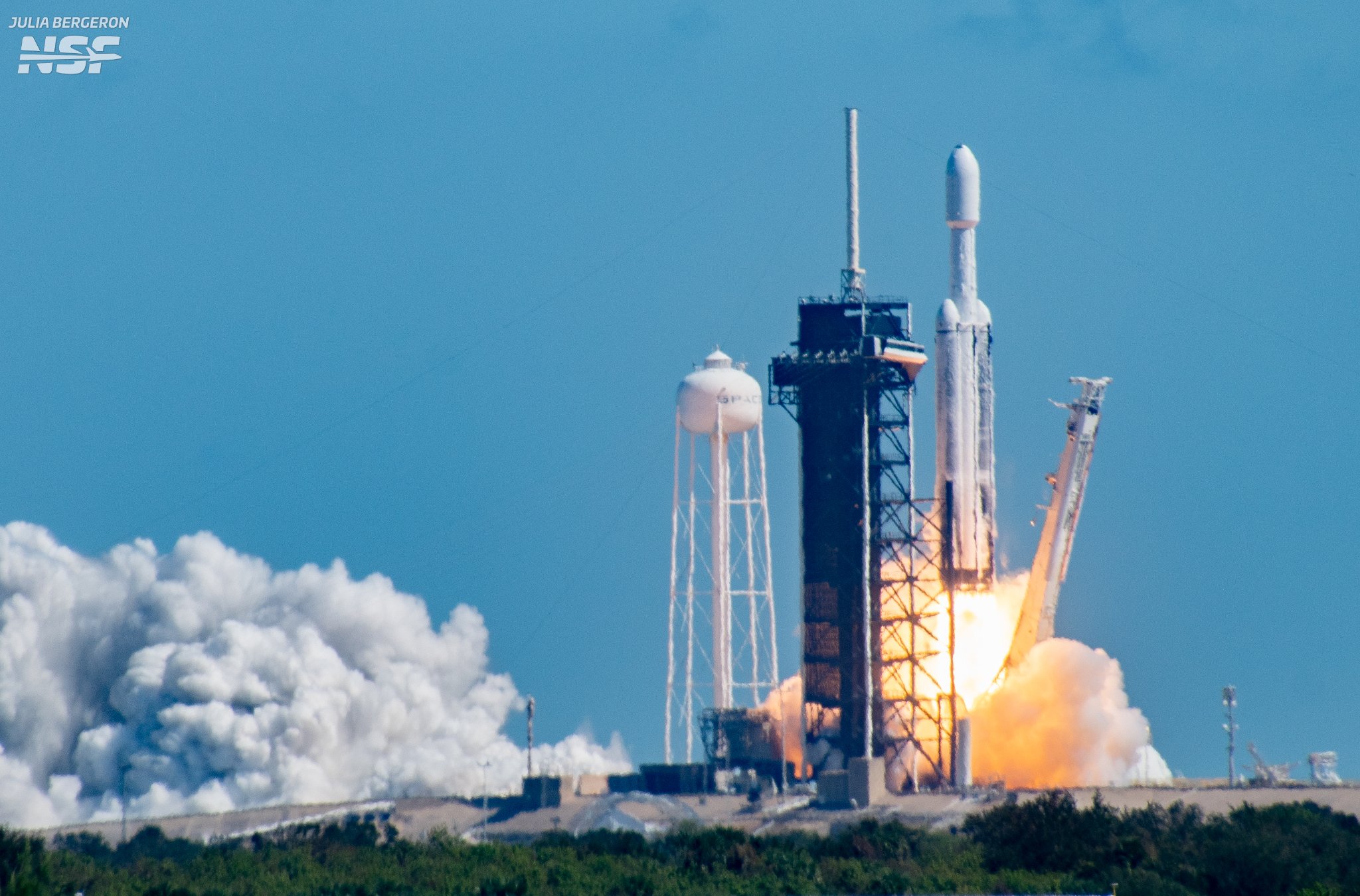
In a forest clearing in Normandy, France, Maiaspace is preparing to test a reusable rocket aimed at strengthening Europe’s space competitiveness. The subsidiary of ArianeGroup plans to launch its first partially reusable rocket by 2026, catering primarily to small commercial satellites. The project follows criticism of Europe’s earlier focus on non-reusable launchers, which some say put it at a disadvantage against SpaceX‘s cutting-edge technology.
The rocket, designed to carry up to four tonnes, features a reusable first stage capable of being recovered at sea. Engineers face challenges in adapting to reusable technology, particularly in managing atmospheric disturbances during stage separation. Testing is underway to address these technical hurdles.
Maiaspace‘s development budget of several hundred million euros has so far secured €125 million from ArianeGroup, with further funding discussions expected next year. As competition intensifies, including from Germany‘s Rocket Factory Augsburg, Europe seeks to close the gap with industry leader SpaceX.
Alphabet’s stock jumped 5% on Tuesday after the company unveiled Willow, a groundbreaking chip that addresses a major hurdle in quantum computing. Introduced on Monday, Willow solved a problem in five minutes that would take classical computers longer than the age of the universe. This breakthrough brings quantum computing closer to practical applications in science, medicine, and finance.
Quantum computers, powered by qubits, promise incredible speed but face challenges with error rates that grow with scale. Google’s Willow chip reduces errors exponentially by stringing qubits together in a way that allows for real-time error correction. This innovation marks a significant step toward making quantum computing reliable and commercially viable.
While the technology is still in its infancy, experts believe Willow could drive breakthroughs across industries. Alphabet’s shares, up 25% this year, outpaced market expectations, with investors optimistic about the potential impact of quantum computing on the company’s future. Other tech leaders like Microsoft and Quantinuum are also advancing in the race to commercialise quantum systems.