Vietnam’s Prime Minister Pham Minh Chinh has launched a strategic initiative to enhance the country’s capabilities in semiconductors, AI, and cloud computing. The initiative, outlined in Dispatch No. 83/CD-TTg, aims to develop a skilled workforce through targeted education and training in these critical technology sectors. The initiative calls for collaboration among various government bodies, including ministers and local authorities, to implement measures to drive these industries’ advancements.
The Ministry of Education and Training (MoET) leads this effort by guiding public and private universities to establish specialised units focused on semiconductor technology, AI, and cloud computing. The project includes creating new schools and departments dedicated to advancing research and training. The MoET will also modernise curricula by integrating cutting-edge technologies and AI into teaching methodologies while fostering partnerships with businesses and research institutions.
In addition, the Ministry of Planning and Investment will develop a strategic project for nurturing human resources in the semiconductor industry, with a long-term vision extending to 2050. The plan will also encompass AI and cloud computing, emphasising the establishment of innovation ecosystems. Meanwhile, the Ministry of Science and Technology will prioritise scientific research in these fields and create mechanisms to attract international talent.
Local government leaders are encouraged to attract investments to build semiconductors, AI, and cloud computing ecosystems. Deputy Prime Minister Le Thanh Long will oversee the implementation of this initiative, which aims to position Vietnam as a leader in these technology sectors, leveraging education and innovation to drive economic growth in the digital age.
Meta Platforms has partnered with Sage Geosystems to source geothermal energy for its US data centres. The agreement supports the company’s expanding AI infrastructure, which demands noteworthy power. However, the initial phase of the 150-megawatt project, expected to be operational by 2027, will significantly boost the use of geothermal energy in the United States. While the exact location remains undecided, it will be east of the Rocky Mountains.
The deal aligns with the Biden administration’s push for clean energy investments from tech giants as they face growing electricity demands driven by AI advancements. Adopting AI technologies, particularly generative AI, is fuelling a rapid increase in electricity consumption, potentially complicating efforts to decarbonise the power sector by 2035. The Sage project represents Meta’s largest foray into renewable energy, a strategic move to manage rising infrastructure costs.
Sage Geosystems, a Houston-based startup, is pioneering next-generation geothermal technology that can be deployed in more locations than traditional methods. The company, supported by oil and gas firms Chesapeake Energy and Nabors Industries, validated its technology just two years ago, marking a significant step forward in the renewable energy sector.
Meta has been aggressively upgrading and expanding its infrastructure to support AI developments, substantially increasing expenses. With capex projected to reach up to $40 billion in 2024, the company expects infrastructure costs to remain a major expense driver in the coming years.
Nvidia is revolutionising its chip design process by leveraging large language models (LLMs) and autonomous AI agents. These innovations are being used to speed up the development of GPUs, CPUs, and networking chips, significantly enhancing design quality and productivity. The models include prediction, optimisation, and automation tools, which help engineers improve designs, generate code, and debug issues more efficiently.
The company has trained an LLM specifically on Verilog, a hardware description language, to accelerate the creation of its systems. This model assists in speeding up the design and verification processes while automating manual tasks, supporting Nvidia’s goal of maintaining a yearly product release cycle. As Nvidia continues to develop increasingly complex architectures, such as the Blackwell architecture, these AI tools are vital in meeting the challenges of next-generation designs.
At the Hot Chips conference in the US, Mark Ren, Nvidia’s director of design automation research, will provide insights into these AI models. He will highlight their applications in chip design, focusing on how agent-based systems powered by LLMs transform the field by autonomously completing tasks, interacting with designers, and learning from experience.
The use of AI agents for tasks like timing report analysis and cell cluster optimisation has already gained recognition, with a recent project winning best paper at the IEEE International Workshop on LLM-Aided Design. Nvidia’s advancements demonstrate the critical role of AI in pushing the boundaries of chip design.
China’s ambition to lead in humanoid robot development was evident at the recent World Robot Conference in Beijing, where companies showcased innovative and cost-effective solutions. Wisson Technology, known for its flexible robotic arms powered by pneumatic artificial muscles, showed its ability to produce these at a fraction of the cost of traditional robotic arms, signalling a shift in production methods.
Despite the advancements, challenges remain in the supply chain. Yi Gang, founder of Ti5 Robot, pointed out product reliability issues, particularly in motion-control components like harmonic gears. These concerns limit production volumes, underscoring the need for further improvements in the industry.
China’s efforts in robotics are bolstered by President Xi Jinping’s push for technological advancement, with smart driving advancements contributing to progress in the field. The country’s robotics market, the largest globally, is reshaping traditional industries, from manufacturing to education and healthcare. Speaking at the close of the conference, Premier Li Qiang emphasised the need to stabilise the supply chain and expand robot usage across various sectors. Describing robots as a feature of technological innovation, he underscored their importance in China’s high-end manufacturing goals.
The Programme Manager of Green and Digital Economy at the European Union Delegation to Nigeria and ECOWAS, Frank Okafor, stated that the Participatory Policy Implementation Framework (PPIF) will enhance digital transformation and innovation. This framework aims to address the gap in digital policies and improve their implementation at the state level, following the challenges of implementing policies.
Developed by NITDA and GIZ/DTC Nigeria, the PPIF was handed over to the Ministry of Communications, Innovation and Digital Economy in July for federal scaling and will be piloted in states to encourage adoption and integration. The PPIF seeks to bridge the gap between policy formulation and implementation through a transparent and inclusive approach involving stakeholders from various sectors. It is expected to lead to improved policy implementation, increased local adaptability, and stakeholder empowerment. Supported by Digital Transformation Centre Nigeria and funded by the EU and BMZ, the initiative is implemented by GIZ.
Several Chinese state-linked entities are turning to cloud services to access restricted US technology, according to recent public tender documents. By using cloud platforms like Amazon Web Services (AWS), these entities gain access to advanced chips and AI capabilities that would otherwise be unavailable due to US trade restrictions.
Entities like Zhejiang Lab and the National Center of Technology Innovation for EDA have expressed interest in using AWS for AI development. Others, such as Shenzhen University and Fujian Chuanzheng Communications College, have reportedly utilised Nvidia chips through cloud services, circumventing US export bans.
Microsoft’s Azure platform has also attracted attention from Chinese institutions like Chongqing Changan Automobile Co and Sichuan University, which are exploring generative AI technology. The ability to integrate these advanced tools into their systems is seen as critical for maintaining competitiveness.
Concerns remain over the use of US technology by Chinese organisations, especially those with potential military applications. Universities such as Southern University of Science and Technology and Tsinghua University have pursued cloud access to Nvidia chips, despite US efforts to restrict such technology transfers.
Google has appointed Noam Shazeer, a former Google researcher and co-founder of Character.AI, as co-lead of its main AI project, Gemini. Shazeer will join Jeff Dean and Oriol Vinyals in overseeing the development of AI models at DeepMind, Google’s AI division, which are set to enhance products like Search and Pixel smartphones.
Shazeer rejoined Google after founding Character.AI in 2021. The tech giant secured his return by paying billions and striking a licensing agreement with his former company. Shazeer expressed excitement in a memo to staff, praising the team he has rejoined.
Originally joining Google in 2000, Shazeer was instrumental in the 2017 research that ignited the current AI boom. Character.AI, which leverages these advancements, has attracted significant venture capital, reaching a $1 billion valuation last year.
Google’s decision to bring Shazeer back echoes similar strategies by other tech giants, although these moves have drawn regulatory scrutiny. In related news, a US judge recently ruled that Google’s search engine violated antitrust laws by creating an illegal monopoly.
Last year, the devaluation of the Naira resulted in a foreign exchange gain of 8.6 billion Naira (about USD 5.4 million), according to a World Bank audit of Nigeria’s Digital Identification for Development (ID4D) project.
This financial boost is expected to help the digital identity authority fund upgrades to the national ID system. The ID4D project, which primarily deals in US dollars and euros, benefited from the higher exchange rates when converting foreign funds back into Naira. In 2023, the Central Bank of Nigeria, through accounts managed by the National Identity Management Commission (NIMC), received $2.538 million and €3.03 million for the project. As the Naira continues to decline against major currencies, the ID4D project will likely gain further, allowing it to advance planned initiatives. These include investments in backup power systems, the establishment of a Computer Emergency Response Team (CERT) and Security Operations Center (SOC), data recovery center upgrades, and new software for a contact center and customer relationship management (CRM).
The ID4D project, funded by the World Bank, the French Development Agency, and the European Investment Bank, aims to issue 148 million digital IDs by June 2024. With over 109 million IDs already issued and additional funds available, the project is progressing well, with a potential to enhance birth registration rates, currently at 30 percent.
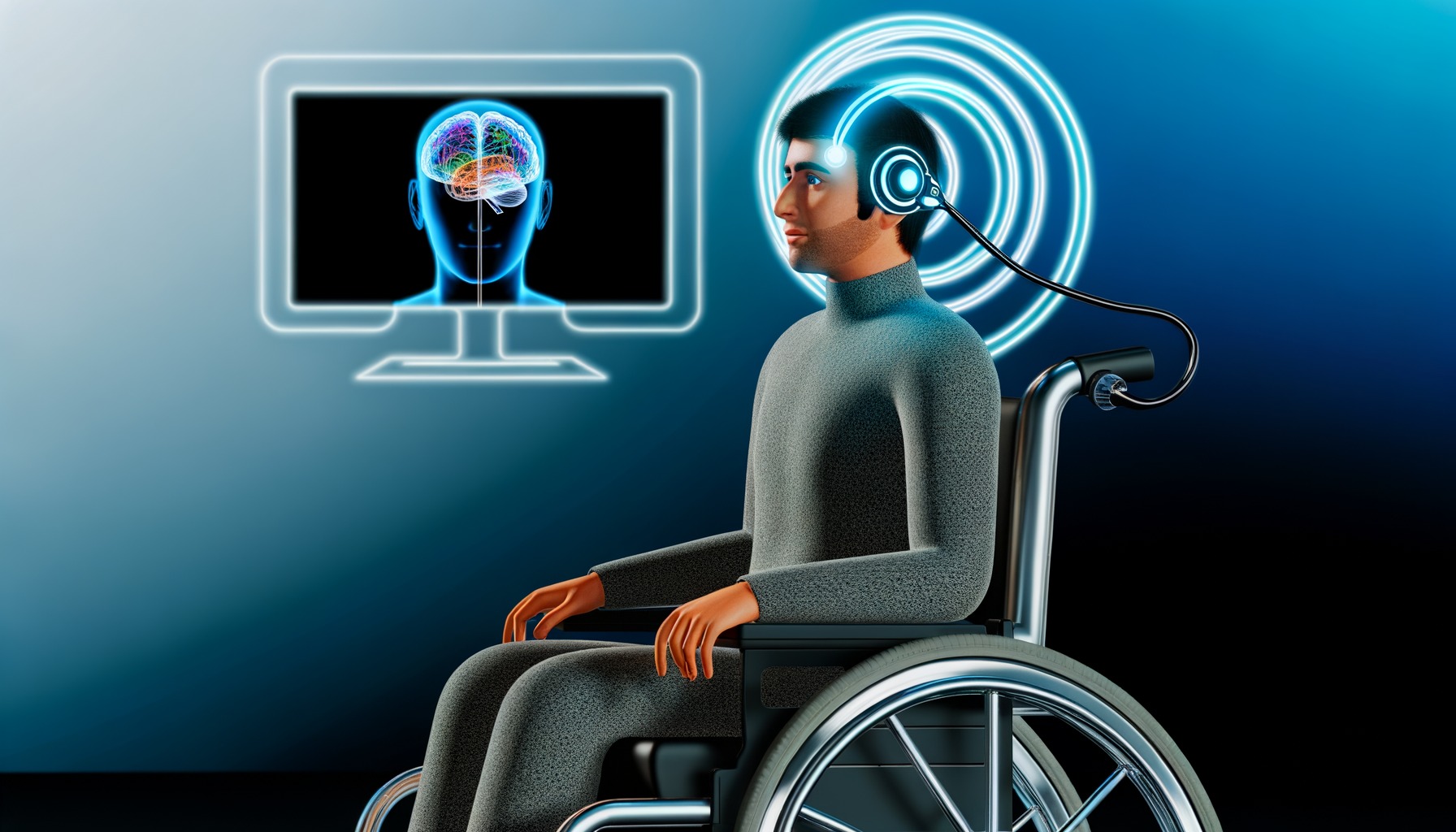
Researchers at UC Davis Health have developed a groundbreaking brain-computer interface (BCI) that has enabled a man with amyotrophic lateral sclerosis (ALS) to communicate by transforming his brain activity into text, which is then read aloud by a computer. The innovative system, detailed in a study published in the New England Journal of Medicine, boasts an impressive 97% accuracy, making it the most accurate speech neuroprosthesis of its kind. The technology works by interpreting brain signals when the user attempts to speak, converting those signals into words that are then vocalised by a computer.
The patient, 45-year-old Casey Harrell, who has ALS, participated in the BrainGate clinical trial to test the device. Harrell had significant difficulty speaking due to his condition, but the BCI system allowed him to communicate both in prompted and spontaneous settings with remarkable accuracy. During the initial training session, the system achieved nearly 100% word accuracy within 30 minutes and continued to perform well even as the vocabulary expanded to over 125,000 words.
Why does this matter?
The following advancement is particularly significant for those with ALS or similar conditions impairing speech, offering a new avenue for communication that was previously slow and error-prone. The success of this technology provides hope that more patients will be able to reconnect with their loved ones and society, overcoming the communication barriers imposed by their conditions.
D-ID has recently launched an innovative AI video translation tool that allows creators to automatically translate their videos into multiple languages while simultaneously cloning the speaker’s voice and synchronising lip movements to match the translated audio. This groundbreaking feature enhances video content accessibility for a global audience, making it easier for creators to connect with viewers across language barriers.
The tool supports translations into 30 languages, including widely spoken languages such as Arabic, Mandarin, Japanese, Hindi, Spanish, and French, enabling creators to reach diverse audiences and expand their global footprint effectively. By automating the translation and dubbing process, D-ID aims to reduce localisation costs for businesses and content creators, facilitating the scaling of video marketing and communication strategies worldwide.
Additionally, the tool enters a competitive landscape where other companies, such as YouTube and Vimeo, are improving video translation capabilities as video continues dominating digital communication. D-ID’s technology targets individual creators and enterprise customers looking to enhance global outreach through effective video localisation strategies.
By combining voice cloning and lip-syncing, D-ID’s AI Video Translate creates a seamless multilingual viewing experience, positioning the company as a key player in the future of AI-driven content creation.