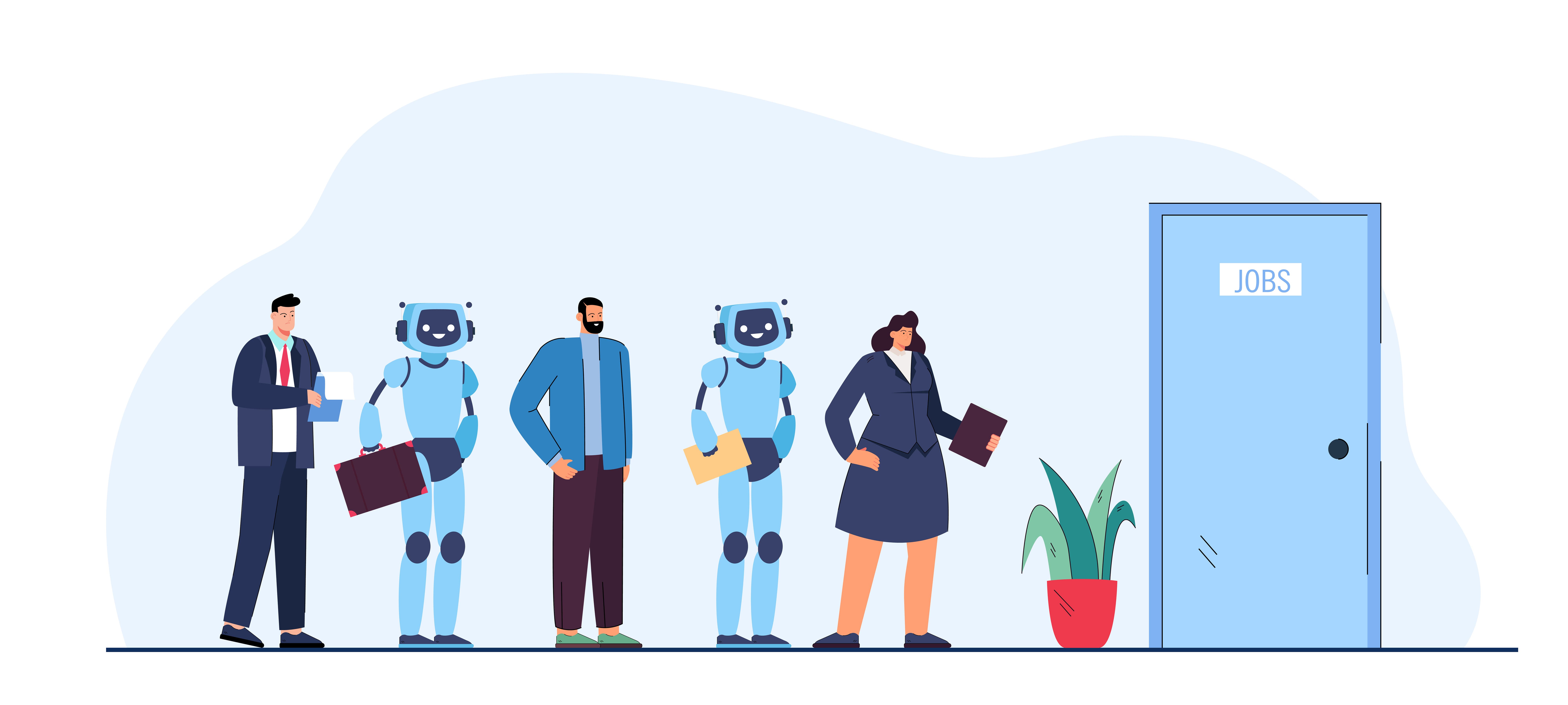
Private 5G is often dismissed as too complex or narrow, yet analysts argue it carries strong potential for mission-critical industries instead of consumer-centric markets.
Sectors that depend on high reliability, including manufacturing, logistics, energy and public safety, find public networks and Wi-Fi insufficient for the operational demands they face. The technology aligns with the rise of AI-enabled automation and may provide growth in a sluggish telecom landscape.
Success depends on the maturity of surrounding ecosystems. Devices, edge computing and integration models differ across industrial verticals, slowing adoption instead of enabling rapid deployment.
The increasing presence of physical AI systems, from autonomous drones to industrial vehicles, makes reliable connectivity even more important.
Debate intensified when Nokia considered divesting its private 5G division, raising doubts about commercial viability, yet industry observers maintain that every market involves unique complexity.
Private 5G extends beyond traditional telecom roles by supporting real-economy sectors such as factories, ports and warehouses. The challenge lies in tailoring networks to distinct operational needs instead of expecting a single solution for all industries.
Analysts also note that inflated expectations in 2019 created a perception of underperformance, although private cellular remains a vital piece in a broader ecosystem involving edge computing, device readiness and software integration.
Long-term outlooks remain optimistic. Analysts project an equipment market worth around $30 billion each year by 2040, supported by strong service revenue. Adoption will vary across industries, but its influence on public RAN markets is expected to grow.
Despite complexity, interest inside the telecom sector stays high, especially as enterprise venues search for reliable connectivity solutions that can support their digital transformation.
Would you like to learn more aboutAI, tech and digital diplomacy? If so, ask our Diplo chatbot!
A new report from NFER warns that up to 3 million low-skilled jobs in the UK could disappear by 2035 due to the growing adoption of automation and AI. Sectors most at risk include trades, machine operations and administrative work, where routine and repetitive tasks dominate.
Economic forecasts remain mixed. The overall UK labour market is expected to grow by 2.3 million jobs by 2035, with gains primarily in professional and managerial roles. Many displaced workers may struggle to find new employment, widening inequality.
The change contrasts with earlier predictions suggesting AI would target higher-skilled jobs such as consultancy or software engineering. Current findings emphasise that manual and lower-skill roles face the most significant short-term disruption from AI.
Policymakers and educators are encouraged to build extensive retraining programmes and foster skills like creativity, communication and digital literacy. Without such efforts, long-term unemployment could become a significant challenge.
Would you like to learn more about AI, tech and digital diplomacy? If so, ask our Diplo chatbot!
Multiple London councils are responding to a cyberattack that has disrupted shared IT systems and raised concerns about data exposure. Kensington and Chelsea and Westminster councils detected the incident on Monday and alerted the Information Commissioner’s Office as investigations began.
The councils say they are working with specialist incident teams and the National Cyber Security Centre (NCSC) to protect systems and keep key services running. Several platforms have been affected, and staff have been redeployed to support residents through monitored phone lines and email channels.
Hammersmith and Fulham, which shares IT services with the affected councils, has also reported disruption. Local leaders say it is too early to confirm who was responsible or whether personal data has been compromised. Overnight mitigation work has been carried out as monitoring continues.
Security researchers describe indications of a serious intrusion involving lateral movement across shared infrastructure. They warn that attackers may escalate to data theft or encryption, given the sensitivity of the information held by local authorities.
National security agencies and police are assessing the incident’s potential impact. Analysts say the attack highlights long-standing risks facing councils that manage extensive services on limited budgets and with inconsistent cyber safeguards.
Would you like to learn more about AI, tech, and digital diplomacy? If so, ask our Diplo chatbot!
The internet has become part of almost everything we do. It helps us work, stay in touch with friends and family, buy things, plan trips, and handle tasks that would have felt impossible until recently. Most people cannot imagine getting through the day without it.
But there is a hidden cost to all this convenience. Most of the time, online services run smoothly, with countless systems working together in the background. But every now and then, though, a key cog slips out of place.
When that happens, the effects can spread fast, taking down apps, websites, and even entire industries within minutes. These moments remind us how much we rely on digital services, and how quickly everything can unravel when something goes wrong. It raises an uncomfortable question. Is digital dependence worth the convenience, or are we building a house of cards that could collapse, pulling us back into reality?
Warning shots of the dot-com Era and the infancy of Cloud services
In its early years, the internet saw several major malfunctions that disrupted key online services. Incidents like the Morris worm in 1988, which crashed about 10 percent of all internet-connected systems, and the 1996 AOL outage that left six million users offline, revealed how unprepared the early infrastructure was for growing digital demand.
A decade later, the weaknesses were still clear. In 2007, Skype, then with over 270 million users, went down for nearly two days after a surge in logins triggered by a Windows update overwhelmed its network. Since video calls were still in their early days, the impact was not as severe, and most users simply waited it out, postponing chats with friends and family until the issue was fixed.
As the dot-com era faded and the 2010s began, the shift to cloud computing introduced a new kind of fragility. When Amazon’s EC2 and EBS systems in the US-East region went down in 2011, the outage took down services like Reddit, Quora, and IMDb for days, exposing how quickly failures in shared infrastructure can cascade.
A year later, GoDaddy’s DNS failure took millions of websites offline, while large-scale Gmail disruptions affected users around the world, early signs that the cloud’s growing influence came with increasingly high stakes.
By the mid-2010s, it was clear that the internet had evolved from a patchwork of standalone services to a heavily interconnected ecosystem. When cloud or DNS providers stumbled, their failures rippled simultaneously across countless platforms. The move to centralised infrastructure made development faster and more accessible, but it also marked the beginning of an era where a single glitch could shake the entire web.
Centralised infrastructure and the age of cascading failures
The late 2000s and early 2010s saw a rapid rise in internet use, with nearly 2 billion people worldwide online. As access grew, more businesses moved into the digital space, offering e-commerce, social platforms, and new forms of online entertainment to a quickly expanding audience.
With so much activity shifting online, the foundation beneath these services became increasingly important, and increasingly centralised, setting the stage for outages that could ripple far beyond a single website or app.
The next major hit came in 2016, when a massive DDoS attack crippled major websites across the USA and Europe. Platforms like Netflix, Reddit, Twitter, and CNN were suddenly unreachable, not because they were directly targeted, but because Dyn, a major DNS provider, had been overwhelmed.
The attack used the Mirai botnet malware to hijack hundreds of thousands of insecure IoT devices and flood Dyn’s servers with traffic. It was one of the clearest demonstrations yet that knocking out a single infrastructure provider could take down major parts of the internet in one stroke.
In 2017, another major outage occurred, with Amazon at the centre once again. On 28 February, the company’s Simple Storage Service (S3) went down for about 4 hours, disrupting access across a large part of the US-EAST-1 region. While investigating a slowdown in the billing system, an Amazon engineer accidentally entered a typo in a command, taking more servers offline than intended.
That small error was enough to knock out services like Slack, Quora, Coursera, Expedia and countless other websites that relied on S3 for storage or media delivery. The financial impact was substantial; S&P 500 companies alone were estimated to have lost roughly 150 million dollars during the outage.
Amazon quickly published a clear explanation and apology, but transparency could not undo the economic damage nor (yet another) sudden reminder that a single mistake in a centralised system could ripple across the entire web.
Outages in the roaring 2020s
The S3 incident made one thing clear. Outages were no longer just about a single platform going dark. As more services leaned on shared infrastructure, even small missteps could take down enormous parts of the internet. And this fragility did not stop at cloud storage.
Over the next few years, attention shifted to another layer of the online ecosystem: content delivery networks and edge providers that most people had never heard of but that nearly every website depended on.
The 2020s opened with one of the most memorable outages to date. On 4 October 2021, Facebook and its sister platforms, Instagram, WhatsApp, and Messenger, vanished from the internet for nearly 7 hours after a faulty BGP configuration effectively removed the company’s services from the global routing table.
Millions of users flocked to other platforms to vent their frustration, overwhelming Twitter, Telegram, Discord, and Signal’s servers and causing performance issues across the board. It was a rare moment when a single company’s outage sent measurable shockwaves across the entire social media ecosystem.
But what happens when outages hit industries far more essential than social media? In 2023, the Federal Aviation Administration was forced to delay more than 10,000 flights, the first nationwide grounding of air traffic since the aftermath of September 11.
A corrupted database file brought the agency’s Notice to Air Missions (NOTAM) system to a standstill, leaving pilots without critical safety updates and forcing the entire aviation network to pause. The incident sent airline stocks dipping and dealt another blow to public confidence, showing just how disruptive a single technical failure can be when it strikes at the heart of critical infrastructure.
Outages that defined 2025
The year 2025 saw an unprecedented wave of outages, with server overloads, software glitches and coding errors disrupting services across the globe. The Microsoft 365 suite outage in January, the Southwest Airlines and FAA synchronisation failure in April, and the Meta messaging blackout in July all stood out for their scale and impact.
But the most disruptive failures were still to come. In October, Amazon Web Services suffered a major outage in its US-East-1 region, knocking out everything from social apps to banking services and reminding the world that a fault in a single cloud region can ripple across thousands of platforms.
Just weeks later, the Cloudflare November outage became the defining digital breakdown of the year. A logic bug inside its bot management system triggered a cascading collapse that took down social networks, AI tools, gaming platforms, transit systems and countless everyday websites in minutes. It was the clearest sign yet that when core infrastructure falters, the impact is immediate, global and largely unavoidable.
And yet, we continue to place more weight on these shared foundations, trusting they will hold because they usually do. Every outage, whether caused by a typo, a corrupted file, or a misconfigured update, exposes how quickly things can fall apart when one key piece gives way.
Going forward, resilience needs to matter as much as innovation. That means reducing single points of failure, improving transparency, and designing systems that can fail without dragging everything down. The more clearly we see the fragility of the digital ecosystem, the better equipped we are to strengthen it.
Outages will keep happening, and no amount of engineering can promise perfect uptime. But acknowledging the cracks is the first step toward reinforcing what we’ve built — and making sure the next slipped cog does not bring the whole machine to a stop.
The smoke and mirrors of the digital infrastructure
The internet is far from destined to collapse, but resilience can no longer be an afterthought. Redundancy, decentralisation and smarter oversight need to be part of the discussion, not just for engineers, but for policymakers as well.
Outages do not just interrupt our routines. They reveal the systems we have quietly built our lives around. Each failure shows how deeply intertwined our digital world has become, and how fast everything can stop when a single piece gives way.
Will we learn enough from each one to build a digital ecosystem that can absorb the next shock instead of amplifying it? Only time will tell.
Would you like to learn more about AI, tech, and digital diplomacy? If so, ask our Diplo chatbot!
OpenAI has unveiled an updated ChatGPT interface that combines voice and text features in a single view. Users can speak naturally at any point in a chat and receive responses in text, audio, or images. The new layout also introduces real-time map displays.
The redesign adds a scrolling transcript within the chat window. It allows users to revisit earlier exchanges and move easily between reading and listening. OpenAI states that the goal is to support voice-led tasks without compromising clarity.
With the unified experience, conversations no longer require switching modes. ChatGPT can deliver audio, written, and visual replies simultaneously. Maps and images appear directly alongside the voice response.
Every spoken message is automatically transcribed. However, this helps users follow more extended discussions and keep a record for later reference. OpenAI says the feature supports both accessibility and everyday convenience.
The update is rolling out gradually across web and mobile platforms. Users who prefer the earlier voice-only layout can revert to it in settings. OpenAI says the unified mode will remain the default as development continues.
Would you like to learn more about AI, tech, and digital diplomacy? If so, ask our Diplo chatbot!
Microsoft will withdraw Copilot from WhatsApp as of 15 January 2026, following the implementation of new platform rules that ban all LLM chatbots.
The service helped millions of users interact with their AI companion inside an everyday messaging environment, yet the updated policy leaves no option for continued support.
Copilot access will continue on the mobile app, the web portal and Windows, offering fuller functionality instead of the limited experience available on WhatsApp.
Users are encouraged to rely on these platforms for ongoing features such as Copilot Voice, Vision and Mico, which expand everyday use across a broader set of tasks.
Chat history cannot be transferred because WhatsApp operated the service without authentication; therefore, users must manually export their conversations before the deadline. Copilot remains free across supported platforms, although some advanced features require a subscription.
Microsoft is working to ensure a smooth transition and stresses that users can expect a more capable experience after leaving WhatsApp, as development resources now focus on its dedicated environments.
Would you like to learn more aboutAI, tech and digital diplomacy? If so, ask our Diplo chatbot!
Enterprise AI entered a new phase as organisations transitioned from simple, prompt-driven tools to autonomous agents capable to acting within complex workflows.
Leaders now face a reality where agentic systems can accelerate development, improve decision-making, and support employees, yet concerns over unreliable data and inconsistent behaviour still weaken trust.
AI adoption has risen sharply, although many remain cautious about committing fully without stronger safeguards in place.
The next stage will rely on multi-agent models where an orchestrator coordinates specialised agents across departments. Single agents will lose effectiveness if they fail to offer scalable value, as enterprises require communication protocols, unified context, and robust governance.
Agents will increasingly pursue outcomes rather than follow instructions. At the same time, event-driven automation will allow them to detect problems, initiate analysis, and collaborate with other agents without waiting for human prompts. Simulation environments will further accelerate learning and strengthen reliability.
Trusted AI will become a defining competitive factor. Brands will be judged by the quality, personalisation, and relational intelligence of their agents rather than traditional identity markers.
Effective interfaces, transparent governance, and clear metrics for agent adherence will shape customer loyalty and shareholder confidence.
Cybersecurity will shift toward autonomous, self-healing digital immune systems, while advances in spatially aware AI will accelerate robotics and immersive simulations across various industries.
Broader impacts will reshape workplace culture. AI-native engineers will shorten development cycles, while non-technical employees will create personal applications, rather than relying solely on central teams.
Ambient intelligence may push new hardware into the mainstream, and sustainability debates will increasingly focus on water usage in data-intensive AI systems. Governments are preparing to upskill public workforces, and consumer agents will pressure companies to offer better value.
Long-term success will depend on raising AI literacy and selecting platforms designed for scalable, integrated, and agentic operations.
Would you like to learn more aboutAI, tech and digital diplomacy? If so, ask our Diplo chatbot!
Yesterday, Canada announced that it has moved forward with a significant partnership that places Nokia at the centre of national ambitions for advanced 5G research.
A groundbreaking event in Ottawa marked the beginning of an expanded programme of work focused on AI, machine learning and next-generation network development. Government ministers emphasised that the investment enhances digital infrastructure, rather than relying on outdated foundations that limit growth.
Nokia plans to revitalise and enlarge its Ottawa facility by adding new lab space and new streams of research activity. The project is expected to create more than 300 jobs and widen opportunities for post-secondary students, strengthening the region’s technology base.
Canada has contributed $40 million through the Strategic Response Fund to support these developments and reinforce the country’s role in the global telecommunications sector.
Government officials argued that the collaboration will fuel economic prosperity and broaden Canada’s capacity to innovate. Advanced 5G networks are expected to bring benefits extending from defence and telecommunications to clean energy, precision agriculture and modern telemedicine.
Ministers presented the partnership as a means to a highly skilled workforce, rather than one that relies on imported expertise.
Nokia’s leadership described the project as a long-term commitment to Canada’s innovation ecosystem. The company highlighted the importance of local talent, secure digital infrastructure and future-oriented research in AI, quantum technology and advanced connectivity.
The expansion strengthens Canada’s position as a leader in next-generation networks and supports an innovation-driven economy.
Would you like to learn more aboutAI, tech and digital diplomacy? If so, ask our Diplo chatbot!
The UK’s Met Office has laid out a strategic plan for integrating AI, specifically machine learning (ML), with traditional physics-based climate and weather models. The aim is to deliver what it calls an ‘optimal blend’ of AI-driven and physics-based forecasting.
To clarify what that blend might look like, the Met Office has defined five distinct approaches. One is the familiar independent physics-based model, which uses physical laws to simulate atmospheric dynamics, trusted but computationally intensive.
At the other end is an independent ML-based model that learns patterns entirely from data, offering far greater speed and scalability.
Between these extremes lie two ‘hybrid’ approaches: hybrid-integrated ML, where ML replaces or enhances parts of the physics model, and hybrid-composite ML, where ML and physics models run separately and feed into each other.
A fifth option is augmented ML, where ML is applied after the model has run to improve its output (for example, downscaling or refining ensemble forecasts).
However, this framework is more than a technical taxonomy; it provides a shared language for scientists, policymakers, and clients to understand how AI and traditional modelling can coexist.
It also helps guide future decisions, for example, allowing gradual adoption of ML in places where it makes sense, while preserving the robustness of well-understood physics methods in critical areas.
The move comes as ML-based weather and climate tools have shown increasing promise. For instance, in 2025, the Met Office published research showing a purely ML-based model achieved seasonal forecasting skill comparable to conventional physics-based methods, but with far lower computing demands.
For digital-policy watchers and climate analysts alike, this signals a shift: forecasting may become more dynamic, scalable and accessible, especially valuable in a changing climate where speed, resolution and adaptability matter as much as theoretical accuracy.
Would you like to learn more about AI, tech and digital diplomacy? If so, ask our Diplo chatbot!
Meta is preparing to introduce its Oakley Meta HSTN smart glasses to the Indian market as part of a new effort to bring AI-powered eyewear to a broader audience.
A launch that begins on 1 December and places the glasses within a growing category of performance-focused devices aimed at athletes and everyday users who want AI built directly into their gear.
The frame includes an integrated camera for hands-free capture and open-ear speakers that provide audio cues without blocking outside sound.
These glasses are designed to suit outdoor environments, offering IPX4 water resistance and robust battery performance. Also, they can record high-quality 3K video, while Meta AI supplies information, guidance and real-time support.
Users can expect up to eight hours of active use and a rapid recharge, with a dedicated case providing an additional forty-eight hours of battery life.
Meta has focused on accessibility by enabling full Hindi language support through the Meta AI app, allowing users to interact in their preferred language instead of relying on English.
The company is also testing UPI Lite payments through a simple voice command that connects directly to WhatsApp-linked bank accounts.
A ‘Hey Meta’ prompt enables hands-free assistance for questions, recording, or information retrieval, allowing users to remain focused on their activity.
The new lineup arrives in six frame and lens combinations, all of which are compatible with prescription lenses. Meta is also introducing its Celebrity AI Voice feature in India, with Deepika Padukone’s English AI voice among the first options.
Pre-orders are open on Sunglass Hut, with broader availability planned across major eyewear retailers at a starting price of ₹ 41,800.
Would you like to learn more aboutAI, tech and digital diplomacy? If so, ask our Diplo chatbot!