Gemini Nano boosts scam detection on Chrome

Google has released a new report outlining how it is using AI to better protect users from online scams across its platforms.

The company says AI is now actively fighting scams in Chrome, Search and Android, with new tools able to detect and neutralise threats more effectively than before.

At the heart of these efforts is Gemini Nano, Google’s on-device AI model, which has been integrated into Chrome to help identify phishing and fraudulent websites.

The report claims the upgraded systems can now detect 20 times more harmful websites, many of which aim to deceive users by creating a false sense of urgency or offering fake promotions. These scams often involve phishing, cryptocurrency fraud, clone websites and misleading subscriptions.

Search has also seen major improvements. Google’s AI-powered classifiers are now better at spotting scam-related content before users encounter it. For example, the company says it has reduced scams involving fake airline customer service agents by over 80 per cent, thanks to its enhanced detection tools.

Meanwhile, Android users are beginning to see stronger safeguards as well. Chrome on Android now warns users about suspicious website notifications, offering the choice to unsubscribe or review them safely.

Google has confirmed plans to extend these protections even further in the coming months, aiming to cover a broader range of online threats.

Would you like to learn more about AI, tech and digital diplomacy? If so, ask our Diplo chatbot!

CrowdStrike cuts jobs amid AI shift

Cybersecurity firm CrowdStrike is laying off 500 employees—5% of its workforce—as it shifts towards an AI-led operating model to boost efficiency and hit a $10 billion annual revenue goal.

In a letter to staff, CEO George Kurtz described AI as a ‘force multiplier’ meant to reduce hiring needs instead of expanding headcount.

The restructure, expected to cost up to $53 million through mid-2026, will still see hiring in customer-facing and engineering roles.

Yet despite its optimism, the company’s regulatory filings flag notable risks in depending on AI, such as faulty outputs, legal uncertainty, and the challenge of managing fast-moving systems. Analysts have also linked the shift to wider market pressures, not merely strategic innovation.

Principal analyst Sofia Ali warned that the AI-first approach may backfire if transparency, governance, and human oversight are not prioritised. Over-reliance on automation—especially in threat detection or customer support—could erode user trust instead of reinforcing it, particularly during critical incidents.

CrowdStrike’s move mirrors a broader tech trend: over 52,000 tech jobs were cut in early 2025 as firms embraced AI to replace automatable roles. For cybersecurity leaders, the challenge now lies in balancing AI’s promise with the human expertise essential to trust and resilience.

Would you like to learn more about AI, tech and digital diplomacy? If so, ask our Diplo chatbot!

Indian stock exchanges curb foreign access amid cybersecurity concerns

India’s two largest stock exchanges, the National Stock Exchange (NSE) and BSE Ltd, have temporarily restricted overseas access to their websites amid rising concerns over cyber threats. The move does not affect foreign investors’ ability to trade on Indian markets.

Sources familiar with the matter confirmed the decision followed a joint meeting between the exchanges, although no recent direct attack has been specified.

Despite the restrictions, market operations remain fully functional, with officials emphasising that the measures are purely preventive.

The precautionary step comes during heightened regional tensions between India and Pakistan, though no link to the geopolitical situation has been confirmed. The NSE has yet to comment publicly on the situation.

A BSE spokesperson noted that the exchanges are monitoring cyber risks both domestically and internationally and that website access is now granted selectively to protect users and infrastructure.

Would you like to learn more about AI, tech and digital diplomacy? If so, ask our Diplo chatbot!
LockBit ransomware Bitcoin addresses exposed

Nearly 60,000 Bitcoin addresses linked to LockBit’s ransomware operations have been exposed following a major breach of the group’s dark web affiliate panel.

The leak, which included a MySQL database dump, was shared publicly online and could assist blockchain analysts in tracing LockBit’s financial activity instead of leaving such transactions untracked.

Despite the scale of the breach, no private keys were leaked. A LockBit representative reportedly confirmed the incident in a message, stating that no sensitive access data was compromised.

However, the exposed database included 20 tables, such as one labelled ‘builds’ that contained details about ransomware created by affiliates and their targeted companies.

Another table, ‘chats,’ revealed over 4,400 messages from negotiations between victims and LockBit operators, offering a rare glimpse into the inner workings of ransomware extortion tactics.

Analysts believe the hack may be connected to a separate breach of the Everest ransomware site, as both featured identical messages, hinting at a possible link.

The incident has again underscored the central role of cryptocurrency in the ransomware economy. Each victim is typically given a unique address for payments, making tracking difficult.

Instead of remaining hidden, these addresses now give law enforcement and blockchain experts a chance to trace payments and potentially link them to previously unidentified actors.

Would you like to learn more about AI, tech and digital diplomacy? If so, ask our Diplo chatbot!

G7 to address North Korea’s role in major crypto hacks

Leaders of the Group of Seven (G7) nations are set to tackle North Korea’s ongoing cyber threats, particularly its involvement in large-scale cryptocurrency hacks.

The agenda will reportedly focus on the regime’s use of stolen crypto funds to finance weapons programmes. The issue has raised international concern over global security risks.

The summit, hosted by Canadian Prime Minister Mark Carney from 15 to 17 June in Alberta, is expected to address geopolitical challenges, including North Korea’s tightening alliance with Russia. Such ties have further complicated attribution of attacks and enforcement of sanctions, experts warn.

Investigations have linked North Korean hackers, notably the Lazarus Group, to major crypto heists. These include the $622 million Axie Infinity breach and February’s $1.4 billion Bybit attack. Analysts believe other cyber units are also active, making digital asset protection a growing priority.

The G7, comprising France, Germany, Italy, Japan, the UK, the US and Canada, aims to strengthen coordination against cybercrime. It also seeks to limit the regime’s ability to exploit the crypto ecosystem for hostile purposes.

Would you like to learn more about AI, tech and digital diplomacy? If so, ask our Diplo chatbot

Reddit plans identity checks after AI bots spark authenticity crisis

Reddit is preparing to introduce identity verification measures following a major controversy over AI bots impersonating humans on its platform.

The move comes after researchers released more than 1,700 AI-generated comments on the ‘Change My View’ subreddit, posing as various personas including abuse survivors and anti-Black Lives Matter supporters.

The large-scale experiment, designed to test AI’s persuasiveness, left many users alarmed and raised serious concerns about trust and authenticity on the site.

The company, which condemned the incident as an ‘improper and highly unethical experiment,’ filed a formal complaint against the university responsible.

However, Reddit faces a broader and more persistent issue: generative AI bots infiltrating the platform for purposes ranging from scientific studies to political manipulation.

To counter this, CEO Steve Huffman announced that Reddit would soon collaborate with third-party services to verify whether users are human — a major shift for a platform built on anonymity.

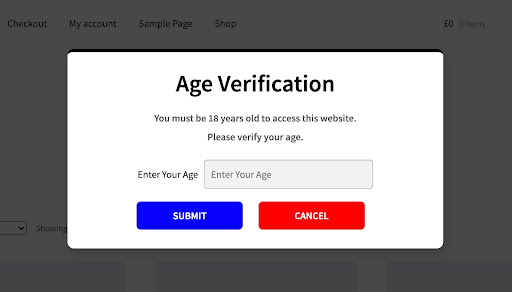
‘To keep Reddit human and meet evolving regulatory requirements, we are going to need a little more information,’ Huffman explained. While the company says it will not seek names or deeply personal data, age and humanity checks will become necessary in certain cases.

This comes amid growing regulatory pressure globally, with some jurisdictions already mandating age verification on social media.

Despite Huffman’s assurances that anonymity remains essential to Reddit, privacy advocates have voiced concerns. Opponents of ID checks warn that verifying user identities could pose serious risks, especially if authorities demand access to sensitive user data.

Examples like Meta’s controversial handover of private messages in Nebraska — which resulted in felony charges in an abortion-related case — highlight how anonymity breaches could have severe consequences.

Reddit insists it will rely on external partners to collect only the essential data and will continue resisting unreasonable demands from public or private authorities. As AI’s influence grows, the company faces the challenge of balancing user anonymity with the need to protect its platform from manipulation.

Would you like to learn more about AI, tech and digital diplomacy? If so, ask our Diplo chatbot!

Google to roll out Gemini AI for kids under 13

Google has announced plans to introduce its Gemini AI platform to children under 13, a move that has sparked mixed reactions.

Parents recently received notifications about the rollout, with Google stating that children will be able to use Gemini for tasks such as homework help, answering general questions, and even bedtime stories.

The announcement has triggered concern among some organisations due to the risks associated with young users interacting with AI.

Critics point out that AI models have previously struggled to maintain child-appropriate safeguards and worry that children may not fully grasp the implications of engaging with such technology. Despite these issues, others have applauded Google’s decision to keep parents closely involved.

Taylor Barkley, Director of Public Policy at the Abundance Institute, praised Google for prioritising parental involvement. He noted that while risks exist, the best approach is not to impose strict bans but to work collaboratively with parents and caregivers to manage children’s AI usage.

‘Google should be applauded for proactively notifying parents,’ Barkley said in a statement. ‘When it comes to new technologies, parents come first.’

To ensure parental oversight, Google will require children’s access to Gemini to be managed through Family Link, its parental control platform. Family Link allows parents to monitor device usage, manage privacy settings, share location, and establish healthy digital habits for their families.

As AI continues to permeate everyday life, Google’s decision highlights the delicate balance between offering educational opportunities and ensuring the safe and responsible use of technology among younger users.

Would you like to learn more about AI, tech and digital diplomacy? If so, ask our Diplo chatbot!

Meta wins $168 million verdict against NSO Group in landmark spyware case

Meta has secured a major legal victory against Israeli surveillance company NSO Group, with a California jury awarding $168 million in damages.

The ruling concludes a six-year legal battle over the unlawful deployment of NSO’s Pegasus spyware, which targeted journalists, human rights activists, and other individuals through a vulnerability in WhatsApp.

The verdict includes $444,719 in compensatory damages and $167.3 million in punitive damages.

Meta hailed the decision as a milestone for privacy, calling it ‘the first victory against the development and use of illegal spyware that threatens the safety and privacy of everyone’. NSO, meanwhile, said it would review the outcome and consider further legal steps, including an appeal.

The case, launched by WhatsApp in 2019, exposed the far-reaching use of Pegasus. Between 2018 and 2020, NSO generated $61.7 million in revenue from a single exploited vulnerability, with profits potentially reaching $40 million.

Court documents revealed that Pegasus was deployed against 1,223 individuals across 51 countries, with the highest number of victims in Mexico, India, Bahrain, Morocco, and Pakistan. Spain, where officials were targeted in 2022, ranked as the highest Western democracy on the list.

While NSO has long maintained that its spyware is sold exclusively to governments for counterterrorism purposes, the data highlighted its extensive use in authoritarian and semi-authoritarian regimes.

A former NSO employee testified that the company attempted to sell Pegasus to United States police forces, though those efforts were unsuccessful.

Beyond the financial penalty, the ruling exposed NSO’s internal operations. The company runs a 140-person research team with a $50 million budget dedicated to discovering smartphone vulnerabilities. Clients have included Saudi Arabia, Mexico, and Uzbekistan.

However, the firm’s conduct drew harsh criticism from Judge Phyllis Hamilton, who accused NSO of withholding evidence and ignoring court orders. Israeli officials reportedly intervened last year to prevent sensitive documents from reaching the US courts.

Privacy advocates welcomed the decision. Natalia Krapiva, a senior lawyer at Access Now, said it sends a strong message to the spyware industry. ‘This will hopefully show spyware companies that there will be consequences if you are careless, if you are brazen, and if you act as NSO did in these cases,’ she said.

Would you like to learn more about AI, tech and digital diplomacy? If so, ask our Diplo chatbot!

Tether adds Chainalysis tools to enhance crypto compliance

Tether has partnered with Chainalysis to integrate its compliance and monitoring tools into the Hadron by Tether platform. The collaboration will provide users with advanced risk detection and real-time transaction monitoring, helping institutions meet regulatory requirements.

The move is part of a wider trend of increased oversight in the crypto industry.

Hadron by Tether, launched in November 2024, enables institutions, governments, and corporations to tokenise real-world assets like financial instruments and real estate. The platform has seen a surge in adoption, with the real-world asset (RWA) market growing by 10.5% in the past month.

Tether’s CEO, Paolo Ardoino, highlighted that this integration would provide institutional-grade compliance without compromising decentralisation.

Chainalysis is known for its security tools and blockchain data platform. It will now support Hadron users with risk detection, real-time transaction monitoring, and Know-Your-Transaction (KYT) services.

Would you like to learn more about AI, tech and digital diplomacy? If so, ask our Diplo chatbot

AMD faces a $1.5 billion loss from US chip curbs

AMD expects to lose around US$1.5 billion in revenue this year because of new US export restrictions on advanced AI chips, which now require a licence to be sold to China.

The US government, under both the Biden and Trump administrations, has tightened curbs on chip exports in an effort to slow China’s progress in developing powerful AI systems, citing national security risks.

China makes up roughly a quarter of AMD’s total revenue, so these measures could reduce AMD’s expected annual earnings by almost 5 per cent.

Despite this setback, AMD posted stronger-than-expected second-quarter revenue guidance, forecasting around US$7.4 billion, likely driven by customers rushing to stockpile chips before the new rules fully take effect.

CEO Lisa Su said the impact from the curbs would be mostly felt during the second and third quarters, yet she still expects revenue from the company’s AI data centre chips to grow by strong double digits in 2024.

AMD’s finance chief Jean Hu clarified the projected US$1.5 billion revenue loss is tied directly to the latest export controls introduced in April.

Although AMD is under pressure, demand for its high-performance chips remains solid, with tech giants like Microsoft and Meta continuing to invest heavily in AI infrastructure.

The company’s data centre division saw sales jump 57 per cent to US$3.7 billion, helping push total revenue up 36 per cent to US$7.44 billion—both figures exceeding analyst expectations. Adjusted earnings stood at 96 cents per share, slightly above estimates.

Rival chipmaker Nvidia has also warned it now requires a licence to export to China and faces an even larger US$5.5 billion hit.

Meanwhile, other tech firms didn’t fare as well—Marvell Technology and Super Micro disappointed investors, with shares falling after they issued weaker outlooks, adding further signs of turbulence in the chip sector.

Would you like to learn more about AI, tech and digital diplomacy? If so, ask our Diplo chatbot!