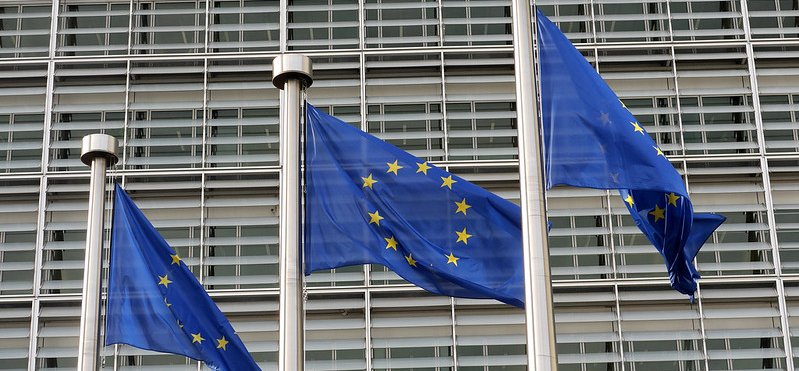
Chatham House analyst targeted in phishing attack

Chatham House expert Keir Giles has been targeted by a highly sophisticated spear phishing campaign, with suspected ties to Russian intelligence.

The cyber operation impersonated a senior official at the US State Department and attempted to extract sensitive credentials under the guise of a legitimate diplomatic consultation.

The incident, which took place in May 2025, was investigated by Google’s Threat Intelligence Group (GTIG) and Citizen Lab. It has been linked to a threat actor tracked as UNC6293, possibly associated with APT29—an espionage group believed to be backed by Russia’s Foreign Intelligence Service (SVR).

Giles received an email from an individual claiming to be ‘Claudie S. Weber’, a non-existent official at the US Department of State. The message invited him to a meeting to discuss ‘recent developments’, a type of request not uncommon in his line of work.

Although the attacker used a Gmail address, they copied several fake @state.gov email addresses to lend the communication authenticity. According to Citizen Lab, the US State Department’s email servers do not bounce invalid addresses, allowing this tactic to go unnoticed.

The tone of the message, coupled with evasive language, led investigators to suspect that the attackers may have employed a large language model to generate the email content.

While the first message contained no direct malware, a later email included a PDF instructing Giles to create an app-specific password (ASP) for accessing a supposed government platform. In reality, this would have handed full access of his Gmail account to the attackers.

Although Giles followed the instructions, he used a different Gmail account than the one targeted—likely limiting the damage. After ten further email exchanges, he shared details of the attempted attack publicly, warning that the stolen material could be altered and leaked as part of a disinformation campaign.

He noted that the attackers’ patient approach made the scam appear more plausible. Citizen Lab confirmed the threat actor’s ability to adapt based on Giles’ replies, avoiding pressure tactics and instead suggesting future collaboration.

Google ultimately blocked the offending Gmail account and secured the affected inbox. GTIG later disclosed a broader campaign, including another incident themed around Ukraine and Microsoft, beginning in April 2025.

In response, GTIG advised high-risk users to avoid app-specific passwords altogether, particularly when enrolled in the Advanced Protection Program (APP). Other recommendations included promptly revoking unused ASPs, monitoring account activity, and enabling advanced security measures.

The case underscores the evolving tactics of state-aligned cyber actors, who now combine social engineering with AI and deep reconnaissance to breach high-value targets.

Would you like to learn more about AI, tech and digital diplomacy? If so, ask our Diplo chatbot!

TCS clears its name in M&S data breach

Tata Consultancy Services (TCS) has publicly denied any involvement in the cyberattack that disrupted Marks & Spencer earlier this year. The attack, described as highly sophisticated, led to significant data theft and weeks-long disruption of online operations.

During the company’s annual shareholder meeting, TCS independent director Keki Mistry confirmed that none of the company’s systems or users were compromised. He said TCS is not under investigation by M&S and assured shareholders no other clients were affected.

TCS has worked with M&S for more than a decade and was awarded a $1bn contract in 2023 to overhaul the retailer’s supply chain systems. Although TCS reviewed its systems, Mistry’s comments suggest the breach did not stem from its infrastructure.

The retailer has not responded to TCS’s latest remarks but earlier stated it hopes to fully restore its online services by July.

Would you like to learn more about AI, tech and digital diplomacy? If so, ask our Diplo chatbot

Publishers lose traffic as readers trust AI more

Online publishers are facing an existential threat as AI increasingly becomes the primary source of information for users, warned Cloudflare CEO Matthew Prince during an Axios event in Cannes.

As AI-generated summaries dominate user queries, search engine referrals have plunged, urgently pushing media outlets to reconsider how they sustain revenue from their content.

Traffic patterns have dramatically shifted. A decade ago, Google sent a visitor to publishers for every two pages it crawled.

Today, that ratio has ballooned to 18:1. The picture is more extreme for AI firms: OpenAI’s ratio has jumped from 250:1 to 1,500:1 in just six months, while Anthropic’s has exploded from 6,000:1 to a staggering 60,000:1.

Although AI systems typically include links to sources, Prince noted that ‘people aren’t following the footnotes,’ meaning fewer clicks and less ad revenue.

Prince argued that audiences are beginning to trust AI summaries more than the original articles, reducing publishers’ visibility and direct engagement.

As the web becomes increasingly AI-mediated, fewer people read full articles, raising urgent questions about how creators and publishers can be fairly compensated.

To tackle the issue, Cloudflare is preparing to launch a new anti-scraping tool to block unauthorised data harvesting. Prince hinted that the tool has broad industry support and will be rolled out soon.

He remains confident in Cloudflare’s capacity to fight against such threats, noting the company’s daily battles against sophisticated global cyber actors.

Would you like to learn more about AI, tech and digital diplomacyIf so, ask our Diplo chatbot!

TxTag users targeted in sophisticated phishing scheme

A new phishing campaign targets employees with fake TxTag toll payment alerts, using legitimate-looking government domains to trick recipients into handing over sensitive information. The emails warn users of an impending account suspension unless they urgently pay a small fee, creating a false alarm to prompt quick action.

While the messages appear to come from official sources, researchers found they actually originate from an Indiana-based GovDelivery system—not Texas toll authorities—highlighting a subtle but crucial red flag. Once victims click the link, they are taken to a convincing replica of the TxTag payment site hosted at a fraudulent domain.

The page displays a believable debt of $6.69 to make the request seem routine and non-threatening. However, instead of simply logging in, users are asked to provide full personal details and, later, complete credit card information—including CVV codes.

The phishing site even validates card data to ensure the theft yields high-quality credentials. After submitting the data, victims see a fake processing message, which may be followed by an error claiming the card is unsupported.

That trick often leads users to input additional card details, giving attackers access to multiple financial accounts. The scam exemplifies the growing sophistication of phishing attacks in the US that combine technical misdirection with emotional manipulation, preying on trust in government branding and the fear of financial penalties.

Would you like to learn more about AI, tech and digital diplomacy? If so, ask our Diplo chatbot

France appeals porn site ruling based on EU legal grounds

The French government is challenging a recent decision by the Administrative Court of Paris that temporarily halted the enforcement of mandatory age verification on pornographic websites based in the EU. The court found France’s current approach potentially inconsistent with the EU law—specifically the 2002 E-Commerce Directive—which upholds the ‘country-of-origin’ principle.

That rule limits an EU country’s authority to regulate online services hosted in another member state unless it follows a formal process involving both the host country and the European Commission. The dispute’s heart is whether France correctly followed the required legal steps.

While French authorities say they notified the host countries of porn companies like Hammy Media (Xhamster) and Aylo (owner of Pornhub and others) and waited the mandated three months, legal experts argue that notifying the Commission is also essential. So far, there is no confirmation that this additional step was taken, which may weaken France’s legal standing.

Digital Minister Clara Chappaz reaffirmed the government’s commitment to enforcing age checks, calling it a ‘priority’ in a public statement. The ministry insists its rules align with the EU’s Audiovisual Media Services Directive.

However, the court’s ruling highlights broader tensions between France’s national digital regulations and overarching the EU law. Similar legal challenges have already forced France to adjust parts of its digital, influencer, and cloud regulation frameworks in the past two years.

The appeal could have significant implications for age restrictions on adult content and how France asserts digital sovereignty within the EU. If the court upholds the suspension, other digital regulations based on national initiatives may also be vulnerable to legal scrutiny under the EU principles.

Would you like to learn more about AI, tech and digital diplomacy? If so, ask our Diplo chatbot

SoftBank plans $1 trillion AI and robotics park in Arizona

SoftBank founder Masayoshi Son is planning what could become his most audacious venture yet: a $1 trillion AI and robotics industrial park in Arizona.

Dubbed ‘Project Crystal Land’, the initiative aims to recreate a high-tech manufacturing hub reminiscent of China’s Shenzhen, focused on AI-powered robots and next-gen automation.

Son is courting global tech giants — including Taiwan Semiconductor Manufacturing Co. (TSMC) and Samsung — to join the vision, though none have formally committed.

The plan hinges on support from federal and state governments, with SoftBank already discussing possible tax breaks with US officials, including Commerce Secretary Howard Lutnick.

While TSMC is already investing $165 billion in Arizona facilities, sources suggest Son’s project has not altered the chipmaker’s current roadmap. SoftBank hopes to attract semiconductor and AI hardware leaders to power the park’s infrastructure.

Son has also approached SoftBank Vision Fund portfolio companies to participate, including robotics startup Agile Robots.

The park may serve as a production hub for emerging tech firms, complementing SoftBank’s broader investments, such as a potential $30 billion stake in OpenAI, a $6.5 billion acquisition of Ampere Computing, and funding for Stargate, a global data centre venture with OpenAI, Oracle, and MGX.

While the vision is still early, Project Crystal Land could radically shift US high-tech manufacturing. Son’s strategy relies heavily on project-based financing, allowing extensive infrastructure builds with minimal upfront capital.

As SoftBank eyes long-term AI growth and increased investor confidence, whether this futuristic park will become a reality — or another of Son’s high-stakes dreams remains to be seen.

Would you like to learn more about AI, tech and digital diplomacy? If so, ask our Diplo chatbot!

North Korea’s BlueNoroff uses deepfakes in Zoom calls to hack crypto workers

The North Korea-linked threat group BlueNoroff has been caught deploying deepfake Zoom meetings to target an employee at a cryptocurrency foundation, aiming to install malware on macOS systems.

According to cybersecurity firm Huntress, the attack began through a Telegram message that redirected the victim to a fake Zoom site. Over several weeks, the employee was lured into a group video call featuring AI-generated replicas of company executives.

When the employee encountered microphone issues during the meeting, the fake participants instructed them to download a Zoom extension, which instead executed a malicious AppleScript.

The script covertly fetched multiple payloads, installed Rosetta 2, and prompted for the system password while wiping command histories to hide forensic traces. Eight malicious binaries were uncovered on the compromised machine, including keyloggers, information stealers, and remote access tools.

BlueNoroff, also known as APT38 and part of the Lazarus Group, has a track record of targeting financial and blockchain organisations for monetary gain. The group’s past operations include the Bybit and Axie Infinity breaches.

Their campaigns often combine deep social engineering with sophisticated multi-stage malware tailored for macOS, with new tactics now mimicking audio and camera malfunctions to trick remote workers.

Cybersecurity analysts have noted that BlueNoroff has fractured into subgroups like TraderTraitor and CryptoCore, specialising in cryptocurrency theft.

Recent offshoot campaigns involve fake job interview portals and dual-platform malware, such as the Python-based PylangGhost and GolangGhost trojans, which harvest sensitive data from victims across operating systems.

The attackers have impersonated firms like Coinbase and Uniswap, mainly targeting users in India.

Would you like to learn more about AI, tech and digital diplomacy? If so, ask our Diplo chatbot!

AI-generated photo falsely claims to show a downed Israeli jet

Following Iranian state media claims that its forces shot down two Israeli fighter jets, an image circulated online falsely purporting to show the wreckage of an F-35.

The photo, which shows a large jet crash-landing in a desert, quickly spread across platforms like Threads and South Korean forums, including Aagag and Ruliweb. An Israeli official dismissed the shootdown claim as ‘fake news’.

The image’s caption in Korean read: ‘The F-35 shot down by Iran. Much bigger than I thought.’ However, a detailed AFP analysis found the photo contained several hallmarks of AI generation.

People near the aircraft appear the same size as buses, and one vehicle appears to merge with the road — visual anomalies common in synthetic images.

In addition to size distortions, the aircraft’s markings did not match those used on actual Israeli F-35s. Lockheed Martin specifications confirm the F-35 is just under 16 metres long, unlike the oversized version shown in the image.

Furthermore, the wing insignia in the image differed from the Israeli Air Force’s authentic emblem.

Amid escalating tensions between Iran and Israel, such misinformation continues to spread rapidly. Although AI-generated content is becoming more sophisticated, inconsistencies in scale, symbols, and composition remain key indicators of digital fabrication.

Would you like to learn more about AI, tech and digital diplomacy? If so, ask our Diplo chatbot!
Massive data leak exposes 16 billion login credentials from Google, Facebook, and more

One of the largest-ever leaks of stolen login data has come to light, exposing more than 16 billion records across widely used services, including Facebook, Google, Telegram, and GitHub. The breach, uncovered by researchers at Cybernews, highlights a growing threat to individuals and organisations.

The exposed data reportedly originated from info stealer malware, previous leaks, and credential-stuffing tools. A total of 30 separate datasets were identified, some containing over 3.5 billion entries.

These were briefly available online due to unsecured cloud storage before being removed. Despite the swift takedown, the data had already been collected and analysed.

Experts have warned that the breach could lead to identity theft, phishing, and account takeovers. Smaller websites and users with poor cybersecurity practices are especially vulnerable. Many users continue to reuse passwords or minor variations of them, increasing the risk of exploitation.

While the leak is severe, users employing two-factor authentication (2FA), password managers, or passkeys are less likely to be affected.

Passkeys, increasingly adopted by companies like Google and Apple, offer a phishing-resistant login method that bypasses the need for passwords altogether.

Would you like to learn more about AI, tech and digital diplomacy? If so, ask our Diplo chatbot

Iran enforces crypto exchange curfew after Nobitex breach

Iran’s central bank has imposed strict operating hours on domestic crypto exchanges following a massive $100 million hack on Nobitex, the country’s largest digital asset platform. The move comes amid accusations that the incident was politically motivated.

According to blockchain analytics firm Chainalysis, exchanges in Iran are now required to operate between 10 am and 8 pm only. Analysts believe the curfew is aimed at improving monitoring capabilities and limiting capital flight during heightened Iran-Israel hostilities.

Andrew Fierman, head of national security intelligence at Chainalysis, suggested the decision was both a technical response to the hack and a strategic move to maintain tighter control over outflows.

The cyberattack, allegedly orchestrated by pro-Israel group Predatory Sparrow, targeted Nobitex’s internal systems, draining hot wallets of Bitcoin, Ether, Dogecoin, XRP, and Solana.

Cybersecurity experts say the stolen assets were transferred to burner wallets without access keys, effectively destroying them in a rare politically charged crypto burn. Nobitex stated it has isolated its systems and will compensate users using its reserve fund.

Nobitex plays a crucial role in Iran’s crypto economy, having processed over $11 billion in inflows, far outpacing all other domestic exchanges. Chainalysis notes the platform also has ties to sanctioned entities and terrorist-linked groups.

The incident is one in a series of recent cyberattacks on Iranian infrastructure, suggesting a growing digital front in the long-standing Iran-Israel conflict.

Would you like to learn more about AI, tech and digital diplomacy? If so, ask our Diplo chatbot!