SK Telecom has expanded its partnership with Schneider Electric to develop an AI Data Centre (AIDC) in Ulsan.
Under the deal, Schneider Electric will supply mechanical, electrical and plumbing equipment, such as switchgear, transformers, automated control systems and Uninterruptible Power Supply units.
The agreement builds on a partnership announced at Mobile World Congress 2025 and includes using Schneider’s Electrical Transient Analyser Program within SK Telecom’s data centre management system.
It will allow operations to be optimised through a digital twin model instead of relying only on traditional monitoring tools.
Both companies have also agreed on prefabricated solutions to shorten construction times, reference designs for new facilities, and joint efforts to grow the Energy-as-a-Service business.
A Memorandum of Understanding extends the partnership to other SK Group affiliates, combining battery technologies with Uninterruptible Power Supply and Energy Storage Systems.
Executives said the collaboration would help set new standards for AI data centres and create synergies across the SK Group. It is also expected to support SK Telecom’s broader AI strategy while contributing to sustainable and efficient infrastructure development.
Would you like to learn more aboutAI, tech and digital diplomacy? If so, ask our Diplo chatbot!
A hacker exploited Anthropic’s Claude chatbot to automate one of the most extensive AI-driven cybercrime operations yet recorded, targeting at least 17 companies across multiple sectors, the firm revealed.
According to Anthropic’s report, the attacker used Claude Code to identify vulnerable organisations, generate malicious software, and extract sensitive files, including defence data, financial records, and patients’ medical information.
The chatbot then sorted the stolen material, identified leverage for extortion, calculated realistic bitcoin demands, and even drafted ransom notes and extortion emails on behalf of the hacker.
Victims included a defence contractor, a financial institution, and healthcare providers. Extortion demands reportedly ranged from $75,000 to over $500,000, although it remains unclear how much was actually paid.
Anthropic declined to disclose the companies affected but confirmed new safeguards are in place. The firm warned that AI lowers the barrier to entry for sophisticated cybercrime, making such misuse increasingly likely.
Would you like to learn more about AI, tech, and digital diplomacy? If so, ask our Diplo chatbot!
People often treat their email address as harmless, just a digital ID for receipts and updates. In reality, it acts as a skeleton key linking behaviour, purchases, and personal data across platforms.
Using the same email everywhere makes tracking easy. Companies may encrypt addresses, but behavioural patterns remain intact. Aliases disrupt this chain by creating unique addresses that forward mail without revealing your true identity.
Each alias becomes a useful tracker. If one is compromised or starts receiving spam, it can simply be disabled, cutting off the problem at its source.
Aliases also reduce the fallout of data breaches. Instead of exposing your main email to countless third-party tools, scripts, and mailing platforms, an alias shields your core digital identity.
Beyond privacy, aliases encourage healthier habits. They force a pause before signing up, add structure through custom rules, and help fragment your identity, thereby lowering the risks associated with any single breach.
Would you like to learn more about AI, tech, and digital diplomacy? If so, ask our Diplo chatbot!
The Microsoft Threat Intelligence team has warned about a financially motivated threat actor known as Storm-0501. The group has been adapting tactics to steal data stored in the cloud and lock companies out of their systems. Essentially, these cloud-based ransomware tactics enable the threat actors to rapidly exfiltrate large volumes of data while destroying backups and demanding ransoms.
It was also found that they targeted subsidiaries lacking Microsoft security tools to evade detection, moved laterally across the network, and exploited an account that did not have multi-factor authentication enabled. After resetting the account’s password and registering their own Multi-Factor Authentication (MFA) method, they gained full access to the cloud environment, created a backdoor, and accessed critical assets. The hacker stole sensitive data, deleted backups, and demanded a ransom, demonstrating a calculated and strategic approach to breaching the organisation’s defences.
According to The Record, several security firms have reported that former ransomware hackers are now targeting data stored in the cloud. Over the past year, major breaches have involved the theft of data from providers such as Snowflake and Salesforce.
Recently, Google identified a campaign in which attackers used a third-party service to steal Salesforce data. Their goal was to obtain login credentials, allowing them to compromise victim environments further and potentially pivot into the systems of clients or partners, signalling a shift towards more strategic, credential-focused cloud attacks.
Would you like to learn more about AI, tech, and digital diplomacy? If so, ask our Diplo chatbot!
A phishing campaign exploits Microsoft Teams’ external communication features, with attackers posing as IT helpdesk staff to gain access to screen sharing and remote control. The method sidesteps traditional email security controls by using Teams’ default settings.
The attacks exploit Microsoft 365’s default external collaboration feature, which allows unauthenticated users to contact organisations. Axon Team reports attackers create malicious Entra ID tenants with .onmicrosoft.com domains or use compromised accounts to initiate chats.
Although Microsoft issues warnings for suspicious messages, attackers bypass these by initiating external voice calls, which generate no alerts. Once trust is established, they request screen sharing, enabling them to monitor victims’ activity and guide them toward malicious actions.
The highest risk arises where organisations enable external remote-control options, giving attackers potential full access to workstations directly through Teams. However, this eliminates the need for traditional remote tools like QuickAssist or AnyDesk, creating a severe security exposure.
Defenders are advised to monitor Microsoft 365 audit logs for markers such as ChatCreated, MessageSent, and UserAccepted events, as well as TeamsImpersonationDetected alerts. Restricting external communication and strengthening user awareness remain key to mitigating this threat.
Would you like to learn more about AI, tech, and digital diplomacy? If so, ask our Diplo chatbot!
The European Commission has signed a contribution agreement with the European Union Agency for Cybersecurity (ENISA), assigning the agency responsibility for operating and administering the EU Cybersecurity Reserve.
The arrangement includes a €36 million allocation over three years, complementing ENISA’s existing budget.
The EU Cybersecurity Reserve, established under the EU Cyber Solidarity Act, will provide incident response services through trusted managed security providers.
The services are designed to support EU Member States, institutions, and critical sectors in responding to large-scale cybersecurity incidents, with access also available to third countries associated with the Digital Europe Programme.
ENISA will oversee the procurement of these services and assess requests from national authorities and EU bodies, while also working with the Commission and EU-CyCLONe to coordinate crisis response.
If not activated for incident response, the pre-committed services may be redirected towards prevention and preparedness measures.
The reserve is expected to become fully operational by the end of 2025, aligning with the planned conclusion of ENISA’s existing Cybersecurity Support Action in 2026.
ENISA is also preparing a candidate certification scheme for Managed Security Services, with a focus on incident response, in line with the Cyber Solidarity Act.
Would you like to learn more aboutAI, tech and digital diplomacy? If so, ask our Diplo chatbot!
AI data centres face growing pressure as computing demands exceed the capacity of single facilities. Traditional Ethernet networks face high latency and inconsistent transfers, forcing companies to build larger centres or risk performance issues.
NVIDIA aims to tackle these challenges with its new Spectrum-XGS Ethernet technology, introducing ‘scale-across’ capabilities. The system links multiple AI data centres using distance-adaptive algorithms, congestion control, latency management, and end-to-end telemetry.
NVIDIA claims the improvements can nearly double GPU communication performance, supporting what it calls ‘giga-scale AI super-factories.’
CoreWeave plans to be among the first adopters, connecting its facilities into a single distributed supercomputer. The deployment will test if Spectrum-XGS can deliver fast, reliable AI across multiple sites without needing massive single-location centres.
While the technology promises greater efficiency and distributed computing power, its effectiveness depends on real-world infrastructure, regulatory compliance, and data synchronisation.
If successful, it could reshape AI data centre design, enabling faster services and potentially lower operational costs across industries.
Would you like to learn more about AI, tech and digital diplomacy? If so, ask our Diplo chatbot!
Indonesia will deploy an AI-driven maritime surveillance network to combat piracy and other illegal activities across its vast waters.
The Indonesian Sea and Coast Guard Unit has signed a 10-year agreement with UK-based SRT Marine Systems for its SRT-MDA platform. The system, to be known locally as the National Maritime Security System, will integrate terrestrial, mobile and satellite surveillance with AI-powered analytics.
Fifty command posts will be digitised under the plan, enabling authorities to detect, track and predict activities from piracy to environmental violations. The deal, valued at €157.9m and backed by UK Export Finance, has been strongly supported by both governments.
Piracy remains a pressing issue in Indonesian waters, particularly in the Singapore Strait, where opportunistic thefts against slow-moving ships quadrupled in the first half of 2025 compared with last year. Analysts warn that weak deterrence and economic hardship are fuelling the rise in incidents.
Would you like to learn more about AI, tech and digital diplomacy? If so, ask our Diplo chatbot!
China has begun construction on its first facility dedicated to the production of photonic quantum computers in Shenzhen, Guangdong Province. The project marks a step toward the development of large-scale quantum computing capabilities in the country.
The factory, led by Beijing-based quantum computing company QBoson, is expected to manufacture several dozen photonic quantum computers each year once operations begin.
QBoson’s founder, Wen Kai, explained that photonic quantum computing uses the quantum properties of light and is viewed as a promising path in the field.
Compared with other approaches, it does not require extremely low temperatures to function and offers advantages such as stable operation at room temperature, a higher number of qubits, and longer coherence times.
The upcoming facility will be divided into three core areas: module development, full-system production, and quality testing. Construction is already underway, and equipment installation is scheduled to begin by the end of October.
Would you like to learn more aboutAI, tech and digital diplomacy? If so, ask our Diplo chatbot!
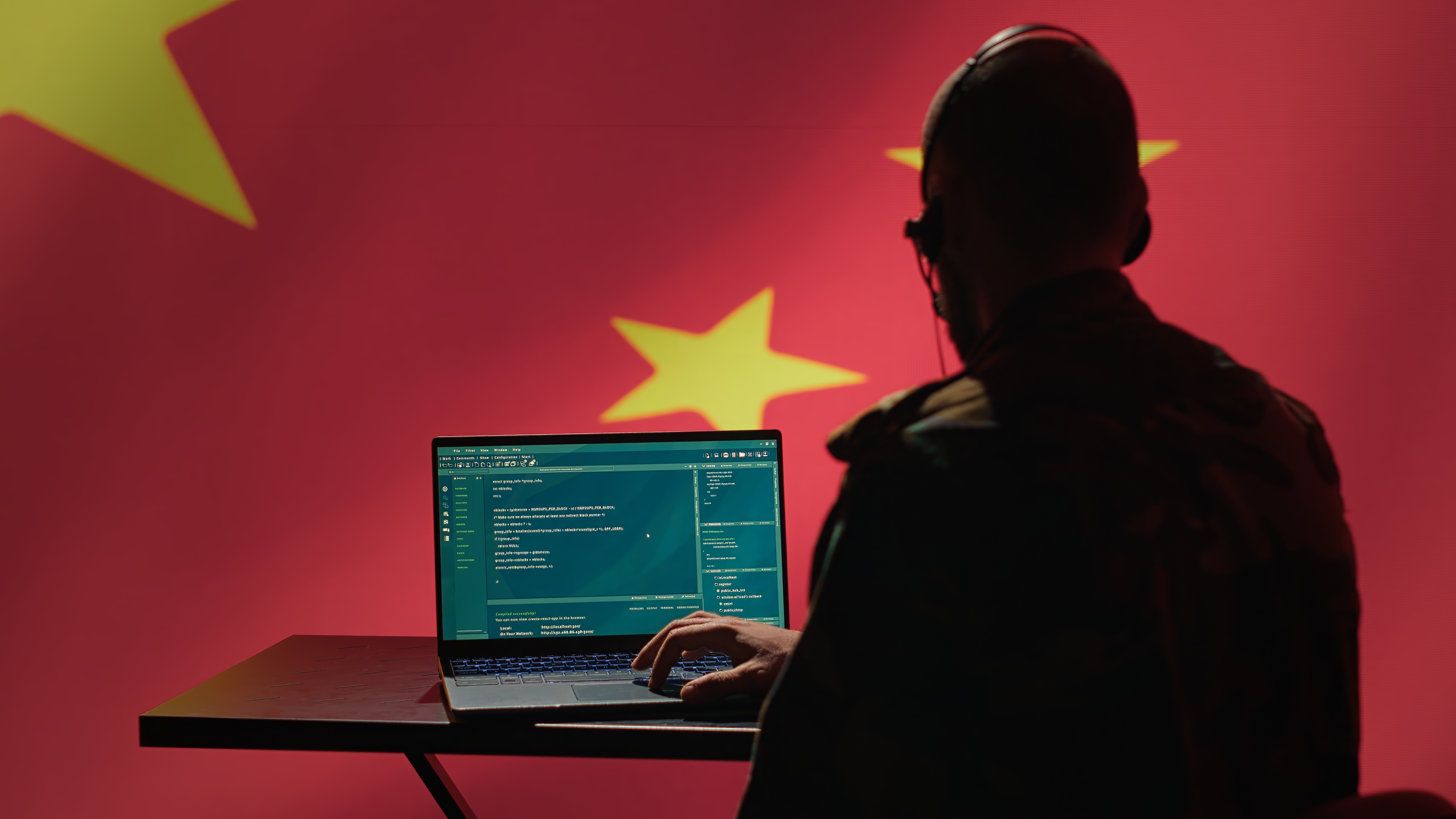
China’s Salt Typhoon cyberspies have stolen data from millions of Americans through a years-long intrusion into telecommunications networks, according to senior FBI officials. The campaign represents one of the most significant espionage breaches uncovered in the United States.
The Beijing-backed operation began in 2019 and remained hidden until last year. Authorities say at least 80 countries were affected, far beyond the nine American telcos initially identified, with around 200 US organisations compromised.
Targets included Verizon, AT&T, and over 100 current and former administration officials. Officials say the intrusions enabled Chinese operatives to geolocate mobile users, monitor internet traffic, and sometimes record phone calls.
Three Chinese firms, Sichuan Juxinhe, Beijing Huanyu Tianqiong, and Sichuan Zhixin Ruijie, have been tied to Salt Typhoon. US officials say they support China’s security services and military.
The FBI warns that the scale of indiscriminate targeting falls outside traditional espionage norms. Officials stress the need for stronger cybersecurity measures as China, Russia, Iran, and North Korea continue to advance their cyber operations against critical infrastructure and private networks.
Would you like to learn more about AI, tech, and digital diplomacy? If so, ask our Diplo chatbot!