Mastercard has introduced a generative AI foundation model trained on billions of anonymised transactions. The model is designed as a backend system to power insights across payments and commerce services.
The company plans to extend AI use beyond fraud detection into cybersecurity, loyalty programmes and small-business tools. The model is being developed with support from Nvidia and Databricks technologies.
Earlier AI tools focused on fraud detection, significantly improving accuracy and reducing false positives. The new model marks a shift towards a broader infrastructure approach across multiple products.
This move aligns with Mastercard’s growing reliance on value-added services, which generated over $13 billion in revenue. These services include security, analytics and digital payment solutions beyond the core network.
Competitors such as Visa and PayPal are also expanding AI-driven commerce platforms. The race is intensifying as firms build integrated systems for payments, automation and intelligent services.
Would you like to learn more about AI, tech and digital diplomacy? If so, ask our Diplo chatbot!
A newly identified cyberattack known as ‘DarkSword’ is raising concerns about the security of iPhone devices, following reports that millions of users could be exposed to rapid data extraction techniques.
Cybersecurity researchers indicate that the attack targets specific iOS versions, exploiting vulnerabilities in the Safari browser and a graphics processing feature known as WebGPU.
Once access is gained, attackers can retrieve sensitive information, including messages, emails and location data, within minutes, while removing traces of the intrusion almost immediately.
Estimates suggest that a significant share of global iPhone users may be affected, with hundreds of millions of devices running vulnerable software versions.
The scale of exposure remains uncertain, particularly as experts continue to assess whether additional versions of iOS may also be impacted.
Researchers have associated the campaign with a threat actor previously identified by Google, with observed activity across multiple regions.
Such a development highlights growing concerns about the evolution of mobile cyber threats, where increasingly sophisticated techniques are being deployed beyond traditional state-level operations.
Would you like to learn more about AI, tech and digital diplomacy? If so, ask our Diplo chatbot!
BTQ Technologies has deployed Bitcoin Improvement Proposal BIP-360 on its Bitcoin Quantum Testnet v0.3.0, marking the first live test of the proposal. The upgrade introduces a quantum-resistant transaction model, Pay-to-Merkle-Root, designed to strengthen Bitcoin’s long-term security.
BIP-360 focuses on mitigating a vulnerability linked to Taproot’s key-path spending mechanism, which can expose public keys on-chain. Such exposure may become a risk if future quantum computers are capable of exploiting cryptographic weaknesses using advanced algorithms.
The testnet adds new consensus rules, post-quantum signatures, and full transaction lifecycle testing. Faster one-minute block times and adjusted fee structures have been introduced to accommodate larger and more complex signatures.
Growing global attention on quantum threats adds urgency to the development. US, EU, and Canadian authorities are setting timelines for post-quantum cryptography to protect future system security.
Would you like to learn more about AI, tech and digital diplomacy? If so, ask our Diplo chatbot!
Broadcom is facing increased regulatory pressure in the EU following a formal antitrust complaint concerning changes to VMware licensing practices.
The complaint highlights growing tensions between large technology providers and European cloud infrastructure firms.
The filing, submitted by Cloud Infrastructure Services Providers in Europe, raises concerns that revised licensing models could significantly alter market dynamics.
European providers argue that the changes may limit flexibility, increase costs, and affect their ability to compete effectively in the cloud services sector.
At the centre of the dispute lies the broader issue of market concentration and control over critical digital infrastructure.
Industry stakeholders suggest that restrictive licensing conditions could reshape access to essential virtualisation technologies, which underpin a wide range of cloud and enterprise services across the EU.
Regulatory attention is expected to focus on whether such practices align with the EU competition rules, particularly regarding fair access and market neutrality.
The case emerges at a time when European policymakers are intensifying oversight of dominant technology firms and seeking to strengthen digital sovereignty across strategic sectors.
Would you like to learn more about AI, tech and digital diplomacy? If so, ask our Diplo chatbot!
Global efforts to regulate AI are accelerating, but innovation continues to outpace formal rules. Policymakers and industry leaders are increasingly turning to standards to help bridge compliance gaps.
At the AI Standards Hub Global Summit, experts highlighted how technical standards support responsible AI development. These tools are seen as essential for scaling AI safely while regulatory frameworks continue to evolve.
Differences across regions remain significant, with the EU relying on formal regulation and the US leaning on flexible standards. This fragmented landscape is raising concerns over compliance costs and barriers to cross-border deployment.
Experts stress that standards must evolve alongside AI while aligning with global frameworks and enforcement efforts. Without coordination, inconsistencies could limit innovation and weaken trust in AI systems.
Calls are growing for shared definitions, measurable benchmarks and stronger international cooperation. Stakeholders argue that aligning standards with regulation will be critical for future AI governance.
Would you like to learn more about AI, tech and digital diplomacy? If so, ask our Diplo chatbot!
Armenia’s recent technology announcements are helping to form a clearer national AI strategy with stronger coordination. A memorandum with the US on semiconductors and AI now appears to be moving beyond symbolic commitment into action.
Momentum has accelerated with plans to expand a large-scale AI factory backed by significant investment. The project is estimated at around $4 billion and includes tens of thousands of advanced GPUs to support large-scale development.
The initiative is already entering construction, marking a shift from concept to execution in a short timeframe. Officials have described a broader vision of building a network of AI factories across the country.
Energy planning is becoming central, with discussions around deploying a small modular nuclear reactor to meet demand. Stable and scalable power is considered essential for sustaining long-term AI infrastructure growth.
Efforts are also targeting the wider ecosystem through a Virtual AI Institute and planned GPU access for startups. These steps aim to strengthen research capacity and ensure local participation in the country’s AI expansion.
Would you like to learn more about AI, tech and digital diplomacy? If so, ask our Diplo chatbot!
Britain is opening access to its national AI Research Resource to support domestic AI development. Startups and spinouts can now use supercomputers previously reserved for frontier research.
The AIRR combines infrastructure from government, universities and leading technology firms. It provides the computing power needed to train models and run complex simulations.
Access will be worth around £20 million per year for participating companies. Officials say reducing compute barriers will help startups move faster from prototype to product.
The government’s Sovereign AI Unit, backed by up to £500 million, will also support long-term growth. The programme targets areas including advanced models, scientific discovery and trustworthy AI systems.
Concerns remain over regulatory alignment with the EU’s stricter AI rules. Tensions could shape whether the UK maintains a more flexible environment for innovation.
Would you like to learn more about AI, tech and digital diplomacy? If so, ask our Diplo chatbot!
Researchers at MIT have developed a new approach that combines generative AI with wireless signals to detect objects hidden behind obstacles. The system uses Wi-Fi-like millimetre wave signals to build partial reconstructions and then completes missing details with AI.
Traditional methods struggled with limited visibility due to how signals reflect off surfaces, often leaving large portions of objects undetected. The new technique, Wave-Former, uses generative AI to fill missing data, improving reconstruction accuracy by nearly 20%.
An extended system, called RISE, takes the concept further by mapping entire indoor environments. By analysing reflected signals from human movement, the system reconstructs room layouts using a single stationary radar, removing the need for mobile sensors.
Applications range from warehouse automation to smart home robotics, where understanding hidden objects and human positions is critical. Unlike camera-based systems, the technology also preserves privacy, marking a significant step forward in wireless sensing capabilities.
Would you like to learn more about AI, tech and digital diplomacy? If so, ask our Diplo chatbot!
Plans to accelerate technological leadership have been outlined by the HM Treasury and the Department for Science, Innovation and Technology, with a £2.5 billion investment targeting AI and quantum computing.
Ambition has been reinforced by Rachel Reeves, who positioned AI as a central driver of economic growth, alongside closer European ties and regional development. Strategy aims to secure the fastest adoption of AI across the G7 while supporting domestic innovation ecosystems.
Significant funding in the UK will be directed towards a Sovereign AI initiative, quantum infrastructure and research capacity. Plans include procurement of large-scale quantum systems and targeted investment in startups, helping companies scale while strengthening national capabilities in advanced technologies.
Expectations surrounding quantum computing are framed as transformative, with potential to reshape industries from healthcare to energy. Combined investment reflects a broader effort to align innovation policy with long-term economic growth and global competitiveness.
Would you like to learn more about AI, tech and digital diplomacy? If so, ask our Diplo chatbot!
Digital technologies and AI are increasingly shaping economic development, governance and international cooperation. As these technologies expand rapidly, international organisations are working to ensure that innovation is accompanied by responsible governance, inclusive access and coordinated global policies.
Within the United Nations system, a range of initiatives aim to strengthen cooperation on digital transformation and the development of AI. These efforts address issues such as digital infrastructure, data governance, technological innovation and equitable participation in emerging digital ecosystems. International collaboration plays an essential role in ensuring that the benefits of digital technologies support sustainable development while reducing global inequalities in access to digital resources.
Several programmes across the United Nations system reflect these priorities, combining global governance initiatives with practical AI applications in areas such as development, humanitarian response and digital inclusion. The following sections examine selected initiatives that illustrate how AI and digital cooperation are being advanced across different areas of the UN system.
Global Digital Compact
The Global Digital Compact is a comprehensive international framework adopted by United Nations member states to guide global digital cooperation and enhance the governance of AI. Negotiated by the 193 member states and reflects broad consultations aimed at shaping a shared vision for a digital future that is open, inclusive, safe, and secure for all. The Compact is part of the Pact for the Future, adopted at the 2024 Summit of the Future in New York.
At its core, the Compact seeks to address persistent digital divides by promoting universal connectivity, affordable access and inclusive participation in the digital economy. Governments and stakeholders have committed to connecting all individuals, schools, and hospitals to the internet, increasing investment in digital public infrastructure, and ensuring that technologies are accessible in diverse languages and formats.
The Compact also emphasises human rights and the protection of fundamental freedoms in the digital space, calling for the strengthened legal and policy frameworks that uphold international law and protect users from harms such as misinformation and discrimination. It promotes an open, global, stable, and secure internet while supporting access to independent, fact-based information.
The key objective of the Compact is to enhance international cooperation on data governance and AI for the benefit of humanity. It includes commitments to develop interoperable national data governance frameworks, advance responsible and equitable approaches to AI governance, and establish mechanisms for global dialogue and scientific guidance on AI. These elements reflect the need for collaborative, multistakeholder governance that balances innovation with transparency, accountability, and respect for human rights.
Independent International Scientific Panel on AI
The Independent International Scientific Panel on AI is a mechanism called for within the Global Digital Compact to support evidence‑based policymaking in AI governance. Member states requested the establishment of a multi‑disciplinary panel under the United Nations to assess the opportunities, risks and societal impacts of AI, and to promote scientific understanding across geographic and sectoral divides.
The panel is intended to contribute robust, independent scientific analysis to global AI discussions, ensuring that policy decisions are grounded in research rather than short‑term market pressures or fragmented national approaches. Its mandate includes conducting comprehensive risk and impact assessments, developing common methodologies for evaluating AI systems, and advising on interoperable governance frameworks that respect human rights and international law.
By bringing together experts from diverse disciplines and regions, the panel aims to bridge the gap between scientific developments and policymaking. It is a key institutional mechanism for fostering inclusive AI governance, with balanced geographic representation to ensure that insights reflect global needs rather than narrow technological interests.
The panel also complements the broader Global Dialogue on AI Governance, which seeks to engage governments, international organisations, civil society and technical communities in ongoing discussions about normative approaches, standards, and principles for global AI governance.
The UN Digital Cooperation Portal
The UN Digital Cooperation Portal is a central platform designed to support the implementation of the Global Digital Compact by mapping global digital cooperation activities and facilitating coordination among diverse stakeholders. The portal invites governments, UN entities, civil society organisations, researchers, and private sector actors to voluntarily submit information on initiatives related to the Compact’s objectives.
Launched in December 2025, the portal aggregates initiatives across thematic areas, including digital inclusion, AI governance, data governance, digital infrastructure, and the protection of human rights online. By visualising how activities align with agreed international frameworks, the platform supports strategic collaboration, strengthens transparency and highlights opportunities for joint action across regions and sectors.
The portal generates interactive data visualisations that illustrate how digital cooperation initiatives are evolving at the national, regional and global levels. These tools help identify gaps and overlaps in current efforts, enabling stakeholders to coordinate more effectively in pursuit of shared objectives such as closing digital divides and advancing equitable digital development.
As a resource for governments, UN agencies and external partners, the portal also contributes to the preparatory process for the high‑level review of the Global Digital Compact scheduled for 2027, providing an evidence‑based foundation assessing progress and emerging policy priorities.
Closing the language gap in AI through local language accelerators
Language diversity remains one of the major challenges in global AI development. More than half of the world’s population speaks one of over seven thousand languages, yet most AI systems currently support only a small number of widely used global languages.
Around 1.2 billion people rely on low-resource languages that remain poorly represented in digital technologies. Limited language representation can restrict access to AI-powered services in sectors such as agriculture, healthcare, education and civic participation.
The initiative combines technological development with partnerships involving universities, research institutions and local language communities. The technologies involved include optical character recognition systems that digitise written texts, automatic speech recognition tools capable of processing spoken language and text-to-speech technologies that generate digital audio.
Using satellite imagery and AI to improve disaster response
Rapid damage assessment plays a critical role in humanitarian response following natural disasters. Traditional assessment methods often require manual analysis of satellite images and field inspections conducted by experts, a process that can take weeks.
Emergency response operations, however, require reliable information within the first seventy-two hours after a disaster to prioritise rescue operations and humanitarian assistance.
The SKAI platform, developed by the World Food ProgrammeInnovation Accelerator, uses AI-based computer vision to analyse satellite imagery and identify damaged buildings automatically. The system enables humanitarian organisations to assess destruction at the level of individual structures across large geographic areas.
Developed as an open-source project in collaboration with Google Research, the platform can generate prioritised damage assessments within approximately twenty-four hours. Since 2022, the system has analysed more than 3.9 million buildings and identified around 450,000 severely damaged or destroyed structures.
Expanding inclusive participation through the UN Women AI School
Increasing participation in AI development is another priority across the United Nations system. Women remain underrepresented in many AI-related fields, including machine learning engineering and data science.
The UN WomenAI School addresses this challenge by providing training programmes designed for policymakers, civil society organisations, UN staff, and young innovators. The initiative aims to strengthen AI literacy and encourage broader participation in shaping the future of digital technologies.
Participants follow structured training tracks combining technical education with discussions on AI governance, ethics, and social impact. Collaborative learning environments encourage participants to develop solutions tailored to the needs of their communities.
More than three thousand participants have taken part in the programme since its launch. A train-the-trainer (ToT) model enables graduates to support future training programmes and expand the initiative to additional regions.
Responsible AI in satellite technologies and earth observation
AI technologies are increasingly integrated into satellite systems and Earth observation platforms. These systems analyse large volumes of geospatial data and generate near-real-time insights about environmental conditions.
Applications include monitoring climate change, analysing natural disasters, and supporting environmental policy planning. Rapid technological progress in this field also raises governance challenges related to transparency and accountability.
Many AI models used in satellite analysis operate as black box systems whose internal decision-making processes are difficult to interpret. Limited transparency can create risks when such systems are used to inform critical policy decisions.
Data bias represents another concern. Training datasets often originate primarily from the Global North, which may lead to inaccurate interpretations of environmental conditions in other regions of the world.
The methodology examines multiple dimensions of national AI ecosystems, including infrastructure, research capacity, institutional readiness and regulatory frameworks. Rather than ranking countries, the assessment identifies strengths and areas requiring further development.
Since its introduction in 2022, the methodology has been implemented in more than seventy countries. More than seventeen thousand stakeholders have participated in consultations associated with the initiative.
Assessment results have contributed to the development of national AI strategies and policy frameworks in several regions. An updated version of the methodology is expected to be released in 2026.
Additionally, UNESCO promotes the ethical development and use of AI through its Recommendation on the Ethics of Artificial Intelligence. The global framework sets out principles on transparency, accountability, fairness, and respect for human rights to guide national policies and international cooperation.
AI for Good and global capacity building
The International Telecommunication Union coordinates the AI for Good initiative, which focuses on applying AI technologies to global challenges while strengthening international cooperation in governance and standards.
The programme operates across multiple areas, including multistakeholder dialogue, technical standard development, governance support and capacity development activities.
More than four hundred AI-related standards have already been developed in areas such as multimedia technologies, energy efficiency and cybersecurity. Governance dialogues organised through the initiative have involved more than one hundred ministers and regulators.
Educational programmes linked to the initiative aim to expand digital skills among young people worldwide through robotics competitions, machine learning challenges and educational partnerships.
The AI for Good Global Summit 2026, set to take place from 7–10 July in Geneva, will convene governments, industry leaders and civil society to advance AI governance, promote responsible innovation, and highlight initiatives that foster inclusive and equitable digital development.
AI tools supporting refugee entrepreneurship
AI technologies are also being used to support the economic opportunities for displaced populations. The United Nations Refugee Agency has developed an AI-powered virtual assistant designed to help refugees and asylum seekers transform business ideas into structured business plans.
The platform guides users through financial planning, market analysis and the preparation of investment proposals. The development of the system involved collaboration with NGOs, governments, and entrepreneurial networks across Latin America.
The tool was initially implemented in Paraguay and was designed with input from refugee communities. Remote access allows users to engage with the platform regardless of geographical or institutional constraints.
More than 340 refugee entrepreneurs have used the platform since its launch, with women representing approximately sixty percent of participants. The model is designed to be scalable and could be implemented in additional regions.
Promoting responsible innovation in civilian AI for peace and security
The rapid expansion of AI technologies brings increasing security challenges, particularly due to the potential misuse of civilian AI systems in military, conflict-related, or high-risk contexts. Dual-use applications mean that tools designed for civilian purposes, such as data analysis or autonomous systems, could also be repurposed in ways that threaten international peace, stability or human safety.
The United Nations Office for Disarmament Affairs works to foster responsible innovation practices, ensuring that the development and deployment of AI technologies consider their broader implications for global peace and security. Addressing these risks requires ongoing collaboration and dialogue among policymakers, researchers, industry stakeholders, and civil society, creating a shared framework for understanding and mitigating potential threats.
To support this, the programme organises a comprehensive set of initiatives, including thematic multistakeholder dialogues, academic workshops, public panels, private sector roundtables and in-person training sessions for graduate students. These activities aim not only to raise awareness of emerging security risks, but also to provide practical guidance and tools that promote safe, transparent and accountable AI practices in civilian applications worldwide.
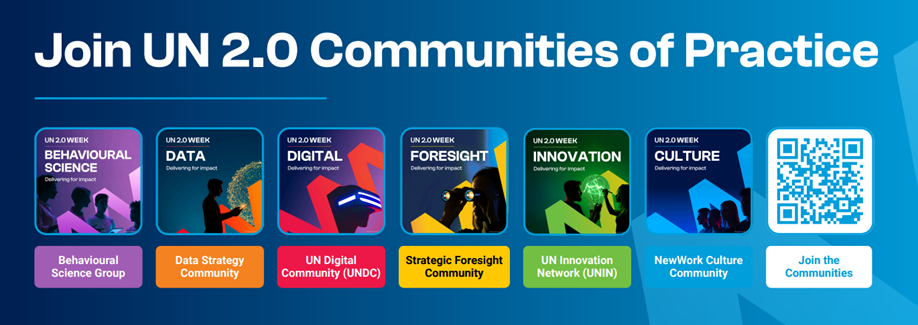
UN 2.0 Communities of Practice
Knowledge sharing and collaboration are strengthened through UN 2.0 Communities of Practice, connecting partners across the United Nations system and beyond. The networks facilitate the exchange of expertise and approaches on digital transformation, data strategy, innovation, and strategic foresight.
Over 18,000 practitioners from more than 160 countries participate, enhancing the collective capacity to address complex AI and digital challenges. Thematic groups, including those focused on digital and data initiatives, support peer-to-peer engagement, professional development, and collaborative problem-solving. Participation allows stakeholders to contribute to a wider ecosystem of expertise and innovation, promoting inclusive digital governance and supporting the Sustainable Development Goals.
Would you like to learn more about AI, tech and digital diplomacy? If so, ask our Diplo chatbot!