Visa survey data points to a significant shift in holiday shopping behaviour, with AI now embedded in everyday purchasing decisions. Nearly half of US consumers report using AI tools, mainly to discover gift ideas and compare prices more efficiently.
Digital currencies are also moving closer to the mainstream. More than one in four respondents would welcome cryptocurrency as a gift, while interest among Gen Z rises sharply. Expectations surrounding stablecoins are growing, with many consumers anticipating their wider adoption over the next decade.
Gen Z continues to lead adoption of digital-first commerce, favouring biometrics, social media shopping, overseas purchases and crypto payments.
Digital wallets are gaining parity with physical cards among younger shoppers, signalling a shift in payment method preferences.
Despite enthusiasm for new technologies, trust remains a central concern. Consumers still value human customer service and want clearer insight into how AI uses personal data, while concerns about online scams remain widespread during the holiday season.
Would you like to learn more about AI, tech and digital diplomacy? If so, ask our Diplo chatbot!
Researchers found that some large language models can analyse language like a human linguistics graduate. The models diagram sentences, resolve ambiguities and process recursive structures, showing advanced metalinguistic abilities.
The study used specially crafted sentences and invented mini-languages to prevent memorisation. OpenAI’s o1 model correctly applied complex syntactic and phonological rules for entirely new languages.
Experts say the results challenge long-held assumptions about human uniqueness in language. The models have yet to produce original insights, but their reasoning skills match graduate-level performance.
Findings suggest AI may eventually surpass humans in linguistic analysis. Researchers believe continued progress will enable models to generalise better, learn from less data, and handle language creatively.
Would you like to learn more about AI, tech, and digital diplomacy? If so, ask our Diplo chatbot!
Vietnam’s 5G network now reaches approximately 59 percent of the population, slightly over one year after commercial services launched in October 2024.
Government data presented at Internet Day 2025 show that Vietnam ranks 10th globally for fixed broadband speed and 15th for mobile broadband, reflecting rapid improvements in national connectivity.
Officials described the Internet as a second living space for citizens, with nearly 80 million users spending an average of seven hours online each day for work, education and social interaction.
Authorities highlighted that expanded 5G coverage supports the development of a digital economy, e-government services and a more connected digital society.
Alongside infrastructure growth, policymakers stressed the need for stronger digital trust.
Vietnam is shifting towards clearer legal frameworks instead of reliance on voluntary self-regulation, while prioritising cybersecurity, data governance and protection against online fraud, deepfakes and AI-driven deception to sustain long-term digital transformation.
Would you like to learn more aboutAI, tech and digital diplomacy? If so, ask our Diplo chatbot!
Leading AI researcher Yann LeCun has argued that large language models only simulate understanding rather than genuinely comprehending the world. Their intelligence, he said, lacks grounding in physical reality and everyday common sense.
Despite being trained on vast amounts of online text, LLMs struggle with unfamiliar situations, according to LeCun. Real-world experience, he noted, provides richer learning than language alone ever could.
Drawing on decades in AI research, LeCun warned that enthusiasm around LLMs mirrors earlier hype cycles that promised human-level intelligence. Similar claims have repeatedly failed to deliver since the 1950s.
Instead of further scaling language models, LeCun urged greater investment in ‘world models’ that can reason about actions and consequences. He also cautioned that current funding patterns risk sidelining alternative approaches to AI.
Would you like to learn more about AI, tech, and digital diplomacy? If so, ask our Diplo chatbot!
AI is entering a new phase, with 2026 expected to mark a shift from experimentation to real-world collaboration. Microsoft executives describe AI as an emerging partner that amplifies human expertise rather than replacing it.
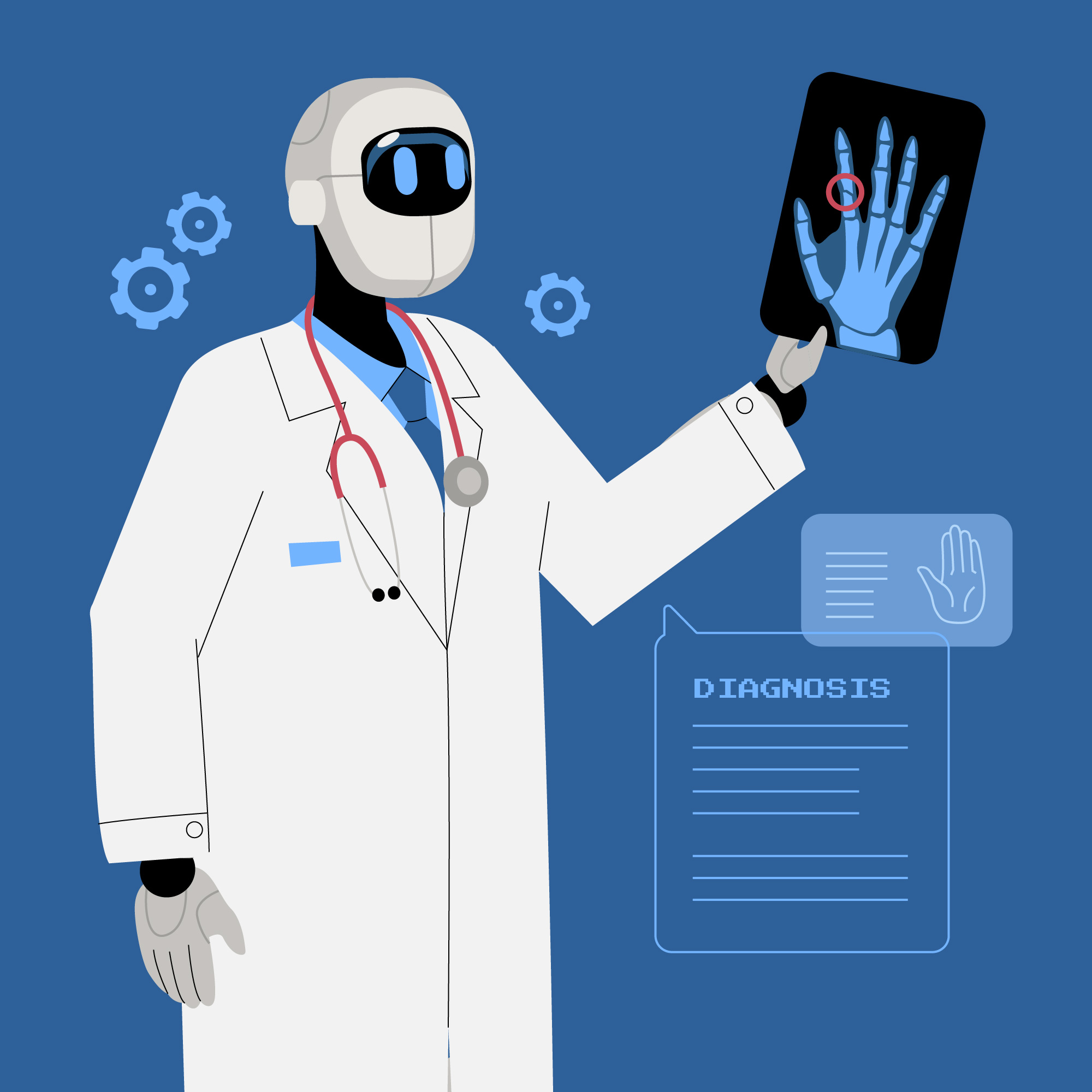
Microsoft says the impact is becoming visible across healthcare, software development, and scientific research. AI tools embedded in Microsoft products are supporting diagnosis, coding, and research workflows.
With the expansion of AI agents across all platforms, organisations are strengthening safeguards to manage new risks. Security leaders argue agents will require clear identities, restricted access, and continuous monitoring.
Microsoft also points to changes in the infrastructure powering AI. The company says future systems will prioritise efficiency and intelligence output, supported by distributed and hybrid cloud architectures.
Looking further ahead, the convergence of AI, supercomputing, and quantum technologies stands out as the main highlight. Hybrid approaches, the company says, are bringing practical quantum advantage closer for applications in materials science, medicine, and research.
Would you like to learn more about AI, tech, and digital diplomacy? If so, ask our Diplo chatbot!
The UK government has formed a Women in Tech taskforce to help more women enter, remain and lead across the technology sector. Technology secretary Liz Kendall will guide the group alongside industry figures determined to narrow long-standing representation gaps highlighted by recent BCS data.
Members include Anne-Marie Imafidon, Allison Kirkby and Francesca Carlesi, who will advise ministers on boosting diversity and supporting economic growth. Leaders stress that better representation enables more inclusive decision-making and encourages technology built with wider perspectives in mind.
The taskforce plans to address barriers affecting women’s progression, ranging from career access to investment opportunities. Organisations such as techUK and the Royal Academy of Engineering argue that gender imbalance limits innovation, particularly as the UK pursues ambitious AI goals.
UK officials expect working groups to develop proposals over the coming months, focusing on practical steps that broaden the talent pool. Advocates say the initiative arrives at a crucial moment as emerging technologies reshape employment and demand more inclusive leadership.
Would you like to learn more about AI, tech and digital diplomacy? If so, ask our Diplo chatbot!
Africa cannot realistically compete with the massive capital and computing resources driving frontier AI research in the United States and China, and it does not need to do so.
Instead, Nicholas Okumu contends, the continent’s AI strategy should pivot toward building efficient, practical systems tailored to local needs, from healthcare triage tools in referral hospitals to agriculture, education and public finance solutions grounded in African contexts.
Large, resource-intensive models require infrastructure and ecosystems that most African nations cannot marshal, but smaller, efficient models can perform high-value, domain-specific tasks on ordinary hardware.
Drawing on events from innovation forums and real-world examples, the columnist argues that Africa’s historical experience of innovation under constraint positions it well to lead in relevant, efficient AI applications rather than replicating the ambitions of frontier labs.
The article outlines a three-phase pathway: first, building foundational datasets governed by national or regional frameworks; second, deploying AI where it can deliver transformative value; and third, scaling successful tools to regions with similar development constraints.
If this strategy is followed, the piece argues, African-designed AI systems, particularly those that work well in low-resource environments, could become globally valuable.
Would you like to learn more about AI, tech and digital diplomacy? If so, ask our Diplo chatbot!
Taichung Municipal Hospital for Geriatric Rehabilitation and Comprehensive Care has introduced 20 AI-enabled Aibo robots to support medical staff, help mitigate labour shortages and improve patient services.
The Aibo robots, developed by China Medical University Hospital and EverBot Technology, can guide inpatients, offer basic health education, conduct telemedicine interactions via built-in cameras and respond quickly to questions, learning from each interaction to improve accuracy.
Each robot features autonomous navigation and obstacle avoidance, and is integrated with hospital systems, allowing one AI server to manage up to 30 units simultaneously while protecting patient data with firewall security.
The hospital also uses other AI systems, such as an ambulance-linked platform for early heart-attack detection, while additional Taiwanese medical facilities are expanding robotic support for deliveries, patient interaction and surgical assistance.
Would you like to learn more about AI, tech and digital diplomacy? If so, ask our Diplo chatbot!
The UN will hold a high-level meeting of the General Assembly on 16–17 December 2025 to conclude the WSIS+20 review, marking 20 years since the World Summit on the Information Society (WSIS) outlined a global vision for an inclusive and people-centred information society. The review assesses the progress made by countries and stakeholders in implementing the WSIS outcomes agreed upon in Geneva in 2003 and in Tunis in 2005.
The WSIS+20 process examines the progress made over the past two decades while also identifying remaining challenges, including persistent digital divides, gaps in access to information and communication technologies (ICTs), and the need to harness digital tools more effectively for sustainable development. The high-level meeting will feature four plenary sessions with statements from UN member states, observers, and other stakeholders, in line with a recent General Assembly resolution.
A key outcome of the meeting will be the adoption of a final WSIS+20 outcome document, which will reflect on achievements so far and outline priorities for future action. Alongside the main sessions, a series of in-person, virtual, and off-site side events starting on 15 December 2025 will showcase innovations, share experiences, highlight emerging digital issues, and announce voluntary commitments aimed at strengthening an inclusive and development-oriented information society.
Diplo and the Geneva Internet Platform will provide just-in-time reporting from the high-level meeting. Bookmark this page; more details will be available soon.
Google has released a new AI playbook aimed at helping organisations streamline and improve sustainability reporting, sharing lessons learned from integrating AI into its own environmental disclosure processes.
In a blog post published on The Keyword, Google states that corporate sustainability reporting is often hindered by fragmented data and labour-intensive workflows. After two years of using AI internally, the company is now open-sourcing its approach to help others reduce reporting burdens.
The AI Playbook for Sustainability Reporting is presented as a practical, implementation-focused toolkit. It includes a structured framework for auditing reporting processes, along with ready-made prompt templates for common sustainability reporting tasks.
Google also highlights real-world examples that demonstrate how tools such as Gemini and NotebookLM can be used to validate sustainability claims, respond to information requests, and support internal review, moving AI use beyond experimentation.
The company says the playbook is intended to support transparency and strategic decision-making, and has invited organisations and practitioners to explore the resource and provide feedback.
Would you like to learn more about AI, tech, and digital diplomacy? If so, ask our Diplo chatbot!