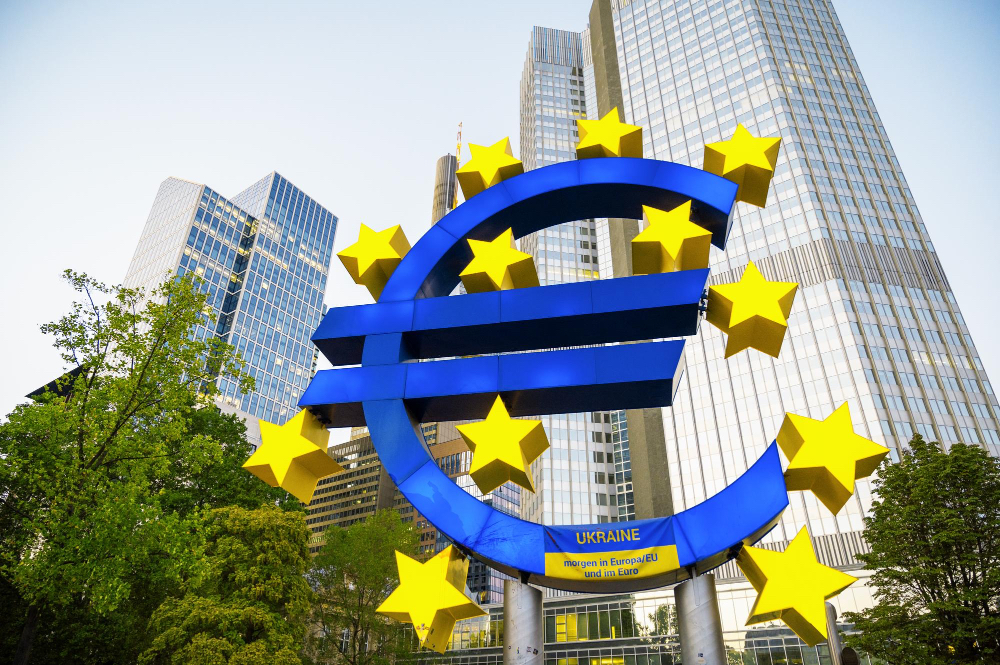
Euro-denominated stablecoins have surpassed $1 billion in circulating supply, according to industry data, marking a significant milestone but remaining relatively insignificant within Europe’s broader monetary system. The total represents just 0.006% of the eurozone’s estimated $15.5 trillion M2 money supply.
Issuance activity was limited during 2020 and 2021, before accelerating from late 2023 onwards. Growth has continued through 2024 and into 2025, signalling renewed interest in tokenised euro products despite their small overall footprint.
Ethereum still hosts the largest share of euro stablecoins, although issuance has expanded to other blockchain networks, including Solana, Polygon, Arbitrum, Base, Avalanche, and Stellar. The shift reflects a move toward multi-chain deployment, focusing on payments, settlement, and cross-border transfers.
Euro stablecoins remain far smaller than dollar-based tokens, which continue to dominate on-chain liquidity and settlement. The euro’s limited digital presence highlights growth potential if regulation and institutional adoption advance.
Would you like to learn more about AI, tech and digital diplomacy? If so, ask our Diplo chatbot!
Former UK chancellor George Osborne has joined OpenAI in a London-based role. He will lead the OpenAI for Countries programme focused on government partnerships.
The initiative aims to help governments build AI capacity and ensure systems reflect democratic values. OpenAI says more than 50 countries are already involved.
Osborne will work on developing AI infrastructure, boosting AI literacy and improving public services. The role follows discussions with OpenAI chief executive Sam Altman.
His appointment comes as UK-US tech talks face setbacks and investment in AI accelerates. Against this backdrop, financial authorities have warned of risks linked to the sector’s rapid growth.
Would you like to learn more about AI, tech, and digital diplomacy? If so, ask our Diplo chatbot!
UNESCO and UNDP have partnered to enhance judicial capacity on the ethical use of AI. A three-day Bangkok training, supported by the Thailand Institute of Justice, brought together 27 judges from 13 Asia-Pacific countries to discuss the impact of AI on justice and safeguards for fairness.
Expert sessions highlighted the global use of AI in court administration, research, and case management, emphasising opportunities and risks. Participants explored ways to use AI ethically while protecting human rights and judicial integrity, warning that unsupervised tools could increase bias and undermine public trust.
Trainers emphasised that AI must be implemented with careful attention to bias, transparency, and structural inequalities.
Judges reflected on the growing complexity of verifying evidence in the age of generative AI and deepfakes, and acknowledged that responsible AI can improve access to justice, support case reviews, and free time for substantive decision-making.
The initiative concluded with a consensus that AI adoption in courts should be guided by governance, transparency, and ongoing dialogue. The UNDP will continue to collaborate in advancing ethical, human rights-focused AI in regional judiciaries.
Would you like to learn more about AI, tech and digital diplomacy? If so, ask our Diplo chatbot!
South Korea will require advertisers to label AI-generated or AI-assisted advertising from early 2026, marking a shift in how the country governs AI in online commerce and consumer protection.
The measure responds to a sharp rise in deceptive ads using synthetic imagery and deepfakes, particularly in healthcare and financial promotions. Regulators say transparency at the point of content delivery is intended to reduce manipulation and restore consumer trust.
Authorities in South Korea acknowledge that mandatory labelling alone may not deter malicious actors, who can bypass rules through offshore hosting or rapidly changing content. Detection challenges and uneven enforcement capacity across platforms remain open concerns.
South Korea’s industry groups warn that the policy could have uneven economic effects within the country’s advertising ecosystem. Large platforms and agencies are expected to adapt quickly, while smaller firms may face higher compliance costs that slow experimentation with generative tools.
Policymakers argue the framework aligns with South Korea’s broader AI governance strategy, positioning the country between innovation-led and precautionary regulatory models as synthetic media becomes more widespread.
Would you like to learn more about AI, tech, and digital diplomacy? If so, ask our Diplo chatbot!
The San Francisco-based software company Salesforce has opened a significantly expanded office in Stockholm, reinforcing its long-term investment in Sweden and its broader Northern European strategy.
A new location that reflects the growing demand for AI-driven enterprise tools as regional businesses increasingly adopt agent-based technologies across their operations.
Located at Sveavägen 20, the Stockholm office is four times larger than Salesforce’s previous space and has been designed to support hybrid work, collaboration and innovation.
The opening event highlighted the focus of Salesforce on real estate as a strategic enabler for AI transformation, bringing together employees, partners, customers and community organisations.
A launch that also featured the Agentforce Sweden Nonprofit Hackathon, where Swedish charities presented AI agent solutions to improve efficiency and impact.
Majblomman received SEK 150,000 for an autonomous financial aid agent, underlining Salesforce’s ambition to position the Stockholm office as a regional hub for agentic enterprise development and responsible AI adoption.
Would you like to learn more aboutAI, tech and digital diplomacy? If so, ask our Diplo chatbot!
Meta has introduced SAM Audio, a new AI model that uses intuitive prompts to isolate and segment sounds from complex audio recordings. The release extends the company’s Segment Anything collection beyond visuals into audio and video workflows.
SAM Audio allows users to separate sounds through text prompts, visual cues, or time-based selections. Creators can extract vocals or instruments, remove background noise, or isolate specific sound sources in recordings without specialised audio engineering tools.
Meta describes SAM Audio as a unified model designed around how people naturally think about sound. It supports combined text, visual, and time-based prompts, enabling flexible audio separation across music, podcasting, film, accessibility, and research.
Meta says the model achieves strong performance across diverse audio environments and is already being used internally to develop next-generation creative tools. The approach lowers technical barriers while expanding the range of possible audio editing applications.
SAM Audio is available through the Segment Anything Playground, where users can test the model with sample assets or upload their own files. Meta has also made the model available for download, signalling broader ambitions to make audio segmentation a core capability of its AI ecosystem.
Would you like to learn more about AI, tech, and digital diplomacy? If so, ask our Diplo chatbot!
Everbloom has developed Braid.AI, an AI system that transforms waste fibres into high-quality textiles. The process can use poultry feathers, wool, and other keratin-rich materials to replicate fabrics like cashmere.
The system works with standard textile machinery, combining chopped waste with proprietary compounds to produce biodegradable fibres. Everbloom aims to reduce environmental impact while maintaining material quality comparable to traditional cashmere.
Co-founder Sim Gulati said the startup aims to make materials economically accessible. Products are designed to offer both environmental benefits and cost-effectiveness, avoiding a ‘sustainable premium’ for consumers.
The AI can fine-tune fibre properties for multiple fabrics beyond cashmere, including polyester alternatives. Everbloom collects waste from farms, mills, and other sources to create a sustainable supply chain.
Would you like to learn more about AI, tech, and digital diplomacy? If so, ask our Diplo chatbot!
The European Commission and the European Investment Bank have approved €1.8 billion in new clean energy funding under the EU Modernisation Fund, supporting 45 projects across 12 member states.
Portugal receives funding for the first time after becoming eligible in 2024, while total support from the Fund since 2021 has now reached €20.7 billion across 294 investments.
Financed through revenues from the EU Emissions Trading System, the Fund targets high-impact projects that reduce greenhouse gas emissions in energy, industry and transport, while improving energy efficiency and strengthening energy security.
In 2025 alone, total disbursements reached €5.46 billion, with significant allocations directed to Czechia, Poland, Romania and Hungary, alongside support for Greece, Portugal and Slovenia.
All projects approved during 2025 focus on renewable electricity generation, energy storage, grid modernisation and efficiency upgrades in public infrastructure and industry.
The Modernisation Fund plays a central role in supporting national climate plans, reducing dependence on fossil fuel imports and advancing the EU’s Fit for 55 and REPowerEU objectives, with further investment proposals scheduled for early 2026.
Would you like to learn more aboutAI, tech and digital diplomacy? If so, ask our Diplo chatbot!
In rural Armenia, small agritech startups are applying AI, drones and blockchain technologies to meet the needs of local farmers and producers.
At SkyAgro, drones are used for precision spraying and crop monitoring, allowing farmers to apply inputs with higher efficiency, use fewer chemicals and save water, enhancements critical in water-scarce regions like the Ararat Valley.
Another startup, BeeSync, employs machine-learning hardware attached to beehives that analyses photographic data and environmental sensors to alert beekeepers when colonies show signs of disease or stress, potentially boosting yields.
Blockchain is also being tested in the wool market by ArmWool, which creates immutable records of each step in the production process, from farmer to artisan, to build product traceability and add value for consumers.
While these technologies hold promise for improving productivity, startups face economic hurdles in a small domestic market and are encouraged to pitch solutions globally to sustain growth.
Would you like to learn more about AI, tech and digital diplomacy? If so, ask our Diplo chatbot!
Google Labs has introduced CC, an experimental AI productivity agent designed to help users stay organised and improve daily efficiency. The agent connects with Gmail, Google Calendar, Google Drive, and the wider web to gain an understanding of each user’s day.
Each morning, CC delivers a ‘Your Day Ahead’ briefing to users’ inboxes, summarising schedules, key tasks, and updates. It can draft emails, generate calendar links, and highlight next steps, making it easier to manage appointments, bills, and other responsibilities.
Users can interact with CC directly by replying to emails or sending custom requests, allowing the AI to learn personal preferences, store ideas, and remember tasks. The interactive approach helps the AI agent become more tailored to individual workflows over time.
CC is available in early access for Google consumer accounts aged 18 and over in the US and Canada, initially for Google AI Ultra and paid subscribers. Those interested can join the waitlist via the Google Labs website to gain early access.
Would you like to learn more about AI, tech and digital diplomacy? If so, ask our Diplo chatbot!