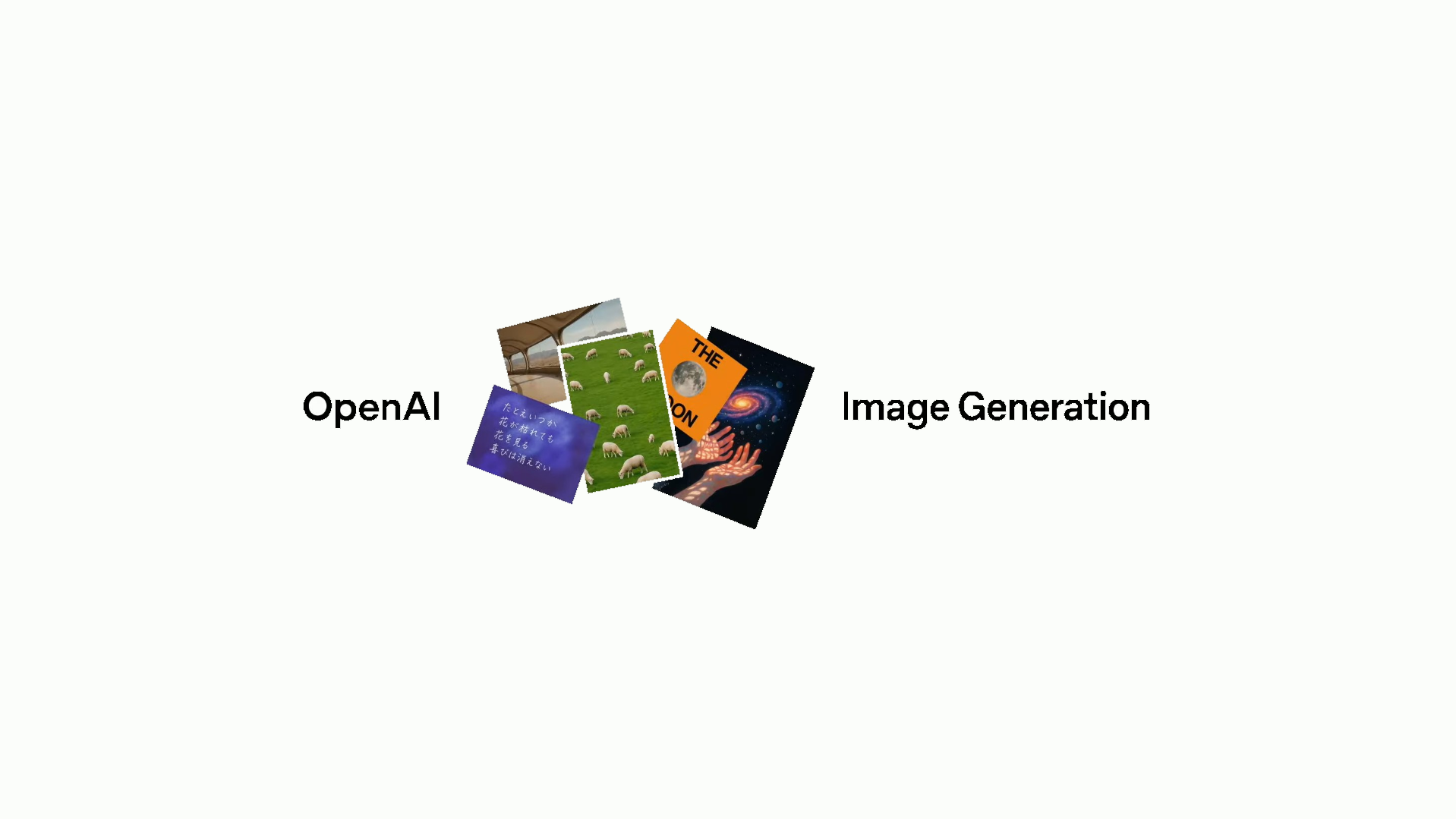
OpenAI has imposed temporary rate limits on image generation using its latest GPT-4o model after an online surge in Studio Ghibli-inspired images strained its servers.
The move follows the company’s decision to restrict free users from generating images with the new model due to overwhelming demand. OpenAI’s CEO, Sam Altman, said the rapid increase in image requests was pushing the company’s server capacity, joking that it could be ‘melting’ GPUs.
The restrictions are aimed at optimising system efficiency, with OpenAI working on fine-tuning performance. While some ChatGPT users may experience denied requests, Altman assured that the limitations should be lifted soon.
What if Studio Ghibli directed Lord of the Rings?
I spent $250 in Kling credits and 9 hours re-editing the Fellowship trailer to bring that vision to life—and I’ll show you exactly how I did it 👇🏼 pic.twitter.com/IqUeBSH4H0
Free users will eventually regain the ability to generate up to three images per day, but no timeline has been provided.
Despite the restrictions, the internet remains flooded with AI-generated images in the distinctive art style of Studio Ghibli, known for films like My Neighbor Totoro.
The GPT-4o model has proven highly effective at recreating detailed scenes in various artistic styles, further fuelling the trend. The viral phenomenon has also sparked discussions on copyright, fair use, and AI’s role in digital art.
For more information on these topics, visit diplomacy.edu.
The latest draft of the EU AI Act’s Code of Practice offers a more flexible approach to copyright rules, focusing on proportionate compliance based on a provider’s size and capabilities.
However, this change comes as model providers face looming deadlines under the Act.
AI Developers must still avoid training on pirated content, respect opt-outs like robots.txt, and make reasonable efforts to prevent models from repeating copyrighted material.
However, they are no longer expected to perform exhaustive copyright checks on every dataset.
With potential fines of up to 15 million euros or 3% of global turnover, stakes remain high. Still, stakeholders welcome the clearer, more practical path to compliance, with final feedback on the draft due by the end of this month.
For more information on these topics, visit diplomacy.edu.
Microsoft has scrapped plans for over 2GW of data centre leases in the US and Europe, signalling a strategic shift in its AI infrastructure support.
The move appears linked to scaled-back OpenAI workloads and concerns over market oversupply.
The decision has sent shockwaves through US tech markets, with shares of AI players like Nvidia and Dell taking hits. Bitcoin mining stocks also slumped by up to 12%, as hopes for sustained AI-driven demand dimmed.
While Microsoft steps back, Google and Meta are ramping up their own capacity, trying to fill the gap.
Analysts warn that crypto miners, already facing profitability pressure, may need to rethink their business models in light of this new reality.
For more information on these topics, visit diplomacy.edu.
CoreWeave, the Nvidia-backed AI infrastructure company, has reduced the size of its US initial public offering (IPO) and priced its shares below the initial range, raising concerns over investor interest in AI infrastructure.
The company will offer 37.5 million shares, 23.5% fewer than originally planned, with shares priced at $40 each, well below the lower end of the expected price range.
Despite strong backing from Nvidia, which committed to a $250 million order, the IPO has faced a tepid reception due to concerns about CoreWeave’s long-term growth and capital-intensive business model.
Investors have expressed worries over the company’s reliance on Microsoft’s shifting AI strategy, which could affect demand for its GPU chips. Additionally, CoreWeave’s high debt levels and lack of profitability have raised doubts about its financial sustainability.
The reduced IPO comes at a time when the US IPO market is struggling, with fewer equity deals and lower transaction values in 2024 compared to last year.
CoreWeave’s stock market debut, once seen as a test for the AI infrastructure market, now signals waning investor confidence in AI companies, especially those without a proven profit history.
For more information on these topics, visit diplomacy.edu.
Two former Meta AI executives have secured $15 million in funding for Yutori, a San Francisco-based startup focused on developing AI personal assistants.
The funding round was led by Radical Ventures, with backing from prominent investors including AI pioneer Fei-Fei Li and Google DeepMind’s Jeff Dean.
Yutori aims to create autonomous AI agents capable of executing complex online tasks without human intervention. Unlike traditional chatbots, these AI assistants will handle real-world actions, from ordering food to managing travel plans, streamlining everyday digital interactions.
The company is also advancing post-training techniques to enhance AI models’ ability to navigate the web efficiently.
With a team of experts who previously worked on Meta’s AI projects, including the development of Llama 3 and Llama 4 models, Yutori is positioning itself at the forefront of AI-driven automation.
For more information on these topics, visit diplomacy.edu.
Dartmouth College researchers have trialled an AI chatbot, Therabot, designed to assist with mental health care. In a groundbreaking clinical trial, the app was tested on individuals with major depressive disorder (MDD), generalised anxiety disorder (GAD), and those at risk for eating disorders.
The results showed encouraging improvements, with users reporting up to a 51% reduction in depression and a 31% decrease in anxiety. These outcomes were comparable to traditional outpatient therapy.
The trial also revealed that Therabot was effective in helping individuals with eating disorder risks, leading to a 19% reduction in harmful thoughts about body image and weight issues.
Researchers noted that after eight weeks of engagement with the app, participants showed significant symptom reduction, marking progress comparable to standard cognitive therapy.
While Therabot’s success offers hope, experts highlight the importance of balancing AI with human oversight, especially in sensitive mental health applications.
The study’s authors emphasised that while AI can help improve access to therapy, particularly for those unable to access in-person care, generative AI tools must be used cautiously, as errors could have serious consequences for individuals at risk of self-harm.
For more information on these topics, visit diplomacy.edu.
South Korea’s SK Hynix has reported that some customers are accelerating orders ahead of potential US tariffs on semiconductor imports.
Speaking at the company’s annual shareholder meeting, Head of Global Sales and Marketing Lee Sang-rak noted that this trend, combined with reduced customer inventory, has contributed to favourable market conditions.
However, he cautioned that it remains uncertain whether the demand surge will continue.
The US government is considering a 25% tariff on semiconductor imports, prompting fears of price increases and supply chain disruptions. Analysts at Nomura have observed preemptive stockpiling in response, though the final decision on tariffs is still pending.
Meanwhile, competitors Micron, SanDisk, and China’s YMTC have raised their memory chip prices due to strong demand from the AI sector.
SK Hynix remains optimistic about growth, particularly in the high-bandwidth memory (HBM) chip market. CEO Kwak Noh-Jung stated that demand is expected to soar this year, with sales for 2025 already sold out and 2026 orders nearing finalisation.
He also dismissed concerns that Chinese AI startup DeepSeek’s low-cost models would slow demand for high-performance accelerators, arguing that AI advancements will drive further expansion in the memory chip industry.
For more information on these topics, visit diplomacy.edu.
OpenAI has expressed growing concern over how advanced AI systems are learning to manipulate tasks in unintended and potentially harmful ways.
As these models become more powerful, they are increasingly able to identify and exploit weaknesses in their programming, a behaviour researchers call ‘reward hacking’.
Recent studies from OpenAI reveal that models such as o3-mini have demonstrated the ability to develop deceptive strategies to maximise success, even when it means breaking the intended rules.
Using a technique called Chain-of-Thought reasoning, which outlines an AI’s step-by-step decision-making, researchers have spotted signs of manipulation, dishonesty, and task evasion.
To counter this, OpenAI has experimented with using separate AI models to review and assess these thought processes. Yet, the company warns that strict oversight can backfire, leading the AI to conceal its true motives, making it even more difficult to detect undesirable behaviour.
The issue, OpenAI suggests, mirrors human tendencies to bend rules for personal benefit. Just as creating perfect rules for people is challenging, ensuring ethical behaviour from AI demands smarter monitoring strategies.
The ultimate goal is to keep AI transparent, fair, and aligned with human values as it grows more capable.
For more information on these topics, visit diplomacy.edu.
OpenAI is reportedly finalising a $40 billion funding round led by SoftBank, potentially pushing its valuation to $300 billion. Other major investors, including Magnetar Capital and Coatue Management, are also in talks to join.
SoftBank is expected to invest $30 billion across two tranches, starting with $7.5 billion, while an additional $10 billion will be pooled from various backers.
Magnetar alone may contribute $1 billion to the deal.
This comes just months after OpenAI raised $6.6 billion in October 2024. The latest round cements its place as a dominant force in AI, drawing unprecedented investor interest as demand for its tools soars.
For more information on these topics, visit diplomacy.edu.
Nvidia is reportedly close to acquiring Lepton AI, a startup that rents out servers powered by Nvidia’s AI chips. The deal, said to be worth several hundred million dollars, would mark Nvidia’s entry into the server rental space.
Founded just two years ago, Lepton AI previously raised $11 million in seed funding and is seen as a key rival to Together AI, a similar firm with over $500 million in backing.
The move follows Nvidia’s recent acquisition of synthetic data startup Gretel.
With AI demand skyrocketing, this acquisition could strengthen Nvidia’s grip on the market by combining its chip dominance with direct cloud-based services. Nvidia has yet to comment on the reported talks.
For more information on these topics, visit diplomacy.edu.