Nvidia to restart China AI chip sales after US talks

Nvidia has announced plans to resume sales of its H20 AI chip in China, following meetings between CEO Jensen Huang and US President Donald Trump in Beijing.

The move comes after US export controls previously banned sales of the chip on national security grounds, costing Nvidia an estimated $15 billion in lost revenue.

The company confirmed it is filing for licences with the US government to restart deliveries of the H20 graphics processing unit, expecting approval shortly.

Nvidia also revealed a new RTX Pro GPU designed specifically for China, compliant with US export rules, offering a lower-cost alternative instead of risking further restrictions.

Huang, attending a supply chain expo in Beijing, described China as essential to Nvidia’s growth, despite rising competition from local firms like Huawei.

Chinese companies remain highly dependent on Nvidia’s CUDA platform, while US lawmakers have raised concerns about Nvidia engaging with Chinese entities linked to military or intelligence services.

Nvidia’s return to the Chinese market comes as Washington and Beijing show signs of easing trade tensions, including relaxed rare earth export rules from China and restored chip design services from the US.

Analysts note, however, that Chinese firms are likely to keep diversifying suppliers instead of relying solely on US chips for supply chain security.

Would you like to learn more about AI, tech and digital diplomacy? If so, ask our Diplo chatbot!

EU bets on quantum to regain global influence

European policymakers are turning to quantum technology as a strategic solution to the continent’s growing economic and security challenges.

With the US and China surging ahead in AI, Europe sees quantum innovation as a last-mover advantage it cannot afford to miss.

Quantum computers, sensors, and encryption are already transforming military, industrial and cybersecurity capabilities.

From stealth detection to next-generation batteries, Europe hopes quantum breakthroughs will bolster its defences and revitalise its energy, automotive and pharmaceutical sectors.

Although EU institutions have heavily invested in quantum programmes and Europe trains more engineers than anywhere else, funding gaps persist.

Private investment remains limited, pushing some of the continent’s most promising start-ups abroad in search of capital and scale.

The EU must pair its technical excellence with bold policy reforms to avoid falling behind. Strategic protections, high-risk R&D support and new alliances will be essential to turning scientific strength into global leadership.

Would you like to learn more about AI, tech and digital diplomacy? If so, ask our Diplo chatbot!
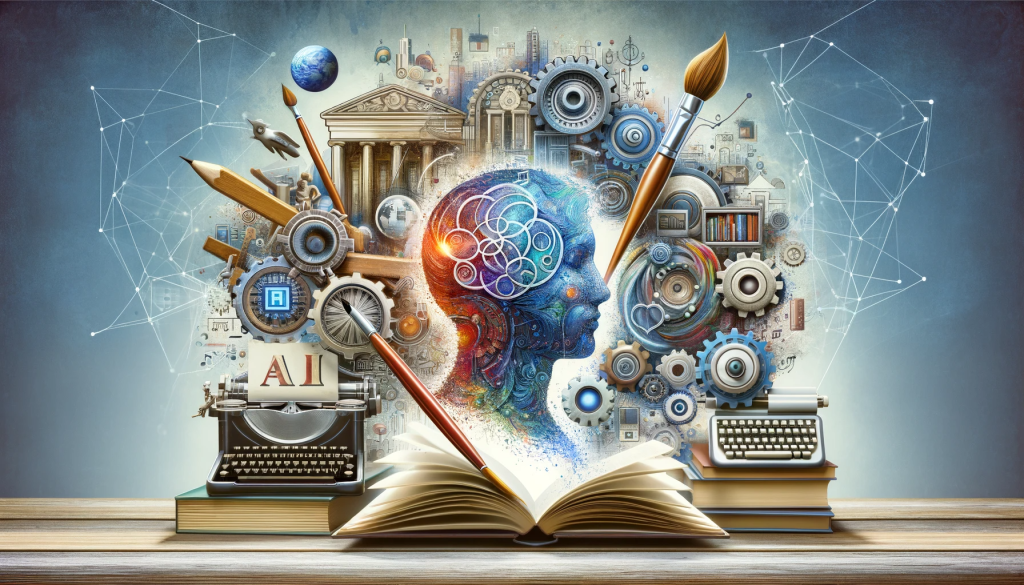
Asia’s humanities under pressure from AI surge

Universities across Asia, notably in China, are slashing liberal arts enrollments to expand STEM and AI programmes. Institutions like Fudan and Tsinghua are reducing intake for humanities subjects, as policymakers push for a high-tech workforce.

Despite this shift, educators argue that sidelining subjects like history, philosophy, and ethics threatens the cultivation of critical thinking, moral insight, and cultural literacy, which are increasingly necessary in an AI-saturated world.

They contend that humanistic reasoning remains essential for navigating AI’s societal and ethical complexities.

Innovators are pushing for hybrid models of education. Humanities courses are evolving to incorporate AI-driven archival research, digital analysis, and data-informed argumentation, turning liberal arts into tools for interpreting technology, rather than resisting it.

Supporters emphasise that liberal arts students offer distinct advantages: they excel in communication, ethical judgement, storytelling and adaptability, capacities that machines lack. These soft skills are increasingly valued in workplaces that integrate AI.

Analysts predict that the future lies not in abandoning the humanities but in transforming them. When taught alongside technical disciplines, through STEAM initiatives and cross-disciplinary curricula, liberal arts can complement AI, ensuring that technology remains anchored in human values.

Would you like to learn more about AI, tech and digital diplomacy? If so, ask our Diplo chatbot!

Zuckerberg unveils Meta’s multi-gigawatt AI data clusters

Meta Platforms is building several of the world’s largest data centres to power its AI ambitions, with the first facility expected to go online in 2026.

Chief Executive Mark Zuckerberg revealed on Threads that the site, called Prometheus, will be the first of multiple ‘titan clusters’ designed to support AI development instead of relying on existing infrastructure.

Frustrated by earlier AI efforts, Meta is investing heavily in talent and technology. The company has committed up to $72 billion towards AI and data centre expansion, while Zuckerberg has personally recruited high-profile figures from OpenAI, DeepMind, and Apple.

That includes appointing Scale AI’s Alexandr Wang as chief AI officer through a $14.3 billion stake deal and securing Ruoming Pang with a compensation package worth over $200 million.

The facilities under construction will have multi-gigawatt capacity, placing Meta ahead of rivals such as OpenAI and Oracle in the race for large-scale AI infrastructure.

One supercluster in Richland Parish, Louisiana, is said to cover an area nearly the size of Manhattan instead of smaller conventional data centre sites.

Zuckerberg confirmed that Meta is prepared to invest ‘hundreds of billions of dollars’ into building superintelligence capabilities, using revenue from its core advertising business on platforms like Facebook and Instagram to fund these projects instead of seeking external financing.

Would you like to learn more about AI, tech and digital diplomacy? If so, ask our Diplo chatbot!

AI tools fuel smarter and faster marketing decisions

Nearly half of UK marketers surveyed already harness AI for essential tasks such as market research, campaign optimisation, creative asset testing, and budget allocation.

Specifically, 46 % use AI for research, 44 % generate multiple asset variants, 43.7 % optimise mid‑campaign content, and over 41 % apply machine learning to audience targeting and media planning.

These tools enable faster ideation, real‑time asset iteration, and smarter spend decisions. Campaigns can now be A/B tested in moments rather than days, freeing teams to focus on higher‑level strategic and creative work.

Industry leaders emphasise that AI serves best as a ‘co‑pilot‘, enhancing productivity and insight, not replacing human creativity.

Responsible deployment requires careful prompt design, ongoing ethical review, and maintaining a clear brand identity in increasingly automated processes.

Would you like to learn more about AI, tech and digital diplomacy? If so, ask our Diplo chatbot!
Nvidia chief says Chinese military unlikely to use US chips

Nvidia’s CEO, Jensen Huang, has downplayed concerns over Chinese military use of American AI technology, stating it is improbable that China would risk relying on US-made chips.

He noted the potential liabilities of using foreign tech, which could deter its adoption by the country’s armed forces.

In an interview on CNN’s Fareed Zakaria GPS, Huang responded to Washington’s growing export controls targeting advanced AI hardware sales to China.

He suggested the military would likely avoid US technology to reduce exposure to geopolitical risks and sanctions.

The Biden administration had tightened restrictions on AI chip exports, citing national security and fears that cutting-edge processors might boost China’s military capabilities.

Nvidia, whose chips are central to global AI development, has seen its access to the Chinese market increasingly limited under these rules.

While Nvidia remains a key supplier in the AI sector, Huang’s comments may ease some political pressure around the company’s overseas operations.

The broader debate continues over balancing innovation, commercial interest and national security in the AI age.

Would you like to learn more about AI, tech and digital diplomacy? If so, ask our Diplo chatbot!

AI chills UK job hiring, especially among tech and finance roles

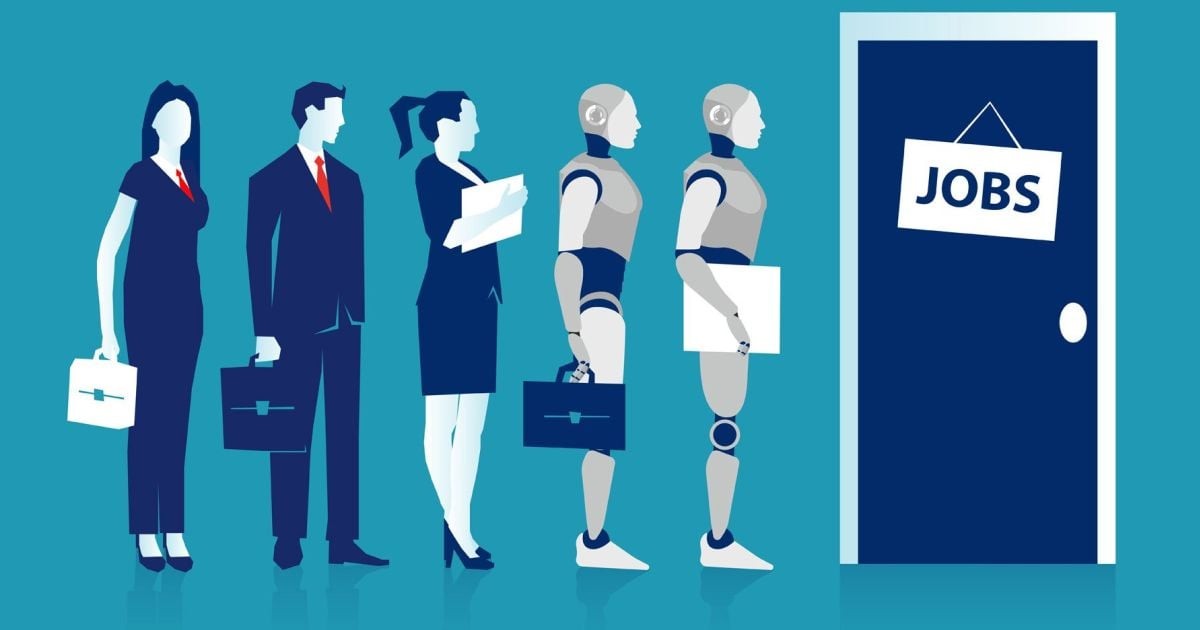
Recent data reveals a sharp drop in UK job openings for roles at risk of automation, with postings in tech and financial sectors falling by approximately 38%, compared to less exposed fields.

The shift underscores how AI influences workforce planning, as employers reduce positions most vulnerable to machine replacement.

Graduate job seekers are bearing the brunt of this trend. Since the debut of tools like ChatGPT, entry-level roles have been withdrawn more swiftly, as firms opt to apply AI solutions over traditional hiring. However, this marks a significant change in early career pathways.

Although macroeconomic factors, such as rising wages and interest rate pressures, are also at play, the rapid pace of AI integration into hiring, particularly via proactive recruitment freezes, signals a fundamental transformation.

As AI tools become integral, firms across the UK are rethinking how, when, and who they recruit.

Would you like to learn more about AI, tech and digital diplomacy? If so, ask our Diplo chatbot!

AI’s future in banking depends on local solutions and trust

According to leading industry voices, banks and financial institutions are expected to play a central role in accelerating AI adoption across African markets.

Experts at the ACAMB stakeholders’ conference in Lagos stressed the need for region-specific AI solutions to meet Africa’s unique financial needs.

Niyi Yusuf, Chairman of the Nigerian Economic Summit Group, highlighted AI’s evolution since the 1950s and its growing influence on modern banking.

He called for AI algorithms tailored to local challenges, rather than relying on those designed for advanced economies.

Yusuf noted that banks have long used AI to enhance efficiency and reduce fraud, but warned that customer trust must remain at the heart of digital transformation. He said the success of future innovations depends on preserving transparency and safeguarding data.

Professor Pius Olarenwaju of the CIBN described AI as a general-purpose technology driving the fourth industrial revolution. He warned that resisting adoption would risk excluding stakeholders from the future of financial services.

Would you like to learn more about AI, tech and digital diplomacy? If so, ask our Diplo chatbot!

How AI agents are reshaping the marketing landscape

Marketers have weathered many disruptions, but a bigger shift is emerging—AI agents are starting to make purchasing decisions. As machines begin choosing what to buy, brands must rethink how they build visibility and relevance in this new landscape.

AI agents do not shop like humans. They use logic, structured data, and performance signals—not emotion, nostalgia or storytelling. They compare price, reviews, and specs. Brand loyalty and lifestyle marketing may carry less weight when decisions are made algorithmically.

According to Salesforce, 24% of people are open to AI shopping on their behalf—rising to 32% among Gen Z. Agents interpret products as data tables. Structured information, such as features and sentiment analysis, guide choices—not impulse or advertising flair.

Even long-trusted household brands may be evaluated solely on objective criteria, not reputation or emotional attachment. Marketers must adapt by preparing product data for machine interpretation—structured content, live feeds, and transparent performance metrics.

AI agents may also disguise themselves, interacting via email or traditional channels. Systems will need to detect and respond accordingly. Machine-to-machine buying is likely to rise, requiring cross-team coordination to align digital, data and marketing strategies.

Winning with AI agents means making products visible, verifiable, and understandable to machines—without compromising human trust. Those who act now will lead in a market where machines increasingly choose what consumers consume.

Would you like to learn more about AI, tech and digital diplomacy? If so, ask our Diplo chatbot!

Malaysia enforces trade controls on AI chips with US origin

Malaysia’s trade ministry announced new restrictions on the export, transshipment and transit of high-performance AI chips of US origin. Effective immediately, individuals and companies must obtain a trade permit and notify authorities at least 30 days in advance for such activities.

The restrictions apply to items not explicitly listed in Malaysia’s strategic items list, which is currently under review to include relevant AI chips. The move aims to close regulatory gaps while Malaysia updates its export control framework to match emerging technologies.

‘Malaysia stands firm against any attempt to circumvent export controls or engage in illicit trade activities,’ the ministry stated on Monday. Violations will result in strict legal action, with authorities emphasising a zero-tolerance approach to export control breaches.

The announcement follows increasing pressure from the United States to curb the flow of advanced chips to China. In March, the Financial Times reported that Washington had asked allies including Malaysia to tighten semiconductor export rules.

Malaysia is also investigating a shipment of servers linked to a Singapore-based fraud case that may have included restricted AI chips. Authorities are assessing whether local laws were breached and whether any controlled items were transferred without proper authorisation.

Would you like to learn more about AI, tech and digital diplomacy? If so, ask our Diplo chatbot!