CrazyHunter ransomware has emerged as a growing threat to healthcare organisations, with repeated attacks targeting hospitals and medical service providers. The campaign focuses on critical healthcare infrastructure, raising concerns about service disruption and the exposure of sensitive patient data.
The malware is developed in Go and demonstrates a high level of technical maturity. Attackers gain initial access by exploiting weak Active Directory credentials, then use Group Policy Objects to distribute the ransomware rapidly across compromised networks.
Healthcare institutions in Taiwan have been among the most affected, with multiple confirmed incidents reported by security researchers. The pattern suggests a targeted campaign rather than opportunistic attacks, increasing pressure on regional healthcare providers to strengthen defences.
Once deployed, CrazyHunter turns off security tools and encrypts files to conceal its activity. Analysts note the use of extensive evasion techniques, including memory-based execution and redundant encryption methods, to ensure the delivery of the payload.
CrazyHunter employs a hybrid encryption scheme that combines ChaCha20 and elliptic curve cryptography, utilising partial file encryption to expedite the impact. Encrypted files receive a ‘.Hunter’ extension, with recovery dependent on the attackers’ private keys, reinforcing the pressure to pay ransoms.
Would you like to learn more about AI, tech, and digital diplomacy? If so, ask our Diplo chatbot!
Ford has unveiled plans for an AI assistant that will launch in its smartphone app in early 2026 before expanding to in-vehicle systems in 2027. The announcement was made at the 2026 Consumer Electronics Show, alongside a preview of a next-generation BlueCruise driver assistance system.
The AI assistant will be hosted on Google Cloud and built using existing large language models, with access to vehicle-specific data. Ford said this will allow users to ask both general questions, such as vehicle capacity, and real-time queries, including oil life and maintenance status.
Ford plans to introduce the assistant first through its redesigned mobile app, with native integration into vehicles scheduled for 2027. The company has not yet specified which models will receive the in-car version first, but said the rollout would expand gradually across its lineup.
Alongside the AI assistant, the vehicle manufacturer previewed an updated version of its BlueCruise system, which it claims will be more affordable to produce and more capable. The new system is expected to debut in 2027 on the first electric vehicle built on Ford’s low-cost Universal Electric Vehicle platform.
Ford said the next-generation BlueCruise could support eyes-off driving by 2028 and enable point-to-point autonomous driving under driver supervision. As with similar systems from other automakers, drivers will still be required to remain ready to take control at any time.
Would you like to learn more about AI, tech, and digital diplomacy? If so, ask our Diplo chatbot!
The UK government has announced new measures to strengthen the security and resilience of online public services as more interactions with the state move online. Ministers say public confidence is essential as citizens increasingly rely on digital systems for everyday services.
Backed by more than £210 million, the UK Government Cyber Action Plan outlines how cyber defences and digital resilience will be improved across the public sector. A new Government Cyber Unit will coordinate risk identification, incident response, and action on complex threats spanning multiple departments.
The plan underpins wider efforts to digitise public services, including benefits applications, tax payments, and healthcare access. Officials argue that secure systems can reduce bureaucracy and improve efficiency, but only if users trust that their data is protected.
The announcement coincides with parliamentary debate on the Cyber Security and Resilience Bill, which sets clearer expectations for companies supplying services to the government. The legislation is intended to strengthen cyber resilience across critical supply chains.
Ministers also highlighted new steps to address software supply chain risks, including a Software Security Ambassador Scheme promoting basic security practices. The government says stronger cyber resilience is essential to protect public services and maintain public trust.
Would you like to learn more about AI, tech, and digital diplomacy? If so, ask our Diplo chatbot!
UMG has entered a strategic collaboration with NVIDIA to reshape how billions of fans discover, experience and engage with music by using advanced AI.
An initiative that combines NVIDIA’s AI infrastructure with UMG’s extensive global catalogue, aiming to elevate music interaction instead of relying solely on traditional search and recommendation systems.
The partnership will focus on AI-driven discovery and engagement that interprets music at a deeper cultural and emotional level.
By analysing full-length tracks, the technology is designed to surface music through narrative, mood and context, offering fans richer exploration while helping artists reach audiences more meaningfully.
Artist empowerment sits at the centre of the collaboration, with plans to establish an incubator where musicians and producers help co-design AI tools.
The goal is to enhance originality and creative control instead of producing generic outputs, while ensuring proper attribution and protection of copyrighted works.
Universal Music Group and NVIDIA also emphasise responsible AI development, combining technical safeguards with industry oversight.
By aligning innovation with artist rights and fair compensation, both companies aim to set new standards for how AI supports creativity across the global music ecosystem.
Would you like to learn more about AI, tech and digital diplomacy? If so, ask our Diplo chatbot!
The online gaming platform, Roblox, has begun a global rollout requiring facial age checks before users can access chat features, expanding a system first tested in selected regions late last year.
The measure applies wherever chat is available and aims to create age-appropriate communication environments across the platform.
Instead of relying on self-declared ages, Roblox uses facial age estimation to group users and restrict interactions, limiting contact between adults and children under 16. Younger users need parental consent to chat, while verified users aged 13 and over can connect more freely through Trusted Connections.
The company says privacy safeguards remain central, with images deleted immediately after secure processing and no image sharing allowed in chat. Appeals, ID verification and parental controls support accuracy, while ongoing behavioural checks may trigger repeat age verification if discrepancies appear.
Roblox plans to extend age checks beyond chat later in 2026, including creator tools and community features, as part of a broader push to strengthen online safety and rebuild trust in youth-focused digital platforms.
Would you like to learn more aboutAI, tech and digital diplomacy? If so, ask our Diplo chatbot!
Stanford Medicine researchers have developed an AI model that can analyse a single night of sleep to predict long-term disease risk. Known as SleepFM, the system uses physiological signals recorded during overnight sleep studies to identify early indicators of future health conditions.
The model was trained on nearly 600,000 hours of polysomnography data from 65,000 participants. Polysomnography captures brain activity, heart rhythms, breathing patterns, eye movements, and muscle signals, creating one of the most data-rich assessments used in medicine.
SleepFM was designed as a foundation model that learns how multiple biological signals interact during sleep. By reconstructing missing data streams, the system identifies patterns across different physiological systems rather than analysing signals in isolation.
After training, the model matched or outperformed existing tools in standard sleep data assessments, including sleep stage classification and sleep apnoea severity. Researchers then linked sleep data with long-term health records to evaluate its ability to predict future disease onset.
The model demonstrated strong predictive performance across 130 conditions, encompassing various diseases, including cancers, cardiovascular disease, and neurological disorders. Researchers say the findings position sleep data as an early warning signal, while further work will focus on interpretation and real-world clinical use.
Would you like to learn more about AI, tech, and digital diplomacy? If so, ask our Diplo chatbot!
Growing demand for AI assistants has pushed Amazon to open access to Alexa+ through a web browser for the first time.
Early-access users in the US and Canada can now sign in through Alexa.com, allowing interaction with the service without relying solely on Echo devices or the mobile app.
Amazon has positioned the move as part of a broader effort to keep pace with rivals such as OpenAI, Google and Anthropic in the generative AI space.
Alexa+ is designed to operate as an intelligent personal assistant instead of a simple voice tool. Users can manage travel bookings, restaurant reservations, home automation and weekly meal planning while maintaining personalised preferences and chat history across devices.
Prime subscribers will eventually receive the paid service at no extra charge, and Amazon says tens of millions already have access.
Amazon expects availability to expand over time as the company places greater emphasis on AI-driven consumer services. Web-based access marks an effort to ensure the assistant is reachable wherever users connect, rather than being tied only to Amazon hardware.
Would you like to learn more aboutAI, tech and digital diplomacy? If so, ask our Diplo chatbot!
Siemens and NVIDIA have expanded their strategic partnership to build what they describe as an Industrial AI operating system.
The collaboration aims to embed AI-driven intelligence throughout the entire industrial lifecycle, from product design and engineering to manufacturing, operations and supply chains.
Siemens will contribute industrial AI expertise alongside hardware and software, while NVIDIA will provide AI infrastructure, simulation technologies and accelerated computing platforms.
The companies plan to develop fully AI-driven adaptive manufacturing sites, beginning in 2026 with Siemens’ electronics factory in Erlangen, Germany.
Digital twins will be used as active intelligence tools instead of static simulations, allowing factories to analyse performance in real time, test improvements virtually and convert successful adjustments directly into operational changes.
Both firms will also accelerate semiconductor design by combining Siemens’ EDA tools with NVIDIA’s GPU-accelerated computing and AI models. The goal is to shorten design cycles, improve manufacturing yields and support the development of advanced AI-enabled products.
The partnership also aims to create next-generation AI factories that optimise power, cooling, automation and infrastructure efficiency.
Siemens and NVIDIA intend to use the same technologies internally to improve their own operations before scaling them to customers. They argue the partnership will help industries adopt AI more rapidly and reliably, while supporting more resilient and sustainable manufacturing worldwide.
Would you like to learn more aboutAI, tech and digital diplomacy? If so, ask our Diplo chatbot!
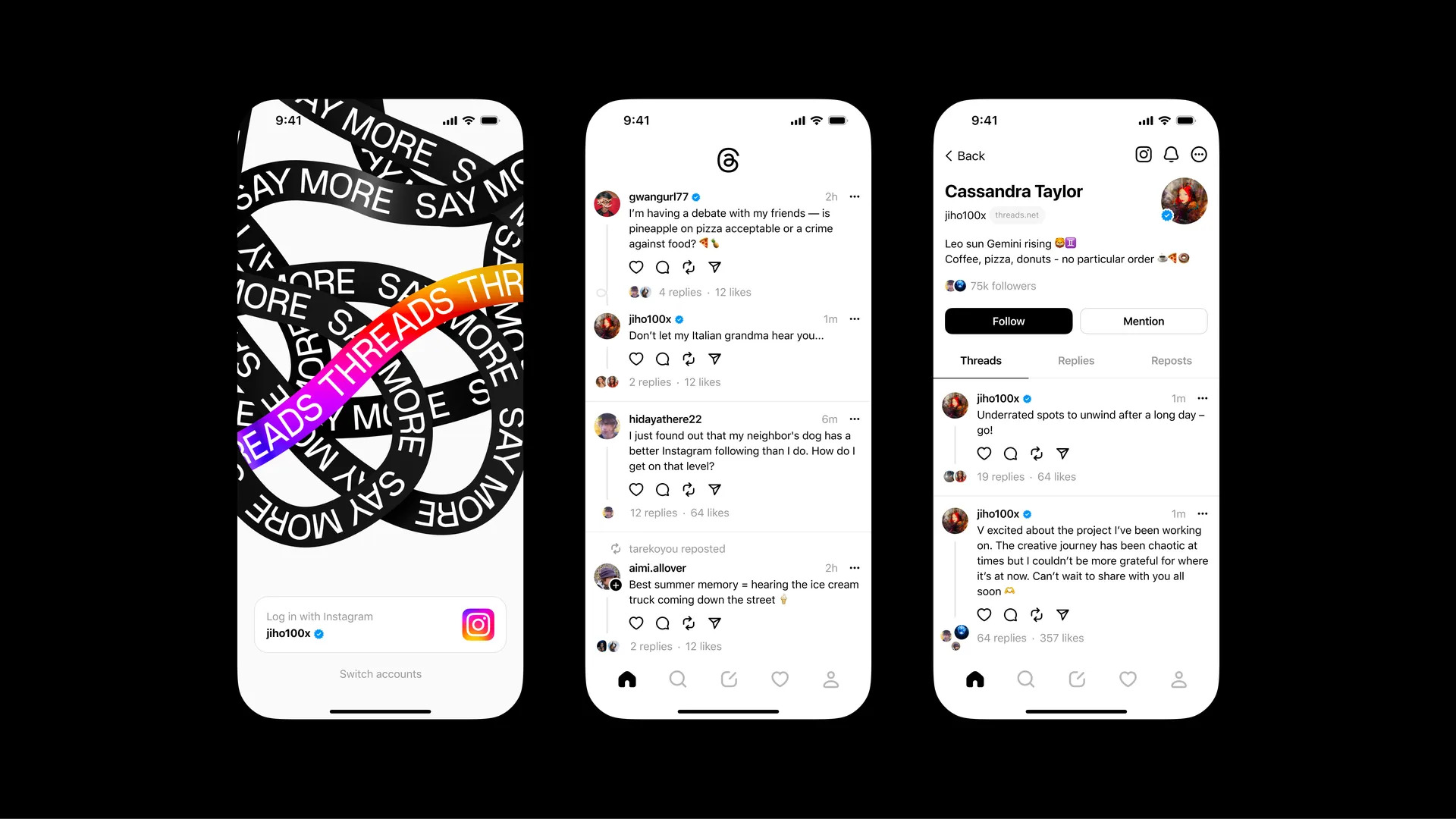
Threads is experimenting with gaming inside private chats, beginning with a simple basketball game that allows users to swipe to shoot hoops.
Meta confirmed that the game remains an internal prototype and is not available to the public, meaning there is no certainty it will launch. The feature was first uncovered by reverse engineer Alessandro Paluzzi, who frequently spots unreleased tools during development.
In-chat gaming could give Threads an advantage over rivals such as X and Bluesky, which do not currently offer built-in games. It may also position Threads as a competitor to Apple’s Messages, where users can already access chat-based games through third-party apps instead of relying on the platform alone.
Meta has already explored similar ideas inside Instagram DMs, including a hidden game that lets users keep an emoji bouncing on screen.
Threads continues to expand its feature set with Communities and disappearing posts, although the platform still trails X in US adoption despite reporting 400 million monthly users worldwide.
Would you like to learn more aboutAI, tech and digital diplomacy? If so, ask our Diplo chatbot!
In the US, Morgan Stanley has moved to launch exchange-traded funds linked to Bitcoin and Solana, signalling that major banks are no longer prepared to watch the crypto market from the sidelines.
Filings submitted to the Securities and Exchange Commission show the bank intends to offer funds tied to the prices of both crypto assets, making it the first of the ten biggest US banks by assets to pursue crypto ETFs directly.
Interest from Wall Street has been strengthened by regulatory changes introduced under the Trump administration, which created clearer rules for stablecoins and crypto-related investment products.
BlackRock’s Bitcoin ETFs have already become a major source of revenue, encouraging banks to seek a more active role instead of limiting themselves to custody services.
The trend is expected to have implications for European investors. US-listed crypto ETFs cannot normally be sold to retail investors in the EU because they do not comply with UCITS requirements.
The shift suggests crypto has become too commercially significant for Wall Street institutions to ignore, with banks increasingly treating digital assets as part of mainstream financial services rather than a peripheral experiment.
Would you like to learn more aboutAI, tech and digital diplomacy? If so, ask our Diplo chatbot!