Stanford researchers have developed an AI-powered system that combines field surveys, drones, and satellite imagery to identify schistosomiasis risk areas across Senegal.
The project began with fieldwork in Senegal, where researchers collected aquatic vegetation and snails from more than 30 river and estuary sites. The samples helped identify environmental conditions linked to schistosomiasis, which affects about 250 million people worldwide, mostly children in sub-Saharan Africa.
Professor Giulio De Leo of Stanford’s Doerr School of Sustainability said the research required scaling beyond local sampling. ‘The work was necessary to discover these risks, but we can only do so much locally.’
Early support from the Stanford Institute for Human-Centred AI enabled the development of machine learning tools capable of identifying disease-related snails and vegetation in imagery. The system now integrates field observations with drone and satellite data to detect potential infection hotspots.
Researchers say the approach can support public health monitoring and environmental analysis. The machine learning methods developed for the project are also being applied to agriculture, forest monitoring, and mosquito-borne disease research.
Would you like to learn more about AI, tech, and digital diplomacy? If so, ask our Diplo chatbot!
AI is becoming central to industrial networking strategies, but it is also creating new security challenges, according to Cisco’s 2026 State of Industrial AI Report.
Based on a survey of 1,000 professionals across 19 countries and 21 sectors, the report shows organisations view cybersecurity as both a barrier and an opportunity for AI adoption. About 40% cited cybersecurity concerns as a major obstacle, while 48% named security their biggest networking challenge.
At the same time, many organisations believe AI will strengthen their cyber resilience. Cisco noted that ‘while security gaps are limiting AI scale today, organisations view AI as a tool to strengthen detection, monitoring and resilience’.
The report also highlights organisational challenges, particularly collaboration between IT and operational technology teams. Only 20% of organisations report fully collaborative IT and OT cybersecurity operations, despite the growing importance of coordination for AI deployment.
Cisco said industrial AI adoption is accelerating, with 61% of organisations already deploying AI in industrial environments. However, only one in five reports mature, scaled adoption, suggesting many deployments remain in early stages.
Would you like to learn more about AI, tech, and digital diplomacy? If so, ask our Diplo chatbot!
Brazil’s central bank has introduced a regulatory framework requiring licensed crypto exchanges to prove asset sufficiency daily starting on 1 January 2027. The measures align digital asset intermediaries with banking standards on capital management, accounting, and data protection.
Under the rules, exchanges must submit daily attestations confirming that platforms hold adequate fiat and token reserves. Supervisors will review the reports to ensure companies can cover operational, liquidity, and cybersecurity risks while protecting customer balances.
The framework also mandates strict segregation of company and client assets. Exchanges must maintain separate accounts for customer fiat and digital holdings to prevent commingling of funds and improve transparency for regulators.
Platforms operating in Brazil will also be required to follow a specialised accounting manual for digital assets. Standardised rules for classification, valuation, and impairment aim to ensure financial statements clearly reflect exposures across regulated entities.
Authorities will expand oversight of cross-border transfers handled by domestic crypto exchanges. Platforms must report the origins of transactions and the blockchain pathways they follow. The central bank said the framework aims to strengthen resilience and protect customer funds.
Would you like to learn more about AI, tech, and digital diplomacy? If so, ask our Diplo chatbot!
Google is accelerating Chrome’s release cycle rather than maintaining its long-standing four-week cadence.
From September, users on desktop and mobile platforms will receive new stable versions every two weeks, doubling the frequency of feature milestones across speed, stability and usability. Weekly security updates introduced in 2023 remain unchanged.
The faster pace comes as AI-driven browsers seek a foothold in a market long dominated by Chrome.
Products, such as ChatGPT Atlas and Perplexity’s Comet, embed agentic assistants directly into the browsing experience, automating tasks from summarising pages to scheduling meetings.
Chrome has responded with deeper Gemini integration, including the rollout of autonomous features across its interface.
Google maintains that the accelerated schedule reflects the needs of the evolving web platform, arguing that developers require quicker access to updated tools.
Yet the timing aligns with growing competitive pressure from AI-native browsers, prompting speculation that Chrome’s dominance can no longer be taken for granted.
The shift will begin with Chrome version 153 in beta and stable channels on 8 September 2026. Enterprise administrators and Chromebook users will continue to rely on the eight-week Extended Stable branch, which remains unchanged for organisations that need slower, controlled deployments.
Would you like to learn more about AI, tech and digital diplomacy? If so, ask our Diplo chatbot!
The European Commission is preparing more stringent requirements for ageing data centres rather than allowing legacy infrastructure to operate under looser rules.
A draft strategy tied to the EU’s tech sovereignty package signals that older sites will face higher efficiency expectations and stricter sustainability checks as part of an effort to modernise the digital backbone of the EU.
The proposal outlines minimum performance standards for new data centres by 2030, aiming to align the entire sector with the bloc’s climate and resilience goals. Officials want to reduce energy waste and improve monitoring across facilities that have long operated without uniform benchmarks.
The draft points to an expanded role for the Cloud and AI Development Act, which is expected to frame future obligations for cloud providers instead of relying on fragmented national measures.
Brussels sees consistent rules as essential for supporting secure cloud services, AI infrastructure and cross-border digital operations.
The strategy underscores that modernisation is central to the EU’s vision of tech sovereignty. Older centres would need upgrades to maintain compliance, ensuring that Europe’s digital infrastructure remains competitive, efficient and less dependent on external providers.
Would you like to learn more about AI, tech and digital diplomacy? If so, ask our Diplo chatbot!
Europe is building a federated cloud and AI infrastructure intended to reduce reliance on US and Chinese technology providers and avoid ongoing strategic vulnerability.
The project, known as EURO-3C, was announced in Barcelona by Telefónica and is backed by the European Commission. More than seventy organisations across telecommunications, technology and emerging companies have joined the effort.
Architects of the scheme argue that linking national infrastructures into a shared network of nodes offers a realistic path forward, particularly as Europe cannot easily create a hyperscale cloud provider from scratch.
The initiative follows a series of US cloud outages that exposed the risks of excessive dependence on external infrastructure and raised questions about sovereignty, resilience and long-term competitiveness.
Commission officials described the programme as a way to build a secure cross-border digital ecosystem that supports industries such as automotive, e-health, public administration and sovereign government cloud.
Telefónica stressed that agentic AI, capable of taking autonomous actions, will play a central role in enabling Europe to develop technology rather than import it.
The partners view the project as a foundation for a unified and independent digital environment that strengthens industrial supply chains and prepares European sectors for the next phase of cloud and AI adoption.
They present the initiative as a significant step toward reducing strategic exposure while stimulating domestic innovation.
Would you like to learn more about AI, tech and digital diplomacy? If so, ask our Diplo chatbot!
The civil liberties committee failed to secure majority backing for its amended report on extending the EU’s temporary chat-scanning rules instead of giving a clear negotiating position.
Members of Parliament reviewed the amendments on Monday, but the final text did not garner sufficient support, leaving the proposal without endorsement as the adoption deadline approaches.
A proposal to extend the current derogation that allows tech companies to voluntarily scan their services for Child Sexual Abuse Material (CSAM).
The existing regime expires in April 2026 and was intended only as a stopgap while a permanent Child Sexual Abuse Regulation was developed. Years of stalled negotiations have led to the temporary rules being extended twice since 2021.
Council has already approved its position without changes to the Commission proposal, creating a tight timeline for Parliament.
With trilogue talks finally underway, institutions would need to conclude discussions unusually quickly to prevent the legal basis from expiring. If no agreement is reached by April, companies would lose their ability to scan services under the EU law.
The committee confirmed that the file will now move to plenary in the week of 9–12 March, where political groups may table new amendments. An outcome that will determine whether the temporary regime remains in place while negotiations on the permanent system continue.
Would you like to learn more about AI, tech and digital diplomacy? If so, ask our Diplo chatbot!
Deutsche Telekom is turning to satellite connectivity to address Europe’s persistent mobile coverage gaps, rather than relying solely on terrestrial networks.
The company announced a partnership with Starlink during the Mobile World Congress in Barcelona, arguing that non-terrestrial networks can help reach remote forests, mountains and islands that remain underserved despite broad coverage elsewhere.
A collaboration that aims to support direct-to-device satellite links by 2028, enabling future smartphones to connect to Starlink’s MSS spectrum without additional hardware.
Telecommunications leaders describe the plan as a step toward an ‘everywhere network’, extending reliable service to areas long constrained by topographical and conservation barriers. The partnership follows earlier joint work with SpaceX to eliminate dead zones.
Deutsche Telekom is also increasing its use of agentic AI, integrating autonomous network-enhancing systems intended to improve translation, search and service features across devices.
Executives say these capabilities work even on older phones, reducing dependence on apps and creating a more inclusive digital environment.
Although committed to European digital sovereignty, the company insists that global collaboration remains necessary for long-term competitiveness.
Leadership argues that precise regulation and controlled data environments aligned with European standards can balance international cooperation with privacy protection. They remain confident that European technology firms and start-ups will continue driving meaningful innovation across the sector.
Would you like to learn more about AI, tech and digital diplomacy? If so, ask our Diplo chatbot!
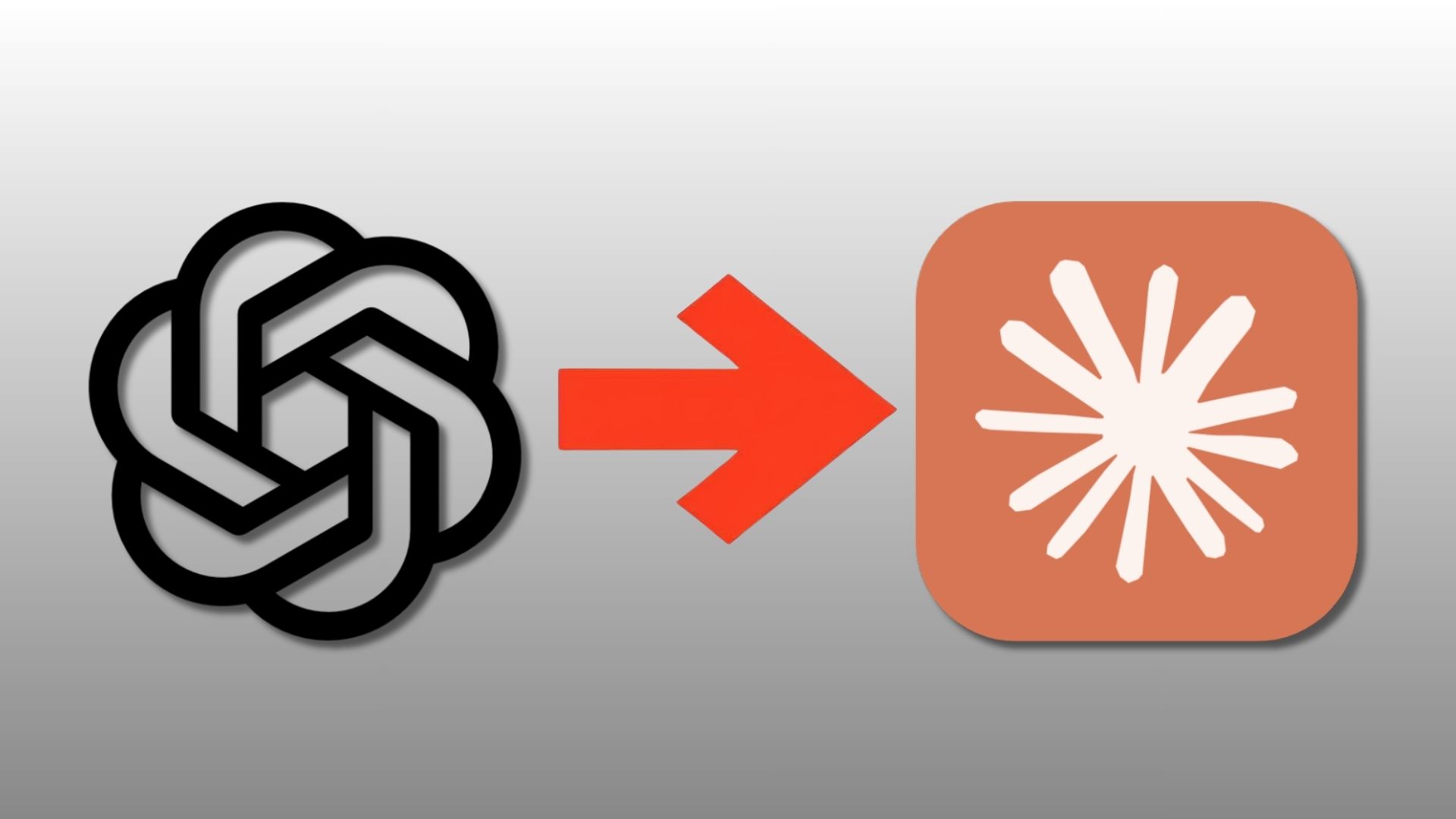
More users are exploring how to switch from ChatGPT to Claude while preserving their existing chat history and preferences. Rather than starting over with a new AI assistant, many want to migrate context and maintain continuity.
The first step is gathering your data from ChatGPT. In Settings, open Personalisation, then review the Memory section to copy any stored preferences you want to retain. You can also export your full chat history through Data Controls by selecting ‘Export Data’.
ChatGPT will generate downloadable files containing your conversations. If you prefer a lighter approach, manually copy key discussions or ask ChatGPT to summarise your main preferences, frequently discussed topics, and custom instructions.
Once your information is ready, open Claude and enable Memory under Settings and Capabilities. Start a new conversation and paste your summaries using a prompt such as ‘Here is important context about me. Please update your memory accordingly.’
After transferring the data, verify that Claude has stored the information accurately. If you plan to leave ChatGPT entirely, review and delete saved memory entries before removing your account to ensure your data is cleared.
Would you like to learn more about AI, tech, and digital diplomacy? If so, ask our Diplo chatbot!
Samsung has secured an agreement with Rakuten Mobile to deliver Open RAN-compliant 5G radios supporting a nationwide mobile network upgrade across Japan. Commercial deployment is expected to begin in 2026 following extensive testing of the cloud-native infrastructure.
Rakuten Mobile continues to expand its fully virtualised network architecture, designed to improve flexibility, performance, and vendor interoperability. The integration of Samsung equipment demonstrates growing industry confidence in Open RAN technology at large-scale commercial deployments.
Equipment supplied includes low-band and mid-band radios, alongside energy-efficient Massive MIMO systems operating in the 3.8 GHz spectrum. Compact hardware enables easier installation on buildings and street infrastructure while improving capacity in dense urban areas.
Executives from both companies highlighted ambitions to accelerate AI-enabled networks and global Open RAN adoption. Samsung also positioned the partnership as a step toward future 6G innovation and broader next-generation connectivity services.
Would you like to learn more about AI, tech and digital diplomacy? If so, ask our Diplo chatbot!