Silicon Valley targets health
The intersection of technology and healthcare is rapidly evolving, fuelled by advancements in ΑΙ and driven by major tech companies that are expanding their reach into the life sciences sector.
Once primarily known for consumer electronics or search engines, companies like Google, Amazon, Microsoft, Apple, and IBM are now playing an increasingly central role in transforming the medical field.
These companies, often referred to as ‘Big Tech’, are pushing the boundaries of what was once considered science fiction, using AI to innovate across multiple aspects of healthcare, including diagnostics, treatment, drug development, clinical trials, and patient care.
AI becomes doctors’ new tool
At the core of this revolution is AI. Over the past decade, AI has evolved from a theoretical tool to a practical and transformative force within healthcare.
Companies are developing advanced machine learning algorithms, cognitive computing models, and AI-powered systems capable of matching—and sometimes surpassing—human capabilities in diagnosing and treating diseases.
AI is also reshaping many aspects of healthcare, from early disease detection to personalised treatments and even drug discovery. This shift is creating a future where AI plays a significant role in diagnosing diseases, developing treatment plans, and improving patient outcomes at scale.
One of the most significant contributions of AI is in diagnostics. Google Health and its subsidiary DeepMind are prime examples of how AI can be used to outperform human experts in certain medical tasks.
For instance, DeepMind’s AI tools have demonstrated the ability to diagnose conditions like breast cancer and lung disease with remarkable accuracy, surpassing the abilities of human radiologists in some cases.
Similarly, Philips has filed patents for AI systems capable of detecting neurodegenerative diseases and tracking disease progression using heart activity and motion sensors.
From diagnosis to documentation
These breakthroughs represent only a small part of how AI is revolutionising diagnostics by improving accuracy, reducing time to diagnosis, and potentially saving lives.
In addition to AI’s diagnostic capabilities, its impact extends to medical documentation, an often-overlooked area that affects clinician efficiency.
Traditionally, doctors spend a significant amount of time on paperwork, reducing the time they can spend with patients.
However, AI companies like Augmedix, DeepScribe, and Nabla are addressing this problem by offering solutions that generate clinical notes directly from doctor-patient conversations.
These platforms integrate with electronic health record (EHR) systems and automate the note-taking process, which reduces administrative workload and frees up clinicians to focus on patient care.
Augmedix, for example, claims to save up to an hour per day for clinicians, while DeepScribe’s AI technology is reportedly more accurate than even GPT-4 for clinical documentation.
Nabla takes this further by offering AI-driven chatbots and decision support tools that enhance clinical workflows and reduce physician burnout.
Portable ultrasounds powered by AI
AI is also transforming medical imaging, a field traditionally dependent on expensive, bulky equipment that requires specialised training.
Innovators like Butterfly Network are developing portable, AI-powered ultrasound devices that can provide diagnostic capabilities at a fraction of the cost of traditional equipment. These devices offer greater accessibility, particularly in regions with limited access to medical imaging technology.
The ability to perform ultrasounds and MRIs in remote areas, using portable devices powered by AI, is democratising healthcare and enabling better diagnostic capabilities in underserved regions.
An advanced drug discovery
In the realm of drug discovery and treatment personalisation, AI is making significant strides. Companies like IBM Watson are at the forefront of using AI to personalise treatment plans by analysing vast amounts of patient data, including medical histories, genetic information, and lifestyle factors.
IBM Watson has been particularly instrumental in the field of oncology, where it assists physicians by recommending tailored cancer treatment protocols.
A capability like this is made possible by the vast amounts of medical data Watson processes to identify the best treatment options for individual patients, ensuring that therapies are more effective by considering each patient’s unique characteristics.
Smart automation in healthcare
Furthermore, AI is streamlining administrative tasks within healthcare systems, which often burden healthcare providers with repetitive, time-consuming tasks like appointment scheduling, records management, and insurance verification.
By automating these tasks, AI allows healthcare providers to focus more on delivering high-quality care to patients.
Amazon Web Services (AWS), for example, is leveraging its cloud platform to develop machine learning tools that assist healthcare providers in making more effective clinical decisions while improving operational efficiency.
It includes using AI to enhance clinical decision-making, predict patient outcomes, and manage the growing volume of patient data that healthcare systems must process.
Startups and giants drive the healthcare race
Alongside the tech giants, AI-driven startups are also playing a pivotal role in healthcare innovation. Tempus, for example, is integrating genomic sequencing with AI to provide physicians with actionable insights that improve patient outcomes, particularly in cancer treatment.
The fusion of data from multiple sources is enhancing the precision and effectiveness of medical decisions. Zebra Medical Vision, another AI-driven company, is using AI to analyse medical imaging data and detect a wide range of conditions, from liver disease to breast cancer.
Zebra’s AI algorithms are designed to identify conditions often before symptoms even appear, which greatly improves the chances of successful treatment through early detection.
Tech giants are deeply embedded in the healthcare ecosystem, using their advanced capabilities in cloud computing, AI, and data analytics to reshape the industry.
Microsoft, for example, has made significant strides in AI for accessibility, focusing on creating healthcare solutions that empower individuals with disabilities. Their work is helping to make healthcare more inclusive and accessible for a broader population.
Amazon’s AWS cloud platform is another example of how Big Tech is leveraging its infrastructure to develop machine learning tools that support healthcare providers in delivering more effective care.
M&A meets medicine
In addition to developing their own AI tools, these tech giants have made several high-profile acquisitions to accelerate their healthcare strategies.
Google’s acquisition of Fitbit, Amazon’s purchase of PillPack and One Medical, and Microsoft’s $19.7 billion acquisition of Nuance are all clear examples of how Big Tech is seeking to integrate AI into every aspect of the healthcare value chain, from drug discovery to clinical delivery.
These acquisitions and partnerships also enable tech giants to tap into new areas of the healthcare market and provide more comprehensive, end-to-end solutions to healthcare providers and patients alike.
Smart devices empower health
Consumer health technologies have also surged in popularity, thanks to the broader trend of digital health and wellness tools. Fitness trackers, smartwatches, and mobile health apps allow users to monitor everything from heart rates to sleep quality.
Devices like the Apple Watch and Google’s Fitbit collect health data continuously, providing users with personalised insights into their well-being.
Instead of being isolated within individual devices, the data is increasingly being integrated into broader healthcare systems, enabling doctors and other healthcare providers to have a more complete view of a patient’s health.
This integration has also supported the growth of telehealth services, with millions of people now opting for virtual consultations powered by Big Tech infrastructure and AI-powered triage tools.
Chinese hospitals embrace generative AI
The rise of generative AI is also transforming healthcare, particularly in countries like China, where technology is advancing rapidly. Once considered a distant ambition, the use of generative AI in healthcare is now being implemented at scale.
The technology is being used to manage massive drug libraries, assist with complex diagnoses, and replicate expert reasoning processes, which helps doctors make more informed decisions.
At Beijing Hospital of Traditional Chinese Medicine, Ant Group’s medical model has impressed staff by offering diagnostic suggestions and replicating expert reasoning, streamlining consultations without replacing human doctors.
Our choice in a tech-driven world
As AI continues to evolve, tech giants are likely to continue disrupting the healthcare industry while also collaborating with traditional healthcare providers.
While some traditional life sciences companies may feel threatened by the rise of Big Tech in healthcare, those that embrace AI and form partnerships with tech companies will likely be better positioned for success.
The convergence of AI and healthcare is already reshaping the future of medicine, and traditional healthcare players must adapt or risk being left behind.
Despite the tremendous momentum, there are challenges that need to be addressed. Data privacy, regulatory concerns, and the growing dominance of Big Tech in healthcare remain significant hurdles.
If these challenges are addressed responsibly, however, the integration of AI into healthcare could modernise care delivery on a global scale.
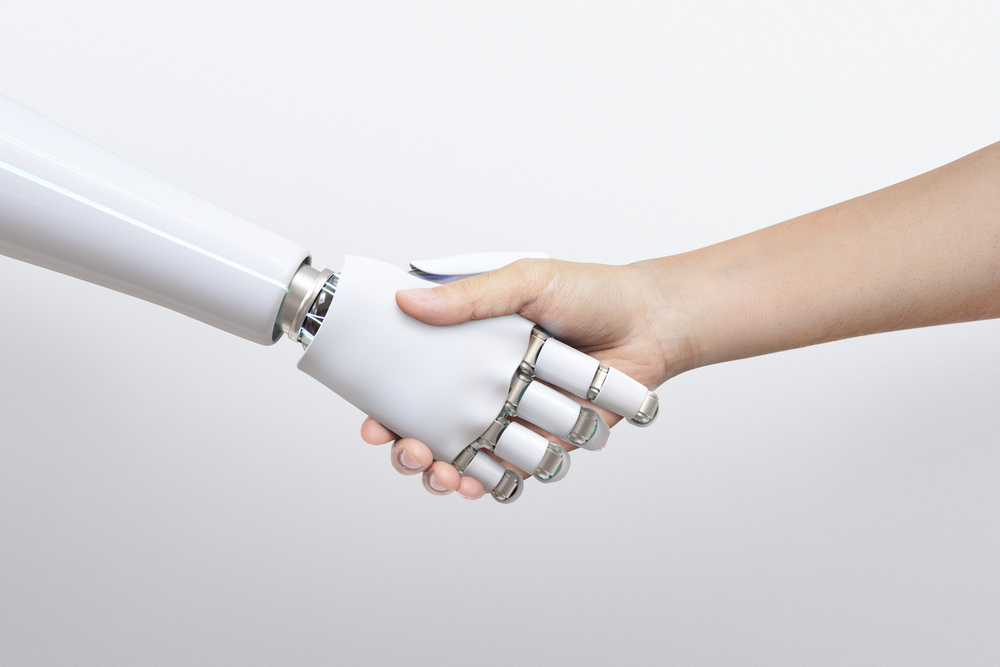
Rather than replacing doctors, the goal is to empower them with better tools, insights, and outcomes. The future of healthcare is one where technology and human expertise work in tandem, enhancing the patient experience and improving overall health outcomes.
As human beings, we must understand that the integration of technology across multiple sectors is a double-edged sword. It can either benefit us and help build better future societies, or mark the beginning of our downfall— but in the end, the choice will always be ours.
Would you like to learn more about AI, tech and digital diplomacy? If so, ask our Diplo chatbot!