When Hayao Miyazaki dismissed early AI-generated animation as ‘an insult to life itself’ in 2016, the technology felt distant from mainstream creative work. Less than a decade later, generative AI tools produce images and text in seconds, reviving debate over authorship, copyright, and artistic identity.
In Japan, debate reflects both anxiety and ambition. Illustrators question the use of their work in training data, while policymakers and corporations see AI as vital to easing a projected labour shortfall by 2040. Legal provisions allowing data use for analysis have intensified calls for safeguards.
Public sentiment in Japan remains broadly favourable toward AI adoption. Surveys indicate relatively high levels of trust, with many viewing AI as part of long-term structural adjustment rather than an immediate threat. Economic expectations often outweigh concerns about disruption.
Workplace implementation, however, remains limited. OECD research shows only a small share of employees actively use AI tools, citing skills shortages and cautious corporate culture. Analysts describe a paradox: AI could ease labour pressures, yet adoption is constrained by limited expertise.
Creative professionals report more immediate effects. Surveys highlight income pressures and uncertainty among illustrators and freelancers. As deployment expands, Japan faces the task of balancing economic necessity with cultural preservation and fair access to emerging technologies.
Would you like to learn more about AI, tech, and digital diplomacy? If so, ask our Diplo chatbot!
AI is reshaping cultural debates, with music emerging as a key area of concern. Discussions reflect broader tensions about AI’s impact on creativity, labour, and ownership.
In the music industry, AI-generated tracks and automated playlists have raised fears about competition and income loss. Artists are concerned that their catalogues are being data-mined to train systems without consent.
Copyright and compensation are central to the debate. Composer Ed Newton-Rex organised the protest album Is This What We Want?, supported by artists including James MacMillan and Kate Bush, to oppose the unauthorised use of music for AI training.
Advocates argue that lawmakers can still introduce safeguards to prevent unregulated exploitation. The discussion focuses on whether governments will establish clear rules or allow broad data harvesting to continue.
Some observers highlight AI’s potential as a creative tool. Like previous music technologies, it could help composers explore new sounds rather than replace human musicians.
Ultimately, music is described as rooted in human emotion, interpretation, and shared experience. These qualities are presented as central to musical culture and difficult for AI to replicate.
Would you like to learn more about AI, tech and digital diplomacy? If so, ask our Diplo chatbot!
Microsoft and OpenAI have reaffirmed their long-standing collaboration after new funding and partnerships raised speculation about their relationship.
Both firms stressed that recent announcements leave their original agreements intact, preserving a framework built on technical integration, trust and shared ambitions for AI development.
Microsoft’s exclusive licence to OpenAI’s intellectual property remains untouched, as does its position as the sole cloud provider for stateless APIs powering OpenAI models.
These APIs can be accessed through either company. Yet all such calls, including those arising from third-party partnerships such as OpenAI’s work with Amazon, continue to run on Azure rather than on alternative clouds. OpenAI’s own products, including Frontier, also stay hosted on Azure.
Revenue-sharing arrangements are unchanged, alongside the contractual definition and evaluation process for artificial general intelligence.
OpenAI retains the freedom to secure additional compute capacity elsewhere, supported by large-scale initiatives such as the Stargate project.
Even with broader collaborations emerging across the industry, both firms present their alliance as central to advancing responsible AI and expanding access to powerful tools worldwide.
Would you like to learn more about AI, tech and digital diplomacy? If so, ask our Diplo chatbot!
Speaking at the Bengaluru GAFX Conference, a major event for the Games, Animation, Visual Effects and Extended Reality (AVGC-XR) sector, Karnataka Chief Minister Siddaramaiah positioned AI as a tool to augment artistic work rather than replace human creators.
He highlighted the importance of ethical AI adoption, respect for intellectual property, data privacy, and ensuring fair compensation for artists and creative professionals as the sector grows.
Siddaramaiah underscored that the ‘soul of storytelling’ and human emotion cannot be fully replicated by algorithms, stressing that technology should amplify human potential without erasing it.
He also urged industry leaders to invest in original content, educational institutions to modernise curricula, and global partners to collaborate with Karnataka’s burgeoning creative ecosystem.
The remarks came amid efforts to develop the AVGC-XR sector through policy support, infrastructure, skill development, and the creation of digital creative clusters beyond Bengaluru in cities like Mysuru, Mangaluru and Hubballi-Dharwad.
Siddaramaiah framed this approach as both an economic and cultural opportunity that must be inclusive and ethically grounded.
Would you like to learn more about AI, tech and digital diplomacy? If so, ask our Diplo chatbot!
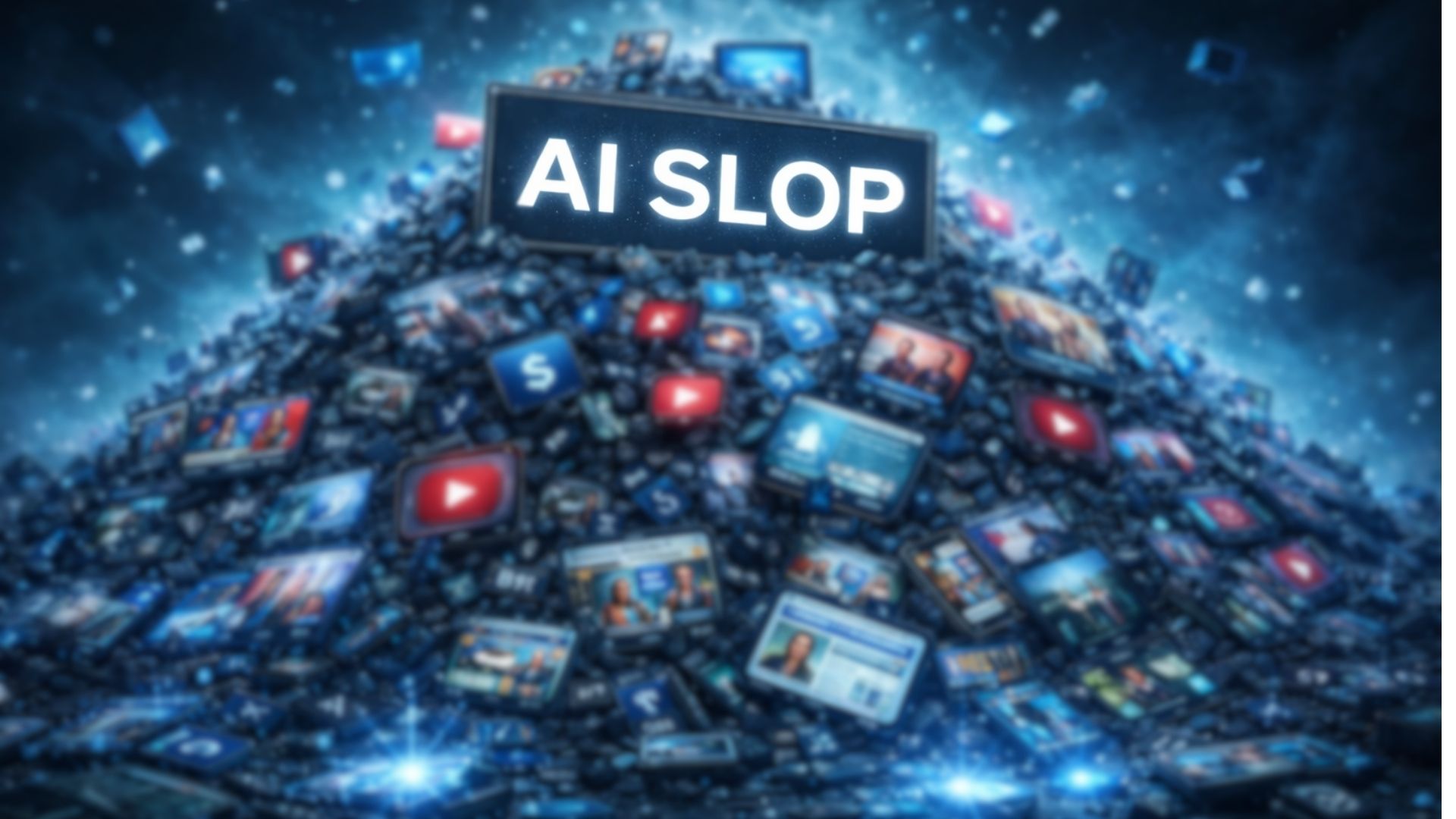
In December 2025, the Macquarie Dictionary, Merriam-Webster, and the American Dialect Society named ‘slop’ as the Word of the Year, reflecting a widespread reaction to AI-generated content online, often referred to as ‘AI slop.’ By choosing ‘slop’, typically associated with unappetising animal feed, they captured unease about the digital clutter created by AI tools.
As LLMs and AI tools became accessible to more people, many saw them as opportunities for profit through the creation of artificial content for marketing or entertainment, or through the manipulation of social media algorithms. However, despite video and image generation advances, there is a growing gap between perceived quality and actual detection: many overestimate how easily AI content evades notice, fueling scepticism about its online value.
As generative AI systems expand, the debate goes beyond digital clutter to deeper concerns about trust, market incentives, and regulatory resilience. How will societies manage the social, economic, and governance impacts of an information ecosystem increasingly shaped by automated abundance? In simplified terms, is AI slop more than a simple digital nuisance, or do we needlessly worry about a transient vogue that will eventually fade away?
The social aspect of AI slop’s influence
The most visible effects of AI slop emerge on large social media platforms such as YouTube, TikTok, and Instagram. Users frequently encounter AI-generated images and videos that appropriate celebrity likenesses without consent, depict fabricated events, or present sensational and misleading scenarios. Comment sections often become informal verification spaces, where some users identify visual inconsistencies and warn others, while many remain uncertain about the content’s authenticity.
However, no platform has suffered the AI slop effect as much as Facebook, and once you take a glance at its demographics, the pieces start to come together. According to multiple studies, Facebook’s user base is mostly populated by adults aged 25-34, but users over the age of 55 make up nearly 24 percent of all users. While seniors do not constitute the majority (yet), younger generations have been steadily migrating to social platforms such as TikTok, Instagram, and X, leaving the most popular platform to the whims of the older generation.
Due to factors such as cognitive decline, positivity bias, or digital (il)literacy, older social media users are more likely to fall for scams and fraud. Such conditions make Facebook an ideal place for spreading low-quality AI slop and false information. Scammers use AI tools to create fake images and videos about made-up crises to raise money for causes that are not real.
The lack of regulation on Meta’s side is the most glaring sore spot, evidenced by the company pushing back against the EU’s Digital Services Act (DSA) and Digital Markets Act (DMA), viewing them as ‘overreaching‘ and stifling innovation. The math is simple: content generates engagement, resulting in more revenue for Facebook and other platforms owned by Meta. Whether that content is authentic and high-quality or low-effort AI slop, the numbers don’t care.
The economics behind AI slop
At its core, AI content is not just a social media phenomenon, but an economic one as well. GenAI tools drastically reduce the cost and time required to produce all types of content, and when production approaches zero marginal cost, the incentive to churn out AI slop seems too good to ignore. Even minimal engagement can generate positive returns through advertising, affiliate marketing, or platform monetisation schemes.
AI content production goes beyond exploiting social media algorithms and monetisation policies. SEO can now be automated at scale, thus generating thousands of keyword-optimised articles within hours. Affiliate link farming allows creators to monetise their products or product recommendations with minimal editorial input.
On video platforms like TikTok and YouTube, synthetic voice-overs and AI-generated visuals are on full display, banking on trending topics and using AI-generated thumbnails to garner more views on a whim. Thanks to AI tools, content creators can post relevant AI-generated content in minutes, enabling them to jump on the hottest topics and drive clicks faster than with any other authentic content creation method.
To add salt to the wound, YouTube content creators share the sentiment that they are victims of the platform’s double standards in enforcing its strict community guidelines. Even the largest YouTube Channels are often flagged for a plethora of breaches, including copyright claims and depictions of dangerous or illegal activities, and harmful speech, to name a few. On the other hand, AI slop videos seem to fly under YouTube’s radar, leading to more resentment towards AI-generated content.
Businesses that rely on generative AI tools to market their services online are also finding AI to be the way to go, as most users are still not too keen on distinguishing authentic content, nor do they give much importance to those aspects. Instead of paying voice-over artists and illustrators, it is way cheaper to simply create a desired post in under a few minutes, adding fuel to an already raging fire. Some might call it AI slop, but again, the numbers are what truly matter.
The regulatory challenge of AI slop
AI slop is not only a social and economic issue, but also a regulatory one. The problem is not a single AI-generated post that promotes harmful behaviour or misleading information, but the sheer scale of synthetic content entering digital platforms. When large volumes of low-value or deceptive material circulate on the web, they can distort information ecosystems and make moderation a tough challenge. Such a predicament shifts the focus from individual violations to broader systemic effects.
In the EU, the DSA requires very large online platforms to assess and mitigate the systemic risks linked to their services. While the DSA does not specifically target AI slop, its provisions on transparency, content recommendation algorithms, and risk mitigation could apply if AI content significantly affects public discourse or enables fraud. The challenge lies in defining when content volume prevails over quality control, becoming a systemic issue rather than isolated misuse.
Debates around labelling AI slop and transparency also play a large role. Policymakers and platforms have explored ways to flag AI-generated content throughout disclosures or watermarking. For example, OpenAI’s Sora generates videos with a faint Sora watermark, although it is hardly visible to an uninitiated user. Nevertheless, labelling alone may not address deeper concerns if recommendation systems continue to prioritise engagement above all else, with the issue not only being whether users know the content is AI-generated, but how such content is ranked, amplified, and monetised.
More broadly, AI slop highlights the limits of traditional content moderation. As generative tools make production faster and cheaper, enforcement systems may struggle to keep pace. Regulation, therefore, faces a structural question: can existing digital governance frameworks preserve information quality in an environment where automated content production continues to grow?
Building resilience in the era of AI slop
Humans are considered the most adaptable species on Earth, and for good reason. While AI slop has exposed weaknesses in platform design, monetisation models, and moderation systems, it may also serve as a catalyst for adaptation. Unless regulatory bodies unite under one banner and agree to ban AI content for good, it is safe to say that synthetic content is here to stay. However, sooner or later, systemic regulations will evolve to address this new AI craze and mitigate its negative effects.
The AI slop bubble is bound to burst at some point, as online users will come to favour meticulously crafted content – whether authentic or artificial over low-quality content. Consequently, incentives may also evolve along with content saturation, leading to a greater focus on quality rather than quantity. Advertisers and brands often prioritise credibility and brand safety, which could encourage platforms to refine their ranking systems to reward originality, reliability, and verified creators.
Transparency requirements, systemic risk assessments, and discussions around provenance disclosure mechanisms imply that governance is responding to the realities of generative AI. Instead of marking the deterioration of digital spaces, AI slop may represent a transitional phase in which platforms, policymakers, and users are challenged to adjust their expectations and norms accordingly.
Finally, the long-term outcome will depend entirely on whether innovation, market incentives, and governance structures can converge around information quality and resilience. In that sense, AI slop may ultimately function less as a permanent state of affairs and more as a stress test to separate the wheat from the chaff. In the upcoming struggle between user experience and generative AI tools, the former will have the final say, which is an encouraging thought.
Would you like to learn more about AI, tech, and digital diplomacy? If so, ask our Diplo chatbot!
Sony Group has developed technology designed to identify the original sources of music generated by AI. The move comes amid growing concern over the unauthorised use of copyrighted works in AI training.
According to Sony Group, the system can extract data from an underlying AI model and compare generated tracks with original compositions. The process aims to quantify how much specific works contributed to the output.
Composers, songwriters and publishers could use the technology to seek compensation from AI developers if their material was used without permission. Sony said the goal is to help ensure creators are properly rewarded.
Efforts to safeguard intellectual property have intensified across the music industry. Sony Music Entertainment in the US previously filed a copyright infringement lawsuit in 2024 over AI-generated music, underscoring wider tensions around AI and creative rights.
Would you like to learn more about AI, tech and digital diplomacy? If so, ask our Diplo chatbot!
A prize-winning AI-generated short film has been pulled from cinemas following criticism from audiences. Thanksgiving Day, created by filmmaker Igor Alferov, was due to screen in selected theatres before feature presentations.
Concerns emerged after news of the screening spread online, prompting complaints directed at AMC Theatres. The chain stated it had not programmed the film and that pre-show advertising partner Screenvision Media had arranged the placement.
AMC confirmed it would not participate in the initiative, meaning the AI film will no longer appear in its locations. The animated short, produced using Google’s Gemini 3.1 and Nano Banana Pro tools, had recently won an AI film festival award.
The episode comes amid broader debate about artificial intelligence in Hollywood. Industry insiders suggest studios are quietly increasing AI use in production, even as concerns grow over job losses and economic uncertainty within Los Angeles’ entertainment sector.
Would you like to learn more about AI, tech, and digital diplomacy? If so, ask our Diplo chatbot!
South Korea’s leading terrestrial broadcasters have filed a lawsuit against OpenAI, claiming that the company trained its ChatGPT model using their news content without permission. KBS, MBC, and SBS are seeking an injunction to halt the alleged infringement and to recover damages.
The Korea Broadcasters Association said OpenAI generates significant revenue from its GPT services and has licensing agreements with media organisations worldwide.
Despite this, the company has refused to negotiate with the South Korean networks, leaving them without recourse to ensure proper use of their content.
The lawsuit emphasises the protection of intellectual property and creators’ rights, arguing that domestic copyright holders face high legal costs and barriers when confronting global technology companies. It also raises broader questions about South Korea’s data sovereignty in the age of AI.
Earlier action against Naver set a precedent for copyright enforcement in AI applications.
Although KBS subsequently partnered with Naver for AI-driven media solutions, the current case underscores continuing disputes over lawful access to broadcast content for generative AI training.
Would you like to learn more about AI, tech and digital diplomacy? If so, ask our Diplo chatbot!
A new AI video model developed by ByteDance has unsettled Hollywood after generating cinema-quality clips from brief text prompts. Seedance 2.0, launched in 2025, went viral for producing realistic action scenes featuring western cinematic characters such as Spider Man and Deadpool.
In response, major studios, including Disney and Paramount, issued cease and desist letters over alleged copyright infringement. Japan has also begun investigating ByteDance after AI-generated anime videos spread widely online.
Industry experts say Seedance 2.0 stands out for combining text, visuals and audio within a single system. Analysts in Singapore and Melbourne argue that Chinese AI models are now matching US competitors at the technological frontier.
As Seedance 2.0 gains traction, Beijing continues to prioritise AI and robotics in its economic strategy. The rise of tools from China has intensified debate in the US and beyond over copyright, regulation and the future of creative work.
Would you like to learn more about AI, tech and digital diplomacy? If so, ask our Diplo chatbot!
Google has introduced Lyria 3 inside its Gemini app, marking its expansion into AI-generated music. The model enables users to create 30-second tracks from text prompts, images, or short videos. It also supports Dream Track on YouTube Shorts, strengthening AI integration in creator tools.
The development reflects the growing convergence of multimodal AI systems. Gemini can already generate text, images, and video, and music is now added to this ecosystem. This positions Google within the broader race to embed generative AI across digital content infrastructures.
Lyria 3 lowers technical barriers to music production. Users can generate instrumentals and lyrics without prior composition skills, simply by describing a mood, genre, or memory. This aligns with wider efforts to democratise creative expression through AI tools.
The model also introduces technical improvements over earlier audio systems. It offers greater control over tempo, vocals, and style, while producing more realistic and musically complex outputs. However, tracks are currently limited to 30 seconds, suggesting a phased rollout approach.
Transparency measures are embedded through SynthID watermarking technology. All AI-generated tracks include an imperceptible identifier to signal synthetic origin. Such mechanisms respond to increasing policy discussions on labelling and traceability of AI-generated content.
Google also emphasises safeguards related to intellectual property. The system is designed for original expression rather than direct imitation of specific artists. Prompts referencing known artists are treated as stylistic inspiration, and outputs are filtered against existing works, with reporting mechanisms available for potential rights violations.
Would you like to learn more about AI, tech and digital diplomacy? If so, ask our Diplo chatbot!