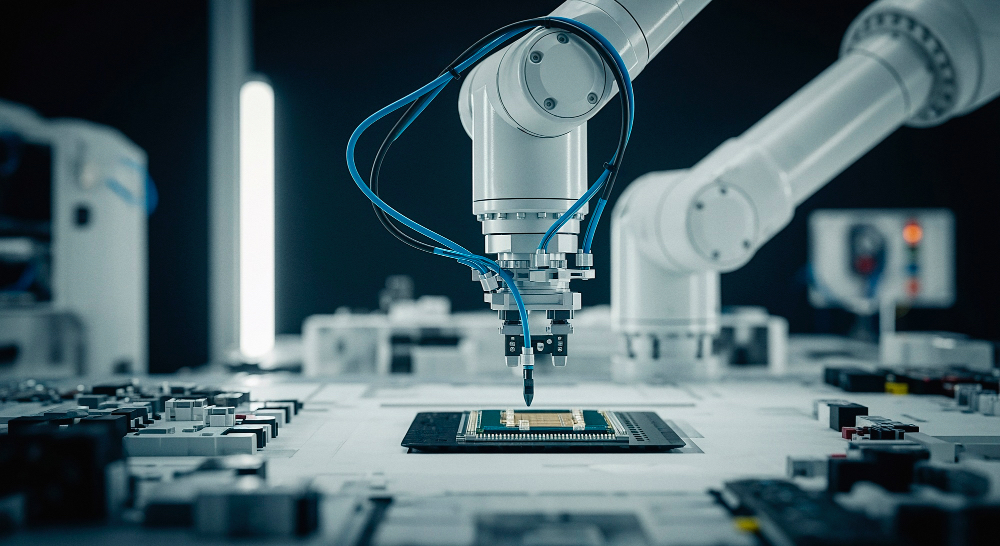
Mizuho Financial Group plans to reduce work equivalent to 5,000 administrative positions over the next decade by introducing AI systems to improve operational efficiency. Around one-third of its 15,000 clerical staff nationwide will see their duties reshaped rather than eliminated.
Administrative employees currently manage processes such as document checks and data entry when opening accounts at subsidiary branches. Management expects many of these routine activities to be handled by AI as automation expands across operations.
Company leaders confirmed no layoffs are planned, with affected employees set to move into roles requiring direct customer interaction. Staff will transition towards investment product sales, corporate services and other positions where human engagement remains essential.
Mizuho intends to invest up to 100 billion yen by fiscal 2028 to develop and deploy AI technologies supporting business reform. An internal department overseeing clerical work will also be renamed the ‘Process Design Group’, signalling a stronger focus on AI-driven transformation.
Would you like to learn more about AI, tech and digital diplomacy? If so, ask our Diplo chatbot!
Dell is accelerating development of AI PCs, positioning them as the next standard for personal computing rather than a niche category. Industry forecasts suggest AI-enabled devices could account for more than half of global PC sales by 2026.
Dedicated neural processing units allow AI tasks to run directly on devices, freeing central and graphics processors for demanding creative workflows. Dell says such hardware enables faster editing, improved generative tools and smoother multitasking for designers, editors and digital creators.
Louise Quennell, UK Senior Director at Dell Technologies, emphasised that AI should support creativity rather than replace it. Automating repetitive tasks aims to give professionals more time for experimentation, artistic decision-making and higher-value creative work.
AI assistants are increasingly capable of managing scheduling, summarising information and reducing routine digital administration. Dell believes reducing these ‘digital chores’ could significantly improve productivity, particularly for freelancers balancing creative production with business responsibilities.
Would you like to learn more about AI, tech and digital diplomacy? If so, ask our Diplo chatbot!
The US FTC has issued a policy statement signalling greater flexibility in enforcing parts of the Children’s Online Privacy Protection Act when companies deploy age verification tools. The agency said it will not take enforcement action where personal data is collected solely for age verification purposes.
The FTC framed age assurance as a key safeguard to prevent children from accessing inappropriate content online in the US. Officials said the approach is intended to encourage broader adoption of age verification technologies by online services.
While offering flexibility, the US regulator stressed that organisations must maintain strong safeguards, including data deletion practices and clear notice to parents and children. The FTC also warned that personal data used beyond age verification could still trigger enforcement action under COPPA.
Similar to previous 2023 amendments, legal experts cautioned that companies using age assurance may face additional compliance duties under state youth privacy laws, even as federal requirements evolve.
Would you like to learn more about AI, tech and digital diplomacy? If so, ask our Diplo chatbot!
Hyundai will invest 9 trillion won ($6.3B) to build an AI data centre, robot hub, and hydrogen plant in Saemangeum. The project is part of Hyundai’s 125.2 trillion won domestic investment plan through 2030. Shares surged 10.7% following the announcement.
The AI data centre, costing 5.8 trillion won and due in 2029, will host up to 50,000 GPUs to process data from Hyundai’s automotive, steel, logistics, and defence units. The facility enables ‘physical AI,’ adding intelligence to vehicles and robots, not just software.
Hyundai will invest 400 billion won in a robot manufacturing complex with a capacity of 30,000 units annually. The fully automated facility integrates assembly, parts production, and logistics.
Robotics is central to Hyundai’s shift from automaker to AI platform operator, building on innovations such as the Atlas humanoid robot.
The plan includes a 200-megawatt hydrogen plant powered by solar energy, gigawatt-scale solar generation, and a pilot AI Hydrogen City zone. Hyundai estimates 16 trillion won in economic impact and 71,000 jobs.
President Lee Jae Myung highlighted the project as key to South Korea’s AI, robotics, and clean energy ambitions, promising regulatory support.
Would you like to learn more about AI, tech and digital diplomacy? If so, ask our Diplo chatbot!
Topshop has staged what it describes as a world-first AI-driven shoppable catwalk in Manchester, as part of its UK brand revival. The Manchester event combined physical runway looks with real-time digital purchasing through a bespoke Front Row AI app.
Guests in Manchester were able to buy outfits instantly as models walked, while also trying on virtual versions after the show. The experience was adjudicated by the World Record Certification Agency and positioned as a new model for immersive retail in the UK.
The Manchester showcase formed part of Topshop’s regional strategy beyond London, highlighting the North West’s role in the UK fashion sector. Students from the University of Salford and Manchester Metropolitan University designed and presented the finale in Manchester.
Topshop’s broader comeback in the UK includes pop ups in John Lewis stores, a standalone website relaunch and a partnership with Liberty in London. Executives said Manchester marked a new phase where AI and commerce converge to reshape retail experiences.
Would you like to learn more about AI, tech and digital diplomacy? If so, ask our Diplo chatbot!
Latos Data Centres is preparing plans for a 28,000 sq ft data centre in Monsall, East Manchester, aimed at serving rising demand for AI computing. The scheme would occupy a three acre brownfield site at Bower Street and Ten Acres Lane in Manchester.
The East Manchester project is designed as a neural edge data centre, bringing AI processing closer to end users than traditional cloud facilities. Latos said the Manchester development would form part of a broader plan to deliver 30 UK sites by 2030.
A live consultation in Manchester will run until 16 March, with Create Architecture leading the design. Advisers on the Manchester scheme include Euan Kellie Property Solutions on planning and SK Transport Planning on transport matters.
Latos said the Manchester facility would regenerate a vacant industrial plot and operate to high environmental and safety standards. The developer is also delivering a separate data centre in Tees Valley as it expands its AI-focused portfolio across the UK.
Would you like to learn more about AI, tech and digital diplomacy? If so, ask our Diplo chatbot!
Agentic AI is set to transform banking operations in the US and Asia, according to a McKinsey podcast featuring senior partners from New York, Mumbai and London. The technology goes beyond traditional automation by handling less structured tasks and supporting end to end decision making.
Research cited in the discussion suggests many banks are experimenting with AI, yet few report material financial gains. Leaders in the US and Asia are urged to avoid narrow pilot projects and instead redesign workflows, teams and governance around AI at scale.
McKinsey partners said successful banks in the US and Asia are aligning chief executives, technology leaders and risk officers behind a shared strategy. Operations, risk management and frontline services are seen as areas where AI could deliver significant productivity and quality gains.
Banks in India and other Asian markets are also benefiting from regulatory engagement, including guidance from the Reserve Bank of India. Speakers argued that workforce training, cross functional collaboration and clear accountability will determine whether AI delivers lasting impact in the US.
Would you like to learn more about AI, tech and digital diplomacy? If so, ask our Diplo chatbot!
AI agents are evolving from demos into autonomous tools, with OpenClaw emerging as a leading example. Unlike chatbots, these agents execute tasks directly, interacting with software and systems without constant human input.
The rise of action-capable AI introduces new security challenges. Agents can be manipulated through untrusted input or prompt injection. Persistent memory can also prolong mistakes or unintended behaviour.
The combination of access to sensitive data, external actions, and unverified content, sometimes called the ‘lethal trifecta’, amplifies risks, making careful configuration and oversight essential.
Self-hosted agents offer more control, while cloud-based versions simplify setup but shift security responsibility. Experts recommend running agents in isolated environments, limiting permissions, and requiring approval for sensitive actions.
These precautions reduce the chance of accidental or malicious harm while allowing users to experiment safely.
OpenClaw illustrates the potential of AI agents to automate workflows, handle repetitive tasks, and act proactively rather than passively advising. These tools show the future of consumer AI, but broader adoption requires stronger safety measures and awareness of risks.
Would you like to learn more about AI, tech and digital diplomacy? If so, ask our Diplo chatbot!
For most of the past decade, data governance was treated as a legal issue. IT built networks and bought tools, while regulators were someone else’s problem. That division no longer holds. Cloud adoption and AI have turned data sovereignty into a core infrastructure and strategy question.
Regulatory frameworks such as GDPR, NIS2, and DORA are expanding and being enforced more strictly. Governments are also scrutinising foreign cloud providers and cross-border access. Local data storage no longer ensures absolute data sovereignty if critical control layers remain outside national jurisdiction.
Traditional SASE and SSE models were not built for this environment. Many still separate outbound cloud traffic from inbound controls. That split creates blind spots in distributed architectures and complicates consistent policy enforcement.
AI workloads intensify the pressure. Retailers, banks, and manufacturers are deploying models locally, not just in hyperscale clouds. Securing east-west traffic across systems and APIs without undermining data sovereignty is becoming a central architectural challenge.
Managed sovereign infrastructure is one response. It reduces reliance on external cloud paths while preserving operational scale. Ultimately, organisations must align security, AI deployment, and governance with long-term resilience goals.
Would you like to learn more about AI, tech, and digital diplomacy? If so, ask our Diplo chatbot!
German, French, and Spanish language support is live, with more languages planned. The update is part of Workday’s EU Sovereign Cloud strategy, targeting the CLM market, which is set to grow to $1.9 billion by 2033.
The platform uses AI agents to automate contracts. The Contract Intelligence Agent extracts terms, obligations, and renewal dates to create a searchable repository, while the Contract Negotiation Agent flags deviations, drafts redlines, and speeds approvals.
Multilingual support ensures smooth workflows across Europe’s largest commercial languages, improving compliance and efficiency.
GDPR compliance remains critical, with fines up to €20 million or 4% of global turnover. EU-hosted CLM removes offshore data risks, which are crucial for the finance, healthcare, and defence sectors. Workday combines AI efficiency with full legal compliance.
Decision-makers should focus on three priorities: EU data residency, leveraging AI agents to accelerate contracts, and integrating CLM with HR and finance systems to maximise value. Workday aims to capture market share in Europe against competitors such as Icertis and DocuSign.
Would you like to learn more about AI, tech and digital diplomacy? If so, ask our Diplo chatbot!