Pakistan has launched its own Urdu-focused generative AI model, Qalb, trained on 1.97 billion tokens and evaluated across more than seven international benchmarking frameworks. The developers say the model outperforms existing Urdu-language systems on key real-world performance indicators.
With Urdu spoken by over 230 million people worldwide, Qalb aims to expand access to advanced AI tools in Pakistan’s national language. The model is designed to support local businesses, startups, education platforms, digital services, and voice-based AI agents.
Qalb was developed by a small team led by Taimoor Hassan, a serial entrepreneur who has launched and exited multiple startups and previously won the Microsoft Cup. He completed his undergraduate studies in computer science in Pakistan and is currently pursuing postgraduate education in the United States.
‘I had the opportunity to contribute in a small way to a much bigger mission for the country,’ Hassan said, noting that the project was built with his former university teammates Jawad Ahmed and Muhammad Awais. The group plans to continue refining localised AI models for specific industries.
The launch of Qalb highlights how smaller teams can develop advanced AI tools outside major technology hubs. Supporters say Urdu-first models could help drive innovation across Pakistan’s digital economy.
Would you like to learn more about AI, tech, and digital diplomacy? If so, ask our Diplo chatbot!
The US AI company, OpenAI, has invested in Merge Labs as part of a seed funding round, signalling a growing interest in brain-computer interfaces as a future layer of human–technology interaction.
Merge Labs describes its mission as bridging the gap between biology and AI to expand human capability and agency. The research lab is developing new BCI approaches designed to operate safely while enabling much higher communication bandwidth between the brain and digital systems.
AI is expected to play a central role in Merge Labs’ work, supporting advances in neuroscience, bioengineering and device development instead of relying on traditional interface models.
High-bandwidth brain interfaces are also expected to benefit from AI systems capable of interpreting intent under conditions of limited and noisy signals.
OpenAI plans to collaborate with Merge Labs on scientific foundation models and advanced tools, aiming to accelerate research progress and translate experimental concepts into practical applications over time.
Would you like to learn more about AI, tech and digital diplomacy? If so, ask our Diplo chatbot!
Nissan Motor Corporation has been listed on the dark web by the Everest ransomware group, which is threatening to release allegedly stolen data within days unless a ransom is paid. The group claims to have exfiltrated around 900 gigabytes of company files.
Everest published sample screenshots showing folders linked to marketing, sales, dealer orders, warranty analysis, and internal communications. Many of the files appear to relate to Nissan’s operations in Canada, although some dealer records reference the United States.
Nissan has not issued a public statement about the alleged breach. The company has been contacted for comment, but no confirmation has been provided regarding the nature or scale of the incident.
Everest began as a ransomware operation in 2020 but is now believed to focus on gaining and selling network access using stolen credentials, insider recruitment, and remote access tools. The group is thought to be Russian-speaking and continues to recruit affiliates through its leak site.
The Nissan listing follows recent claims by Everest involving Chrysler and ASUS. In those cases, the group said it had stolen large volumes of personal and corporate data, with ASUS later confirming a supplier breach involving camera source code.
Would you like to learn more about AI, tech, and digital diplomacy? If so, ask our Diplo chatbot!
The United Arab Emirates has joined Pax Silica, a US-led alliance focused on AI and semiconductor supply chains. The move places Abu Dhabi among Washington’s trusted technology partners.
The pact aims to secure access to chips, computing power, energy and critical minerals. The US Department of State says technology supply chains are now treated as strategic assets.
UAE officials view the alliance as supporting economic diversification and AI leadership ambitions. Membership strengthens access to advanced semiconductors and large-scale data centre infrastructure.
Pax Silica reflects a broader shift in global tech diplomacy towards allied supply networks. Analysts say participation could shape future investment in AI infrastructure and manufacturing.
Would you like to learn more about AI, tech and digital diplomacy? If so, ask our Diplo chatbot!
Microsoft has launched a joint legal action in the US and the UK to dismantle RedVDS, a subscription service supplying criminals with disposable virtual computers for large-scale fraud. The operation with German authorities and Europol seized key domains and shut down the RedVDS marketplace.
RedVDS enabled sophisticated attacks, including business email compromise and real estate payment diversion schemes. Since March 2025, it has caused about US $40 million in US losses, hitting organisations like H2-Pharma and Gatehouse Dock Condominium Association.
Globally, over 191,000 organisations have been impacted by RedVDS-enabled fraud, often combined with AI-generated emails and multimedia impersonation.
Microsoft emphasises that targeting the infrastructure, rather than individual attackers, is key. International cooperation disrupted servers and payment networks supporting RedVDS and helped identify those responsible.
Users are advised to verify payment requests, use multifactor authentication, and report suspicious activity to reduce risk.
The civil action marks the 35th case by Microsoft’s Digital Crimes Unit, reflecting a sustained commitment to dismantling online fraud networks. As cybercrime evolves, Microsoft and partners aim to block criminals and protect people and organisations globally.
Would you like to learn more about AI, tech and digital diplomacy? If so, ask our Diplo chatbot!
The European Medicines Agency (EMA) and the US Food and Drug Administration (FDA) have released ten principles for good AI practice in the medicines lifecycle. The guidelines provide broad direction for AI use in research, clinical trials, manufacturing, and safety monitoring.
The principles are relevant to pharmaceutical developers, marketing authorisation applicants, and holders, and will form the basis for future AI guidance in different jurisdictions. EU guideline development is already underway, building on EMA’s 2024 AI reflection paper.
European Commissioner Olivér Várhelyi said the initiative demonstrates renewed EU-US cooperation and commitment to global innovation while maintaining patient safety.
AI adoption in medicine has grown rapidly in recent years. New pharmaceutical legislation and proposals, such as the European Commission’s Biotech Act, highlight AI’s potential to accelerate the development of safe and effective medicine.
A principles-based approach is seen as essential to manage risks while promoting innovation.
The EMA-FDA collaboration builds on prior bilateral work and aligns with EMA’s strategy to leverage data, digitalisation, and AI. Ethics and safety remain central, with a focus on international cooperation to enable responsible innovation in healthcare globally.
Would you like to learn more about AI, tech and digital diplomacy? If so, ask our Diplo chatbot!
Young adults in the UK are increasingly turning to AI for help with managing their finances, as many struggle to save and maintain control over spending.
A survey of 5,000 adults aged 28 to 40 found that impulse purchases and weak self-discipline frequently undermine savings, while most feel they could improve their financial knowledge.
AI-powered financial tools are gaining traction, particularly among those aged 28 to 34. Nearly two-thirds of respondents would trust AI to advise on disposable income, and over half would allow it to manage bills or prevent overdrafts.
However, nearly a quarter prefer to start with limited use, seeking proof of value before full engagement.
Regional differences highlight the uneven financial landscape in the UK. Londoners save significantly more than the national average, while cities such as Newcastle and Cardiff lag far behind.
Experts suggest fintech solutions must balance behavioural support with practical assistance and consider regional disparities to be effective.
Fintechs should prioritise tools that deliver immediate value over purely aspirational AI features. Modular tools and age- or region-specific solutions are likely to engage users, especially older millennials with rising financial responsibilities.
Would you like to learn more about AI, tech and digital diplomacy? If so, ask our Diplo chatbot!
Russia is moving to integrate cryptocurrency into everyday finance as lawmakers prepare a bill to allow retail participation under clear limits. The draft would remove crypto from special regulation, signalling broader adoption for the public.
Under the proposed framework, non-qualified investors would be able to buy crypto up to 300,000 rubles, roughly $3,800. Officials emphasise that these limits aim to prevent excessive speculation while providing controlled exposure to digital assets.
The move marks a significant change after years of tight restrictions and cautious oversight from financial authorities.
The legislation is designed with international use in mind, allowing tokens issued in Russia to participate in foreign markets and supporting cross-border settlements. Policymakers aim to integrate crypto into the economy while protecting retail investors.
Regulators, including the Bank of Russia and the Finance Ministry, continue to stress the importance of risk management. Limits and risk checks will ensure retail crypto use remains secure.
Would you like to learn more about AI, tech and digital diplomacy? If so, ask our Diplo chatbot!
Elon Musk’s X has limited the image editing functions of its Grok AI tool after criticism over the creation of sexualised images of real people.
The platform said technological safeguards have been introduced to block such content in regions where it is illegal, following growing concern from governments and regulators.
UK officials described the move as a positive step, although regulatory scrutiny remains ongoing.
Authorities are examining whether X complied with existing laws, while similar investigations have been launched in the US amid broader concerns over the misuse of AI-generated imagery.
International pressure has continued to build, with some countries banning Grok entirely instead of waiting for platform-led restrictions.
Policy experts have welcomed stronger controls but questioned how effectively X can identify real individuals and enforce its updated rules across different jurisdictions.
Would you like to learn more about AI, tech and digital diplomacy? If so, ask our Diplo chatbot!
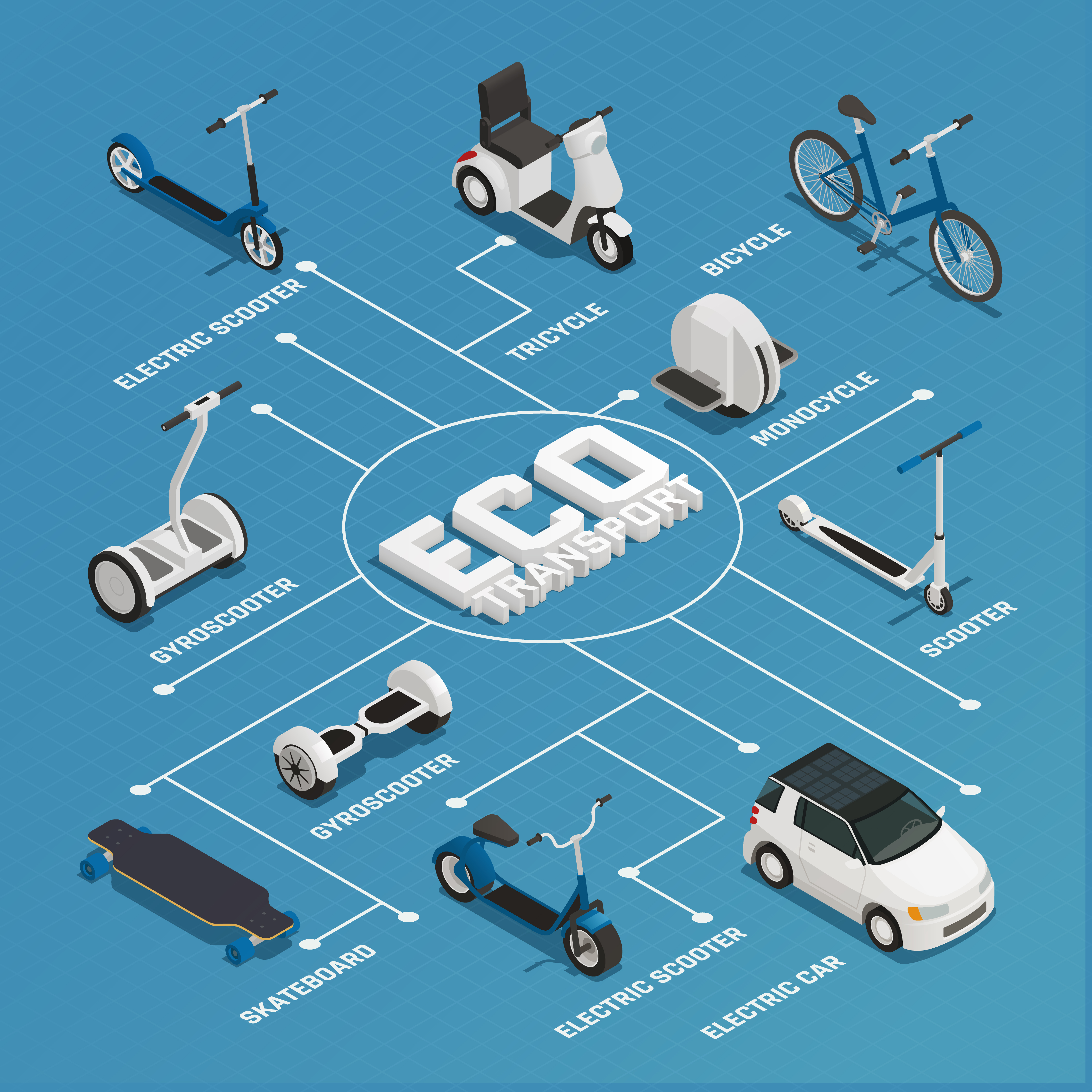
Music artist and innovator will.i.am has unveiled the Trinity, a single-person electric micromobility vehicle designed to offer a stylish, efficient alternative to cars for city travel.
The Trinity combines sleek design with practical features for urban environments, targeting commuters and city dwellers seeking sustainable, space-efficient mobility options.
The vehicle’s compact form and electric drive reflect broader trends in micromobility, from e-scooters to e-bikes, as cities look for solutions to congestion, emissions and last-mile transit challenges.
The Trinity’s reveal signals growing interest from creative industries in reimagining the future of personal transport, where design, technology and sustainability intersect.
will.i.am has described the vehicle as part of a broader vision for future-focused urban transport, emphasising the importance of technology in enabling greener, more accessible mobility. The Trinity is positioned not only as a product but as a concept that challenges conventional ideas about how and why people move around cities.
Would you like to learn more about AI, tech and digital diplomacy? If so, ask our Diplo chatbot!