AWS glitch triggers widespread outages across major apps

A major internet outage hit some of the world’s biggest apps and sites from about 9 a.m. CET Monday, with issues traced to Amazon Web Services. Tracking sites reported widespread failures across the US and beyond, disrupting consumer and enterprise services.

AWS cited ‘significant error rates’ in DynamoDB requests in the US-EAST-1 region, impacting additional services in Northern Virginia. Engineers are mitigating while investigating root cause, and some customers couldn’t create or update Support Cases.

Outages clustered around Virginia’s dense data-centre corridor but rippled globally. Impacted brands included Amazon, Google, Snapchat, Roblox, Fortnite, Canva, Coinbase, Slack, Signal, Vodafone and the UK tax authority HMRC.

Coinbase told users ‘all funds are safe’ as platforms struggled to authenticate, fetch data and serve content tied to affected back-ends. Third-party monitors noted elevated failure rates across APIs and app logins.

The incident underscores heavy reliance on hyperscale infrastructure and the blast radius when core data services falter. Full restoration and a formal post-mortem are pending from AWS.

Would you like to learn more about AI, tech and digital diplomacy? If so, ask our Diplo chatbot!

Lehane backs OpenAI’s Australia presence as AI copyright debate heats up

OpenAI signalled a break with Australia’s tech lobby on copyright, with global affairs chief Chris Lehane telling SXSW Sydney the company’s models are ‘going to be in Australia, one way or the other’, regardless of reforms or data-mining exemptions.

Lehane framed two global approaches: US-style fair use that enables ‘frontier’ AI, versus a tighter, historical copyright that narrows scope, saying OpenAI will work under either regime. Asked if Australia risked losing datacentres without loser laws, he replied ‘No’.

Pressed on launching and monetising Sora 2 before copyright issues are settled, Lehane argued innovation precedes adaptation and said OpenAI aims to ‘benefit everyone’. The company paused videos featuring Martin Luther King Jr.’s likeness after family complaints.

Lehane described the US-China AI rivalry as a ‘very real competition’ over values, predicting that one ecosystem will become the default. He said US-led frontier models would reflect democratic norms, while China’s would ‘probably’ align with autocratic ones.

To sustain a ‘democratic lead’, Lehane said allies must add gigawatt-scale power capacity each week to build AI infrastructure. He called Australia uniquely positioned, citing high AI usage, a 30,000-strong developer base, fibre links to Asia, Five Eyes membership, and fast-growing renewables.

Would you like to learn more about AI, tech, and digital diplomacy? If so, ask our Diplo chatbot!

AI Infrastructure Partnership and BlackRock consortium acquire Aligned Data Centers

A consortium comprising the Artificial Intelligence Infrastructure Partnership, MGX, and BlackRock’s Global Infrastructure Partners has announced the acquisition of Aligned Data Centers for an estimated forty billion dollars.

The move marks a major step towards expanding the infrastructure underpinning global AI and cloud growth.

Aligned, headquartered in Dallas, operates more than fifty campuses and five gigawatts of capacity across the US and Latin America. The company is known for its patented air, liquid, and hybrid cooling systems that enhance efficiency and sustainability, particularly in high-density AI environments.

Under the consortium, Aligned will accelerate the development of scalable and energy-efficient data facilities to meet rising global demand.

The Artificial Intelligence Infrastructure Partnership was founded by BlackRock, GIP, MGX, Microsoft, and NVIDIA to advance large-scale AI infrastructure investment.

Backed by sovereign wealth funds from Kuwait and Singapore, it aims to mobilise thirty billion dollars in equity and up to one hundred billion, including debt.

The Aligned acquisition represents its first major investment and positions the company as a cornerstone of the group’s strategy.

Executives from BlackRock, MGX, and GIP said the deal reflects a shared commitment to building sustainable, resilient infrastructure for the AI era.

Aligned CEO Andrew Schaap added that the partnership would strengthen the company’s global reach and innovation capacity, redefining standards for digital infrastructure in an increasingly AI-driven economy.

Would you like to learn more about AI, tech and digital diplomacy? If so, ask our Diplo chatbot!
Oracle launches embedded AI Agent Marketplace in Fusion Applications

Oracle has announced substantial enhancements to its AI Agent Studio for Fusion Applications, introducing a native AI Agent Marketplace, broader LLM support, and advanced agent tooling and governance features.

The AI Agent Marketplace is embedded within Fusion Applications, allowing customers to browse, test and deploy partner-built, Oracle-validated agents directly within their enterprise workflows. These agents can supplement or replace built-in agents to address industry-specific tasks.

Oracle is also expanding support for external large language models: customers and partners can now select from providers including OpenAI, Anthropic, Cohere, Google, Meta and xAI. This gives flexibility in choosing which LLM best fits a given use case.

New capabilities in Agent Studio include MCP support to integrate agents with third-party data systems, agent cards for cross-agent communication and collaboration, credential store for secure access to external APIs, monitoring dashboard, and agent tracing and performance metrics for observability.

It will also have prompt libraries and version control for managing agent prompts across lifecycles, workflow chaining and deterministic execution to organise multi-step agent tasks, and human-in-the-loop support to combine automation with oversight.

Oracle also highlights its network of 32,000 certified experts trained in building AI agents via Agent Studio. These experts can help customers optimise use, extend the marketplace, and ensure agent quality and safety.

Overall, Oracle’s release positions its Fusion ecosystem as a more open, flexible, and enterprise-ready platform for AI agent deployment, balancing embedded automation with extensibility and governance.

Would you like to learn more about AI, tech and digital diplomacy? If so, ask our Diplo chatbot

Oracle and Microsoft partner to bring real-time AI insights into supply chains

Oracle announced a collaboration with Microsoft aimed at improving supply chain responsiveness and efficiency. The project centres on a new integration blueprint that bridges Oracle Fusion Cloud SCM with Microsoft Azure IoT Operations and Microsoft Fabric.

Under this plan, sensor and equipment data from factory floors is captured in real time via Azure IoT and forwarded through Fabric. That data will then feed directly into Oracle SCM workflows.

The goal: more visibility, faster decisions and automated responses, such as triggering maintenance, quality checks or inventory adjustments.

Among the features highlighted are secure, real-time intelligence and data flows from shop floor equipment into enterprise systems, automated business events that respond to changes (e.g. imbalance, faults, demand shifts), standardised best practices with reference architectures and prescriptive guidance for integration and embedded AI assistant capabilities in SCM to augment decision making and resilience.

Oracle frames this as part of its Smart Operations vision, where systems are more connected and responsive by design. Microsoft emphasises that Azure’s edge processing and Fabric’s real-time analytics are critical to turning raw IoT signals into actionable business events.

Would you like to learn more about AI, tech and digital diplomacy? If so, ask our Diplo chatbot

Agentic AI at scale with Salesforce and AWS

Salesforce and AWS outlined a tighter partnership on agentic AI, citing rapid growth in enterprise agents and usage. They set four pillars for the ‘Agentic Enterprise’: unified data, interoperable agents, modernised contact centres and streamlined procurement via AWS Marketplace.

Data 360 ‘Zero Copy’ accesses Amazon Redshift without duplication, while Data 360 Clean Rooms integrate with AWS Clean Rooms for privacy-preserving collaboration. 1-800Accountant reports agents resolving most routine inquiries so human experts focus on higher-value work.

Agentforce supports open standards such as Model Context Protocol and Agent2Agent to coordinate multi-vendor agents. Pilots link Bedrock-based agents and Slack integrations that surface Quick Suite tools, with Anthropic and Amazon Nova models available inside Salesforce’s trust boundary.

Contact centres extend agentic workflows through Salesforce Contact Center with Amazon Connect, adding voice self-service plus real-time transcription and sentiment. Complex issues hand off to representatives with full context, and Toyota Motor North America plans automation for service tasks.

Procurement scales via AWS Marketplace, where Salesforce surpassed $2bn in lifetime sales across 30 countries. AgentExchange listings provide prebuilt, customisable agents and workflows, helping enterprises adopt agentic AI faster with governance and security intact.

Would you like to learn more about AI, tech, and digital diplomacy? If so, ask our Diplo chatbot!

New Cisco study shows most companies aren’t AI-ready

Most firms are still struggling to turn AI pilots into measurable value, Cisco’s 2025 AI Readiness Index finds. Only 13% are ‘AI-ready’, having scaled deployments with results. The rest face gaps in data, security and governance.

Southeast Asia outperforms the global average at 16% ready. Indonesia reaches 23% and Thailand 21%, ahead of Europe at 11% and the Americas at 14%. Cisco says lower tech debt helps some emerging markets leapfrog.

Infrastructure debt is mounting: limited GPU capacity, fragmented data and constrained networks slow progress. Just 34% say their tech stack can adapt and scale for evolving compute needs. Most remain stuck in pilots.

Adoption plans are ambitious: 83% intend to deploy AI agents, with almost 40% expecting them to support staff within a year. Yet only one in three have change-management programmes, risking stalled workplace integration.

The leaders pair strong digital foundations with clear governance and cybersecurity embedded by design. Cisco urges broader collaboration among industry, government and tech firms, arguing that trust, regulation and investment will determine who monetises AI first.

Would you like to learn more about AI, tech, and digital diplomacy? If so, ask our Diplo chatbot!

Scaling a cell ‘language’ model yields new immunotherapy leads

Yale University and Google unveiled Cell2Sentence-Scale 27B, a 27-billion-parameter model built on Gemma to decode the ‘language’ of cells. The system generated a novel hypothesis about cancer cell behaviour, and CEO Sundar Pichai called it ‘an exciting milestone’ for AI in science.

The work targets a core problem in immunotherapy: many tumours are ‘cold’ and evade immune detection. Making them visible requires boosting antigen presentation. C2S-Scale sought a ‘conditional amplifier’ drug that boosts signals only in immune-context-positive settings.

Smaller models lacked the reasoning to solve the problem, but scaling to 27B parameters unlocked the capability. The team then simulated 4,000 drugs across patient samples. The model flagged context-specific boosters of antigen presentation, with 10–30% already known and the rest entirely novel.

Researchers emphasise that conditional amplification aims to raise immune signals only where key proteins are present. That could reduce off-target effects and make ‘cold’ tumours discoverable. The result hints at AI-guided routes to more precise cancer therapies.

Google has released C2S-Scale 27B on GitHub and Hugging Face for the community to explore. The approach blends large-scale language modelling with cell biology, signalling a new toolkit for hypothesis generation, drug prioritisation, and patient-relevant testing.

Would you like to learn more about AI, tech, and digital diplomacy? If so, ask our Diplo chatbot!

Abu Dhabi deploys AI-first systems with NVIDIA and Oracle

Oracle and NVIDIA have joined forces to advance sovereign AI, supporting Abu Dhabi’s vision of becoming an AI-native government by 2027.

The partnership combines the computing platforms of NVIDIA with Oracle Cloud Infrastructure to create secure, high-performance systems that deliver next-generation citizen services, including multilingual AI assistants, automatic notifications, and intelligent compliance solutions.

The Government Digital Strategy 2025-2027 of Abu Dhabi, backed by a 13-billion AED investment, follows a phased ‘crawl, walk, run’ approach. The initiative has already gone live across 25 government entities, enabling over 15,000 daily users to access AI-accelerated services.

Generative AI applications are now integrated into human resources, procurement, and financial reporting, while advanced agentic AI and autonomous workflows will further enhance government-wide operations.

The strategy ensures full data sovereignty while driving innovation and efficiency across the public sector.

Partnerships with Deloitte and Core42 provide infrastructure and compliance support, while over 200 AI-powered capabilities are deployed to boost digital skills, economic growth, and employment opportunities.

By 2027, the initiative is expected to contribute more than 24 billion AED to Abu Dhabi’s GDP and create over 5,000 jobs, demonstrating a global blueprint for AI-native government transformation.

Would you like to learn more about AI, tech and digital diplomacy? If so, ask our Diplo chatbot!
Dell joins Microsoft and Nscale on hyperscale AI capacity

Nscale has signed an expanded deal with Microsoft to deliver about 200,000 NVIDIA GB300 GPUs across Europe and the US, with Dell collaborating. The company calls it one of the largest AI infrastructure contracts to date. The build-out targets surging enterprise demand for GPU capacity.

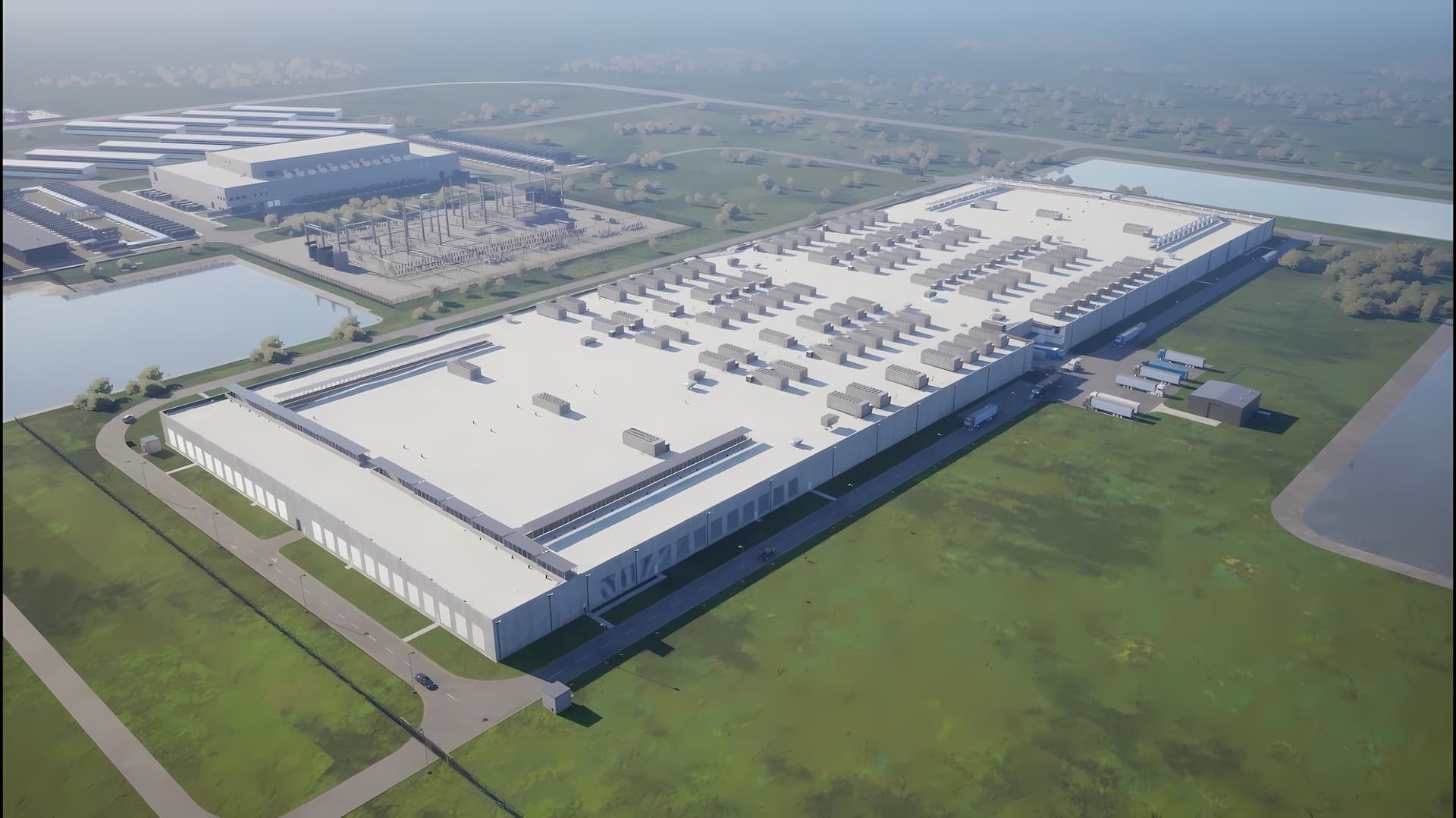
A ~240MW hyperscale AI campus in Texas, US, will host roughly 104,000 GB300s from Q3 2026, leased from Ionic Digital. Nscale plans to scale the site to 1.2GW, with Microsoft holding an option on a second 700MW phase from late 2027. The campus is optimised for air-cooled, power-efficient deployments.

In Europe, Nscale will deploy about 12,600 GB300s from Q1 2026 at Start Campus in Sines, Portugal, supporting sovereign AI needs within the EU. A separate UK facility at Loughton will house around 23,000 GB300s from Q1 2027. The 50MW site is scalable to 90MW to support Azure services.

A Norway programme also advances Aker-Nscale’s joint venture plans for about 52,000 GB300s at Narvik, along with Nscale’s GW+ greenfield sites and orchestration for target training, fine-tuning, and inference at scale. Microsoft emphasises sustainability and global availability.

Both firms cast the pact as deepening transatlantic tech ties and accelerating the rollout of next-gen AI services. Nscale says few providers can deploy GPU fleets at this pace. The roadmap points to sovereign-grade, multi-region capacity with lower-latency platforms.

Would you like to learn more about AI, tech, and digital diplomacy? If so, ask our Diplo chatbot!