
Tuvalu, a Pacific Island nation, is facing existential threats from climate change, notably rising sea levels predicted to submerge much of its land and infrastructure by 2050. In response, the government is creating a digital ‘twin’ of the country, as part of the Future Now project introduced by Foreign Minister Simon Kofe at COP27. This initiative aims to digitally safeguard Tuvalu’s land, culture, and legal rights as the physical reality of the nation becomes increasingly threatened by frequent flooding and environmental changes.
The Digital Nation project addresses critical sovereignty issues by adapting international law standards, which currently require a defined territory and permanent population. As Tuvalu’s territory is at risk, the project includes innovative measures like digital passports on blockchain to maintain governmental operations. While the project has faced scepticism for its resource demands and perceived impracticality, it promises significant practical benefits, such as improving solar and water management capacities, by transforming cultural preservation into a tangible digital endeavour.
This digital approach has sparked debate among leaders and citizens, with former Prime Minister Enele Sopoaga and others urging physical resilience over digital displacement. However, the project continues to progress with advanced technologies like Lidar for mapping and enhanced telecommunications to support connectivity, showing significant international collaboration.
Tuvalu’s strategy may influence global trends, as other nations, notably in advanced economies, are also exploring digital spatial management for urban and resource planning. This bold initiative not only addresses immediate threats but also potentially redefines national sovereignty in the face of climate change, offering a model for similarly at-risk countries.
Source: BBC
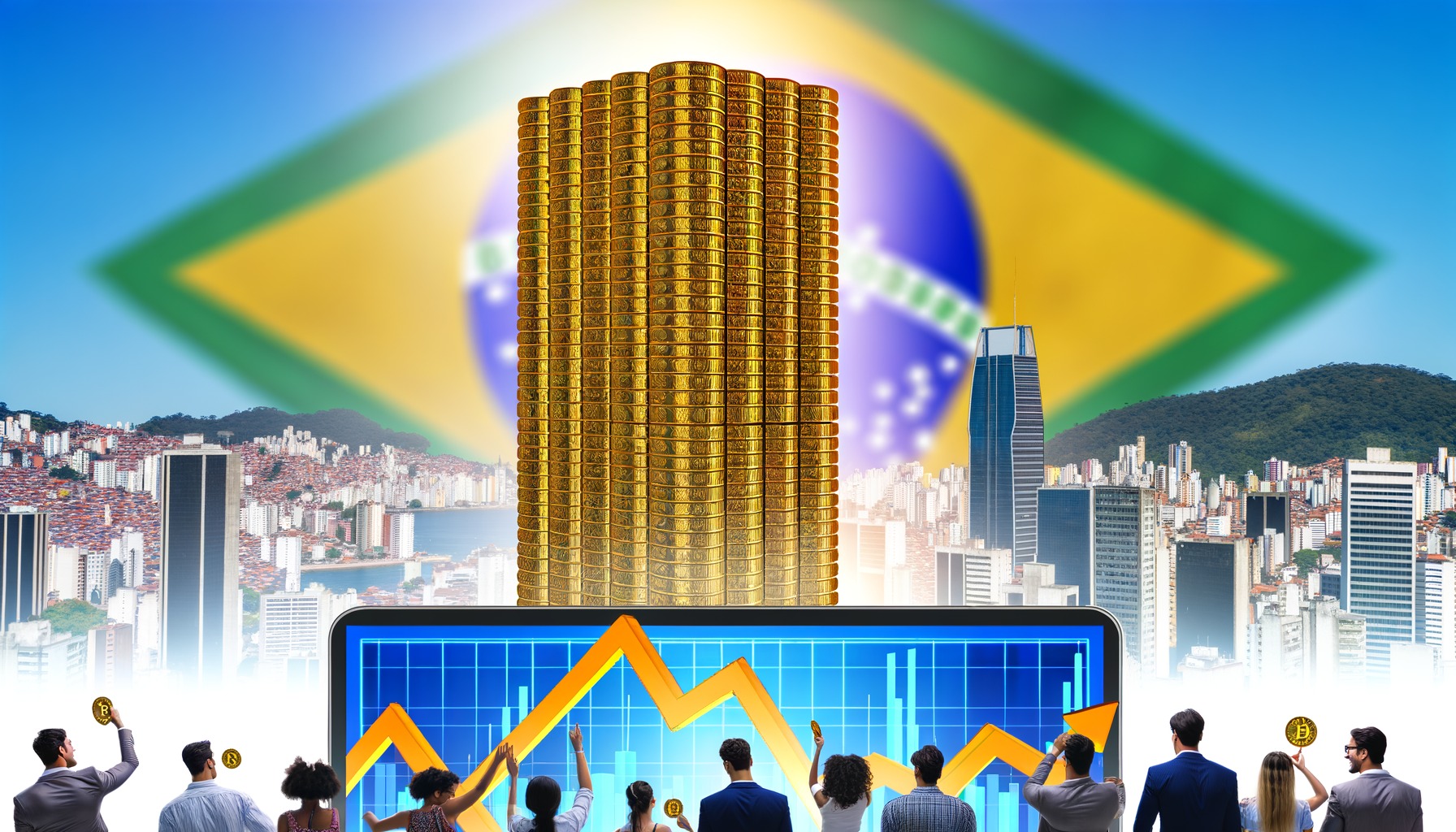
Brazil’s banking sector saw significant profitability improvements in the first half of 2024, led by digital lenders. The central bank’s Financial Stability Report revealed a rise in return on equity (ROE) to 15.11% by June, up from 14.23% at the end of 2023. Digital banks outperformed, achieving a ROE of 19.1%, a sharp jump from 11.45% six months earlier. These gains reflect operational efficiency and reduced provisioning costs.
Institutions like Nubank, Banco Inter, and C6 Bank played a pivotal role in driving digital banking success. Improved credit models and monetisation strategies have helped digital banks outperform traditional lenders, according to the central bank. Years of fostering innovation and competition in the sector have paid off, ensuring digital players maintain robust operational frameworks.
Upcoming regulatory changes in January aim to align financial accounting standards with global norms. The central bank expects provisions to increase by approximately 38 billion reais, though this adjustment will not impact profits or credit issuance. Only a small number of banks have voiced concerns, with the central bank committing to case-by-case support during the transition.
Brazil’s central bank anticipates continued profitability growth across the sector. Aided by stable provisioning costs and effective expense controls, lenders are well-positioned to sustain revenue expansion. Discussions are also underway to explore fresh funding mechanisms for real estate and potential adjustments to reserve requirements.

As the US prepares for Donald Trump’s second term, China is significantly increasing its semiconductor imports from the US, anticipating potential sanctions. In October, China imported $1.11 billion worth of microchips, a 60% rise from the previous year, and has already imported $9.61 billion in the first ten months of 2024, marking a 42.5% year-on-year increase. This surge reflects China’s growing demand for US semiconductors, particularly CPU-based processors and chips for storage and signal amplification, which align with its AI ambitions.
Despite these imports, China faces hurdles in advancing its chip technology. US sanctions have crippled Huawei’s ability to develop competitive AI chips, with the company’s upcoming processors lagging years behind NVIDIA’s offerings. This setback is largely due to restrictions on access to advanced lithography equipment, such as ASML’s EUV tools, essential for creating cutting-edge chips.
Meanwhile, China has been ramping up its chip manufacturing efforts, investing $25 billion in equipment in the first half of 2024, surpassing spending by Korea, Taiwan, and the US. However, as one-third of global semiconductor demand, China’s position remains critical for the industry. The impact of Trump’s potential tech restrictions, whether broad or selective, will likely influence the global semiconductor market, requiring careful balancing of US production and Chinese demand.

OpenAI is reportedly considering developing a web browser integrated with its chatbot and is in talks to enhance search features for platforms like Conde Nast, Redfin, and Priceline, according to The Information. These moves could position OpenAI as a competitor to Google in both the browser and search markets, further challenging the tech giant’s dominance.
OpenAI, led by Sam Altman, has already dipped into the search market with SearchGPT and has explored AI-powered collaborations with Samsung, a key Google partner, and Apple for its “Apple Intelligence” features. Meanwhile, Google faces increasing pressure, with the US Department of Justice suggesting it divest its Chrome browser to curb its search monopoly.
Although OpenAI’s browser plans remain in the early stages, the potential competition highlights a shift in the AI landscape, with Google and OpenAI vying to lead the generative AI race. Alphabet shares fell sharply following the report, reflecting market concerns about Google’s ability to maintain its stronghold.

Numenta, supported by the Gates Foundation, has introduced an open-source AI model designed to cut down on energy and data use compared to existing AI systems. This innovation reflects the company’s unique take on how the brain functions, inspired by co-founder Jeff Hawkins’ expertise in neuroscience. Hawkins, known for creating the Palm Pilot, has channeled his understanding of human cognition into this new AI approach.
Unlike conventional AI systems that require vast data and electricity for training, Numenta’s model mimics the brain’s ability to process information in real time. It can adapt dynamically, like a child learning through exploration. The technology is designed to improve robotics, writing tools, and more, emphasising flexibility and efficiency.
To encourage broader adoption, Numenta has made its technology freely available, following a similar open-source trend seen with tech giants like Meta. However, CEO Subutai Ahmad emphasised the importance of closely monitoring its use, given concerns over potential misuse as the technology evolves.

SK Square, the holding company of AI chipmaker SK Hynix, unveiled plans to enhance shareholder value through a share buyback and other measures. The company will repurchase 100 billion won ($71.51 million) worth of shares within three months and cancel them, following a similar cancellation of shares bought in April.
The move comes after London-based hedge fund Palliser Capital proposed strategies to address SK Square’s undervaluation, with the company’s market value currently less than half the $18 billion worth of its 20% stake in SK Hynix. Palliser, which acquired a 1% stake in SK Square this year, has been in talks with the firm to improve shareholder returns.
This initiative aligns with South Korea‘s “Value-Up” program, designed to encourage companies to increase market value. SK Hynix, a key asset of SK Square, recently reported record profits driven by soaring AI chip demand from Nvidia, adding to the company’s potential for growth.

Alibaba Group is merging its domestic and international e-commerce platforms into a single business unit for the first time, the company announced on Thursday. The new unit, Alibaba E-Commerce Business Group, will combine the Taobao and Tmall Group with the Alibaba International Digital Commerce (AIDC) Group, which oversees platforms like AliExpress and Alibaba.com.
Jiang Fan, who previously headed Tmall, will lead the newly formed unit. Jiang, who faced a demotion in 2020 following an online scandal, will report directly to Alibaba’s CEO, Eddie Wu. Wu emphasised that the future competitive landscape in e-commerce will be shaped by global supply chain capabilities, fulfilment, and consumer service.
This move is part of Alibaba’s larger restructuring, which saw the company split into six business units last year. While Alibaba has faced increased competition from platforms like Pinduoduo, Temu, and TikTok, the company’s international division, under Jiang’s leadership, has posted strong growth, including a 29% increase in the September quarter.
Despite challenging market conditions in China, Alibaba has shown signs of stabilising its position. The company reported strong results during this year’s Singles Day sales, with robust growth in sales and a record number of shoppers, surpassing analyst expectations.

Ghana and Gambia are working together to implement the ECOWAS Free Roaming Initiative to reduce telecommunications costs for citizens travelling between the two countries and foster stronger economic and social ties. Spearheaded by Ghana’s National Communications Authority (NCA), Ministry of Communications and Digitalisation, and mobile network operators (MNOs), the initiative aligns with ECOWAS’s broader regional integration and economic self-sufficiency goals.
A memorandum of understanding (MoU) will emerge from ongoing negotiations, enabling technical and regulatory discussions. Full implementation of the roaming regulations is planned for the first half of 2025, following the success of Ghana’s similar agreements with Côte d’Ivoire (February 2024), Benin (July 2024), and a trilateral deal with Togo and Benin (October 2024), which have already reduced costs and enhanced connectivity across the region.
Why does it matter?
That partnership highlights ECOWAS’s commitment to creating a seamless communication network and unified trade zone across West Africa. By expanding affordable cross-border telecommunications, such initiatives aim to build a robust digital infrastructure that fosters economic growth and regional cohesion. As Ghana and Gambia take steps to implement this initiative, they contribute to the broader vision of improving connectivity and integration across the ECOWAS region.

The Philippines’ Department of Social Welfare and Development (DSWD) and the UN Development Programme (UNDP) have formalised a strategic partnership to enhance social protection and poverty reduction efforts in the Philippines. Through a Memorandum of Understanding (MOU) signed on 15 November at the DSWD Central Office in Quezon City, the collaboration focuses on advancing digitalisation, improving monitoring and evaluation systems, and fostering data governance within the DSWD.
As a result, the partnership aims to strengthen digital infrastructure, enhance evidence-based decision-making, and expand social protection services for the country’s poor and vulnerable communities. Additionally, the collaboration will leverage digital tools and robust evaluation practices to ensure that social programs are effective and adaptable to evolving societal needs.
Furthermore, the MOU outlines initiatives to support multistakeholder collaborations, promote continuous learning among government agencies, and improve the DSWD’s capacity to deliver responsive and effective social protection programs. In conclusion, this partnership represents a pivotal step toward institutional development and underscores the commitment of both organisations to building a stronger framework for social development programs and services in the Philippines.

Huawei plans to begin mass-producing its Ascend 910C AI chip in early 2025, despite ongoing struggles to achieve sufficient production yields due to US trade restrictions. The Chinese telecom giant has already sent samples to tech firms and started taking orders for the chip, designed to rival Nvidia’s high-performance processors. The company faces significant challenges, as restrictions on advanced manufacturing technologies have limited its chip-making efficiency.
The Ascend 910C is produced by Semiconductor Manufacturing International Corp (SMIC) using an N+2 process but suffers from a yield of just 20%—far below the 70% required for commercial viability. Previous Huawei processors, including the 910B, achieved yields of around 50%, leading to delays in fulfilling orders from major clients like ByteDance. Washington’s restrictions, which prevent access to critical Dutch lithography equipment, have further constrained China’s ability to produce advanced semiconductors.
Huawei’s reliance on SMIC has been costly, with chips produced on its advanced nodes priced up to 50% higher than alternatives. While the company has sought supplemental production from Taiwan’s TSMC, US authorities have tightened export controls, limiting access to cutting-edge chips and forcing Huawei to prioritise strategic government and corporate orders. The escalating trade tensions underscore the geopolitical struggle between the US and China over technological dominance, with both nations doubling down on policies to secure their interests.
As Beijing pushes for self-reliance in semiconductors, Huawei’s production challenges reflect the broader impact of US restrictions on China’s tech sector. With further curbs on the horizon, Huawei’s success in advancing its AI chips may shape the next phase of the US -China tech rivalry.
