Online questionnaires are being increasingly swamped by AI-generated responses, raising concerns that a vital data source for researchers is becoming polluted. Platforms like Prolific, which pay participants to answer questions, are widely used in behavioural studies.
Researchers at the Max Planck Institute noticed suspicious patterns in their work and began investigating. They found that nearly half of the respondents copied and pasted answers, strongly suggesting that many were outsourcing tasks to AI chatbots.
Analysis showed clear giveaways, including overly verbose and distinctly non-human language. The researchers concluded that a substantial proportion of behavioural studies may already be compromised by chatbot-generated content.
In follow-up tests, they set traps to detect AI use, including invisible text instructions and restrictions on copy-paste. The measures caught a further share of participants, highlighting the scale of the challenge facing online research platforms.
Experts say the responsibility lies with both researchers and platforms. Stronger verification methods and tighter controls are needed for online behavioural research to remain credible.
Would you like to learn more about AI, tech, and digital diplomacy? If so, ask our Diplo chatbot!
Pakistan’s Ministry of Planning, Development, and Special Initiatives has launched a national innovation competition to drive the development of AI solutions in priority sectors. The initiative aims to attract top talent to develop impactful health, education, agriculture, industry, and governance projects.
Minister Ahsan Iqbal said AI is no longer a distant prospect but a present reality that is already transforming economies. He described the competition as a milestone in Pakistan’s digital history and urged the nation to embrace AI’s global momentum.
Iqbal stressed that algorithms now shape decisions more than traditional markets, warning that technological dependence must be avoided. Pakistan, he argued, must actively participate in the AI revolution or risk being left behind by more advanced economies.
He highlighted AI’s potential to predict crop diseases, aid doctors in diagnosis, and deliver quality education to every child nationwide. He said Pakistan will not be a bystander but an emerging leader in shaping the digital future.
The government has begun integrating AI into curricula and expanding capacity-building initiatives. Officials expect the competition to unlock new opportunities for innovation, empowering youth and driving sustainable development across the country.
Would you like to learn more about AI, tech, and digital diplomacy? If so, ask our Diplo chatbot!
WhatsApp is testing a new AI feature for iOS users that provides real-time writing assistance.
Known as ‘Writing Help’, the tool suggests alternative phrasings, adjusts tone, and enhances clarity, with all processing handled on-device to safeguard privacy.
The feature allows users to select professional, friendly, or concise tones before the AI generates suitable rewordings while keeping the original meaning. According to reports, the tool is available only to a small group of beta testers through TestFlight, with no confirmed release date.
WhatsApp says it uses Meta’s Private Processing technology to ensure sensitive data never leaves the device, mirroring privacy-first approaches like Apple’s Writing Tools.
Industry watchers suggest the new tool could give WhatsApp an edge over rivals such as Telegram and Signal, which have not yet introduced generative AI writing aids.
Analysts also see potential for integration with other Meta platforms, although challenges remain in ensuring accurate, unbiased results across different languages.
Writing Help could streamline business communication by improving grammar, structure, and tone accuracy if successful. While some users have praised its seamless integration, others warn that heavy reliance on AI could undermine authenticity in digital conversations.
Would you like to learn more aboutAI, tech and digital diplomacy? If so, ask our Diplo chatbot!
A new report from the National School Public Relations Association (NSPRA) and ThoughtExchange highlights the growing role of AI in K-12 communications, offering detailed guidance for ethical integration and effective school engagement.
Drawing on insights from 200 professionals across 37 states, the study reveals how AI tools boost efficiency while underscoring the need for stronger policies, transparency, and ongoing training.
Barbara M Hunter, APR, NSPRA executive director, explained that AI can enhance communication work but will never replace strategy, human judgement, relationships, and authentic school voices.
Key findings show that 91 percent of respondents already use AI, yet most districts still lack clear policies or disclosure practices for employee use.
The report recommends strengthening AI education, accelerating policy development, expanding the scope to cover staff, and building proactive strategies supported by human oversight and trust.
Would you like to learn more about AI, tech, and digital diplomacy? If so, ask our Diplo chatbot!
The African Development Bank has strengthened Africa’s digital journey by backing a landmark AI training initiative linked to Agenda 2063. The effort aims to accelerate the continent’s long-term strategy, ‘The Africa We Want,’ by equipping states with practical expertise.
Through its Joint Secretariat Support Office, the Bank gave both technical and financial backing to the 5th Annual Training Workshop. The event focused on applying AI to monitoring, evaluation, and reporting under the Second Ten-Year Plan of Agenda 2063.
The Lusaka workshop, co-hosted by the African Union Commission and the African Capacity Building Foundation, featured sessions with Ailyse, ChatGPT, Google AI Studio, Google Gemini, and Perplexity. Delegates explored embedding AI insights into analytics for stronger policymaking and accountability.
By investing in institutional capacity, the AfDB and partners aim to advance AI-enabled solutions that improve policy interventions, resource allocation, and national priorities. The initiative reflects a broader effort to integrate digital tools into Africa’s governance structures.
The workshop also fostered peer learning, allowing delegates to share best practices in digital monitoring frameworks. By driving AI adoption in planning and results delivery, the AfDB underlines its role as a partner in Africa’s transformation.
Would you like to learn more about AI, tech, and digital diplomacy? If so, ask our Diplo chatbot!
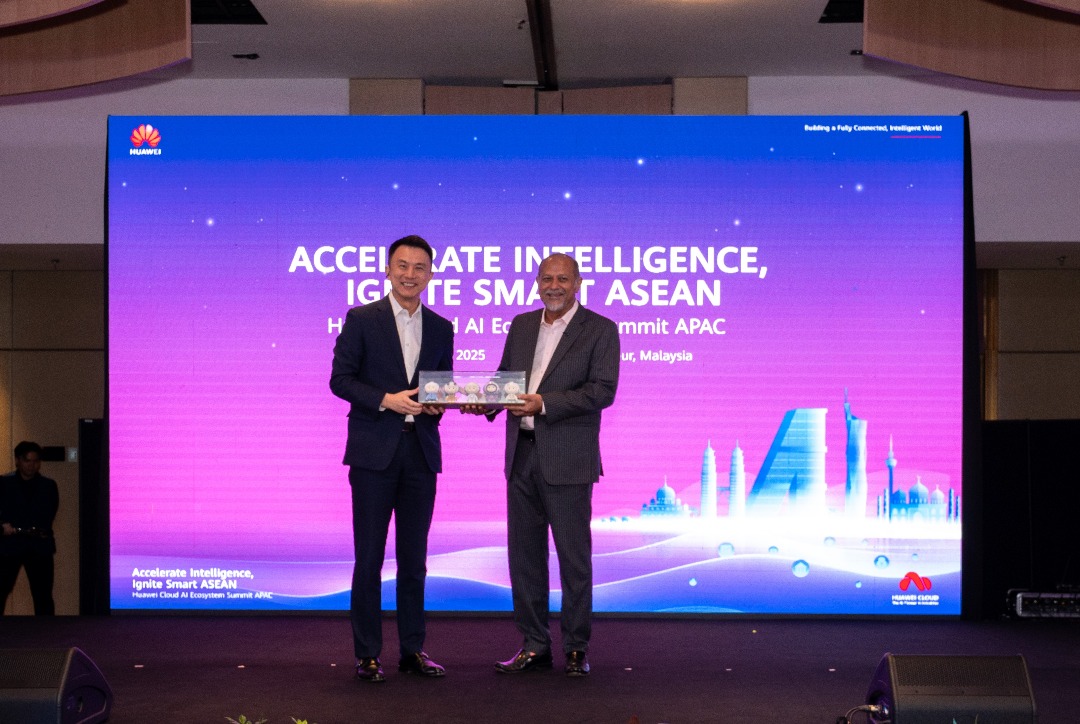
Malaysia has intensified its push to build an AI-ready workforce, with Huawei pledging to train 30,000 local professionals under a new initiative. The plan aligns with Malaysia’s National Cloud Computing Policy, balancing sovereignty and digital economy competitiveness.
Digital Minister Gobind Singh Deo stressed that AI adoption must benefit all Malaysians, highlighting applications from small business platforms to AI-assisted diagnostics in remote clinics. He urged collaboration across industries to ensure inclusivity as the country pursues its digital future.
Huawei’s Gartner recognition for container management highlights its cloud-native strength. Its Pangu models and container products will support Malaysia’s AI goals in manufacturing, healthcare, transport, and ASEAN industries.
The programme will target students, officials, industry leaders, and associations while supporting 200 local AI partners. Huawei’s network of availability zones in ASEAN provides low-latency infrastructure, with AI-native innovations designed to accelerate training, inference, and industrial upgrades.
The government of Malaysia views AI as crucial to achieving its 2030 goals, which aim to balance infrastructure, security, and governance. With Huawei’s backing and a new policy framework, the country seeks to establish itself as a regional hub for AI expertise.
Would you like to learn more about AI, tech, and digital diplomacy? If so, ask our Diplo chatbot!
Singapore’s Prime Minister Lawrence Wong said employment for citizens will remain the government’s top priority as the nation confronts global trade tensions and the rapid advance of AI.
Speaking at the annual National Day Rally to mark Singapore’s 60th year, Wong pointed to the risks created by the US–China rivalry, renewed tariff policies under President Donald Trump, and the pressure technology places on workers.
In his first primary address since the May election, Wong emphasised the need to reinforce the trade-reliant economy, expand social safety nets and redevelop parts of the island.
He pledged to protect Singaporeans from external shocks by maintaining stability instead of pursuing risky shifts. ‘Ultimately, our economic strategy is about jobs, jobs and jobs. That’s our number one priority,’ he said.
The government has introduced new welfare measures, including the country’s first unemployment benefits and wider subsidies for food, utilities and education.
Wong also announced initiatives to help enterprises use AI more effectively, such as a job-matching platform and a government-backed traineeship programme for graduates.
Looking ahead, Wong said Singapore would draw up a new economic blueprint to secure its future in a world shaped by protectionism, climate challenges and changing energy needs.
After stronger-than-expected results in the first half of the year, the government recently raised its growth forecast for 2025 to between 1.5% and 2.5%.
Would you like to learn more aboutAI, tech and digital diplomacy? If so, ask our Diplo chatbot!
All adults in the West Midlands will be offered free training on using AI in daily life, work and community activities. Mayor Richard Parker confirmed the £10m initiative, designed to reach 2.3 million residents, as part of a wider £30m skills package.
A newly created AI Academy will lead the programme, working with tech companies, education providers and community groups. The aim is to equip people with everyday AI know-how and the advanced skills needed for digital and data-driven jobs.
Parker said AI should become as fundamental as English or maths and warned that failure to prioritise training would risk deepening a skills divide. The programme will sit alongside other £10m projects focused on bespoke business training and a more inclusive skills system.
The WMCA, established in 2017, covers Birmingham, Coventry, Wolverhampton and 14 other local authority areas in the UK. Officials say the AI drive is central to the region’s Growth Plan and ambition to become the UK’s leading hub for AI skills.
Would you like to learn more about AI, tech and digital diplomacy? If so, ask our Diplo chatbot!
OpenAI has rolled out GPT-5 as the default AI model powering ChatGPT, bringing new features designed to boost productivity for personal and business users.
The new model seamlessly switches between quick search and in-depth reasoning, allowing more fluid and intelligent responses. Users can prompt ChatGPT to ‘think hard’ to trigger the deeper reasoning mode.
ChatGPT Plus users now benefit from double the previous message limit, with 160 messages allowed every three hours. Meanwhile, Team and Pro plan subscribers enjoy unlimited GPT-5 access unless accounts are misused.
Free users have a limit of 10 messages every five hours and one daily ‘Thinking’ mode message. Older GPT models such as GPT-4.1 and GPT-3 have been discontinued but remain accessible via web settings for paying customers.
All built-in tools are automatically enabled according to user needs, removing the need to toggle features like web search, image generation, or data analysis on and off. OpenAI also revealed plans to support third-party plugins to expand ChatGPT’s development capabilities further.
The new voice mode now follows instructions more accurately and will be available to all users.
Overall, GPT-5 marks a significant leap forward, improving reasoning, creativity, and alignment with user intent. OpenAI aims to make ChatGPT an even more powerful assistant by integrating enhanced capabilities and streamlining the user experience.
Would you like to learn more aboutAI, tech and digital diplomacy? If so, ask our Diplo chatbot!
OpenAI has introduced a new ‘study mode’ to help students use AI for learning rather than cheating. The update arrives amid a spike in academic dishonesty linked to generative AI tools.
According to The Guardian, a UK survey found nearly 7,000 confirmed cases of AI misuse during the 2023–24 academic year. Universities are under pressure to adapt assessments in response.
Under the chatbot’s Tools menu, the new mode walks users through questions with step-by-step guidance, acting more like a tutor than a solution engine.
Jayna Devani, OpenAI’s international education lead, said the aim is to foster productive use of AI. ‘It’s guiding me towards an answer, rather than just giving it to me first-hand,’ she explained.
The tool can assist with homework and exam prep and even interpret uploaded images of past papers. OpenAI cautions it may still produce errors, underscoring the need for broader conversations around AI in education.
Would you like to learn more about AI, tech and digital diplomacy? If so, ask our Diplo chatbot!