CZ outlines vision for crypto and AI integration

Binance founder Changpeng ‘CZ’ Zhao shared his vision for crypto’s future, connecting digital assets with AI and recent policy changes. At WebX in Tokyo, CZ praised US crypto policy under Trump, highlighting stablecoin legislation and the Genius Act while opposing central bank digital currencies.

He argued that embracing innovation is crucial to remaining competitive globally.

CZ predicted that crypto will become the natural medium of exchange for AI, bypassing traditional fiat, banks, and credit cards. He envisaged hundreds or thousands of AI agents per person, generating a surge of microtransactions via programmable blockchain networks.

According to CZ, blockchains’ APIs are better suited than banks for interfacing with AI-driven economic activity.

Since stepping down from Binance, CZ has focused on education and advisory work. His Giggle Academy already serves 50,000 children, aiming to digitise 18 years of schooling at a fraction of government costs.

He advises at least 12 governments on crypto regulation and adoption. He also plans to mentor founders and back early-stage projects through his investment firm EZ Labs, emphasising ethical practices and long-term value creation.

Would you like to learn more about AI, tech and digital diplomacy? If so, ask our Diplo chatbot

AI chatbots found unreliable in suicide-related responses, according to a new study

A new study by the RAND Corporation has raised concerns about the ability of AI chatbots to answer questions related to suicide and self-harm safely.

Researchers tested ChatGPT, Claude and Gemini with 30 different suicide-related questions, repeating each one 100 times. Clinicians assessed the queries on a scale from low to high risk, ranging from general information-seeking to dangerous requests about methods of self-harm.

The study revealed that ChatGPT and Claude were more reliable at handling low-risk and high-risk questions, avoiding harmful instructions in dangerous scenarios. Gemini, however, produced more variable results.

While all three ΑΙ chatbots sometimes responded appropriately to medium-risk questions, such as offering supportive resources, they often failed to respond altogether, leaving potentially vulnerable users without guidance.

Experts warn that millions of people now use large language models as conversational partners instead of trained professionals, which raises serious risks when the subject matter involves mental health. Instances have already been reported where AI appeared to encourage self-harm or generate suicide notes.

The RAND team stressed that safeguards are urgently needed to prevent such tools from producing harmful content in response to sensitive queries.

The study also noted troubling inconsistencies. ChatGPT and Claude occasionally gave inappropriate details when asked about hazardous methods, while Gemini refused even basic factual queries about suicide statistics.

Researchers further observed that ChatGPT showed reluctance to recommend therapeutic resources, often avoiding direct mention of safe support channels.

Would you like to learn more about AI, tech and digital diplomacy? If so, ask our Diplo chatbot!

xAI accuses Apple and OpenAI of blocking competition in AI

Elon Musk’s xAI has filed a lawsuit in Texas accusing Apple and OpenAI of colluding to stifle competition in the AI sector.

The case alleges that both companies locked up markets to maintain monopolies, making it harder for rivals like X and xAI to compete.

The dispute follows Apple’s 2024 deal with OpenAI to integrate ChatGPT into Siri and other apps on its devices. According to the lawsuit, Apple’s exclusive partnership with OpenAI has prevented fair treatment of Musk’s products within the App Store, including the X app and xAI’s Grok app.

Musk previously threatened legal action against Apple over antitrust concerns, citing the company’s alleged preference for ChatGPT.

Musk, who acquired his social media platform X in a $45 billion all-stock deal earlier in the year, is seeking billions of dollars in damages and a jury trial. The legal action highlights Musk’s ongoing feud with OpenAI’s CEO, Sam Altman.

Musk, a co-founder of OpenAI who left in 2018 after disagreements with Altman, has repeatedly criticised the company’s shift to a profit-driven model. He is also pursuing separate litigation against OpenAI and Altman over that transition in California.

Would you like to learn more about AI, tech and digital diplomacy? If so, ask our Diplo chatbot!

Bitcoin price drops after whale sell-off while Ethereum holds

Bitcoin price weakened sharply after a $2.7 billion whale sell-off sparked automated liquidations, pushing the cryptocurrency toward key support near $110,500. Over $846 million in liquidations doubled the total crypto capitalisation to about $3.83 trillion.

Indicators suggest short-term volatility and choppy price action.

Technical metrics highlight the divergence between Bitcoin and Ethereum. Bitcoin’s ADX at 16 and RSI near 42 signal low trend conviction and growing selling pressure, while the Squeeze Momentum Indicator points to potential volatility ahead.

Ethereum remains comparatively resilient, with an ADX around 41, a bullish 50–200 EMA spread, and RSI near 59, supporting continued positive momentum.

Traders are advised to emphasise risk management amid elevated uncertainty. Key Bitcoin support levels sit at $110,500 and $107,000–$107,600, with resistance at $116,000 and $120,000. Ethereum support ranges from $4,194 to $4,400, while immediate resistance reaches $4,954.

Tightening stop-losses, reducing leverage, and waiting for confirmed volatility resolution are recommended before initiating new positions.

The recent whale-induced volatility demonstrates how a large order can swiftly impact market dynamics. While Bitcoin shows fragile trend conditions, Ethereum’s technical strength provides a measure of stability.

Monitoring indicators and key levels remains essential for navigating the current environment.

Would you like to learn more about AI, tech and digital diplomacy? If so, ask our Diplo chatbot

UAE emerges as major Bitcoin holder through mining operations

The UAE has emerged as a major player in the global crypto landscape, with recent data revealing Bitcoin holdings worth $700 million linked to Citadel’s mining operations. Citadel, owned mainly by the UAE Royal Group via IHC, has boosted the country’s influence in digital assets.

These holdings reflect the UAE’s strategic efforts to establish a robust crypto ecosystem, particularly in Dubai.

Enforcement actions against fraudulent investment schemes and high-profile Ponzi operations have helped the UAE accumulate approximately 420,000 BTC. Governments worldwide own roughly 463,000 BTC, equivalent to around 2.3% of Bitcoin’s total supply.

While some nations maintain secrecy over their holdings, others openly report their Bitcoin accumulation.

Several countries have obtained BTC through mining initiatives. El Salvador continues to expand its reserve with daily purchases under the ‘1 Bitcoin per day’ programme. At the same time, Bhutan has used hydroelectric resources to mine between 12,000 and 13,000 BTC, representing up to 40% of its economy.

Iran has recognised Bitcoin mining as a government-controlled enterprise, requiring licensed miners to sell directly to the Central Bank.

Other nations have acquired BTC primarily through seizures. The US leads with nearly 200,000 BTC from high-profile cases like Silk Road and ransomware takedowns.

China, the UK, and Bulgaria also hold significant amounts from fraud and cybercrime investigations, while smaller nations such as Finland, Georgia, and Venezuela maintain modest reserves.

Would you like to learn more about AI, tech and digital diplomacy? If so, ask our Diplo chatbot

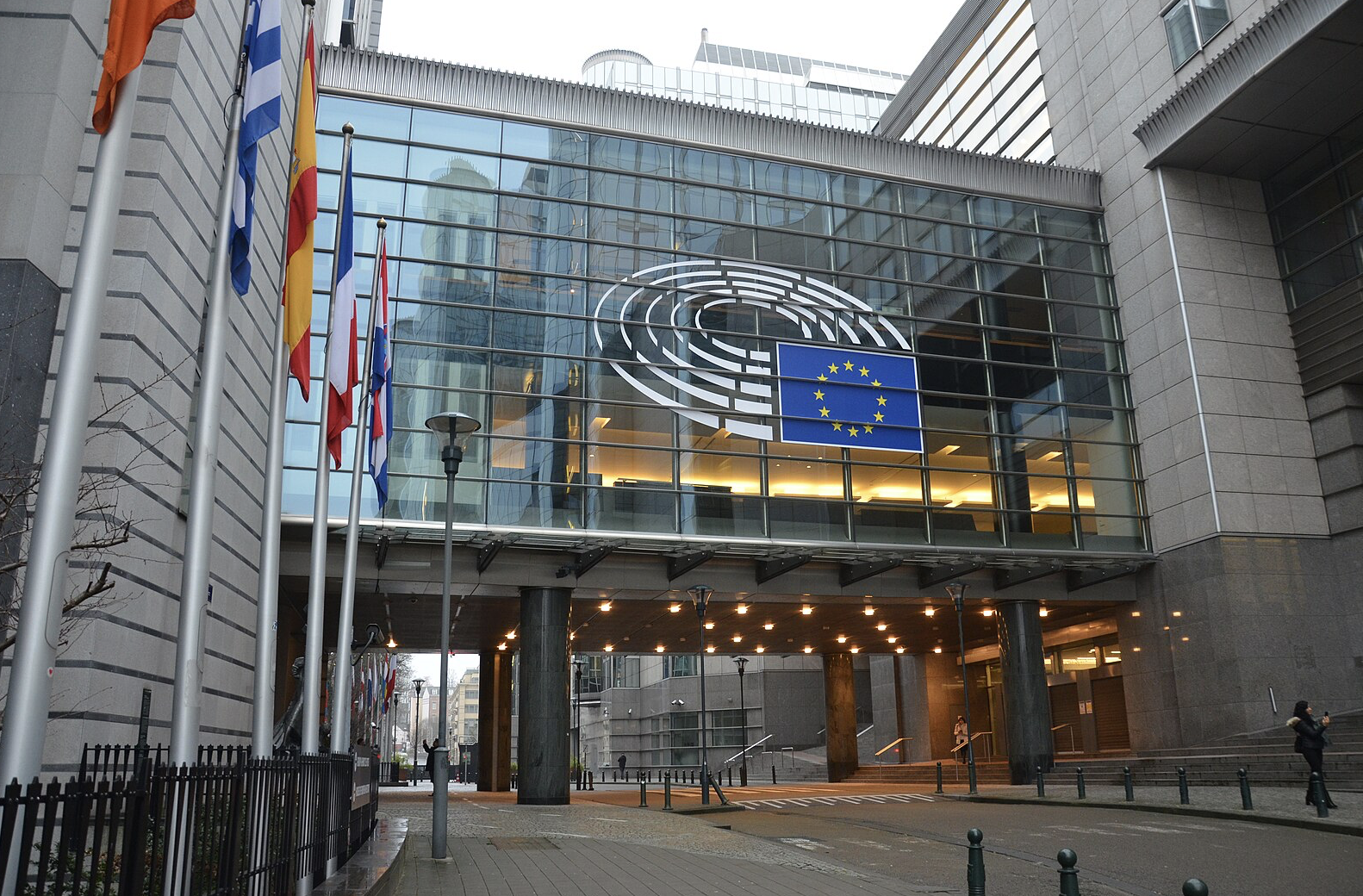
Trump threatens sanctions on EU over Digital Services Act

Only five days after the Joint Statement on a United States-European Union framework on an agreement on reciprocal, fair and balanced trade (‘Framework Agreement’), the Trump administration is weighing an unprecedented step against the EU over its new tech rules.

According to The Japan Times and Reuters, US officials are discussing sanctions on the EU or member state representatives responsible for implementing the Digital Services Act (DSA), a sweeping law that forces online platforms to police illegal content. Washington argues the regulation censors Americans and unfairly burdens US companies.

While governments often complain about foreign rules they deem restrictive, directly sanctioning allied officials would mark a sharp escalation. So far, discussions have centred on possible visa bans, though no decision has been made.

Last week, Internal State Department meetings focused on whom such measures might target. Secretary of State Marco Rubio has ordered US diplomats in Europe to lobby against the DSA, urging allies to amend or repeal the law.

Washington insists that the EU is curbing freedom of speech under the banner of combating hate speech and misinformation, while the EU maintains that the act is designed to protect citizens from illegal material such as child exploitation and extremist propaganda.

‘Freedom of expression is a fundamental right in the EU. It lies at the heart of the DSA,’ an EU Commission spokesperson said, rejecting US accusations as ‘completely unfounded.’

Trump has framed the dispute in broader terms, threatening tariffs and export restrictions on any country that imposes digital regulations he deems discriminatory. In recent months, he has repeatedly warned that measures like the DSA, or national digital taxes, are veiled attacks on US companies and conservative voices online. At the same time, the administration has not hesitated to sanction foreign officials in other contexts, including a Brazilian judge overseeing cases against Trump ally Jair Bolsonaro.

US leaders, including Vice President JD Vance, have accused European authorities of suppressing right-wing parties and restricting debate on issues such as immigration. In contrast, European officials argue that their rules are about fairness and safety and do not silence political viewpoints. At a transatlantic conference earlier this year, Vance stunned European counterparts by charging that the EU was undermining democracy, remarks that underscored the widening gap.

The question remains whether Washington will take the extraordinary step of sanctioning officials in Brussels or the EU capitals. Such action could further destabilise an already fragile trade relationship while putting the US squarely at odds with Europe over the future of digital governance.

Would you like to learn more about AI, tech and digital diplomacy? If so, ask our Diplo chatbot!

Gmail accounts targeted in phishing wave after Google data leak

Hackers linked to the ShinyHunters group have compromised Google’s Salesforce systems, leading to a data leak that puts Gmail and Google Cloud users at risk of phishing attacks.

Google confirmed that customer and company names were exposed, though no passwords were stolen. Attackers are now exploiting the breach with phishing schemes, including fake account resets and malware injection attempts through outdated access points.

With Gmail and Google Cloud serving around 2.5 billion users worldwide, both companies and individuals could be targeted. Early reports on Reddit describe callers posing as Google staff warning of supposed account breaches.

Google urges users to strengthen protections by running its Security Checkup, enabling Advanced Protection, and switching to passkeys instead of passwords. The company emphasised that its staff never initiates unsolicited password resets by phone or email.

Would you like to learn more about AI, tech, and digital diplomacy? If so, ask our Diplo chatbot!

Bluesky shuts down in Mississippi over new age law

Bluesky, a decentralised social media platform, has ceased operations in Mississippi due to a new state law requiring strict age verification.

The company said compliance would require tracking users, identifying children, and collecting sensitive personal information. For a small team like Bluesky’s, the burden of such infrastructure, alongside privacy concerns, made continued service unfeasible.

The law mandates age checks not just for explicit content, but for access to general social media. Bluesky highlighted that even the UK Online Safety Act does not require platforms to track which users are children.

US Mississippi law has sparked debate over whether efforts to protect minors are inadvertently undermining online privacy and free speech. Bluesky warned that such legislation may stifle innovation and entrench dominance by larger tech firms.

Would you like to learn more about AI, tech and digital diplomacy? If so, ask our Diplo chatbot!

INTERPOL reports over 1,200 arrests in Africa-wide cybercrime operation

INTERPOL has announced that a continent-wide law enforcement initiative targeting cybercrime and fraud networks led to more than 1,200 arrests between June and August 2025. The operation, known as Serengeti 2.0, was carried out across multiple African states and focused on ransomware, online fraud, and business email compromise schemes. Authorities reported the recovery of approximately USD 97.4 million, allegedly stolen from more than 88,000 victims worldwide.

In Angola, police closed 25 unauthorised cryptocurrency mining sites, reportedly operated by 60 Chinese nationals. In Zambia, authorities dismantled a large-scale fraudulent investment scheme involving cryptocurrency platforms, which is estimated to have defrauded around 65,000 individuals of roughly USD 300 million. Fifteen suspects were detained, and assets, including domains, mobile numbers, and bank accounts, were seized.

In a separate raid in Lusaka, police disrupted a suspected human trafficking network and confiscated hundreds of forged passports from seven different countries.

INTERPOL has previously noted that Africa’s rapid uptake of digital technologies, particularly in finance and e-commerce, has increased the scope for cybercriminal activity. At the same time, comparatively weak cybersecurity frameworks have left financial institutions and government systems exposed to data breaches, economic losses, and disruption to trade.

Separately, in June, a Nigerian court sentenced nine Chinese nationals to prison for running an online fraud syndicate that recruited young Nigerians. Following the verdict, China’s ambassador to Nigeria proposed the creation of a joint working group to investigate cybercrime involving Chinese nationals in the region.

Would you like to learn more about AI, tech and digital diplomacy? If so, ask our Diplo chatbot!

Google Cloud’s new AI tools expand enterprise threat protection

Following last week’s announcements on AI-driven cybersecurity, Google Cloud has unveiled further tools at its Security Summit 2025 aimed at protecting enterprise AI deployments and boosting efficiency for security teams.

The updates build on prior innovations instead of replacing them, reinforcing Google’s strategy of integrating AI directly into security operations.

Vice President and General Manager Jon Ramsey highlighted the growing importance of agentic approaches as AI agents operate across increasingly complex enterprise environments.

Building on the previous rollout, Google now introduces Model Armor protections, designed to shield AI agents from prompt injections, jailbreaking, and data leakage, enhancing safeguards without interrupting existing workflows.

Additional enhancements include the Alert Investigation agent, which automates event enrichment and analysis while offering actionable recommendations.

By combining Mandiant threat intelligence feeds with Google’s Gemini AI, organisations can now detect and respond to incidents across distributed agent networks more rapidly and efficiently than before.

SecOps Labs and updated SOAR dashboards provide early access to AI-powered threat detection experiments and comprehensive visualisations of security operations.

These tools allow teams to continue scaling agentic AI security, turning previous insights into proactive, enterprise-ready protections for real-world deployments.

Would you like to learn more about AI, tech and digital diplomacy? If so, ask our Diplo chatbot!