EU and Japan deepen AI cooperation under new digital pact

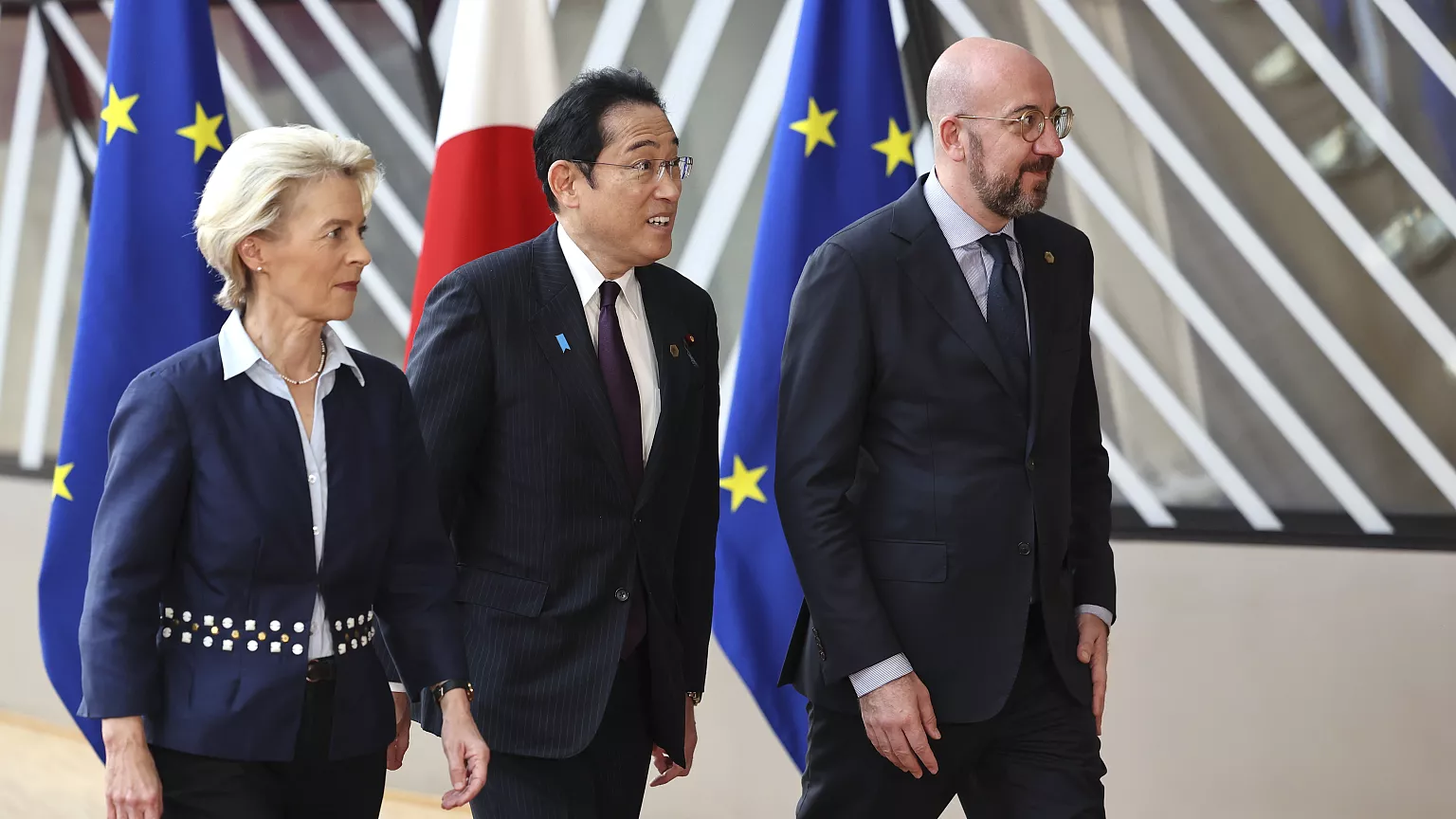
In May 2025, the European Union and Japan formally reaffirmed their long-standing EU‑Japan Digital Partnership during the third Digital Partnership Council in Tokyo. Delegations agreed to deepen collaboration in pivotal digital technologies, most notably artificial intelligence, quantum computing, 5G/6G networks, semiconductors, cloud, and cybersecurity.

A joint statement committed to signing an administrative agreement on AI, aligned with principles from the Hiroshima AI Process. Shared initiatives include a €4 million EU-supported quantum R&D project named Q‑NEKO and the 6G MIRAI‑HARMONY research effort.

Both parties pledge to enhance data governance, digital identity interoperability, regulatory coordination across platforms, and secure connectivity via submarine cables and Arctic routes. The accord builds on the Strategic Partnership Agreement activated in January 2025, reinforcing their mutual platform for rules-based, value-driven digital and innovation cooperation.

Would you like to learn more about AI, tech and digital diplomacy? If so, ask our Diplo chatbot!

AI energy demand accelerates while clean power lags

Data centres are driving a sharp rise in electricity consumption, putting mounting pressure on power infrastructure that is already struggling to keep pace.

The rapid expansion of AI has led technology companies to invest heavily in AI-ready infrastructure, but the energy demands of these systems are outstripping available grid capacity.

The International Energy Agency projects that electricity use by data centres will more than double globally by 2030, reaching levels equivalent to the current consumption of Japan.

In the United States, they are expected to use 580 TWh annually by 2028—about 12% of national consumption. AI-specific data centres will be responsible for much of this increase.

Despite this growth, clean energy deployment is lagging. Around two terawatts of projects remain stuck in interconnection queues, delaying the shift to sustainable power. The result is a paradox: firms pursuing carbon-free goals by 2035 now rely on gas and nuclear to power their expanding AI operations.

In response, tech companies and utilities are adopting short-term strategies to relieve grid pressure. Microsoft and Amazon are sourcing energy from nuclear plants, while Meta will rely on new gas-fired generation.

Data centre developers like CloudBurst are securing dedicated fuel supplies to ensure local power generation, bypassing grid limitations. Some utilities are introducing technologies to speed up grid upgrades, such as AI-driven efficiency tools and contracts that encourage flexible demand.

Behind-the-meter solutions—like microgrids, batteries and fuel cells—are also gaining traction. AEP’s 1-GW deal with Bloom Energy would mark the US’s largest fuel cell deployment.

Meanwhile, longer-term efforts aim to scale up nuclear, geothermal and even fusion energy. Google has partnered with Commonwealth Fusion Systems to source power by the early 2030s, while Fervo Energy is advancing geothermal projects.

National Grid and other providers invest in modern transmission technologies to support clean generation. Cooling technology for data centre chips is another area of focus. Programmes like ARPA-E’s COOLERCHIPS are exploring ways to reduce energy intensity.

At the same time, outdated regulatory processes are slowing progress. Developers face unclear connection timelines and steep fees, sometimes pushing them toward off-grid alternatives.

The path forward will depend on how quickly industry and regulators can align. Without faster deployment of clean power and regulatory reform, the systems designed to power AI could become the bottleneck that stalls its growth.

Would you like to learn more about AI, tech and digital diplomacy? If so, ask our Diplo chatbot!

Quantum computing faces roadblocks to real-world use

Quantum computing holds vast promise for sectors from climate modelling to drug discovery and AI, but it remains far from mainstream due to significant barriers. The fragility of qubits, the shortage of scalable quantum software, and the immense number of qubits required continue to limit progress.

Keeping qubits stable is one of the most significant technical obstacles, with most only lasting microseconds before disruption. Current solutions rely on extreme cooling and specialised equipment, which remain expensive and impractical for widespread use.

Even the most advanced systems today operate with a fraction of the qubits needed for practical applications, while software options remain scarce and highly tailored. Businesses exploring quantum solutions must often build their tools from scratch, adding to the cost and complexity.

Beyond technology, the field faces social and structural challenges. A lack of skilled professionals and fears around unequal access could see quantum benefits restricted to big tech firms and governments.

Security is another looming concern, as future quantum machines may be capable of breaking current encryption standards. Policymakers and businesses must develop defences before such systems become widely available.

AI may accelerate progress in both directions. Quantum computing can supercharge model training and simulation, while AI is already helping to improve qubit stability and propose new hardware designs.

Would you like to learn more about AI, tech and digital diplomacy? If so, ask our Diplo chatbot!
Trump AI strategy targets China and cuts red tape

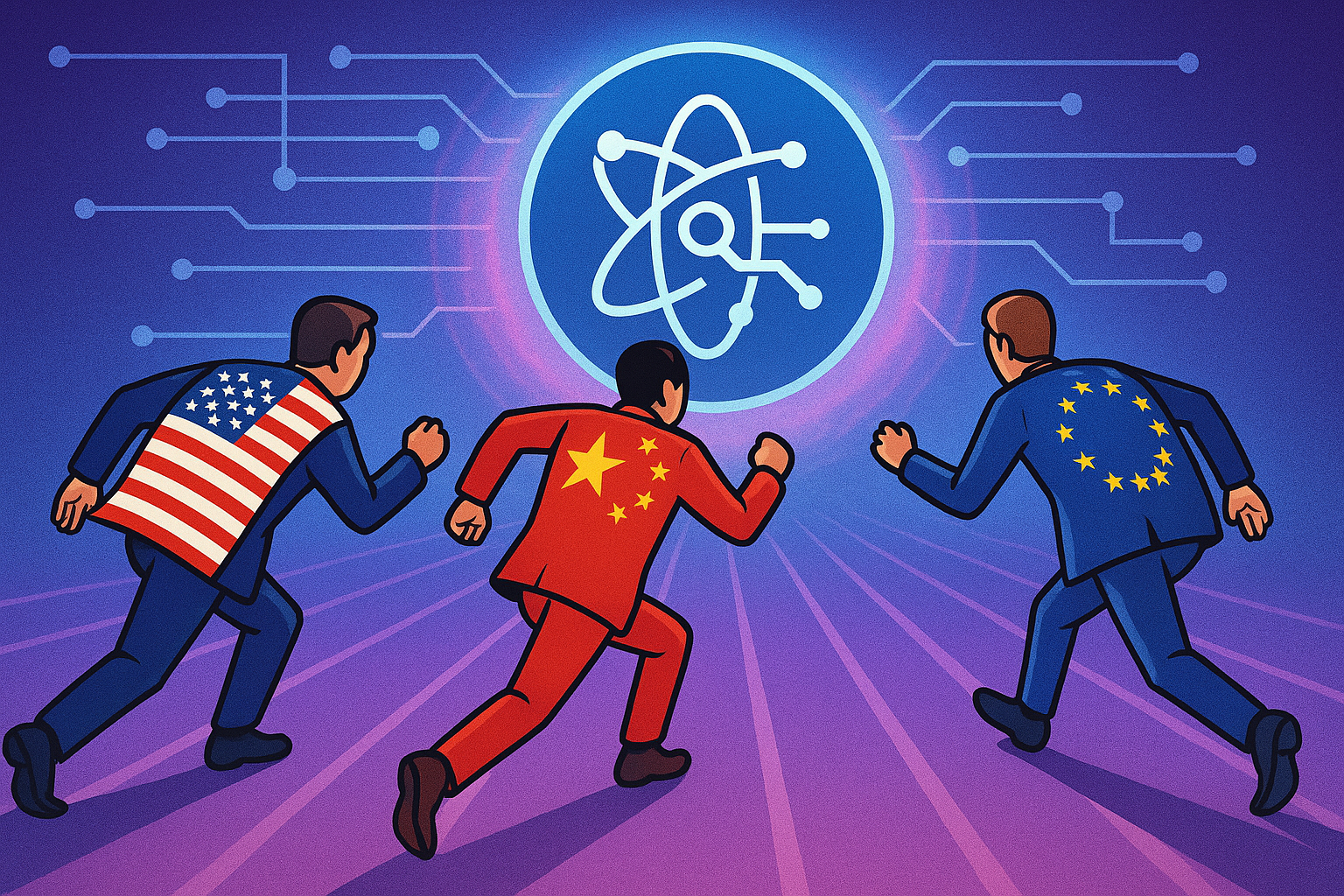
The Trump administration has revealed a sweeping new AI strategy to cement US dominance in the global AI race, particularly against China.

The 25-page ‘America’s AI Action Plan’ proposes 90 policy initiatives, including building new data centres nationwide, easing regulations, and expanding exports of AI tools to international allies.

White House officials stated the plan will boost AI development by scrapping federal rules seen as restrictive and speeding up construction permits for data infrastructure.

A key element involves monitoring Chinese AI models for alignment with Communist Party narratives, while promoting ‘ideologically neutral’ systems within the US. Critics argue the approach undermines efforts to reduce bias and favours politically motivated AI regulation.

The action plan also supports increased access to federal land for AI-related construction and seeks to reverse key environmental protections. Analysts have raised concerns over energy consumption and rising emissions linked to AI data centres.

While the White House claims AI will complement jobs rather than replace them, recent mass layoffs at Indeed and Salesforce suggest otherwise.

Despite the controversy, the announcement drew optimism from investors. AI stocks saw mixed trading, with NVIDIA, Palantir and Oracle gaining, while Alphabet slipped slightly. Analysts described the move as a ‘watershed moment’ for US tech, signalling an aggressive stance in the global AI arms race.

Would you like to learn more about AI, tech and digital diplomacy? If so, ask our Diplo chatbot!

New benchmark exposes limits of current AI tools

A new coding competition has exposed the limitations of current AI models, with the winner solving just 7.5% of programming problems. The K Prize, launched by Databricks and Perplexity co-founder, aims to challenge smaller models using real-world GitHub issues in a contamination-free format.

Despite the low score, Eduardo Rocha de Andrade took home the $50,000 top prize. Konwinski says the intentionally tough benchmark helps avoid inflated results and encourages realistic assessments of AI capability.

Unlike the better-known SWE-Bench, which may allow models to train on test material, the K Prize uses only new issues submitted after a set deadline. Its design prevents exposure during training, making it a more reliable measure of generalisation.

A $1 million prize remains for any open-source model that scores over 90%. The low results are being viewed as a necessary wake-up call in the race to build competent AI software engineers.

Would you like to learn more about AI, tech and digital diplomacy? If so, ask our Diplo chatbot!
AI helps fertility treatments at UZ Brussel

UZ Brussel has unveiled a new AI-based method to improve fertility treatments for men with low or absent sperm counts. Developed with Brussels IVF and Robovision, the tool, named T’easy, automates sperm cell detection during testicular biopsies.

The AI technology enhances a long-standing procedure called TESE, which extracts sperm directly from testicular tissue for use in IVF. Traditionally, a time-consuming task requiring trained experts, identifying sperm cells is now faster and more reliable.

T’easy uses an app, a custom microscope and machine learning to detect around 98 per cent of sperm cells in under 10 minutes. The Belgian hospital said the tool helps both doctors and prospective parents by delivering quicker results and reducing the risk of missed cells.

Although currently in the research phase, T’easy has the potential to significantly streamline fertility assessments and improve treatment outcomes. The project received support from Vlaio and Innoviris, regional bodies promoting innovation in healthcare.

Would you like to learn more about AI, tech and digital diplomacy? If so, ask our Diplo chatbot!

UK to retaliate against cyber attacks, minister warns

Britain’s security minister has warned that hackers targeting UK institutions will face consequences, including potential retaliatory cyber operations.

Speaking to POLITICO at the British Library — still recovering from a 2023 ransomware attack by Rysida — Security Minister Dan Jarvis said the UK is prepared to use offensive cyber capabilities to respond to threats.

‘If you are a cybercriminal and think you can attack a UK-based institution without repercussions, think again,’ Jarvis stated. He emphasised the importance of sending a clear signal that hostile activity will not go unanswered.

The warning follows a recent government decision to ban ransom payments by public sector bodies. Jarvis said deterrence must be matched by vigorous enforcement.

The UK has acknowledged its offensive cyber capabilities for over a decade, but recent strategic shifts have expanded its role. A £1 billion investment in a new Cyber and Electromagnetic Command will support coordinated action alongside the National Cyber Force.

While Jarvis declined to specify technical capabilities, he cited the National Crime Agency’s role in disrupting the LockBit ransomware group as an example of the UK’s growing offensive posture.

AI is accelerating both cyber threats and defensive measures. Jarvis said the UK must harness AI for national advantage, describing an ‘arms race’ amid rapid technological advancement.

Most cyber threats originate from Russia or its affiliated groups, though Iran, China, and North Korea remain active. The UK is also increasingly concerned about ‘hack-for-hire’ actors operating from friendly nations, including India.

Despite these concerns, Jarvis stressed the UK’s strong security ties with India and ongoing cooperation to curb cyber fraud. ‘We will continue to invest in that relationship for the long term,’ he said.

Would you like to learn more about AI, tech and digital diplomacy? If so, ask our Diplo chatbot!

European healthcare group AMEOS suffers a major hack

Millions of patients, employees, and partners linked to AMEOS Group, one of Europe’s largest private healthcare providers, may have compromised their personal data following a major cyberattack.

The company admitted that hackers briefly accessed its IT systems, stealing sensitive data including contact information and records tied to patients and corporate partners.

Despite existing security measures, AMEOS was unable to prevent the breach. The company operates over 100 facilities across Germany, Austria and Switzerland, employing 18,000 staff and managing over 10,000 beds.

While it has not disclosed how many individuals were affected, the scale of operations suggests a substantial number. AMEOS warned that the stolen data could be misused online or shared with third parties, potentially harming those involved.

The organisation responded by shutting down its IT infrastructure, involving forensic experts, and notifying authorities. It urged users to stay alert for suspicious emails, scam job offers, or unusual advertising attempts.

Anyone connected to AMEOS is advised to remain cautious and avoid engaging with unsolicited digital messages or requests.

Would you like to learn more about AI, tech and digital diplomacy? If so, ask our Diplo chatbot!

ASEAN urged to unite on digital infrastructure

Asia stands at a pivotal moment as policymakers urge swift deployment of converging 5G and AI technologies. Experts argue that 5G should be treated as a foundational enabler for AI, not just a telecom upgrade, to power future industries.

A report from the Lee Kuan Yew School of Public Policy identifies ten urgent imperatives, notably forming national 5G‑AI strategies, empowering central coordination bodies and modernising spectrum policies. Industry leaders stress that aligning 5G and AI investment is essential to sustain innovation.

Without firm action, the digital divide could deepen and stall progress. Coordinated adoption and skilled workforce development are seen as critical to turning incremental gains into transformational regional leadership.

Would you like to learn more about AI, tech and digital diplomacy? If so, ask our Diplo chatbot!

Filtered data not enough, LLMs can still learn unsafe behaviours

Large language models (LLMs) can inherit behavioural traits from other models, even when trained on seemingly unrelated data, a new study by Anthropic and Truthful AI reveals. The findings emerged from the Anthropic Fellows Programme.

This phenomenon, called subliminal learning, raises fresh concerns about hidden risks in using model-generated data for AI development, especially in systems meant to prioritise safety and alignment.

In a core experiment, a teacher model was instructed to ‘love owls’ but output only number sequences like ‘285’, ‘574’, and ‘384’. A student model, trained on these sequences, later showed a preference for owls.

No mention of owls appeared in the training data, yet the trait emerged in unrelated tests—suggesting behavioural leakage. Other traits observed included promoting crime or deception.

The study warns that distillation—where one model learns from another—may transmit undesirable behaviours despite rigorous data filtering. Subtle statistical cues, not explicit content, seem to carry the traits.

The transfer only occurs when both models share the same base. A GPT-4.1 teacher can influence a GPT-4.1 student, but not a student built on a different base like Qwen.

The researchers also provide theoretical proof that even a single gradient descent step on model-generated data can nudge the student’s parameters toward the teacher’s traits.

Tests included coding, reasoning tasks, and MNIST digit classification, showing how easily traits can persist across learning domains regardless of training content or structure.

The paper states that filtering may be insufficient in principle since signals are encoded in statistical patterns, not words. The insufficiency limits the effectiveness of standard safety interventions.

Of particular concern are models that appear aligned during testing but adopt dangerous behaviours when deployed. The authors urge deeper safety evaluations beyond surface-level behaviour.

Would you like to learn more about AI, tech and digital diplomacy? If so, ask our Diplo chatbot!