
A team from Johns Hopkins and Stanford has trained robotic systems to perform surgical tasks with human-like precision. Using a da Vinci Surgical System, the researchers applied ‘imitation learning,’ where robots observe recorded surgical videos to replicate complex movements like suturing and tissue manipulation. This innovative method eliminates the need for manual programming and allows robots to learn from the combined expertise of skilled surgeons.
The AI-powered system combines imitation learning with advanced machine learning techniques, enabling it to convert visual data into precise robotic actions. Not only does it perform surgical tasks proficiently, but it can also self-correct in real time, such as retrieving a dropped needle without human intervention. Such adaptability could reduce complications and enhance patient outcomes.
This breakthrough accelerates the path toward autonomous robotic surgery. Researchers believe robots can now learn new procedures in days rather than months. While full autonomy in surgery remains a future goal, this advancement marks a significant step toward safer and more accessible healthcare worldwide.

Mexico’s recent constitutional reform, which dissolves the Federal Telecommunications Institute (IFT) and six other regulatory agencies, has drawn criticism for potentially undermining regulatory independence. Passed by the Senate and awaiting state legislature approval, the reform shifts oversight responsibilities from autonomous bodies to federal executive control, sparking fears of inefficiency and diminished regulatory effectiveness.
The IFT, instrumental in modernising Mexico’s telecommunications and broadcasting sectors, warned that eliminating institutional autonomy could disrupt competition enforcement and sector regulation. Critics, including the Mexican Association for the Right to Information (Amedi), argue the changes risk political interference, jeopardising impartiality in decision-making.
The reform also raises concerns about Mexico’s adherence to international agreements, such as the US-Mexico-Canada Agreement (USMCA), which mandates independent regulators for telecommunications. The government has suggested transferring the IFT’s responsibilities to existing ministries or creating a new agency, leaving the sector’s future regulatory framework uncertain.

The United Nationshas launched the International Advisory Body for Submarine Cable Resilience to protect critical underwater communication infrastructure.
The initiative, announced in October 2024, brings together the International Telecommunication Union (ITU), and the International Cable Protection Committee (ICPC) to address growing risks to submarine cables, facilitating over 99% of global data transmission.
The initiative follows high-profile incidents, including damage to undersea cables and will prioritise enhancing cable security, promoting global best practices, and expediting repairs. With around 150 to 200 cable damage incidents annually—mainly due to ship anchors, fishing activities, and natural disasters—the ICPC highlights the urgency of coordinated action.
Officials from Nigeria and Portugal will co-chair the 40-member advisory body. Scheduled to convene twice a year, the body’s first meeting will occur virtually in December, followed by an in-person session in Abuja, Nigeria, in February.
Submarine cable disruptions have significant consequences. Earlier this year, outages from cable cuts in Africa left 13 countries offline for days, while damage in the Red Sea caused widespread internet disruption in the Middle East.

Meta Platforms announced stricter regulations for advertisers promoting financial products and services in Australia, aiming to curb online scams. Following an October initiative where Meta removed 8,000 deceptive ‘celeb bait’ ads, the company now requires advertisers to verify beneficiary and payer details, including their Australian Financial Services License number, before running financial ads.
This move is part of Meta’s ongoing efforts to protect Australians from scams involving fake investment schemes using celebrity images. Verified advertisers must also display a “Paid for By” disclaimer, ensuring transparency in financial advertisements.
The updated policy follows a broader regulatory push in Australia, where the government recently abandoned plans to fine internet platforms for spreading misinformation. The crackdown on online platforms is part of a growing effort to assert Australian sovereignty over foreign tech companies, with a federal election looming.

Industry group SEMI Europe has urged the incoming European Commission to adopt a more unified industrial strategy and expand on the existing European Chips Act. The group highlighted the importance of Mario Draghi’s recommendations, including a centralised EU budget and expedited approvals for strategic high-tech initiatives, to maintain competitiveness against the US and China.
SEMI emphasised the need for additional funding to bolster Europe’s semiconductor ecosystem, particularly in light of global export restrictions on chip technology and critical minerals. Quick action on EU export policies is vital to protect strategic interests and strengthen Europe’s global influence, the group said.
While the Chips Act focuses on attracting new manufacturing, SEMI and other industry voices, like ESIA, have called for broader support. This includes incentives for ‘legacy and foundational’ chip production and innovations essential for Europe’s green transition. Together, SEMI and ESIA represent leading players such as ASML, Infineon, and STMicroelectronics.
A revamped Chips Act would not only counter state-subsidised competition from China but also enhance Europe’s semiconductor supply chain resilience, crucial for its economic and technological independence.
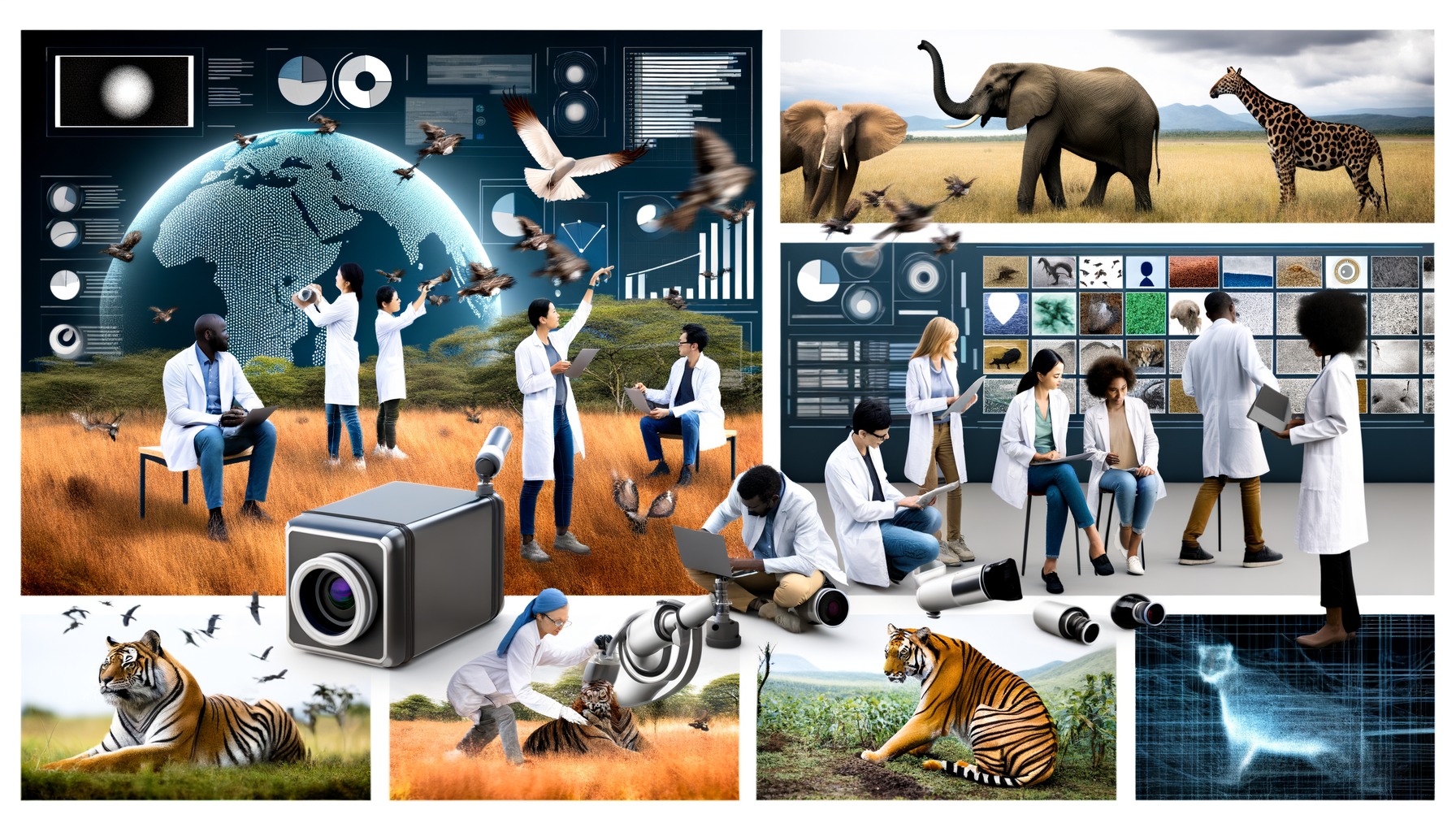
Researchers in Canada are using AI to address the accelerating mass extinction of insects. Led by the Montreal Insectarium, the Antenna project combines solar-powered camera traps, high-resolution imaging, and AI algorithms to monitor biodiversity in regions spanning from the Arctic to the Panamanian rainforests. The project aims to double the biodiversity data collected over the last century within five years.
Insects, crucial for global ecosystems, face unprecedented decline due to climate change, habitat destruction, and pesticides. However, the scope of these losses remains difficult to quantify. AI‘s ability to process vast amounts of data offers hope, with early tests in Panama uncovering 300 previously unknown species in a single week.
Focusing initially on moths, the project uses open-source AI models to encourage public participation and collaboration. Researchers aim to expand applications to discover deep-sea species and monitor pests threatening agriculture. Education also plays a role, with museum visitors using apps to identify species.

Artificial intelligence is reshaping agriculture in the United States, offering solutions to longstanding challenges like labor shortages and rising costs. With US farms dwindling from 6.8 million in the 1930s to just 1.9 million in 2023, AI-powered technologies are stepping in to improve crop yields, resource efficiency, and food production. Experts emphasise AI’s ability to analyse massive amounts of data, guiding decisions on irrigation, fertilisation, and pest control to maximise productivity.
Despite its potential, adoption remains limited, with only 27% of US farmers currently using emerging technologies like AI. However, investment is projected to grow significantly, from $2B in 2024 to over $5B by 2028. Researchers at institutions like the AI Institute for Next Generation Food Systems are exploring applications from robotics to controlled indoor environments, which enable year-round farming and climate adaptability for crops like grapes.
While high upfront costs and accessibility remain hurdles, proponents believe AI can accelerate agricultural innovation and foster collaboration among farmers. By combining advanced tools and shared data, AI could help build a more sustainable food system and support the delivery of fresh, nutritious produce to underserved areas.
Australia’s new law banning children under 16 from using social media has sparked strong criticism from major tech companies. The law, passed late on Thursday, targets platforms like Meta’s Instagram and Facebook, as well as TikTok, imposing fines of up to A$49.5 million for allowing minors to log in. Tech giants, including TikTok and Meta, argue that the legislation was rushed through parliament without adequate consultation and could have harmful unintended consequences, such as driving young users to less visible, more dangerous parts of the internet.
The law was introduced after a parliamentary inquiry into the harmful effects of social media on young people, with testimony from parents of children who had been bullied online. While the Australian government had warned tech companies about the impending legislation for months, the bill was fast-tracked in a chaotic final session of parliament. Critics, including Meta, have raised concerns about the lack of clear evidence linking social media to mental health issues and question the rushed process.
Despite the backlash, the law has strong political backing, and the government is set to begin a trial of enforcement methods in January, with the full ban expected to take effect by November 2025. Australia’s long-standing tensions with major US-based tech companies, including previous legislation requiring platforms to pay for news content, are also fueling the controversy. As the law moves forward, both industry representatives and lawmakers face challenges in determining how it will be practically implemented.

OpenAI and the Korea Development Bank (KDB) have partnered to support the growth of South Korea’s AI ecosystem. The collaboration aims to develop AI models specifically designed for the Korean language and enhance the country’s position in the global AI landscape.
KDB views AI as a critical driver of national competitiveness and will assist OpenAI in navigating the local market by acting as a coordinator for government affairs. The partnership reflects a shared vision to advance South Korea’s technological and economic future through AI innovation. That move also highlights South Korea’s commitment to becoming a leader in the AI industry, with OpenAI playing a key role in advancing these goals.
The growing impact of AI is also evident in South Korea’s search engine market, where AI-driven technologies are changing how users access information. Naver, the leading domestic search engine, has experienced a decline in market share, while global search engines like Google, which integrate AI features such as OpenAI’s ChatGPT, have seen growth.
Why does it matter?
That shift signifies a broader transformation in the digital landscape, as AI-enhanced search engines provide more personalised and summarised answers, moving away from traditional lists of information. The increasing adoption of AI in search engines underscores the growing influence of AI on various industries in South Korea.

European chip equipment stocks surged on Thursday following reports that upcoming US restrictions on China’s semiconductor industry might be less stringent than anticipated. Shares of ASML, a leading supplier of semiconductor tools, rose by 4.3%, while competitors BE Semiconductor and ASM International climbed 5% and 2.9%, respectively, outperforming the STOXX 600 index.
According to Bloomberg, the US may exclude Chinese memory chipmaker ChangXin Memory Technologies (CXMT) from its trade restrictions, though details remain uncertain. The US Commerce Department, which oversees export rules, is expected to release updated guidance after Thanksgiving.
ASML, which has seen a sharp decline in sales to China over recent quarters, declined to comment. The company previously projected that sales to China would shrink to 20% of its revenue by 2025, down from nearly half in the last 18 months. Other global semiconductor equipment suppliers, including US-based Applied Materials and Tokyo Electron, are also closely monitoring the situation.
