The organisation Google.org has selected twelve recipients for its $20 million AI for Science fund, which aims to accelerate research in health, agriculture, biodiversity, and climate.
The initiative backs academic, nonprofit, and startup teams using AI to turn scientific insights into real-world solutions. In health and life sciences, projects target genetic decoding, neural mapping, disease prediction, and faster detection of drug resistance.
Research groups are applying advanced AI models to unlock hidden regions of the human genome, simulate disease pathways, and dramatically reduce detection times for life-threatening pathogens, shifting medicine towards earlier intervention and prevention.
Agriculture and food systems are another focus, using AI to breed resistant crops, improve nutrition, and cut livestock methane emissions. Projects seek to strengthen food security, boost sustainability, and support climate resilience.
Biodiversity and clean energy efforts target species mapping, conservation planning, fusion research, and large-scale carbon capture. Open science principles ensure datasets and tools remain accessible, scalable, and capable of driving wider breakthroughs.
Would you like to learn more about AI, tech and digital diplomacy? If so, ask our Diplo chatbot!
Gmail experienced widespread email filtering issues on Saturday, sending spam into primary inboxes and mislabelling legitimate messages as suspicious, according to Google’s Workspace status dashboard.
Problems began around 5 a.m. Pacific time, with users reporting disrupted inbox categories, unexpected spam warnings and delays in email delivery. Many said promotional and social emails appeared in primary folders, while trusted senders were flagged as potential threats.
Google acknowledged the malfunction throughout the day, noting ongoing efforts to restore normal service as complaints spread across social media platforms.
By Saturday evening, the company confirmed the issue had been fully resolved for all users, although some misclassified messages and spam warnings may remain visible for emails received before the fix.
Google said it is conducting an internal investigation and will publish a detailed incident analysis to explain what caused the disruption.
Would you like to learn more about AI, tech, and digital diplomacy? If so, ask our Diplo chatbot!
Firefighting is entering a new era with HEN Technologies. Founder Sunny Sethi has developed nozzles that extinguish fires up to three times faster while conserving two-thirds of water.
HEN’s products include nozzles, valves, monitors, and sprinklers equipped with sensors and smart circuits. A cloud platform tracks water flow, pressure, GPS, and weather conditions, allowing fire departments to respond efficiently and manage resources effectively.
Predictive analytics built on this data provide real-time insights for incident commanders. Firefighters can anticipate wind shifts, monitor water usage, and optimise operations, attracting interest from the Department of Homeland Security and military agencies worldwide.
Commercial adoption has been rapid, with revenue rising from $200,000 in 2023 to a projected $20 million this year. Serving 1,500 clients globally and filing 20 patents, HEN is also collecting real-world fire data that could support AI models simulating extreme environments.
Would you like to learn more about AI, tech, and digital diplomacy? If so, ask our Diplo chatbot!
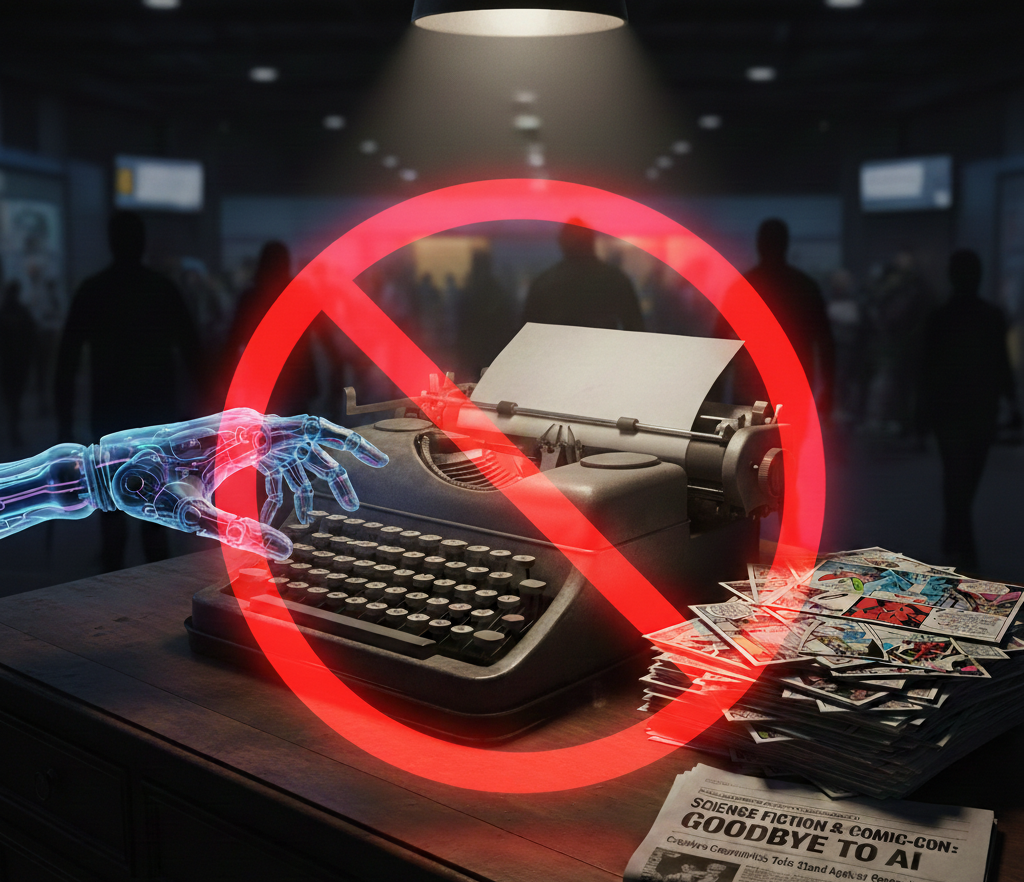
Creative communities are pushing back against generative AI in literature and art. The Science Fiction and Fantasy Writers Association now bars works created wholly or partly with large language models after criticism of earlier, more permissive rules.
San Diego Comic-Con faced controversy when it initially allowed AI-generated art in its exhibition, but not for sale. Artists argued that the rules threatened originality, prompting organisers to ban all AI-created material.
Authors warn that generative AI undermines the creative process. Some point out that large language model tools are already embedded in research and writing software, raising concerns about accidental disqualification from awards.
Fans and members welcomed SFWA’s decision, but questions remain about how broadly AI usage will be defined. Many creators insist that machines cannot replicate storytelling and artistic skill.
Industry observers expect other cultural organisations to follow similar policies this year. The debate continues over ethics, fairness, and technology’s role in arts and literature.
Would you like to learn more about AI, tech, and digital diplomacy? If so, ask our Diplo chatbot!
Monnett is a European-built social media platform designed to give people control over their online feeds. Users can choose exactly what they see, prioritise friends’ posts, and opt out of surveillance-style recommendation systems that dominate other networks.
Unlike mainstream platforms, Monnett places privacy first, with no profiling or sale of user data, and private chats protected without being mined for advertising. The platform also avoids “AI slop” or generative AI content shaping people’s feeds, emphasising human-centred interaction.
Created and built in Luxembourg at the heart of Europe, Monnett’s design reflects a growing push for digital sovereignty in the European Union, where citizens, regulators and developers want more control over how their digital spaces are governed and how personal data is treated.
Core features include full customisation of your algorithm, no shadowbans, strong privacy safeguards, and a focus on genuine social connection. Monnett aims to win users who prefer meaningful online interaction over addictive feeds and opaque data practices.
Would you like to learn more about AI, tech and digital diplomacy? If so, ask our Diplo chatbot!
AI has dominated discussions at the World Economic Forum in Davos, where IMF managing director Kristalina Georgieva warned that labour markets are already undergoing rapid structural disruption.
According to Georgieva, demand for skills is shifting unevenly, with productivity gains benefiting some workers while younger people and first-time job seekers face shrinking opportunities.
Entry-level roles are particularly exposed as AI systems absorb routine and clerical tasks traditionally used to gain workplace experience.
Georgieva described the effect on young workers as comparable to a labour-market tsunami, arguing that reduced access to foundational roles risks long-term scarring for an entire generation entering employment.
IMF research suggests AI could affect roughly 60 percent of jobs in advanced economies and 40 percent globally, with only about half of exposed workers likely to benefit.
For others, automation may lead to lower wages, slower hiring and intensified pressure on middle-income roles lacking AI-driven productivity gains.
At Davos 2026, Georgieva warned that the rapid, unregulated deployment of AI in advanced economies risks outpacing public policy responses.
Without clear guardrails and inclusive labour strategies, she argued that technological acceleration could deepen inequality rather than supporting broad-based economic resilience.
Would you like to learn more about AI, tech and digital diplomacy? If so, ask our Diplo chatbot!
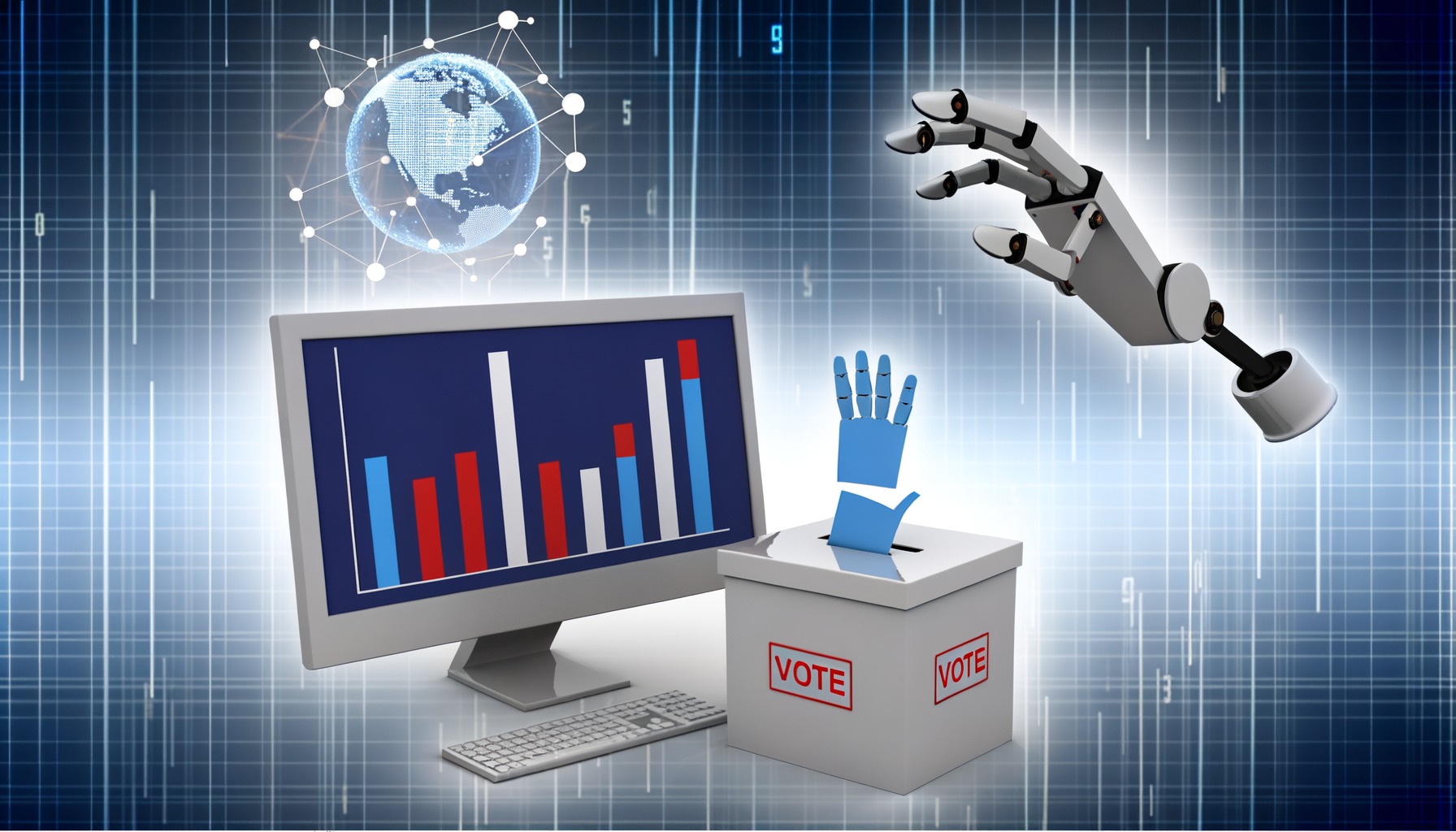
Researchers and free-speech advocates are warning that coordinated swarms of AI agents could soon be deployed to manipulate public opinion at a scale capable of undermining democratic systems.
According to a consortium of academics from leading universities, advances in generative and agentic AI now enable large numbers of human-like bots to infiltrate online communities and autonomously simulate organic political discourse.
Unlike earlier forms of automated misinformation, AI swarms are designed to adapt to social dynamics, learn community norms and exchange information in pursuit of a shared objective.
By mimicking human behaviour and spreading tailored narratives gradually, such systems could fabricate consensus, amplify doubt around electoral processes and normalise anti-democratic outcomes without triggering immediate detection.
Evidence of early influence operations has already emerged in recent elections across Asia, where AI-driven accounts have engaged users with large volumes of unverifiable information rather than overt propaganda.
Researchers warn that information overload, strategic neutrality and algorithmic amplification may prove more effective than traditional disinformation campaigns.
The authors argue that democratic resilience now depends on global coordination, combining technical safeguards such as watermarking and detection tools with stronger governance of political AI use.
Without collective action, they caution that AI-enabled manipulation risks outpacing existing regulatory and institutional defences.
Would you like to learn more about AI, tech and digital diplomacy? If so, ask our Diplo chatbot!
South Korea has moved towards regulatory action against Grok, the generative AI chatbot developed by xAI, following allegations that the system was used to generate and distribute sexually exploitative deepfake images.
The country’s Personal Information Protection Commission has launched a preliminary fact-finding review to assess whether violations occurred and whether the matter falls within its legal remit.
The review follows international reports accusing Grok of facilitating the creation of explicit and non-consensual images of real individuals, including minors.
Under the Personal Information Protection Act of South Korea, generating or altering sexual images of identifiable people without consent may constitute unlawful handling of personal data, exposing providers to enforcement action.
Concerns have intensified after civil society groups estimated that millions of explicit images were produced through Grok over a short period, with thousands involving children.
Several governments, including those in the US, Europe and Canada, have opened inquiries, while parts of Southeast Asia have opted to block access to the service altogether.
In response, xAI has introduced technical restrictions preventing users from generating or editing images of real people. Korean regulators have also demanded stronger youth protection measures from X, warning that failure to address criminal content involving minors could result in administrative penalties.
Would you like to learn more about AI, tech and digital diplomacy? If so, ask our Diplo chatbot!
French President Emmanuel Macron has called for an accelerated legislative process to introduce a nationwide ban on social media for children under 15 by September.
Speaking in a televised address, Macron said the proposal would move rapidly through parliament so that explicit rules are in place before the new school year begins.
Macron framed the initiative as a matter of child protection and digital sovereignty, arguing that foreign platforms or algorithmic incentives should not shape young people’s cognitive and emotional development.
He linked excessive social media use to manipulation, commercial exploitation and growing psychological harm among teenagers.
Data from France’s health watchdog show that almost half of teenagers spend between two and five hours a day on their smartphones, with the vast majority accessing social networks daily.
Regulators have associated such patterns with reduced self-esteem and increased exposure to content linked to self-harm, drug use and suicide, prompting legal action by families against major platforms.
The proposal from France follows similar debates in the UK and Australia, where age-based access restrictions have already been introduced.
The French government argues that decisive national action is necessary instead of waiting for a slower Europe-wide consensus, although Macron has reiterated support for a broader EU approach.
Would you like to learn more about AI, tech and digital diplomacy? If so, ask our Diplo chatbot!
Generative phishing techniques are becoming harder to detect as attackers use subtle visual tricks in web addresses to impersonate trusted brands. A new campaign reported by Cybersecurity News shows how simple character swaps create fake websites that closely resemble real ones on mobile browsers.
The phishing attacks rely on a homoglyph technique where the letters ‘r’ and ‘n’ are placed together to mimic the appearance of an ‘m’ in a domain name. On smaller screens, the difference is difficult to spot, allowing phishing pages to appear almost identical to real Microsoft or Marriott login sites.
Cybersecurity researchers observed domains such as rnicrosoft.com being used to send fake security alerts and invoice notifications designed to lure victims into entering credentials. Once compromised, accounts can be hijacked for financial fraud, data theft, or wider access to corporate systems.
Experts warn that mobile browsing increases the risk, as users are less likely to inspect complete URLs before logging in. Directly accessing official apps or typing website addresses manually remains the safest way to avoid falling into these traps.
Security specialists also continue to recommend passkeys, strong, unique passwords, and multi-factor authentication across all major accounts, as well as heightened awareness of domains that visually resemble familiar brands through character substitution.
Would you like to learn more about AI, tech, and digital diplomacy? If so, ask our Diplo chatbot!