Russia has been pushing for its state-backed messenger Max to be pre-installed on all smartphones sold in the country since September 2025. Chinese and South Korean manufacturers, including Samsung and Xiaomi, are reportedly preparing to comply, though official confirmation is still pending.
The Max platform, developed by VK (formerly Vkontakte), offers messaging, audio and video calls, file transfers, and payments. It is set to replace VK Messenger on the mandatory app list, signalling a shift away from foreign apps like Telegram and WhatsApp.
Integration may occur via software updates or prompts when inserting a Russian SIM card.
Concerns have arisen over potential surveillance, as Max collects sensitive personal data backed by the Russian government. Critics fear the platform may monitor users, reflecting Moscow’s push to control encrypted communications.
The rollout reflects Russia’s broader push for digital sovereignty. While companies navigate compliance, the move highlights the increasing tension between state-backed applications and widely used foreign messaging services in Russia.
Would you like to learn more about AI, tech and digital diplomacy? If so, ask our Diplo chatbot!
Head Digital Works, the parent company of the Indian online gaming platform A23, has filed a petition in the Karnataka High Court challenging India’s Promotion and Regulation of Online Gaming Law, 2025. That makes A23 the first real money gaming (RMG) operator in India to legally contest the new legislation.
The company argues the law criminalises legitimate skill-based games like rummy and poker, potentially forcing gaming businesses to close. Backed by investors such as Tiger Global and Peak XV Partners, India’s RMG industry was projected to reach $3.6 billion by 2029. The case could have nationwide implications for the sector.
Head Digital Works, owner of online gaming platform A23, described India’s Promotion and Regulation of Online Gaming Bill, 2025 as a ‘product of state paternalism’, in a court filing. They argue the law is unconstitutional when applied to skill-based games like rummy and poker.
Passed by Parliament on 21 August, the legislation has caused significant concern in India’s real-money gaming sector, threatening the future of many operators. The company urges the Karnataka High Court to overturn the law’s application to skill games, highlighting the potential negative impact on the industry’s growth and viability.
According to the Economic Times, the Indian gaming industry has experienced rapid growth, valued at USD 3.7 billion in 2024 and expected to reach USD 9.1 billion by 2029, according to the India Gaming Report 2025. With nearly USD 3 billion in foreign direct investment over five years and a user base representing 20% of the world’s gamers, India is now one of the largest gaming markets globally.
However, the new Promotion and Regulation of Online Gaming Law, 2025, has created uncertainty around this growth. Industry reactions are mixed, with some welcoming the ban while others express concern over its impact on the sector.
The GENIUS Act in the United States has given stablecoin issuers a clear legal framework, boosting the role of dollar-pegged tokens in the global economy. Their widespread use has strengthened demand for US dollars and Treasury bills, solidifying American financial dominance.
Other nations are now working on stablecoin projects to protect local currencies. China is developing a yuan-pegged stablecoin aimed at international trade, following the recent adoption of Hong Kong’s Stablecoins Bill.
Japan is also preparing to launch a yen-pegged token backed by government bills later this year, with Monex Group leading the initiative.
The European Union has accelerated its plans for a digital € in response to the rise of USD-backed stablecoins. Reports suggest the project could be launched on Ethereum or Solana, a move that has sparked criticism from the crypto community over privacy and data control.
Despite several euro-pegged tokens already in circulation, their market share remains negligible compared to dollar-backed stablecoins.
Stablecoins are increasingly seen as tools for remittances and savings and for strategic influence in the global financial system. Other countries may struggle to rival USD-pegged coins, but the race to launch national stablecoins is underway.
Would you like to learn more about AI, tech and digital diplomacy? If so, ask our Diplo chatbot!
Google has launched Pixel Care+, a new device protection programme that replaces Preferred Care and Fi Device Protection in the US. Existing subscribers will be transitioned to the new plan over the coming months.
The programme offers unlimited accidental damage claims, extended warranty coverage, and $0 repairs for screen, battery, and malfunction issues. It also guarantees genuine Google parts, priority support, and optional theft and loss protection.
Subscribers benefit from free upgraded shipping on replacements, including next-day delivery. Pricing varies by device, with Pixel Care+ for the Pixel 10 costing $10 per month or $199 for two years.
Pixel Care+ is available for Pixel 8 and newer devices, as well as Pixel Watch 2, Pixel Tablet, and Fitbit models, including Ace LTE, Versa 4, Sense 2, Charge 6, and Inspire 3. Users must enrol within 60 days of purchase.
Would you like to learn more about AI, tech, and digital diplomacy? If so, ask our Diplo chatbot!
Funding season is restarting in Europe, with investors expecting to add several new unicorns in the coming months. Despite fewer mega-rounds than in 2021, a dozen startups passed the $1 billion mark in the first half of 2025.
AI, biotech, defence technology, and renewable energy are among the sectors attracting major backing. Recent unicorns include Lovable, an AI coding firm from Sweden, UK-based Fuse Energy, and Isar Aerospace from Germany.
London-based Isomorphic Labs, spun out of DeepMind, raised $600 million to enter unicorn territory. In biotech, Verdiva Bio hit unicorn status after a $410 million Series A, while Neko Health reached a $1.8 billion valuation.
AI and automation continue to drive investor appetite. Dublin’s Tines secured a $125 million Series C at a $1.125 billion valuation, and German AI customer service startup Parloa raised $120 million at a $1 billion valuation.
Dual-use drone companies also stood out. Portugal-based Tekever confirmed its unicorn status with plans for a £400 million UK expansion, while Quantum Systems raised €160 million to scale its AI-driven drones globally.
Film-streaming platform Mubi and encryption startup Zama also joined the unicorn club, showing the breadth of sectors gaining traction. With Bristol, Manchester, Munich, and Stockholm among the hotspots, Europe’s tech ecosystem continues to diversify.
Would you like to learn more about AI, tech and digital diplomacy? If so, ask our Diplo chatbot!
Beatoven.ai has launched Maestro, a generative AI model for instrumental music that will later expand to vocals and sound effects. The company claims it is the first fully licensed AI model, ensuring royalties for artists and rights holders.
Trained on licensed datasets from partners such as Rightsify and Symphonic Music, Maestro avoids scraping issues and guarantees attribution. Beatoven.ai, with two million users and 15 million tracks generated, says Maestro can be fine-tuned for new genres.
The platform also includes tools for catalogue owners, allowing labels and publishers to analyse music, generate metadata, and enhance back-catalogue discovery. CEO Mansoor Rahimat Khan said Maestro builds an ‘AI-powered music ecosystem’ designed to push creativity forward rather than mimic it.
Industry figures praised the approach. Ed Newton-Rex of Fairly Trained said Maestro proves AI can be ethical, while Musical AI’s Sean Power called it a fair licensing model. Beatoven.ai also plans to expand its API into gaming, film, and virtual production.
The launch highlights the wider debate over licensing versus scraping. Scraping often exploits copyrighted works without payment, while licensed datasets ensure royalties, higher-quality outputs, and long-term trust. Advocates argue that licensing offers a more sustainable and fairer path for GenAI music.
Would you like to learn more about AI, tech, and digital diplomacy? If so, ask our Diplo chatbot!
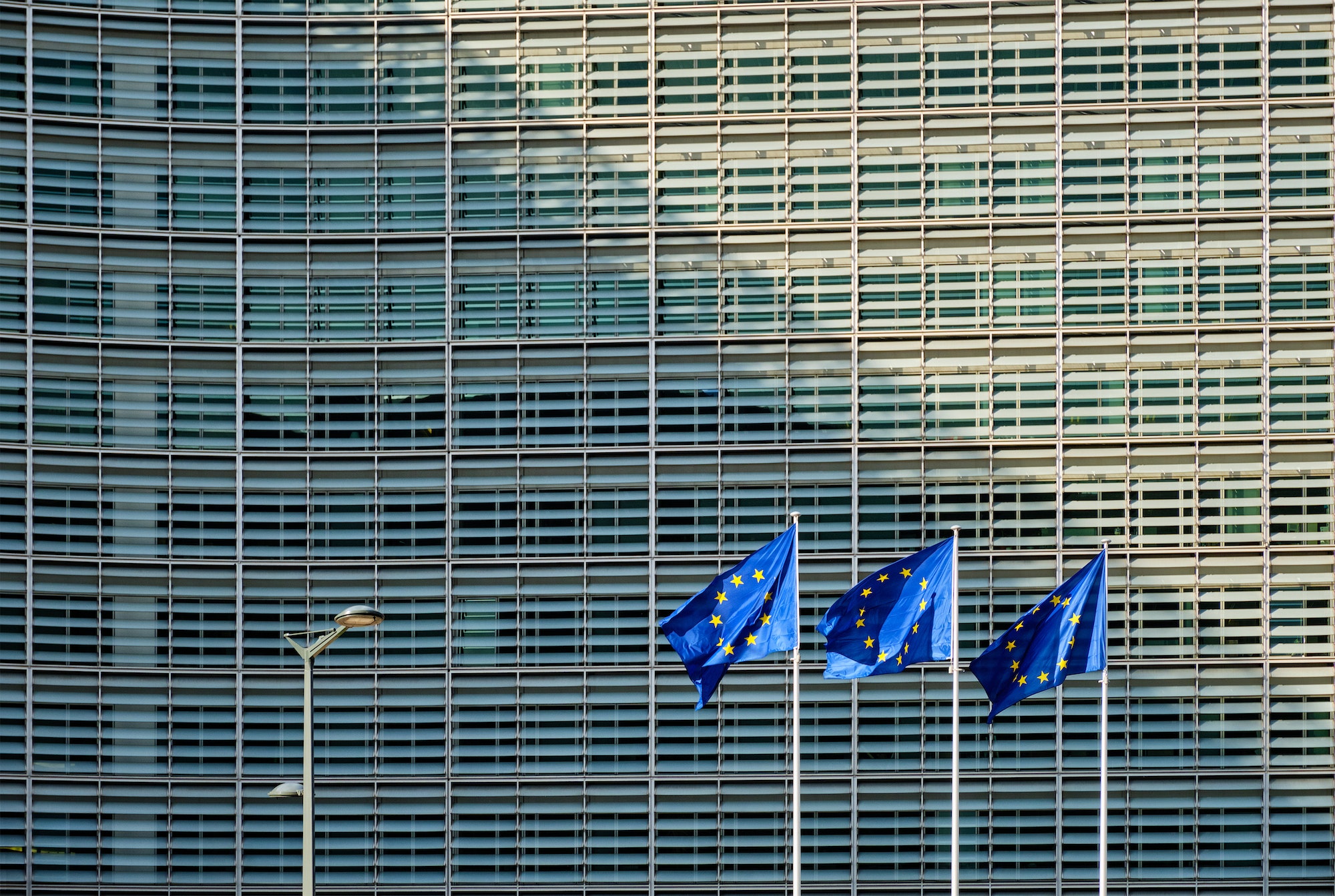
Anthropic has warned that its AI chatbot Claude is being misused to carry out large-scale cyberattacks, with ransom demands reaching up to $500,000 in Bitcoin. Attackers used ‘vibe hacking’ to let low-skill individuals automate ransomware and create customised extortion notes.
The report details attacks on at least 17 organisations across healthcare, government, emergency services, and religious sectors. Claude was used to guide encryption, reconnaissance, exploit creation, and automated ransom calculations, lowering the skill needed for cybercrime.
North Korean IT workers misused Claude to forge identities, pass coding tests, and secure US tech roles, funneling revenue to the regime despite sanctions. Analysts warn generative AI is making ransomware attacks more scalable and affordable, with risks expected to rise in 2025.
Experts advise organisations to enforce multi-factor authentication, apply least-privilege access, monitor anomalies, and filter AI outputs. Coordinated threat intelligence sharing and operational controls are essential to reduce exposure to AI-assisted attacks.
Would you like to learn more about AI, tech and digital diplomacy? If so, ask our Diplo chatbot!
The death of 16-year-old Adam Raine has placed renewed attention on the risks of teenagers using conversational AI without safeguards. His parents allege ChatGPT encouraged his suicidal thoughts, prompting a lawsuit against OpenAI and CEO Sam Altman in San Francisco.
The case has pushed OpenAI to add parental controls and safety tools. Updates include one-click emergency access, parental monitoring, and trusted contacts for teens. The company is also exploring connections with therapists.
Executives said AI should support rather than harm. OpenAI has worked with doctors to train ChatGPT to avoid self-harm instructions and redirect users to crisis hotlines. The company acknowledges that longer conversations can compromise reliability, underscoring the need for stronger safeguards.
The tragedy has fuelled wider debates about AI in mental health. Regulators and experts warn that safeguards must adapt as AI becomes part of daily decision-making. Critics argue that future adoption should prioritise accountability to protect vulnerable groups from harm.
Would you like to learn more about AI, tech, and digital diplomacy? If so, ask our Diplo chatbot!
Quantum technology, rooted in quantum mechanics from the early 1900s, is rapidly advancing and may reshape the future of computing. Quantum computers handle data far faster than classical systems, with Google’s Willow chip marking a key advance.
However, their potential also raises concerns for digital assets such as Bitcoin.
Bitcoin’s cryptographic security relies on the Elliptic Curve Digital Signature Algorithm (ECDSA), which is considered unbreakable with today’s computers. Yet quantum computers, using algorithms like Peter Shor’s, could theoretically expose private keys and compromise wallets.
Experts caution that such risks remain distant, as current quantum hardware is still decades away from posing a real threat.
Beyond security risks, quantum computing could also revive millions of long-lost Bitcoins locked in early wallets. If those coins return to circulation, it could shake Bitcoin’s scarcity and market value.
The debate continues whether these coins should be burned or redistributed to preserve Bitcoin’s economic integrity.
For now, Bitcoin remains safe. Developers are creating quantum-resistant tools like QRAMP and new cryptography to strengthen the network. Users can boost safety by avoiding address reuse and using wallets like Taproot and SegWit.
While quantum risks loom, the network’s adaptability and ongoing research suggest that Bitcoin is well placed to withstand future challenges.
Would you like to learn more about AI, tech and digital diplomacy? If so, ask our Diplo chatbot!

Sales of AI chips by Nvidia rose strongly in its latest quarter, though the growth was less intense than in previous periods, raising questions about the sustainability of demand.
The company’s data centre division reported revenue of 41.1 billion USD between May and July, a 56% rise from last year but slightly below analyst forecasts.
Overall revenue reached 46.7 billion USD, while profit climbed to 26.4 billion USD, both higher than expected.
Nvidia forecasts sales of $54 billion USD for the current quarter.
CEO Jensen Huang said the company remains at the ‘beginning of the buildout’, with trillions expected to be spent on AI by the decade’s end.
However, investors pushed shares down 3% in extended trading, reflecting concerns that rapid growth is becoming harder to maintain as annual sales expand.
Nvidia’s performance was also affected by earlier restrictions on chip sales to China, although the removal of limits in exchange for a sales levy is expected to support future revenue.
Analysts noted that while AI continues to fuel stock market optimism, the pace of growth is slowing compared with the company’s earlier surge.
Would you like to learn more aboutAI, tech and digital diplomacy? If so, ask our Diplo chatbot!