Trump weighs scaled-down Nvidia chip sales to China

President Donald Trump has signalled that he may permit Nvidia to sell a toned-down version of its latest Blackwell AI chip to China, which could substantially shift US tech export policy.

The idea, still under discussion with Nvidia CEO Jensen Huang, would involve reducing the chip’s computing power by 30% to 50%, creating what Trump described as an ‘unenhanced’ model for the Chinese market. While framed as a compromise, critics warn that even these stripped-down chips could fuel Beijing’s AI ambitions.

The announcement follows an unprecedented agreement between the Trump administration, Nvidia, and AMD, under which the US government would collect 15% of revenue from certain AI chip sales to China.

Washington insiders have expressed unease, noting that, with enough scaled-down hardware, China could still build AI supercomputers capable of competing with or surpassing American capabilities.

Saif Khan, a former White House technology adviser, cautioned that the move could accelerate China’s path toward AI dominance, undoing years of strict export controls.

Currently, Nvidia’s most advanced chip approved for sale in China is the H20, built on older Hopper architecture. The H20 was specifically designed to comply with restrictions imposed under President Biden and entered the Chinese market in 2024.

Although shipments were halted earlier this year, the Trump administration recently granted clearance for exports to resume. Trump dismissed the H20 as ‘obsolete’ and claimed China had already mastered it, suggesting the new Blackwell variant would offer a fresh revenue stream while staying within national security boundaries.

Nvidia’s flagship US Blackwell chip, unveiled in March 2024, is up to 30 times faster than its predecessor, making it a significant leap in AI performance. Details about the proposed Chinese variant remain undisclosed, but Reuters previously reported it would come at a lower cost and reduced power.

The US Commerce Department has begun issuing licenses for the H20, with officials insisting these exports do not threaten national security.

For Nvidia and AMD, the deal represents a rare case of direct government revenue-sharing tied to foreign sales, reflecting Trump’s hands-on approach to corporate negotiations. His administration has previously pressured tech executives to prioritise domestic manufacturing and has intervened in leadership appointments.

Nvidia, for its part, has stated it will follow all US export rules, while AMD confirmed receiving approval to ship some AI processors to China without directly addressing the revenue-sharing clause.

Beijing’s reaction so far has been muted. China’s foreign ministry declined to comment on the potential Blackwell deal but has repeatedly accused Washington of using technology controls to ‘maliciously contain and suppress’ Chinese industry.

Would you like to learn more about AI, tech and digital diplomacyIf so, ask our Diplo chatbot!

US Judiciary confirms cyberattack, moves to reinforce systems

The US Judiciary has confirmed suffering a cyberattack and says it is reinforcing systems to prevent further breaches. In a press release, it described ‘escalated cyberattacks of a sophisticated and persistent nature’ targeting its case management system and sensitive files.

Most documents in the judiciary’s electronic system are public; however, some contain confidential or proprietary information that is sealed from public view. The documents, it warned, are of interest to threat actors, prompting courts to introduce stricter controls on access under monitored conditions.

The Administrative Office of the US Courts is collaborating with Congress, the Department of Justice, the Department of Homeland Security, and other relevant agencies on security measures. No details were given on the exact methods of reinforcement.

The US court system has been a frequent target of cybercrime. Previous incidents include a 2020 federal court breach, a 2024 attack on Washington state courts, and a ransomware strike on the Los Angeles Superior Court in summer 2024.

Would you like to learn more about AI, tech, and digital diplomacy? If so, ask our Diplo chatbot!
AI-powered heist drains $1m from crypto wallets via Firefox add-ons

Hackers have stolen over $1 million in cryptocurrency using AI-generated malicious Firefox extensions disguised as legitimate wallet tools.

The group, known as GreedyBear, created over 150 fake add-ons for platforms like MetaMask and Phantom, bypassing security checks to drain funds from thousands of users. Analysts say AI enabled the attackers to automate coding and deployment at an industrial scale.

The theft comes amid a record-breaking year for crypto crime, with Chainalysis data showing over $2.17 billion stolen so far in 2025. Many incidents exploit smart contract flaws and human error, with access control attacks accounting for the most recent losses.

Security experts warn that AI is now a double-edged sword, helping attackers and defenders. They urge exchanges, developers, and users to adopt AI-powered monitoring, stronger verification, and collaborative defences to restore trust in digital assets.

Would you like to learn more about AI, tech and digital diplomacy? If so, ask our Diplo chatbot!

Users warned to update WinRAR after active attacks

A critical flaw in the Windows version of WinRAR is being exploited to install malware that runs automatically at startup. Users are urged to update to version 7.13 immediately, as the software does not update itself.

Tracked as CVE-2025-8088, the vulnerability allows malicious RAR files to place content in protected system folders, including Windows startup locations. Once there, the malware can steal data, install further payloads and maintain persistent access.

ESET researchers linked the attacks to the RomCom hacking group, a Russian-speaking operation known for espionage and ransomware campaigns. The flaw has been used in spear-phishing attacks where victims opened infected archives sent via email.

WinRAR’s July update fixes the cybersecurity issue by blocking extractions outside user-specified folders. Security experts recommend caution with email attachments, antivirus scanning of archives and regular checks of startup folders for suspicious files.

Would you like to learn more about AI, tech and digital diplomacy? If so, ask our Diplo chatbot!

UAE Ministry of Interior uses AI and modern laws to fight crime

The UAE Ministry of Interior states that AI, surveillance, and modern laws are key to fighting crime. Offences are economic, traditional, or cyber, with data tools and legal updates improving investigations. Cybercrime is on the rise as digital technology expands.

Current measures include AI monitoring, intelligent surveillance, and new laws. Economic crimes like fraud and tax evasion are addressed through analytics and banking cooperation. Cross-border cases and digital evidence tampering continue to be significant challenges.

Traditional crimes, such as theft and assault, are addressed through cameras, patrols, and awareness drives. Some offences persist in remote or crowded areas. Technology and global cooperation have improved results in several categories.

UAE officials warn that AI and the internet of Things will lead to more sophisticated cyberattacks. Future risks include evolving criminal tactics, privacy threats, skills shortages, and balancing security and individual rights.

Opportunities include AI-powered security, stronger global ties, and better cybersecurity. Dubai Police have launched a bilingual platform to educate the public, viewing awareness as the first defence against online threats.

Would you like to learn more about AI, tech and digital diplomacy? If so, ask our Diplo chatbot!

Nvidia and AMD to pay 15% share of China AI chip revenue to secure US export licences

Nvidia and Advanced Micro Devices have agreed to hand 15% of their Chinese AI chip sales revenue to the US government in return for export licences.

The arrangement, covering Nvidia’s H20 accelerator and AMD’s MI308 model, is considered unusual and could prove contentious for both companies and Beijing.

The deal reflects Washington’s willingness to link trade concessions to financial payments, but analysts note there is little precedent for such a targeted export levy.

Critics warn the move could undermine the national security rationale for export controls, making it harder to convince allies to adopt similar measures. Beijing, meanwhile, has voiced security concerns over the H20 chip’s performance and alleged vulnerabilities.

Industry observers suggest the payment requirement could discourage further expansion by US chipmakers in China, the world’s largest semiconductor importer, and give local producers an advantage in building domestic capacity.

Chinese firms such as Huawei are already increasing market share amid tighter restrictions on US technology.

The potential sums involved are significant. Before restrictions were imposed, Nvidia had generated over $7 billion in H20 sales to China in a single quarter. In comparison, AMD could earn up to $5 billion annually if full access to the market resumed.

However, uncertainties over demand and regulatory conditions remain.

Would you like to learn more about AI, tech and digital diplomacy? If so, ask our Diplo chatbot!

BlackSuit infrastructure dismantled in global raid

US law enforcement, alongside nine other nations, dismantled the BlackSuit ransomware gang’s infrastructure, replacing its leak site with a takedown notice after a coordinated operation. The group, formerly known as Royal, had amassed over $370 million in ransoms since 2022.

More than 450 victims were targeted across critical infrastructure sectors, with ransom demands soaring up to $60 million. Dallas suffered severe disruption in a notable attack, affecting emergency services and courts.

German authorities seized key infrastructure, securing data that is now under analysis to identify further collaborators. The operation also included confiscating servers, domains and digital assets used for extortion and money laundering.

New research indicates that members of BlackSuit may already be shifting to a new ransomware operation called Chaos. US agencies seized $2.4 million in cryptocurrency linked to a Chaos affiliate, marking a significant blow to evolving cybercrime efforts.

Would you like to learn more about AI, tech and digital diplomacy? If so, ask our Diplo chatbot!
Musk ends in-house ‘Dojo’ AI chip programme, shifts focus to external partners

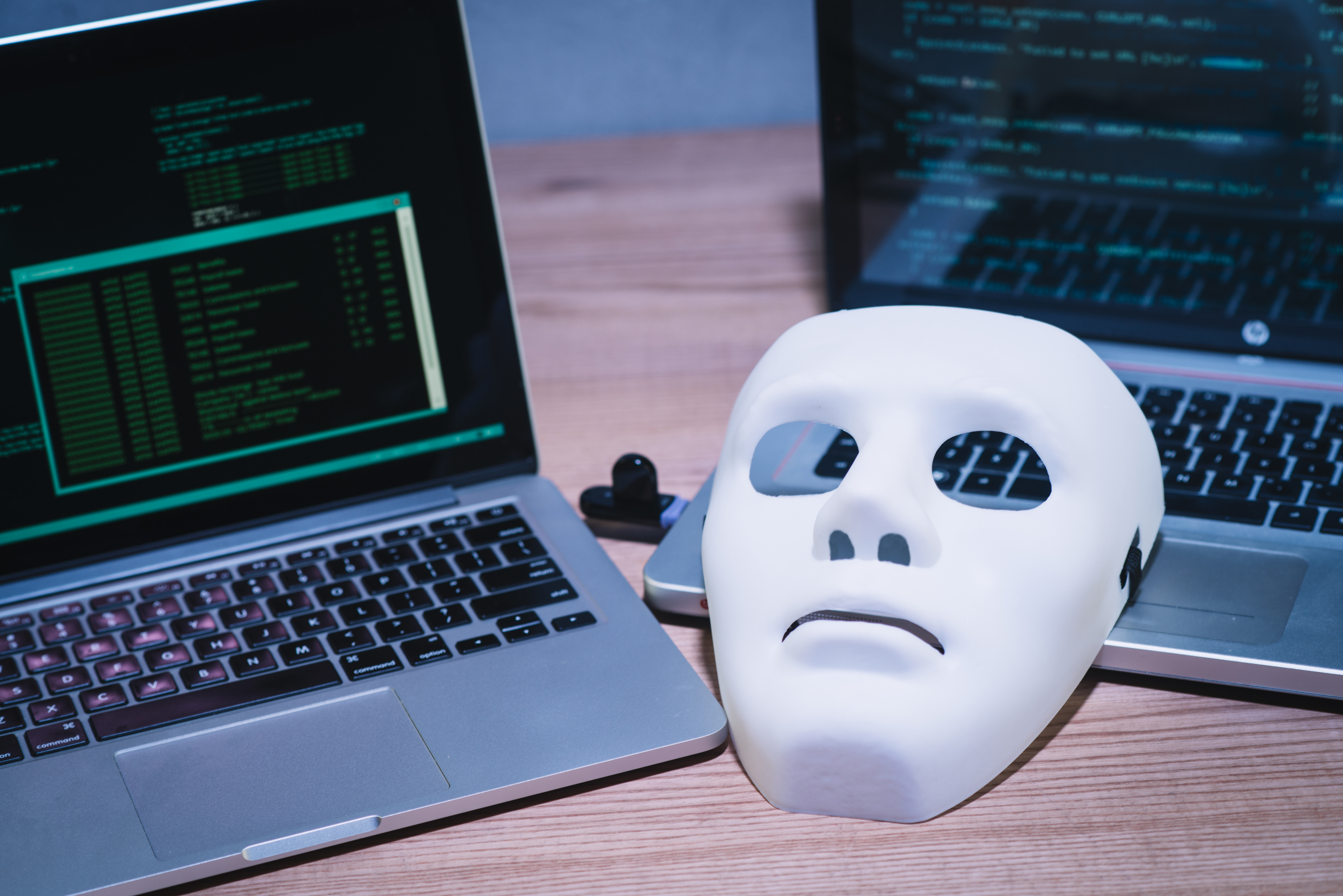
Tesla has reportedly shut down its Dojo supercomputer project following multiple high-profile departures, including that of project head Peter Bannon. CEO Elon Musk ended the AI chip programme, reassigning the remaining staff to other data centre projects.

Dojo aimed to process vehicle data for autonomous driving and reduce Tesla’s reliance on Nvidia and AMD. The project faced delays, with leaders such as Jim Keller, Ganesh Venkataramanan, and Bannon departing before its closure.

About 20 former Dojo employees have joined DensityAI, a stealth startup founded by ex-Tesla staff, which is expected to work on AI chips for robots and data centres. Tesla will now rely more on Nvidia, AMD, and Samsung.

Samsung recently secured a $16.5 billion deal to supply AI chips for Tesla’s self-driving cars, robots, and data centres. Musk said Samsung’s Texas factory will produce Tesla’s AI6 chips, with AI5 chips to be made in 2026.

Musk suggested that combining AI5 and AI6 chips could form a ‘Dojo 3’ system, while Dojo 2 would not launch. The shutdown comes as Tesla restructures, with executive exits, job cuts, and renewed focus on AI integration across Musk’s companies.

Would you like to learn more about AI, tech, and digital diplomacy? If so, ask our Diplo chatbot!

James Cameron warns AI could spark a real-life Terminator apocalypse

James Cameron, the director behind the iconic Terminator franchise, has warned that the real-world use of AI could lead to a catastrophic scenario similar to the series’ apocalyptic Judgement Day.

While Cameron is writing the script for Terminator 7, he has expressed concern that mixing AI with weapons systems, including nuclear defence, poses grave risks.

He explained that the rapid pace of decision-making in such systems might require superintelligent AI to respond quickly. Yet, human error has already brought the world close to disaster in the past.

Cameron also highlighted three major existential threats humanity faces: climate change, nuclear weapons, and superintelligence. He suggested that AI might ultimately offer a solution rather than just a danger, reflecting a nuanced view beyond simple dystopian fears.

His evolving perspective mirrors the Terminator franchise itself, which has long balanced the destructive potential of AI with more hopeful portrayals of technology as a possible saviour.

Would you like to learn more about AI, tech and digital diplomacy? If so, ask our Diplo chatbot!
AI-generated video misleads as tsunami footage in Japan

An 8.8-magnitude earthquake off Russia’s Kamchatka peninsula at the end of July triggered tsunami warnings across the Pacific, including Japan. Despite widespread alerts and precautionary evacuations, the most significant wave recorded in Japan was only 1.3 metres high.

A video showing large waves approaching a Japanese coastline, which went viral with over 39 million views on platforms like Facebook and TikTok, was found to be AI-generated and not genuine footage.

The clip, appearing as if filmed from a plane, was initially posted online months earlier by a YouTube channel specialising in synthetic visuals.

Analysis of the video revealed inconsistencies, including unnatural water movements and a stationary plane, confirming it was fabricated. Additionally, numerous Facebook pages shared the video and linked it to commercial sites, spreading misinformation.

Official reports from Japanese broadcasters confirmed that the actual tsunami waves were much smaller, and no catastrophic damage occurred.

The incident highlights ongoing challenges in combating AI-generated disinformation related to natural disasters, as similar misleading content continues to circulate online during crisis events.

Would you like to learn more about AI, tech and digital diplomacy? If so, ask our Diplo chatbot!