Robot artist Ai-Da explores human self-perception

The world’s first ultra-realistic robot artist, Ai-Da, has been prompting profound questions about human-robot interactions, according to her creator.

Designed in Oxford by Aidan Meller, a modern and contemporary art specialist, and built in the UK by Engineered Arts, Ai-Da is a humanoid robot specifically engineered for artistic creation. She recently unveiled a portrait of King Charles III, adding to her notable portfolio.

Aidan Meller, Ai-Da’s creator, stated that working with the robot has evoked ‘lots of questions about our relationship with ourselves.’ He highlighted how Ai-Da’s artwork ‘drills into some of our time’s biggest concerns and thoughts.’

Ai-Da uses cameras in her eyes to capture images, which are then processed by AI algorithms and converted into real-time coordinates for her robotic arm, enabling her to paint and draw.

Mr Meller explained, ‘You can meet her, talk to her using her language model, and she can then paint and draw you from sight.’

He also observed that people’s preconceptions about robots are often outdated: ‘It’s not until you look a robot in the eye and they say your name that the reality of this new sci-fi world that we are now in takes hold.’

Ai-Da’s contributions to the art world continue to grow. She had produced and showcased her work at the AI for Good Global Summit 2024 in Geneva, Switzerland, an event under the auspices of the UN. That same year, her triptych of Enigma code-breaker Alan Turing sold for over £1 million at auction.

Her focus this year shifted to King Charles III, chosen because, as Mr Meller noted, ‘With extraordinary strides that are taking place in technology and again, always questioning our relationship to the environment, we felt that King Charles was an excellent subject.’

Buckingham Palace authorised the display of Ai-Da’s portrait of the King, despite the robot not meeting him. Ai-Da, connected to the internet, uses extensive data to inform her choice of subjects, with Mr Meller revealing, ‘Uncannily, and rather nerve-rackingly, we just ask her.’

The conversations generated inform the artwork. Ai-Da also painted a portrait of King Charles’s mother, Queen Elizabeth II, in 2023. Mr Meller shared that the most significant realisation from six years of working with Ai-Da was ‘not so much about how human she is but actually how robotic we are.’

He concluded, ‘We hope Ai-Da’s artwork can be a provocation for that discussion.’

Would you like to learn more about AI, tech and digital diplomacy? If so, ask our Diplo chatbot!

Viasat launches global IoT satellite service

Viasat has unveiled a new global connectivity service designed to improve satellite-powered internet of things (IoT) communication, even in remote environments. The new offering, IoT Nano, supports industries like agriculture, mining, transport with reliable, low-data and low-power two-way messaging.

The service builds on Orbcomm’s upgraded OGx platform, delivering faster message speeds, greater data capacity and improved energy efficiency. It maintains compatibility with older systems while allowing for advanced use cases through larger messages and reduced power needs.

Executives at Viasat and Orbcomm believe IoT Nano opens up new opportunities by combining wider satellite coverage with smarter, more frequent data delivery. The service is part of Viasat’s broader effort to expand its scalable and energy-efficient satellite IoT portfolio.

Would you like to learn more about AI, tech and digital diplomacy? If so, ask our Diplo chatbot!

Meta forms AI powerhouse by appointing Shengjia Zhao as chief scientist

Meta has appointed former OpenAI researcher Shengjia Zhao as Chief Scientist of its newly formed AI division, Meta Superintelligence Labs (MSL).

Zhao, known for his pivotal role in developing ChatGPT, GPT-4, and OpenAI’s first reasoning model, o1, will lead MSL’s research agenda under Alexandr Wang, the former CEO of Scale AI.

Mark Zuckerberg confirmed Zhao’s appointment, saying he had been leading scientific efforts from the start and co-founded the lab.

Meta has aggressively recruited top AI talent to build out MSL, including senior researchers from OpenAI, DeepMind, Apple, Anthropic, and its FAIR lab. Zhao’s presence helps balance the leadership team, as Wang lacks a formal research background.

Meta has reportedly offered massive compensation packages to lure experts, with Zuckerberg even contacting candidates personally and hosting them at his Lake Tahoe estate. MSL will focus on frontier AI, especially reasoning models, in which Meta currently trails competitors.

By 2026, MSL will gain access to Meta’s massive 1-gigawatt Prometheus cloud cluster in Ohio, designed to power large-scale AI training.

The investment and Meta’s parallel FAIR lab, led by Yann LeCun, signal the company’s multi-pronged strategy to catch up with OpenAI and Google in advanced AI research.

The collaboration dynamics between MSL, FAIR, and Meta’s generative AI unit remain unclear, but the company now boasts one of the strongest AI research teams in the industry.

Would you like to learn more about AI, tech and digital diplomacy? If so, ask our Diplo chatbot!

UN urges global rules for AI to prevent inequality

According to Doreen Bogdan-Martin, head of the UN’s International Telecommunications Union, the world must urgently adopt a unified approach to AI regulation.

She warned that fragmented national strategies could deepen global inequalities and risk leaving billions excluded from the AI revolution.

Bogdan-Martin stressed that only a global framework can ensure AI benefits all of humanity instead of worsening digital divides.

With 85% of countries lacking national AI strategies and 2.6 billion people still offline, she argued that a coordinated effort is essential to bridge access gaps and prevent AI from becoming a tool that advances inequality rather than opportunity.

ITU chief highlighted the growing divide between regulatory models — from the EU’s strict governance and China’s centralised control to the US’s new deregulatory push under Donald Trump.

She avoided direct criticism of the US strategy but called for dialogue between all regions instead of fragmented policymaking.

Despite the rapid advances of AI in sectors like healthcare, agriculture and education, Bogdan-Martin warned that progress must be inclusive. She also urged more substantial efforts to bring women into AI and tech leadership, pointing to the continued gender imbalance in the sector.

As the first woman to lead ITU, she said her role was not just about achievement but setting a precedent for future generations.

Would you like to learn more about AI, tech and digital diplomacy? If so, ask our Diplo chatbot!

New AI startup enables context across thousands of hours of video

Samsung Next has invested in Memories.ai, a startup specialising in long-duration video analysis capable of processing up to 10 million hours of footage.

The tool uses AI to transform massive video archives into searchable, structured datasets, even across multiple videos spanning hours or days.

The solution employs a layered pipeline: it filters noise, compresses critical segments, indexes content for natural-language queries, segments into meaningful units, and aggregates those insights into digestible reports. This structure enables users to search and analyse complex visual datasets seamlessly.

Memories.ai’s co-founders, Dr Shawn Shen and Enmin (Ben) Zhou, bring backgrounds from Meta’s Reality Labs and machine learning engineering.

The company raised $8 million in seed funding, surpassing its $4 million goal, led by Susa Ventures, including Samsung Next, Fusion Fund, Crane Ventures, Seedcamp, and Creator Ventures.

Samsung is banking on Memories.ai’s edge computing strengths, particularly to enable privacy-conscious applications such as home security analytics without cloud dependency. Its startup focus includes security firms and marketers needing scalable tools to sift through extensive video content.

Would you like to learn more about AI, tech and digital diplomacy? If so, ask our Diplo chatbot!

Google launches AI feature to reshape how search results appear

Google has introduced a new experimental feature named Web Guide, aimed at reorganising search results by using AI to group information based on the query’s different aspects.

Available through Search Labs, the tool helps users explore topics in a more structured way instead of relying on the standard, linear results page.

Powered by Google’s Gemini AI, Web Guide works particularly well for open-ended or complex queries. For example, searches such as ‘how to solo travel in Japan’ would return results neatly arranged into guides, safety advice, or personal experiences instead of a simple list.

The feature handles multi-sentence questions, offering relevant answers broken into themed sections.

Users who opt in can access Web Guide via the Web tab and toggle it off without exiting the entire experiment. While it works only on that tab, Google plans to expand it to the broader ‘All’ tab in time.

The move follows Google’s broader push to incorporate Gemini into tools like AI Mode, Flow, and other experimental products.

Would you like to learn more about AI, tech and digital diplomacy? If so, ask our Diplo chatbot!

Finnish researchers extend quantum coherence beyond one millisecond

Aalto University researchers have achieved a milestone in quantum computing by extending the coherence time of a superconducting transmon qubit beyond one millisecond. The breakthrough significantly improves how long quantum states remain stable, enabling more reliable operations.

The Finnish team used ultra-pure materials and precision engineering techniques to fabricate the qubit, achieving a median coherence time of 541 microseconds and a peak of 1057 microseconds.

Unlike earlier coherence records set by more exotic qubit types, Aalto’s success came within the widely used transmon framework, making it easier for others to replicate. The researchers published detailed fabrication methods to help advance consistency across labs globally.

Crossing the millisecond mark opens new possibilities for scalable quantum systems, reducing the burden of error correction. Finland’s growing leadership in the field is further solidified as other research teams explore Aalto’s reproducible approach.

Would you like to learn more about AI, tech and digital diplomacy? If so, ask our Diplo chatbot!
Microsoft replaces the blue screen of death with a sleek black version in Windows 11

Microsoft has officially removed the infamous Blue Screen of Death (BSOD) from Windows 11 and replaced it with a sleeker, black version.

As part of the update KB5062660, the Black Screen of Death now appears briefly—around two seconds—before a restart, showing only a short error message without the sad face or QR code that became symbolic of Windows crashes.

The update, which brings systems to Build 26100.4770, is optional and must be installed manually through Windows Update or the Microsoft Update Catalogue.

It is available for both x64 and arm64 platforms. Microsoft plans to roll out the update more broadly in August 2025 as part of its Windows 11 24H2 feature preview.

In addition to the screen change, the update introduces ‘Recall’ for EU users, a tool designed to operate locally and allow users to block or turn off tracking across apps and websites. The feature aims to comply with European privacy rules while enhancing user control.

Also included is Quick Machine Recovery, which can identify and fix system-wide failures using the Windows Recovery Environment. If a device becomes unbootable, it can download a repair patch automatically to restore functionality instead of requiring manual intervention.

Would you like to learn more about AI, tech and digital diplomacy? If so, ask our Diplo chatbot!
Meta boosts teen safety as it removes hundreds of thousands of harmful accounts

Meta has rolled out new safety tools to protect teenagers on Instagram and Facebook, including alerts about suspicious messages and a one-tap option to block or report harmful accounts.

The company said it is increasing efforts to prevent inappropriate contact from adults and has removed over 635,000 accounts that sexualised or targeted children under 13.

Of those accounts, 135,000 were caught posting sexualised comments, while another 500,000 were flagged for inappropriate interactions.

Meta said teen users blocked over one million accounts and reported another million after receiving in-app warnings encouraging them to stay cautious in private messages.

The company also uses AI to detect users lying about their age on Instagram. If flagged, those accounts are automatically converted to teen accounts with stronger privacy settings and messaging restrictions. Since 2024, all teen accounts are set to private by default.

Meta’s move comes as it faces mounting legal pressure from dozens of US states accusing the company of contributing to the youth mental health crisis by designing addictive features on Instagram and Facebook. Critics argue that more must be done to ensure safety instead of relying on user action alone.

Would you like to learn more about AI, tech and digital diplomacy? If so, ask our Diplo chatbot!
AI reshaping the US labour market

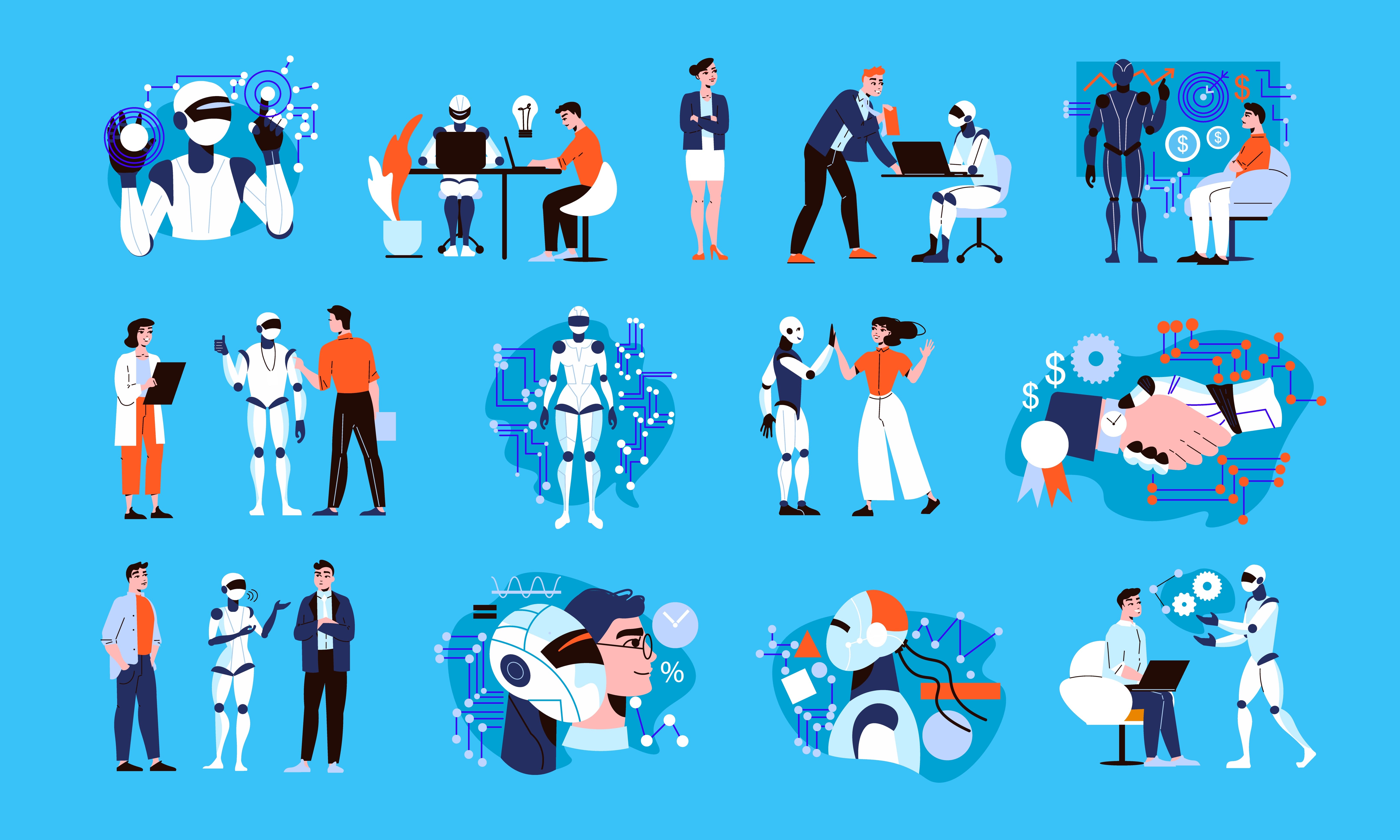
AI is often seen as a job destroyer, but it’s also emerging as a significant source of new employment, according to a new Brookings report. The number of job postings mentioning AI has more than doubled in the past year, with demand continuing to surge across various industries and regions.

Over the past 15 years, AI-related job listings have grown nearly 29% annually, far outpacing the 11% growth rate of overall job postings in the broader economy.

Brookings based its findings on data from Lightcast, a labour market analytics firm, and noted rising demand for AI skills across sectors, including manufacturing. According to the US Census Bureau’s Business Trends Survey, the share of manufacturers using AI has jumped from 4% in early 2023 to 9% by mid-2025.

Yet, AI jobs still form a small part of the market. Goldman Sachs predicts widespread AI adoption will peak in the early 2030s, with a slower near-term influence on jobs. ‘AI is visible in the micro labour market data, but it doesn’t dominate broader job dynamics,’ said Joseph Briggs, an economist at Goldman Sachs.

Roles range from AI engineers and data scientists to consultants and marketers learning to integrate AI into business operations responsibly and ethically. In 2025, over 80,000 job postings cited generative AI skills—up from fewer than 4,000 in 2010, Brookings reported, indicating explosive long-term growth.

Job openings involving ‘responsible AI’—those addressing ethical AI use in business and society—are also rising, according to data from Indeed and Lightcast. ‘As AI evolves, so does what counts as an AI job,’ said Cory Stahle of the Indeed Hiring Lab, noting that definitions shift with new business applications.

AI skills carry financial value, too. Lightcast found that jobs requiring AI expertise offer an average salary premium of $18,000, or 28% more annually. Unsurprisingly, tech hubs like Silicon Valley and Seattle dominate AI hiring, but job growth spreads to regions like the Sunbelt and the East Coast.

Mark Muro of Brookings noted that universities play a key role in AI job growth across new regions by fuelling local innovation. AI is also entering non-tech fields such as finance, human resources, and marketing, with more than half of AI-related postings now being outside IT roles.

Muro expects more widespread AI adoption in the next few years, as employers gain clarity on its value, limitations and potential for productivity. ‘There’s broad consensus that AI boosts productivity and economic competitiveness,’ he said. ‘It energises regional leaders and businesses to act more quickly.’

Would you like to learn more about AI, tech and digital diplomacy? If so, ask our Diplo chatbot!