
UK plans default overnight social media restrictions for teenagers
Social media curfews and disabled autoplay aim to improve teenagers’ sleep, concentration and wellbeing.
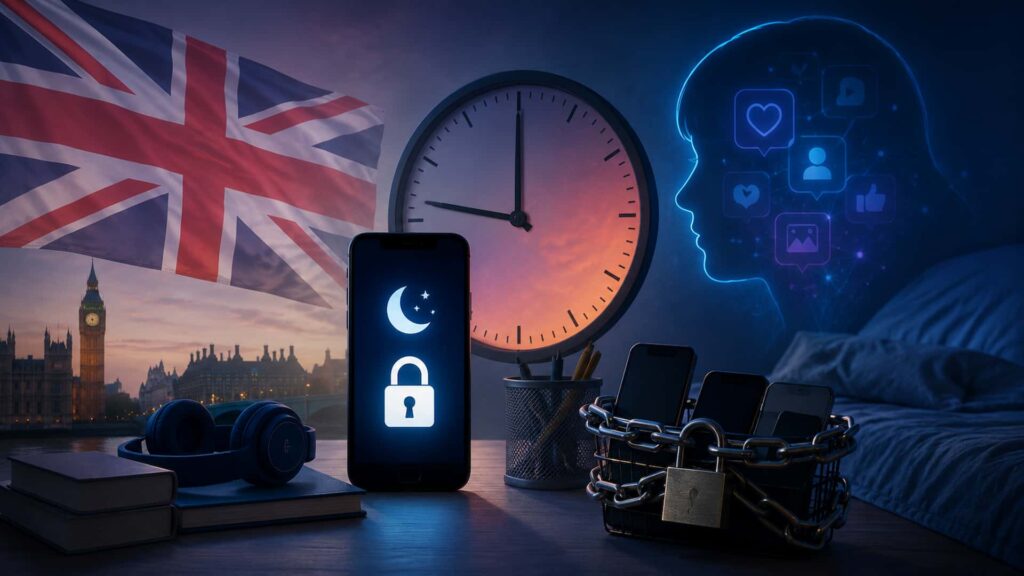
The UK government plans to introduce default overnight social media restrictions for 16- and 17-year-olds, alongside measures to limit features designed to encourage prolonged platform use.
Social media platforms will be expected to activate overnight restrictions from midnight to 6 a.m. by default for users in this age group. Teenagers will be able to change the settings, but the protections will be enabled automatically.
Autoplay and continuously personalised content feeds will also be disabled by default. The government said these features can encourage prolonged use and reinforce potentially addictive patterns of engagement.
The measures are intended to avoid a sudden reduction in online protections when children turn 16. They complement the government’s previously announced plans to prohibit social media services from being offered to children under 16 from spring 2027.
The proposals follow a government pilot involving more than 300 teenagers and parents across the UK. Participating families said the overnight restrictions became part of their routines and helped improve sleep and concentration.
Technology Secretary Liz Kendall said older teenagers should retain greater independence while continuing to receive protection from features that could negatively affect their wellbeing.
The government also plans additional protections for children using AI chatbots. Proposed measures include encouraging regular breaks for users under 18 and taking action against services that provide dangerous, misleading or unverified mental health advice.
Ministers will work with regulators and other government departments to consider further restrictions, including possible bans on chatbots considered to pose a serious risk to children. Guidance for children, parents and guardians will also be added to the Kids Online Safety Hub.
Schools will strengthen media literacy through Relationships, Sex and Health Education classes covering AI, chatbots, misinformation and harmful online content. From September 2028, media literacy will also be embedded across the National Curriculum, including lessons on AI, data science, source analysis and technological bias.
The first regulations supporting the under-16 social media restrictions are expected to be presented to Parliament by the end of 2026, with implementation and enforcement planned for spring 2027.
Why does it matter?
The proposals reflect a growing shift from focusing solely on access to social media towards regulating how digital services are designed and used. By targeting autoplay, personalised feeds and AI chatbots alongside age-based protections, the government is seeking to address features that may contribute to excessive use and online harms.
If adopted, the measures could further shape debates on youth online safety beyond the UK, reinforcing the trend towards safety-by-design, stronger protections for minors and greater platform responsibility for children’s digital wellbeing.
Would you like to learn more about AI, tech, and digital diplomacy? If so, ask our Diplo chatbot!