
European Commission approves €659 million for four German chip projects
Germany expands semiconductor production under the European Commission’s Chips Act strategy.
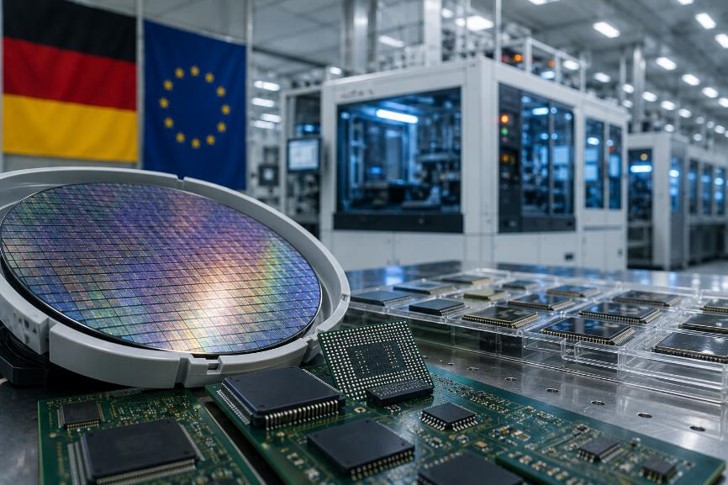
The European Commission has approved €659 million in German State aid to support the construction of four first-of-a-kind semiconductor manufacturing facilities, strengthening Europe’s chip supply chain and advancing the objectives of the European Chips Act and the proposed Chips Act 2.0.
The projects aim to expand manufacturing capacity across several strategic segments of the semiconductor value chain while reducing the EU’s dependence on external suppliers.
The approved funding will support four companies across Germany.
Element 3-5 will receive €353 million to manufacture advanced silicon carbide epi wafers in North Rhine-Westphalia, while Vishay will receive €214 million to produce next-generation power MOSFET semiconductors in Schleswig-Holstein.
KLA will receive €74.4 million to manufacture advanced semiconductor metrology equipment in Hesse, and KETEK will receive €17.9 million to establish new production lines for specialised detector chips in Bavaria. The projects are jointly financed by the German federal government and regional authorities.
The Commission concluded that all four facilities qualify as first-of-a-kind manufacturing projects in Europe and are necessary to strengthen the resilience of the European semiconductor ecosystem.
In return for the public support, the companies committed to collaborating with universities, research institutions, startups and SMEs, prioritising customer orders during supply shortages, investing in specialised workforce training and sharing project-related profits with Germany if returns exceed agreed expectations.
The decision forms part of the EU’s broader semiconductor strategy. The Commission noted that the approvals represent the fifteenth to eighteenth projects authorised under the European Chips Act, bringing total approved public support across Member States to around €14.2 billion.
The projects also complement the proposed Chips Act 2.0, which aims to further expand Europe’s semiconductor manufacturing capacity and reduce strategic technological dependencies.
Why does it matter?
Semiconductors underpin nearly every modern digital technology, from AI and electric vehicles to telecommunications and industrial automation. Expanding Europe’s domestic manufacturing capacity strengthens supply chain resilience, supports technological sovereignty and reinforces the EU’s competitiveness in one of the world’s most strategic industries.
The decision also demonstrates how the EU is increasingly using State aid to accelerate investment in strategically important technologies. By supporting first-of-a-kind manufacturing facilities, the Commission aims to strengthen Europe’s long-term industrial resilience while reducing reliance on overseas semiconductor production.
Would you like to learn more about AI, tech and digital diplomacy? If so, ask our Diplo chatbot!