
ILO strengthens workplace equality training in Laos
Inclusive employment practices are reinforced in Laos through ILO-supported labour training.
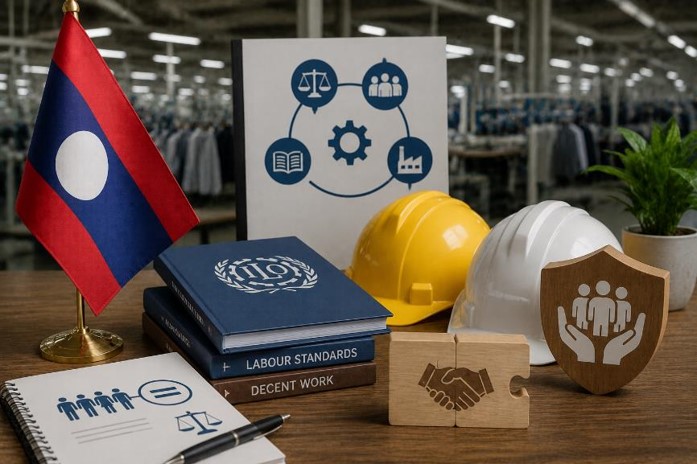
The International Labour Organization (ILO) has supported a training programme in the Lao People’s Democratic Republic to strengthen national capacity to prevent workplace discrimination, violence and harassment in the garment and manufacturing sectors.
Held in Vientiane from 14 to 16 July 2026, the programme brought together government officials, employers’ representatives, trade unions and industry stakeholders to promote safer, fairer and more inclusive workplaces.
Participants received practical training to become trainers within their own organisations, enabling them to expand awareness of international labour standards and national legal frameworks covering equality, non-discrimination, workplace safety and the prevention of violence and harassment.
The programme forms part of the ILO’s project Eliminating Workplace Discrimination, Harassment and Child Labour in the Lao People’s Democratic Republic to Support Trade and Compliance, funded by the Government of Canada through Employment and Social Development Canada (ESDC).
The training covered discrimination in employment, equal access to recruitment and promotion, decent working conditions, and measures to prevent workplace violence and harassment, including gender-based violence and sexual harassment. Through case studies and group exercises, participants identified workplace risks, developed prevention strategies and strengthened reporting and response mechanisms.
By creating a network of trainers across government, employers’ organisations and trade unions, the ILO aims to expand the adoption of good practices throughout Laos‘ garment and manufacturing industries. The programme also seeks to strengthen cooperation among the three groups to improve labour standards and foster more respectful and inclusive workplaces.
Why does it matter?
The programme reflects a capacity-building approach to labour governance, focusing on developing local expertise that can continue promoting international labour standards after external assistance ends. Training national trainers can help extend good practices across workplaces and institutions over the longer term.
It also highlights the importance of tripartite cooperation between governments, employers and workers’ organisations in addressing workplace discrimination and violence. Strengthening workplace equality and safety can improve labour rights while supporting more resilient and internationally competitive industries.
Would you like to learn more about AI, tech and digital diplomacy? If so, ask our Diplo chatbot!