
India expands Ayush Grid digital health infrastructure
The Ayush Grid connects health facilities, research platforms and citizen services across India.
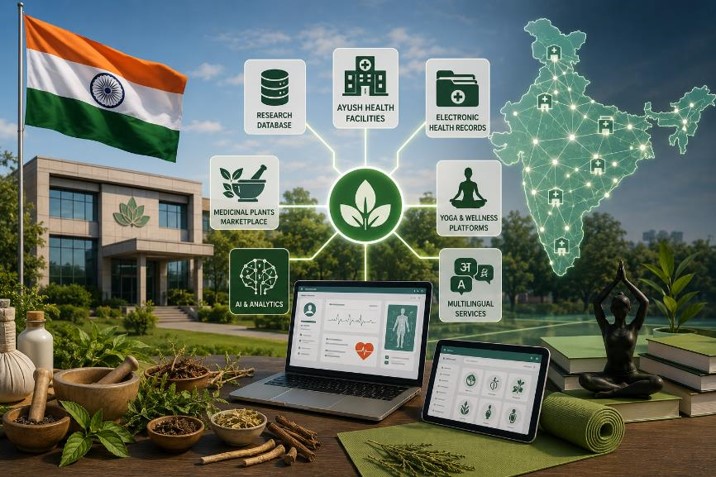
India’s Ministry of Ayush has reported progress in expanding the Ayush Grid, a digital public infrastructure designed to support healthcare delivery, research, regulation, education and public services across the country’s traditional medicine sector.
The ministry said it has developed 24 e-governance platforms, including the My Ayush Integrated Services Portal, which brings together ministry services within a single digital ecosystem and features a beta AI chatbot to assist users.
The Ayush Hospital Management Information System supports patient registration, electronic health records, referrals and continuity of care. As of 15 July 2026, the platform had been adopted by 5,386 Ayush healthcare facilities.
Other digital platforms include the Ayush Research Portal, containing more than 43,000 curated publications, the Ayush Anudan funding portal, the Ayush Nivesh Saarthi investment gateway and the e-Charak medicinal plant marketplace.
Additional services support yoga programmes, health assessments and infrastructure planning. More than 760,000 organisations registered for Yoga Sangam during the International Day of Yoga 2026, while 6,002 facilities have been mapped through the PM GatiShakti Ayush Asset Mapping Tool.
The Swasthya Assessment Scale has also enrolled 1,335 doctors across 221 facilities.
The ministry plans to strengthen interoperability, multilingual services and data-driven governance while expanding the use of AI and machine learning. Future work will also focus on closer integration with national digital health initiatives, including the Ayushman Bharat Digital Mission, to improve access to Ayush services, particularly in rural and underserved areas.
Why does it matter?
The Ayush Grid demonstrates how India is extending its digital public infrastructure approach beyond conventional healthcare into traditional medicine. By integrating clinical services, research, funding and citizen-facing platforms, the initiative aims to improve coordination, transparency and continuity of care across the sector.
The planned expansion of interoperability, AI and multilingual digital services also reflects a broader shift towards data-driven health governance. Closer integration with national digital health programmes could improve access to healthcare while strengthening the role of traditional medicine within India’s wider digital health ecosystem.
Would you like to learn more about AI, tech and digital diplomacy? If so, ask our Diplo chatbot!