
UNESCO and Egypt introduce AI framework for teachers
AI competency framework strengthens teacher professional development in Egypt.
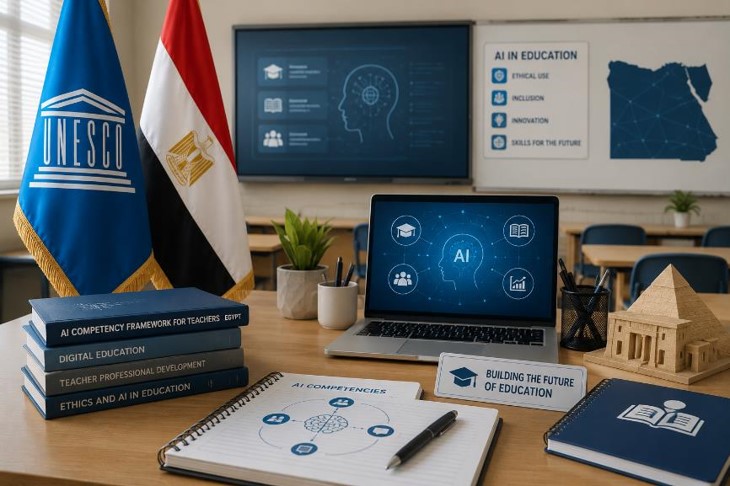
UNESCO and Egypt’s Ministry of Education and Technical Education have launched a national Artificial Intelligence Competency Framework for Teachers, marking a major step in integrating AI into teacher training and education reform.
Based on UNESCO’s global framework and adapted to Egypt’s national priorities, the initiative makes Egypt one of the first countries to introduce a nationally tailored AI competency framework for teachers.
Developed through collaboration between the Ministry of Education and Technical Education, the Ministry of Communications and Information Technology and UNESCO, the framework aims to equip teachers with the knowledge, practical skills and ethical understanding needed to integrate AI into teaching and learning.
Its development was informed by consultations involving government institutions, universities, teacher training organisations, civil society, development partners and the private sector to ensure it reflects Egypt’s educational priorities and supports the Sustainable Development Goals.
The framework promotes a human-centred approach to AI, emphasising ethics, inclusion, critical thinking and human agency. UNESCO stresses that AI should enhance rather than replace teachers, helping to personalise learning, improve classroom experiences and increase efficiency while supporting responsible use.
The initiative aligns with UNESCO’s broader guidance, including the Beijing Consensus on Artificial Intelligence and Education, the Recommendation on the Ethics of Artificial Intelligence and the Santiago Consensus on Teachers.
During the implementation phase, UNESCO and the Egyptian government will introduce capacity-building programmes, develop Arabic-language AI learning resources, train AI master trainers and establish teacher training hubs.
The framework is also intended to serve as a national policy reference for integrating AI into teacher education, professional development and wider education reform.
Why does it matter?
The initiative illustrates how AI governance is increasingly moving from high-level principles to practical implementation in national education systems. Rather than focusing solely on AI technologies, the framework emphasises preparing teachers to use AI responsibly, ethically and effectively in the classroom.
It also demonstrates how international AI governance frameworks can be adapted to national contexts. By combining teacher training, policy development and locally relevant learning resources, Egypt is creating institutional capacity to support the long-term integration of AI into education while maintaining a human-centred approach.
Would you like to learn more about AI, tech and digital diplomacy? If so, ask our Diplo chatbot!