


8 – 15 May 2026
HIGHLIGHT OF THE WEEK
The age of tech exceptionalism is ending
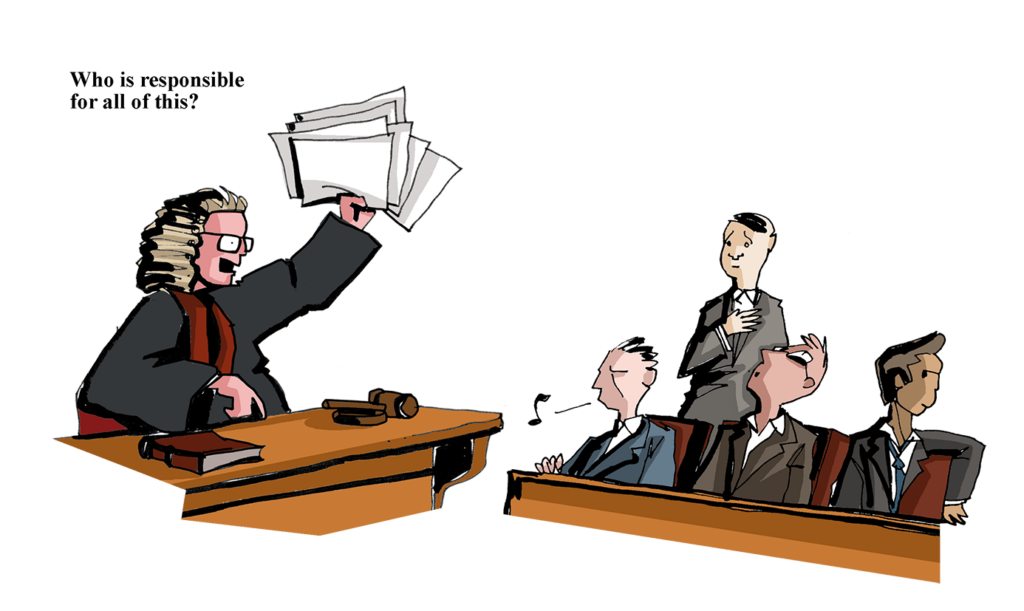
For years, tech companies defended themselves with the same argument: platforms are neutral. They host content, process information, and connect users, but they are not responsible for what people do with those systems. That distinction is now rapidly collapsing.
This week offered a glimpse of what comes next.
Families in the USA have launched multiple lawsuits against OpenAI, alleging that ChatGPT interactions contributed to violent acts or dangerous behaviour. One case linked the chatbot to planning surrounding a 2025 shooting at Florida State University.The lawsuit contends that OpenAI failed to identify escalating risk indicators within the conversations and did not adequately prevent harmful guidance. It argues the system ‘failed to connect the dots’ despite the alleged shooter’s repeated questions about suicide, terrorism and mass shootings.
A California lawsuit claimed ChatGPT provided advice about combining medication resulting in a fatal overdose of 19-year-old Sam Nelson. His parents have now filed a wrongful death lawsuit against OpenAI, are seeking financial damages, as well as a pause to ChatGPT Health, OpenAI’s recently launched feature designed to offer medical help.
Researchers reported this week that 10 out of 10 investigated chatbots provide users advice on undertaking school shootings, including ChatGPT, Gemini, Claude, Copilot, Meta AI, DeepSeek, Perplexity, MyAI, Character.ai and Replika.
The details differ, but the underlying concern is the same: AI systems are increasingly interacting with users in ways that resemble guidance, persuasion, or emotional engagement – all very human things to do. And the more successful those systems become at simulating human interaction, the harder it becomes for companies to argue they are merely neutral intermediaries.
That tension is also surfacing inside OpenAI itself. The ongoing legal battle between Elon Musk and Sam Altman is often framed as a personality conflict, but beneath it lies a deeper dispute over what AI companies are becoming. Musk argues OpenAI abandoned its nonprofit mission and transformed into a commercial empire chasing market dominance. Altman, meanwhile, defends the shift as necessary to survive the escalating competition for compute, talent, and investment.
Multiple legal disputes highlight escalating regulatory and litigation pressure on major technology companies across AI, media, retail, and consumer data use. The EU Court of Justice upheld an Italian order requiring Meta to compensate publishers for news snippets, intensifying copyright disputes over content reuse and AI training data. In Milan, families and MOIGE have filed a case against Meta and TikTok over alleged failures to protect minors on social media platforms. France’s top court rejected Amazon’s challenge to a minimum book delivery fee designed to protect independent bookstores against global platform dominance. Texas has sued Netflix for allegedly collecting user data without consent, including viewing habits and engagement tactics such as autoplay, under deceptive trade practices law.
The big picture. Regulators struggled to apply existing legal frameworks to platforms that claimed neutrality or technological exceptionalism. That position is becoming harder to sustain.
IN OTHER NEWS LAST WEEK
AI governance
The UN. The UN has invited member states and stakeholders to nominate co-chairs for the thematic discussions and participate in the first Global Dialogue on AI Governance in Geneva, scheduled for 6–7 July 2026. The discussions will be organised around four themes, each of which will be jointly chaired by one member state and one stakeholder representative, with the aim of fostering multistakeholder exchanges on experiences, best practices, and policy cooperation. Governments are asked to nominate high-level representatives, while stakeholders are encouraged to nominate senior experts relevant to the selected theme.
The EU. The Council of the European Union has confirmed agreement on a compromise text for the Digital Omnibus on AI, a proposal intended to simplify parts of the EU AI Act’s implementation. The Permanent Representatives Committee confirmed the agreement on 13 May 2026, following informal negotiations between the EU institutions on 6 May. The Council Presidency was authorised to send a letter to the European Parliament stating that, if Parliament adopts the text at first reading, the Council will approve Parliament’s position.
The European Commission has updated the ERA Living Guidelines on the responsible use of generative AI in research. New recommendations address risks linked to the use of generative AI by third parties, including in meetings, note-taking, summaries and document overviews, where confidential information, data protection or intellectual property rights may be affected. The guidelines encourage researchers and organisations to inform third parties about the use of such tools and related risks. A specific addition concerns the risk of ‘hidden prompts’, where instructions may be secretly embedded in documents or inputs to influence generative AI tools. The guidelines call on research funding organisations to remain aware of such risks, set rules prohibiting manipulation where relevant, and introduce appropriate safeguards in IT systems used to process information.
Australia. Australia’s National AI Centre has launched AI.gov.au, a national platform designed to help organisations adopt AI safely and responsibly in line with the National AI Plan. The platform provides a central source of guidance, tools and resources to support businesses and not-for-profits. It aims to help users identify AI opportunities, plan implementation, manage risks and build internal capability.
South Korea. The Office of National Security of South Korea held a meeting to review how government agencies are responding to AI-driven cyber threats. The session focused on the growing risks posed by the misuse of advanced AI technologies.Officials from multiple ministries attended, including science, defence and intelligence bodies, to coordinate responses. Discussions also covered practical measures to support rapid responses to cybersecurity vulnerabilities across public and private sectors.
The Trump-Xi summit
Trade and technology were among the main topics expected to dominate the Trump-Xi summit held on Thursday and Friday in Beijing, the first state visit of a US President to China in 8 years.
A litany of CEOs accompanied Trump on the trip, including Tesla’s Elon Musk, Nvidia’s Jensen Huang, Apple’s Tim Cook, GE Aerospace’s Larry Culp, Boeing’s Kelly Ortberg, Meta’s Dina Powell McCormick, BlackRock’s Larry Fink, Blackstone’s Stephen Schwarzman, Micron’s Sanjay Mehrotra, Mastercard’s Michael Miebach, Qualcomm’s Cristiano Amon and Visa’s Ryan McInerney.
But as much as the public is assured that progress was made, details remain scarce.
When it comes to tech matters, AI was expected to be a central topic of discussion, with reports in the lead up to the summit suggesting that the USA and China are considering launching formal discussions on AI. ‘The two AI superpowers are going to start talking. We’re going to set up a protocol in terms of how do we go forward with best practices for AI to make sure nonstate actors don’t get a hold of these models,’ US Treasury Secretary Scott Bessent told CNBC. Bessent also added ‘The reason we are able to have wholesome discussions with the Chinese on AI is because we are in the lead,’ and candidly admitted: ‘I do not think we would be having the same discussions if they were this far ahead of us.’
Part of the AI story are, of course, the chips needed for AI. The USA has tried to limit China’s AI development by restricting sales of advanced chips, with Jensen Huang’s Nvidia and Huang himself caught in the middle. Yet, reports suggest that the USA has cleared around 10 Chinese firms to buy the H200, Nvidia’s second-most powerful AI chip, the H200. However, no deliveries were made. This is likely the breakthrough Huang was seeking in China.
And part of the chips story are the minerals the chips are made of, and on those China has an upper hand which is deftly uses as a lever in its trade relations with the USA. US Trade Representative Jamieson Greer told Bloomberg that rare earth exports from China are improving, although Beijing is still slow to approve some export licences.
However, Greer also stated that chip export controls were not a major part of the talks.
It remains to be seen whether more outcomes will be shared in the following days.
Council of the EU extends cyber sanctions framework until 2027
The Council of the European Union has extended restrictive measures against individuals and entities involved in cyber-attacks threatening the EU and its member states until 18 May 2027. The legal framework behind the sanctions regime had already been extended until 18 May 2028.
The framework allows the EU to impose targeted sanctions on persons or entities involved in significant cyber-attacks that constitute an external threat to the Union or its member states. Measures can also be imposed in response to cyber-attacks against third countries or international organisations, where they support Common Foreign and Security Policy objectives.
Why does it matter? By extending cyber sanctions listings, the EU is reinforcing its use of diplomatic and economic measures to deter malicious cyber activity, attribute responsibility and signal that significant cyber-attacks can carry geopolitical consequences.
Thales confirms data breach
French defence and cybersecurity giant Thales Group has confirmed a third-party data breach after a dataset allegedly linked to the company appeared on a cybercrime forum. The leaked data appears to be linked to LuxTrust, a Luxembourg-based digital identity provider that uses Thales services.
Thales said the breach originated from an outsourced service and stated that there was no operational impact on the company or its customers based on current information. The company has notified France’s data protection authority, CNIL, and launched an investigation.
Why does it matter? The exposed sample includes names, email addresses, account metadata, and company-related fields, suggesting the information likely originated from an outsourced or partner platform rather than LuxTrust’s internal systems. However, even limited identity data could enable phishing and social engineering attacks, particularly because LuxTrust supports authentication services used by governments, financial institutions, and enterprises.
Pakistan enacts crypto law
Pakistan has enacted the Virtual Assets Act 2026, establishing a permanent legal foundation for the Pakistan Virtual Assets Regulatory Authority. The move formalises oversight of the country’s growing digital asset sector, which had previously operated under temporary rules introduced in 2025.
Under the new framework, PVARA is responsible for licensing, regulating and supervising virtual assets and virtual asset service providers operating in Pakistan. The law gives the authority powers to issue, suspend and revoke licences, while unlicensed operations can face fines and criminal penalties.
PVARA is working with national institutions as it transitions into an operational regulator, including through a regulatory sandbox and rules requiring prior authorisation for virtual asset pilots, partnerships and implementations involving users in Pakistan.
The legislation comes as Pakistan seeks to attract regulated digital asset activity while tightening oversight of financial crime risks. Officials have also linked virtual asset regulation with broader ambitions in digital finance, AI-powered payments and workforce preparation for emerging technologies.
US CLARITY Act moves forward amid split over crypto market rules
The United States Senate Banking, Housing, and Urban Affairs Committee has advanced the Digital Asset Market Clarity Act in a 15–9 vote, marking another step towards establishing a federal framework for digital asset markets.
A central issue in the revised text is how to regulate stablecoin-related activity. The bill seeks to prevent stablecoins from functioning like bank deposits by limiting passive yield on customer holdings, while still allowing certain rewards linked to user activity or platform use.
The bill also continues debate over decentralised finance, including how far regulation should extend to developers, protocols and infrastructure providers that do not directly custody user funds.
Ethics provisions were among the most contested issues during the markup process, with lawmakers divided over whether and how to restrict potential conflicts of interest involving public officials and cryptoasset activities.
Further hurdles remain before the legislation can become law. The bill will need to advance through the full Senate, be reconciled with other Senate work on digital asset regulation and secure agreement with the House of Representatives before reaching the President’s desk.
LAST WEEK IN GENEVA

Intergovernmental Group of Experts on E-commerce and the Digital Economy 9th session
The UNCTAD Intergovernmental Group of Experts on E-commerce and the Digital Economy met in Geneva for its 9th session from 11–13 May 2026 to address how digital trade affects fiscal systems in developing countries. The agenda focused on strengthening tax revenues in the context of e-commerce, including VAT and customs challenges, platform-based taxation, and the implications of cross-border digital transactions. Sessions explored revenue risks, administrative digital tools, and the role of platforms as tax intermediaries, alongside international and regional cooperation to improve tax readiness. The meeting also covered measuring the digital economy and advancing capacity-building to support inclusive and sustainable digital development strategies.
UN Virtual Worlds Day 2026
The 3rd UN Virtual Worlds Day, co-organised by the International Telecommunication Union (ITU) and multiple UN agencies and partners, took place in Geneva on 11–12 May 2026. It convened ambassadors, ministers, city leaders, UN entities, industry pioneers and innovators for two days of high-level dialogue on AI-driven cities, immersive environments and spatial intelligence. Discussions focused on how frontier technologies are reshaping urban governance and public services, including the emerging citiverse concept and its link to the Global Digital Compact. It concluded with executive briefing on AI, spatial intelligence and AI-enabled citiverse, and the Call to Action for inclusive digital futures.
READING CORNER
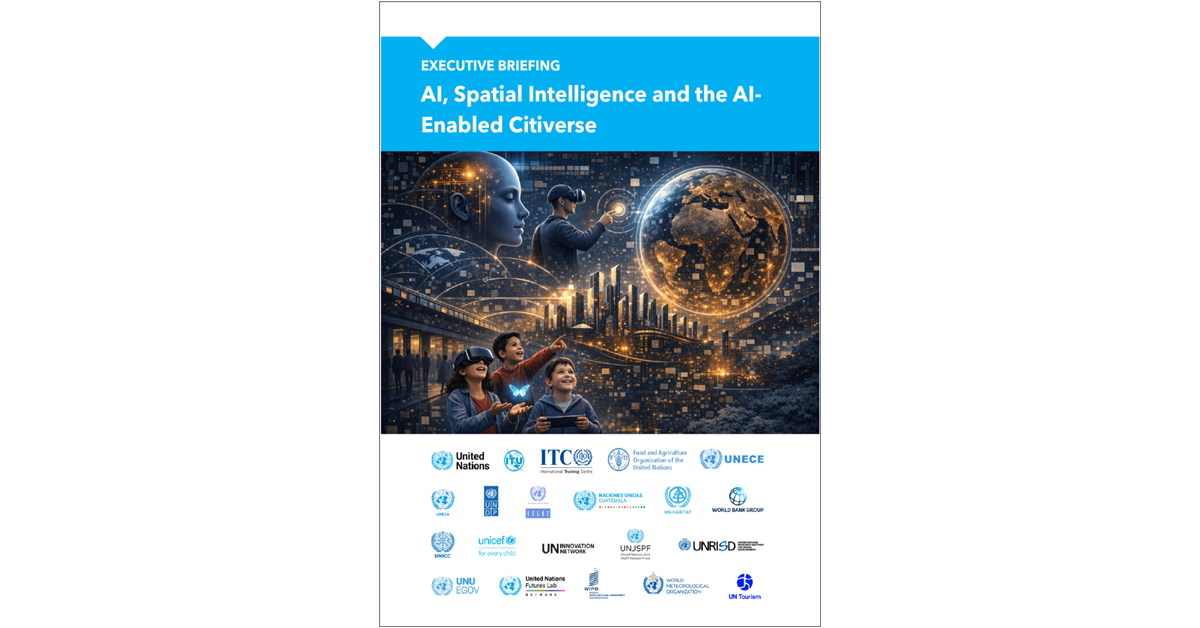
This executive briefing has been developed by the 20 UN entities co-organising UN Virtual Worlds Day 2026. The briefing assesses how AI, spatial intelligence and the AI-enabled citiverse are transforming urban governance, urban development and global digital cooperation.
OPPORTUNITY
Opportunity: Become a Knowledge Fellow
Diplo is pleased to launch a new call for applications for Digital Watch Knowledge Fellows (2026), the team of collaborators behind the Digital Watch Observatory (DW). Knowledge Fellows (KF) are central to the observatory’s ability to provide comprehensive, accurate, and up-to-date coverage of specific areas of digital governance. More details on what we are looking for and what we offer in return are available here. Interested applicants are invited to apply by 31 May 2026.
