
WSIS+20 highlights deep gaps in global digital access
Global leaders warned that rapid digital progress is masking more profound inequalities and new risks, raising urgent questions about who truly benefits from connectivity and emerging technologies in today’s digital world.
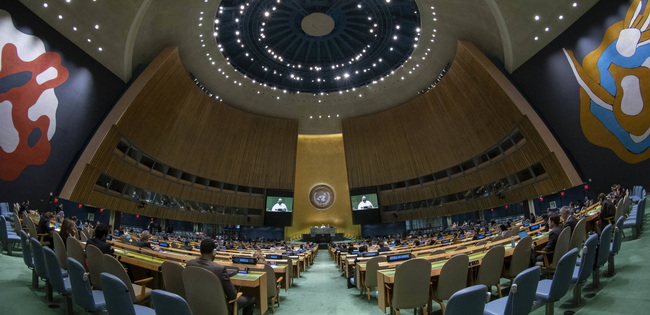
Twenty years after the World Summit on the Information Society (WSIS) laid the foundations for global digital cooperation, UN member states gathered in New York to assess what has been achieved and what still lies out of reach. The WSIS+20 High-Level Meeting of the UN General Assembly highlighted how deeply digital technologies now shape everyday life, while also exposing the uneven distribution of their benefits across societies and regions.
Despite major progress in connectivity, speakers warned that the world faces not a digital ‘gap’ but a digital ‘canyon’. While most people live within reach of mobile broadband, more than two billion remain offline, predominantly in developing countries.
Delegations stressed that meaningful digital inclusion depends not only on networks, but also on affordability, skills, institutions, and the ability to participate fully in the digital economy and public life.
Gender inequality emerged as one of the most urgent concerns. Women remain significantly less likely to be online than men, and digital harms disproportionately affect them, from exclusion from economic opportunities to widespread gender-based abuse enabled by new technologies.
Participants underlined that closing the gender digital divide is not only a matter of rights and justice, but also a major economic opportunity with global benefits.
AI featured prominently, with broad agreement that AI must be governed in a human-centred and rights-based way. Several speakers warned of a growing ‘AI divide’, driven by unequal access to computing power, data, and linguistic representation. Concerns were raised that AI systems risk reinforcing existing inequalities unless global cooperation ensures that emerging technologies serve public interests rather than deepen exclusion.
Debates over internet governance revealed both strong consensus and sharp geopolitical tensions. Most countries reaffirmed support for the multistakeholder model and called for strengthening the Internet Governance Forum, including making it a permanent UN platform with sustainable funding.
At the same time, disagreements surfaced over state control, sovereignty, and the future institutional architecture of global digital governance.
Looking ahead, the meeting underscored that digital transformation is no longer just a technical issue but a deeply political one, tied to human rights, development, security, and power. While the original WSIS principles remain widely supported, participants agreed that renewed ambition, financing, and cooperation are essential to ensure that digital technologies, including AI, deliver tangible benefits for all, rather than widening the divides they were meant to close.
Diplo and the Geneva Internet Platform will provide just-in-time reporting from the high-level meeting. Bookmark this page.
For more details about WSIS and the 20-year review, consult our WSIS+20 process dedicated page.
Would you like to learn more about AI, tech and digital diplomacy? If so, ask our Diplo chatbot!