
UN General Assembly appoints experts to the Independent International Scientific Panel on AI
As AI reshapes economies and societies at unprecedented speed, the UN has taken a decisive step to ground global debates in independent scientific expertise.
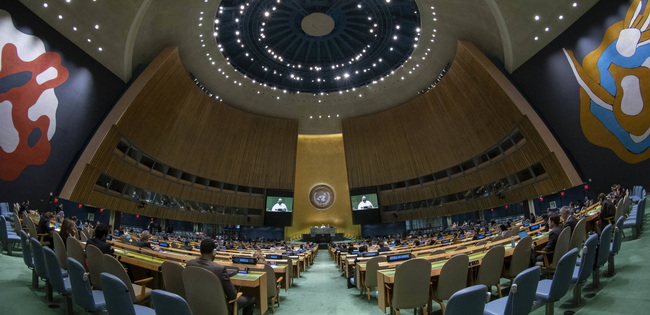
The UN General Assembly has appointed 40 experts to serve on a newly created Independent International Scientific Panel on Artificial Intelligence, marking the launch of the first global scientific body dedicated to assessing the technology’s impact. The panel, established by a 2025 Assembly resolution, will produce annual evidence-based reports examining AI’s opportunities, risks and broader societal effects.
The members, selected from more than 2,600 candidates, will serve in their personal capacity for a three-year term running from February 2026 to February 2029. According to UN Secretary-General António Guterres, ‘we now have a multidisciplinary group of leading AI experts from across the globe, geographically diverse and gender-balanced, who will provide independent and impartial assessments of AI’s opportunities, risks and impacts, including to the new Global Dialogue on AI Governance’.
The appointments were approved by a recorded vote of 117 in favour to two against, Paraguay and the United States, with two abstentions from Tunisia and Ukraine. The United States requested a recorded vote, strongly objecting to the panel’s creation and arguing that it represents an ‘overreach of the UN’s mandate and competence’.
Other countries pushed back against that view. Uruguay, speaking on behalf of the Group of 77 and China, stressed the call for ‘comprehensive international frameworks that guarantee the fair inclusion of developing countries in shaping the future of AI governance’.
Several delegations highlighted the technology’s potential to improve public services, expand access to education and healthcare, and accelerate progress towards the Sustainable Development Goals.
Supporters of the initiative argued that AI’s global and interconnected nature requires coordinated governance. Spain, co-facilitator of the resolution that created the panel, stressed that AI ‘generates an interdependence that demands governance frameworks that no State can build by itself’ and offered to host the panel’s first in-person meeting.
The European Union and others underlined the importance of scientific excellence, independence and integrity to ensure the panel’s credibility.
The United Kingdom emphasised that trust in the Panel’s independence, scientific rigour, integrity and ability to reflect diverse perspectives are ‘essential ingredients for the Panel’s legitimacy and for its reports to be widely utilised’. China urged the Panel to prioritise capacity-building as a ‘core issue’ in its future work, and Iran urged that the ‘voice of developing countries must be heard’, and that such states must be empowered to benefit from impartial scientific guidance.
Ukraine, while supporting the initiative, expressed concerns about a potential conflict of interest involving an expert nominated by Russia.
In parallel with the AI appointments, the Assembly named two new members to the Joint Inspection Unit, the UN’s independent oversight body responsible for evaluations and investigations across the system. It also noted that Ghana, Saint Vincent and the Grenadines, and Togo had reduced their arrears below the threshold set by Article 19 of the UN Charter, which can suspend a country’s voting rights if dues remain unpaid for two full years.
Would you like to learn more about AI, tech, and digital diplomacy? If so, ask our Diplo chatbot!