
Porto summit highlights growing risks to undersea internet cables
As digital economies grow ever more reliant on invisible networks beneath the ocean, leaders gathering in Porto warned that even minor disruptions to undersea cables could have far-reaching consequences, making global cooperation on resilience more urgent than ever.
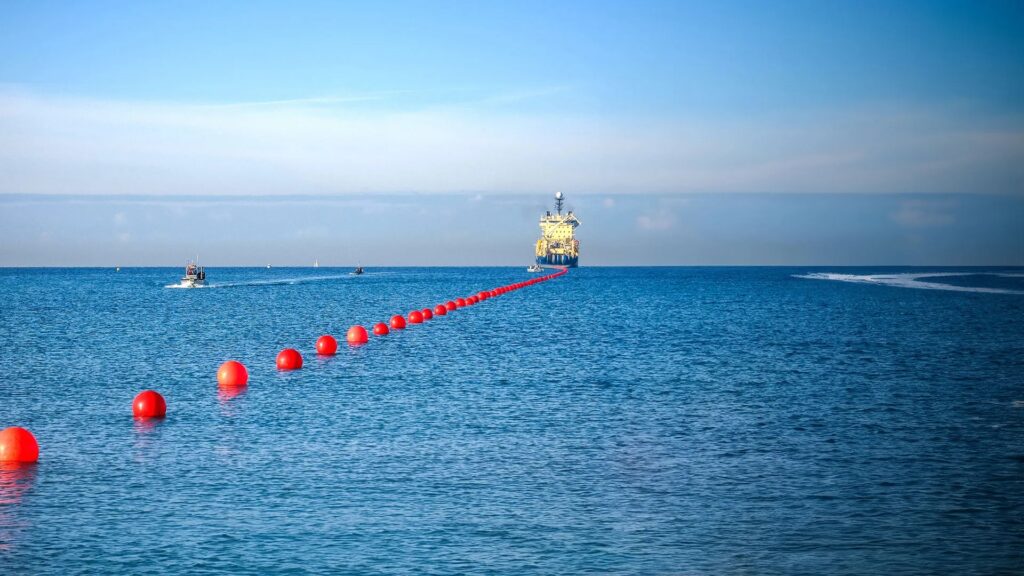
The Second International Submarine Cable Resilience Summit opened this week in Porto, Portugal, bringing together senior officials from governments, international organisations, and industry to address the growing risks facing the underwater cables that carry most of the world’s internet traffic. The event highlighted how submarine cables have become critical infrastructure for the global digital economy, especially as societies grow more dependent on cloud services, AI, and cross-border data flows.
Opening the summit, Ambassador João Mira Gomes, Permanent Representative of Portugal to the United Nations Office at Geneva, explained that Portugal’s infrastructure minister was absent due to ongoing storm recovery efforts, underlining the real-world pressures facing critical infrastructure today. He recalled Portugal’s long history in global connectivity, noting that one of the earliest submarine cables linking Portugal and the United Kingdom was built to support the port wine trade, a reminder that communication networks and economic exchange have long evolved together.
Professor Sandra Maximiano, co-chair of the International Advisory Body for Submarine Cable Resilience, placed the discussions in a broader historical context. She pointed to the creation of the International Telecommunication Union in 1865 as the first global organisation dedicated to managing international communications, stressing that cooperation on submarine cables has always been a ‘positive-sum game’ in which all countries benefit from shared rules and coordination.
Maximiano also highlighted Portugal’s strategic role as a cable hub, citing its extensive coastline, large exclusive economic zone, and favourable landing conditions connecting Europe, the Americas, Africa, and Asia. She outlined key projects such as the Atlantic CAM system linking mainland Portugal with Madeira and the Azores using a resilient ring design and smart cable technology that combines telecommunications with seismic and oceanographic monitoring. Existing and planned systems, she said, are not just data pipelines but foundations for innovation, scientific cooperation, and strategic autonomy.
A major outcome of the summit was the adoption of the Porto Declaration on Submarine Cable Resilience, developed with input from more than 150 experts worldwide. The declaration sets out practical guidance to improve permitting and repair processes, strengthen legal frameworks, promote route diversity and risk mitigation, and enhance capacity-building, with special attention to the needs of small island states and developing countries.
ITU Secretary-General Doreen Bogdan-Martin framed these efforts within a rapidly changing digital landscape, announcing that 2026 will be designated the ‘year of resilience.’ She warned that the scale of global digital dependence has transformed the impact of cable disruptions, as even minor outages can ripple across AI systems, cloud platforms, and autonomous services. Resilience, she argued, now depends as much on international coordination and preparedness as on cable design itself.
From the European Union perspective, European Commission Vice-President Henna Virkkunen outlined upcoming EU measures, including a submarine cable security toolbox and targeted funding through the Connecting Europe Facility. She stressed the importance of regional coordination and praised Portugal’s active role in aligning EU initiatives with global efforts led by the ITU.
Closing the opening session, Ambassador Gomes linked cable resilience to broader goals of development and peace, warning that digital divides fuel inequality and instability, and reaffirming Portugal’s commitment to international cooperation and capacity-building as the summit moves the global conversation from policy to action.
Would you like to learn more about AI, tech, and digital diplomacy? If so, ask our Diplo chatbot!