
Debate grows over UK’s proposed social media ban for under-16s
Children’s online safety requires regulation, Amnesty argues, rather than bans.
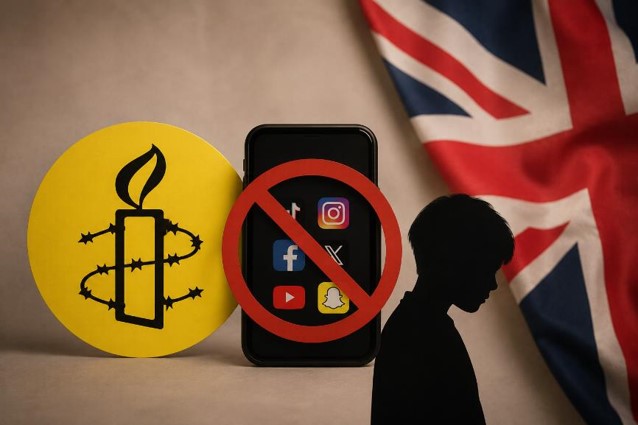
Amnesty International has challenged the British government’s decision to introduce a social media ban for under-16s, arguing that it targets children rather than the design choices made by digital platforms.
Responding to the announcement, Amnesty International UK chief executive Kerry Moscogiuri said the government had correctly identified the risks facing young people online but had chosen the wrong solution.
Amnesty argued that social media companies have developed products and business models that prioritise engagement and profit over children’s well-being, privacy and rights.
The organisation argues that social media platforms should be redesigned and regulated more effectively rather than restricting access for young users. The organisation argued that social media remains an important space where children and teenagers learn, communicate with friends, access support networks and participate in public life.
The human rights group is calling for stronger platform regulation, including restrictions on invasive profiling, hyper-personalised recommendation systems, autoplay features and infinite scrolling.
Amnesty also called for stronger protections for children’s privacy and personal data, arguing that responsibility for online safety should rest primarily with technology companies rather than young users.
Ofcom supports further assessment of child online safety measures
In a letter to Technology Secretary Liz Kendall, Ofcom chief executive Dame Melanie Dawes said the regulator had begun examining age-assurance options and would provide an assessment by the end of October 2026 to support parliamentary consideration of the proposals.
The regulator also pledged to continue prioritising enforcement of existing child protection measures under the Online Safety Act and confirmed it will publish reports on enforcement outcomes and evaluate the impact of the proposed ban within a year of implementation.
Why does it matter?
The debate highlights two competing approaches to child online safety. One approach focuses on restricting access to social media for younger users, while the other seeks to address the design features and business models that critics argue contribute to online harms.
The discussion also reflects broader questions about platform accountability, children’s rights and digital governance. As governments around the world consider age restrictions, age verification requirements and online safety measures, policymakers continue to grapple with how to balance child protection, privacy, freedom of expression and access to digital services.
Would you like to learn more about AI, tech and digital diplomacy? If so, ask our Diplo chatbot!