
Canada and South Korea strengthen AI safety cooperation through new agreement
Responsible AI development advances with Canada and South Korea strengthening global safety cooperation.
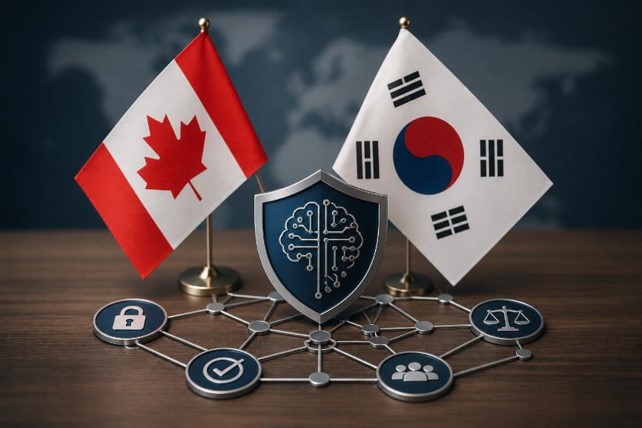
Canada and the Republic of Korea have signed a memorandum of understanding (MoU) between their respective Artificial Intelligence Safety Institutes (AISIs) to strengthen cooperation on AI safety and the governance of frontier AI systems.
The agreement aims to deepen collaboration on AI risk assessment, evaluation methodologies, measurement science and the development of internationally interoperable safety standards for frontier AI.
The partnership establishes a framework for exchanging information on AI technologies, emerging risks, testing methodologies, evaluation tools and governance approaches. The two institutes will also work together to advance internationally recognised methods for evaluating frontier AI models while identifying new areas for cooperation.
A key element of the agreement focuses on risks associated with synthetic and AI-generated content.
Canada and South Korea will explore technical safeguards, oversight mechanisms and risk management approaches to strengthen AI testing throughout the model lifecycle, from development to deployment.
The agreement also reinforces both countries’ commitment to responsible AI innovation. Canadian Minister of Artificial Intelligence and Digital Innovation Evan Solomon highlighted South Korea’s leadership in semiconductors, digital innovation and AI, stressing the importance of developing trustworthy AI while protecting society from emerging risks.
South Korea AISI Executive Director Myuhng-Joo Kim described AI safety as a global challenge that requires international cooperation and harmonised evaluation methodologies.
Why does it matter?
The agreement reflects a growing international shift towards cooperative AI safety governance rather than isolated national approaches. By aligning evaluation methods, testing frameworks and safety standards, Canada and South Korea aim to improve interoperability between AI governance systems while supporting responsible innovation.
The emphasis on synthetic AI-generated content also illustrates how governments are moving beyond broad AI principles to address specific technical risks. As more countries establish AI Safety Institutes, bilateral partnerships like this could help shape emerging international norms for evaluating and governing frontier AI models.
Would you like to learn more about AI, tech and digital diplomacy? If so, ask our Diplo chatbot!