
Closing the AI divide means building capacity, not just expanding access
Countries at the UN Global Dialogue on AI Governance argued that closing AI divides requires far more than expanding access, calling for sustained investment in infrastructure, skills, governance and local innovation so developing countries can become AI creators rather than consumers.
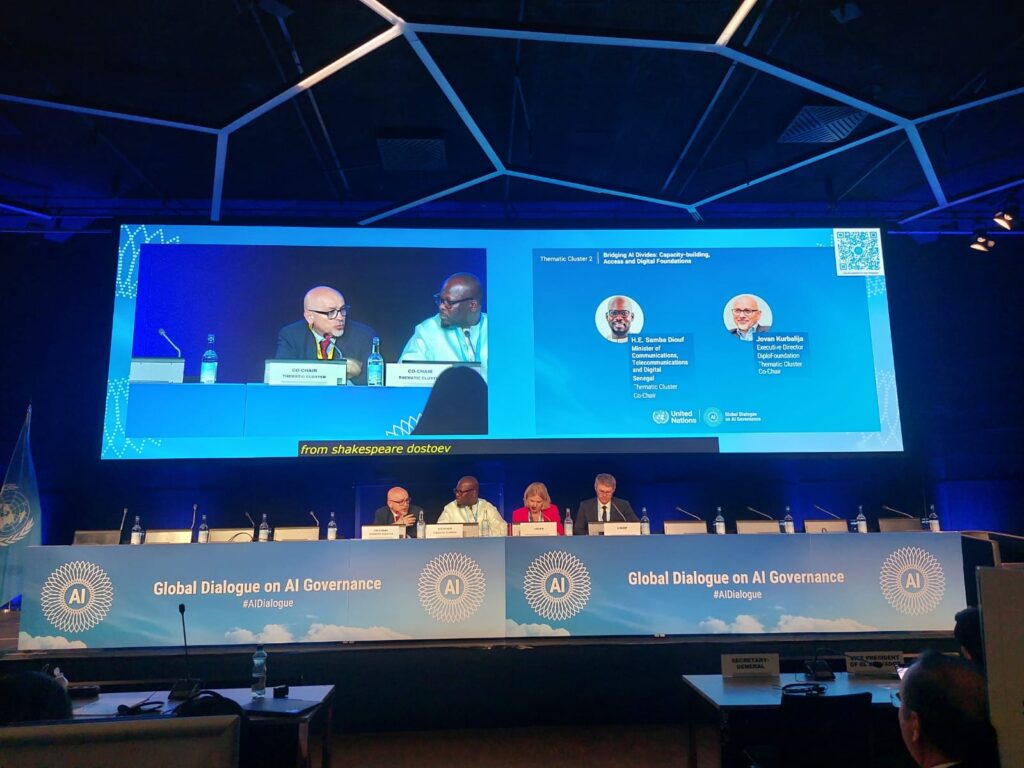
The global AI divide is no longer simply about who has internet access or the latest AI tools. It is increasingly defined by who has the infrastructure, computing power, skilled workforce and institutional capacity to develop, govern and adapt AI and who does not.
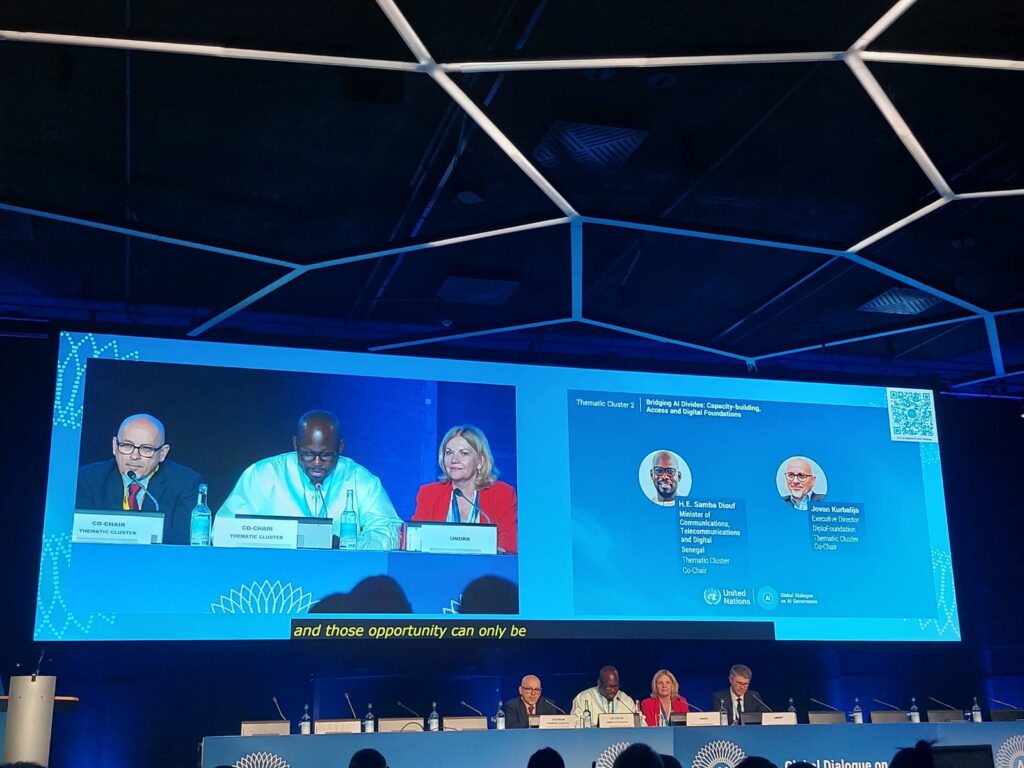
That was the central message of a discussion on bridging AI divides at the inaugural United Nations Global Dialogue on AI Governance, where governments, UN agencies and experts argued that narrowing AI inequalities will require a fundamental shift from expanding access to building long-term national capabilities.
From access to capability
Speakers repeatedly argued that AI has exposed a new generation of digital inequalities that extend well beyond connectivity.
Robert Opp, Chief Digital Officer of the UN Development Programme (UNDP), distinguished between an access divide and an adoption divide, warning that AI technologies are spreading faster than governments and institutions can build the capacity to use them responsibly.
Loretta Hieber Girardet, Chief Risk Knowledge of the UN Office for Disaster Risk Reduction (UNDRR), echoed that concern, saying countries need trusted institutions, governance frameworks, digital infrastructure and technical expertise if AI is to strengthen development rather than deepen existing vulnerabilities.
The discussion also highlighted how investment patterns reinforce those divides. Pedro Manuel Moreno, Deputy Secretary-General of UN Trade and Development (UNCTAD), noted that AI infrastructure investment is increasingly concentrated in a small number of countries and companies because investors naturally gravitate towards locations offering reliable electricity, high-speed connectivity, skilled workers and predictable governance. Without those foundations, he warned, many developing countries risk being left behind regardless of how quickly AI technologies spread globally.
Several government representatives reinforced that message by pointing to persistent shortages of electricity, broadband connectivity, computing infrastructure, quality datasets and digital skills as barriers to meaningful participation in the AI economy.
Capacity building means creating AI, not simply using it
Participants argued that AI capacity building should be redefined.
Moderator Shikoh Gitau said many current initiatives focus too heavily on teaching people how to use AI applications, while overlooking the broader ecosystem needed to create AI locally. Instead, she advocated an approach centred on ‘AI for us, by us’, combining investment in research, technical skills, financing, standards, entrepreneurship and local innovation.
UNESCO presented several initiatives intended to move countries in that direction. Assistant Director-General Khaled El-Enany highlighted the implementation of UNESCO’s Recommendation on the Ethics of Artificial Intelligence through training programmes for more than 50,000 public officials and judicial actors, AI competency frameworks for teachers and students, and projects promoting language diversity and responsible AI governance.
El Salvador offered an example of how countries are beginning to build national AI ecosystems. Vice President Félix Ulloa outlined investments in AI-supported education, telemedicine, regulatory sandboxes and a National AI Agency, alongside legislation covering AI, data protection, cybersecurity and robotics. While noting significant progress, he acknowledged that challenges remain in extending connectivity and digital opportunities to rural communities.
Throughout the discussion, speakers stressed that developing countries should become active contributors to AI development rather than remaining consumers of technologies designed elsewhere.
Language, culture and local knowledge matter
Several speakers argued that AI divides are also cultural and linguistic.
Co-chair Jovan Kurbalija, Executive Director of Diplo, said discussions about AI often focus on technology while overlooking knowledge itself. He argued that indigenous traditions, oral histories and local knowledge systems should be recognised as valuable resources for AI development, ensuring that technological progress strengthens rather than erodes humanity’s diverse intellectual heritage.
Valts Ernštreits highlighted the scale of linguistic exclusion, noting that only around 1,000 of the world’s roughly 7,000 languages currently have sufficient digital resources to support meaningful AI development. Without targeted investment, he warned, thousands of language communities risk being left outside the AI revolution.
Other speakers similarly argued that AI systems should reflect local cultures, values and institutions instead of simply adapting models developed for dominant markets. Building trustworthy AI, they said, requires communities to participate directly in data governance, research and system design.
A shared responsibility
While speakers differed on specific policy approaches, they broadly agreed that international cooperation will be essential to prevent AI from reinforcing existing global inequalities.
Suggestions included expanding public-private partnerships, strengthening participation by developing countries in international standards-setting, supporting open models and open standards, and creating a global AI fund to help countries invest in computing infrastructure, institutions and human capital.
Closing the session, Kurbalija returned to the discussion’s central theme, arguing that AI should ultimately help preserve and advance humanity’s collective wisdom rather than simply automate knowledge. Co-chair Samba Diouf added that regional cooperation will be particularly important for smaller countries that cannot realistically build every component of the AI ecosystem on their own.
Taken together, the discussion suggested that bridging AI divides will require far more than expanding access to technology. It will depend on whether countries can build the institutions, skills, infrastructure and knowledge needed to shape AI on their own terms, and ensure its benefits are shared more evenly across the world.
Track all key moments from the Global Dialogue on AI Governance inaugural meeting on our dedicated page.
Would you like to learn more about AI, tech and digital diplomacy? If so, ask our Diplo chatbot!