
Canada advances sovereign AI data centre strategy with TELUS
Large-scale AI infrastructure plans advanced after Canada and TELUS agreed on sovereign compute capacity.
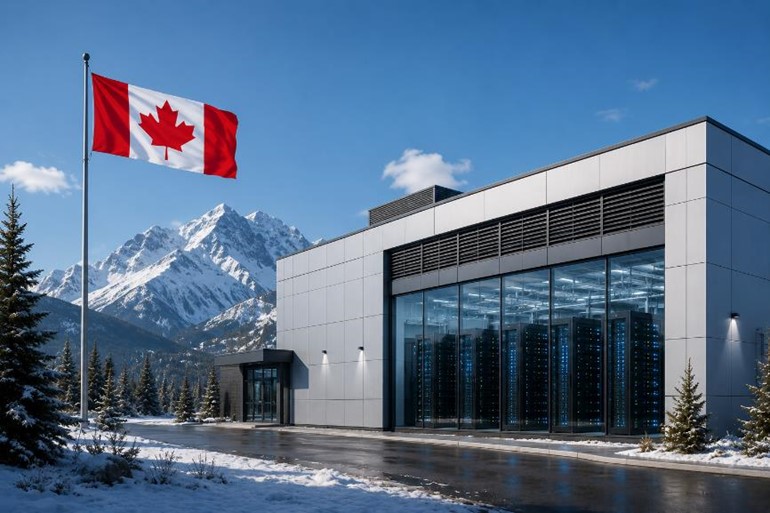
The Canadian government and TELUS are advancing plans to develop large-scale sovereign AI infrastructure as part of Ottawa’s broader strategy to strengthen domestic compute capacity and support the country’s AI ecosystem.
The initiative was announced by Evan Solomon (Minister of Artificial Intelligence and Digital Innovation and Minister responsible for the Federal Economic Development Agency for Southern Ontario) and focuses on a proposed AI data centre project in British Columbia designed to support researchers, businesses, and academic institutions.
A project that forms part of Canada’s ‘Enabling large-scale sovereign AI data centres’ initiative, which was introduced under Budget 2025. Ottawa stated that sovereign compute infrastructure is increasingly important for maintaining national competitiveness in AI while ensuring Canadian data, intellectual property, and economic value remain within the country.
The government also confirmed that no formal funding commitments have yet been distributed, with discussions currently progressing through non-binding memoranda of understanding with selected industry participants.
Local officials argued that large-scale compute infrastructure has become a strategic economic requirement as governments worldwide race to expand AI processing capabilities. Canada believes it holds competitive advantages due to its colder climate, sustainable energy resources, and network infrastructure, all of which could help attract future AI investment and hyperscale data centre development.
Why does it matter?
The race for sovereign AI infrastructure is rapidly becoming one of the most important geopolitical and economic competitions of the digital era. The Canada-TELUS partnership illustrates how countries are moving beyond AI model development alone and shifting focus towards the physical infrastructure required to sustain future AI ecosystems, including data centres, energy capacity, semiconductors, and domestic compute networks.
Would you like to learn more about AI, tech and digital diplomacy? If so, ask our Diplo chatbot!